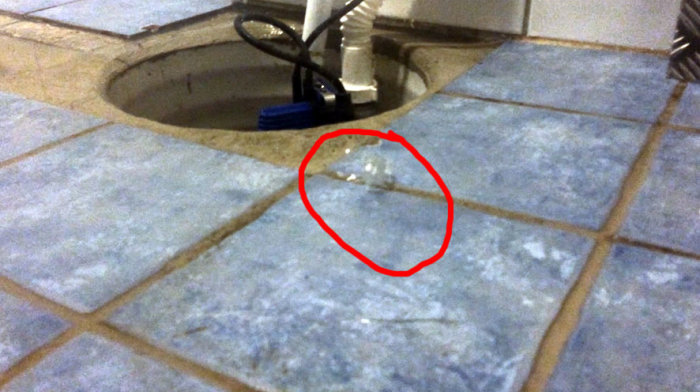
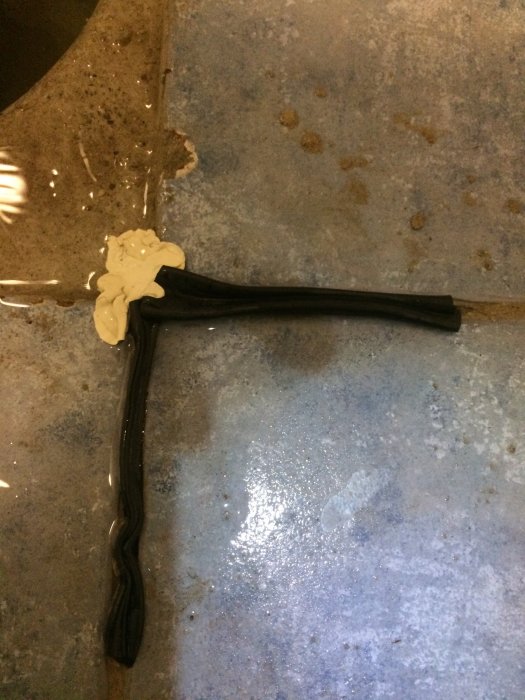
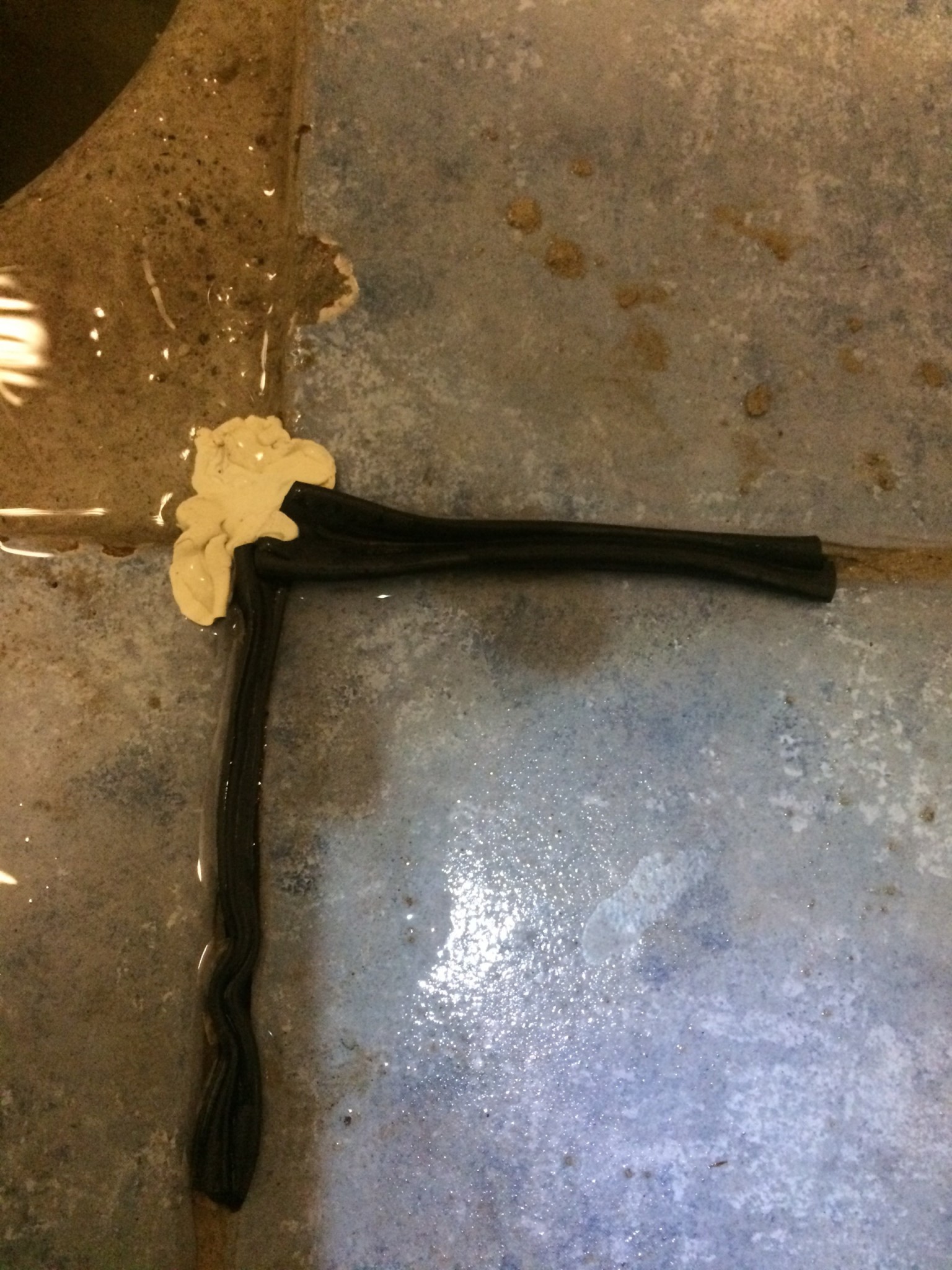
Now I don't understand anything, but if water is gushing up through the floor, my first course of action is not to try to plug the hole with chewing gum and a bicycle tube.
Yes, the waterproofing is normally intended to seal the other way, to prevent moisture from penetrating INTO the floor. If water is now spraying OUT from the floor, that's obviously not good... Regardless of the source (I suspect it might be rising groundwater? but that would probably require a drainage well with a pump?).
Even if it were a boat, I have a hard time seeing the finesse in sealing a hole in the hull by sealing a tile joint... The water seeps in under the tiles anyway.
Even if it were a boat, I find it hard to see the finesse in sealing a hole in the hull by sealing a tile grout... The water still seeps in under the tiles anyway.
Yes, but it has obviously worked until now, he has a bilge pump to keep the worst away!
The likely reason for this is a combination of a poorly plugged stormwater or sewer pipe located under the tiles (The plan was to cut the pipe outside the house and plug it properly there, but I didn't manage to do that in time...) and a high groundwater level. The sea is putting quite a bit of pressure and its level was about 80-90 cm above normal yesterday, and this, combined with enormous amounts of rainfall, caused the level in the municipality's system to rise significantly. The basement is among the lowest points in the municipality's network (well below the retention level). Late last night, I measured the water level in the sewage system to be about 50 cm above floor level, and it had receded quite a bit by then, so it's this water that's putting pressure. "Normally," the groundwater level is about 15 cm below floor level.
For this house, it is not economically justifiable to make any major investments, and under these conditions, I see it as pointless to try to drain and pump away the groundwater. It would be like bailing water from one side of a boat to the other to make it shallower...
There have previously been floods about once a year, but last fall, I made the sump pit and rerouted the pipes to the floor drains in the basement to discharge into the sump pit instead. This saved the basement from flooding this time. What's left to do is to cut off the old sewer pipes that lay under the slab
It's a concrete slab with tiles on top, and it's somewhat strange that it can leak so at all; there must be quite a few holes in the concrete. Additionally, the tile grout was as sandy on the stretches where it leaked, while the rest of the grout is rock hard... The MacGyver repair with the bike tube is to spare the submersible pump from starting and stopping every 20 seconds...
The fact is, we had a similar problem our first winter in our current house. We had started renovating one of the rooms in the basement and were just finished with everything except the floor, which was just a bare concrete floor. One day around Christmas when I went down to the basement, I noticed it smelled damp, and the whole room was wet, with about 1 cm of water at the worst spot. I vacuumed up the worst with the wet-dry vac, but at one spot the water was seeping up through the floor, maybe barely a cm in height.
What happened to us was a combination of the slope towards the house and an unusually slushy and warm winter where the frost thawed around Christmas. The water ran from the road next to the house towards the house, along the basement wall and towards the footing, where it found its way through cracks and holes.
Vi vill skicka notiser för ämnen du bevakar och händelser som berör dig.