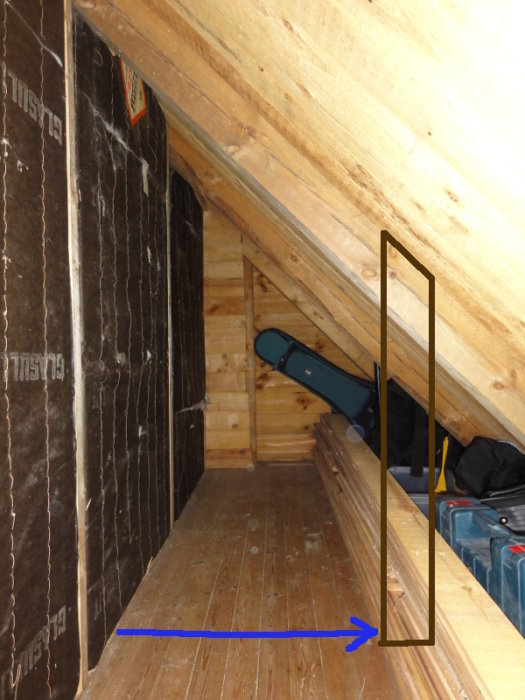
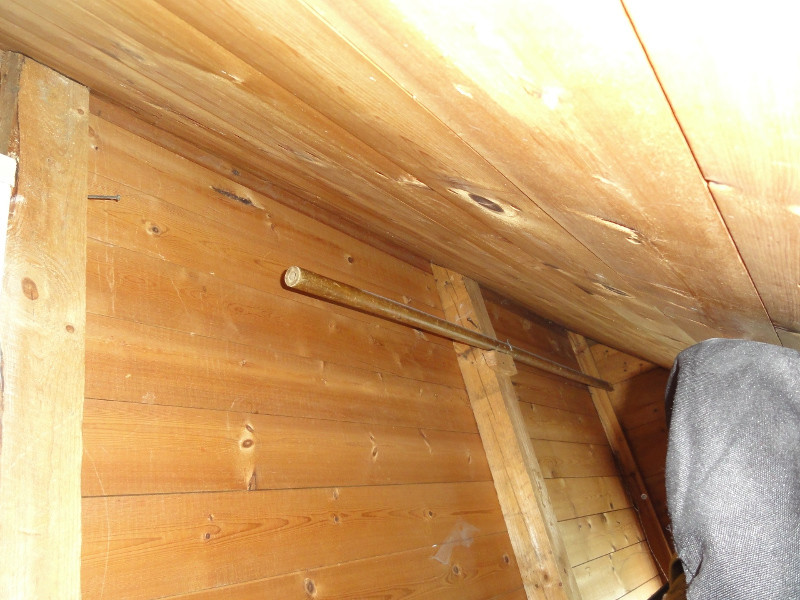
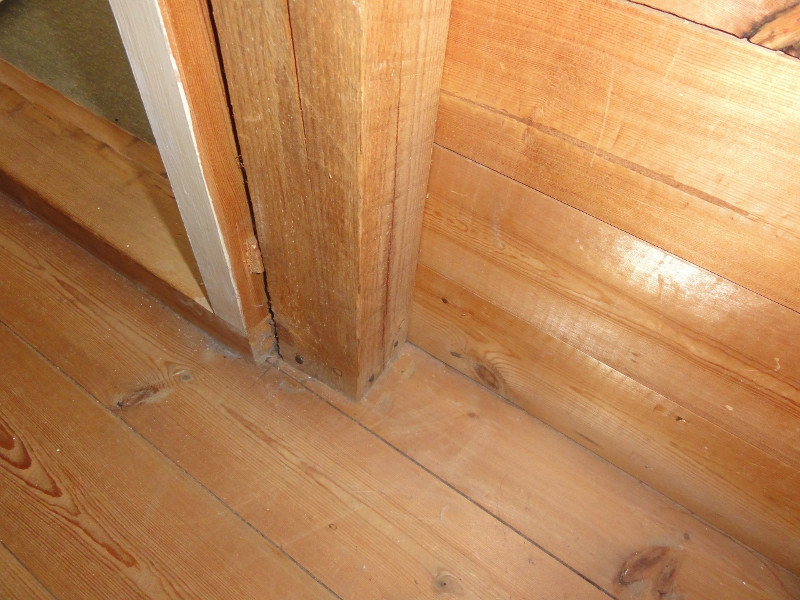
I have a wall for a sidovind/kattvind that I'm considering moving outwards. I have removed the paneling on one side to look at the construction, and I can't believe it's load-bearing, but what do you think, dear forum?
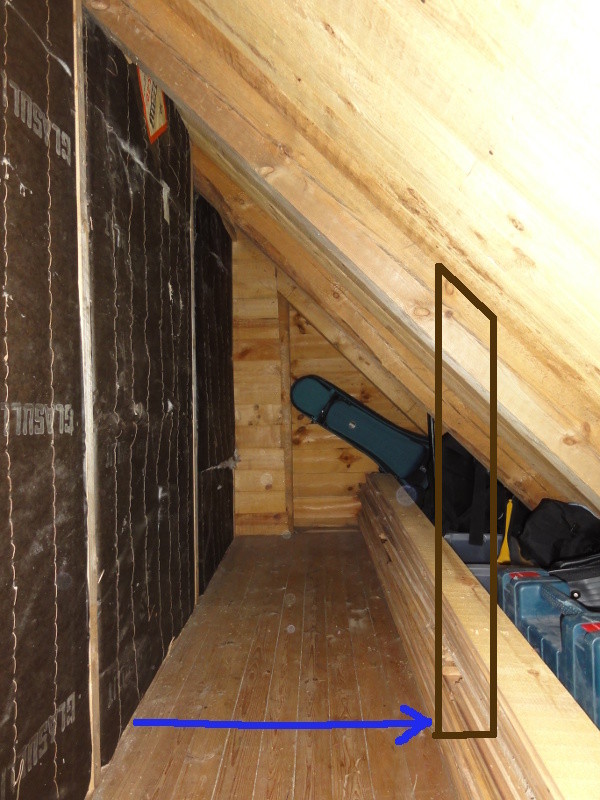
The wall will not be removed but moved 70 cm outwards. It's only under 2 rafters.
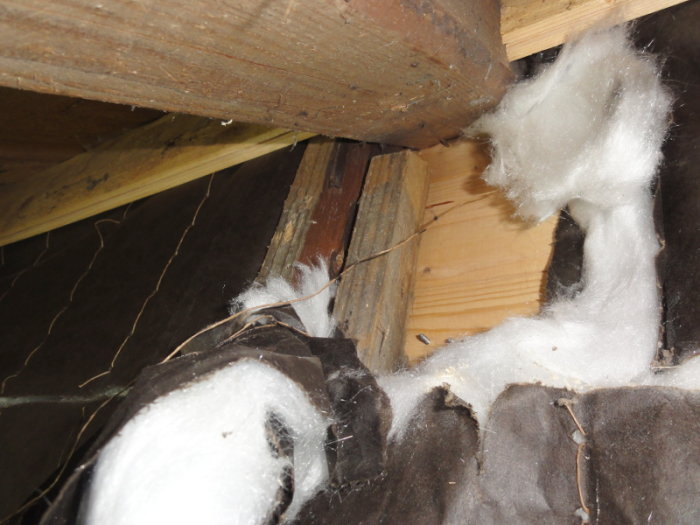
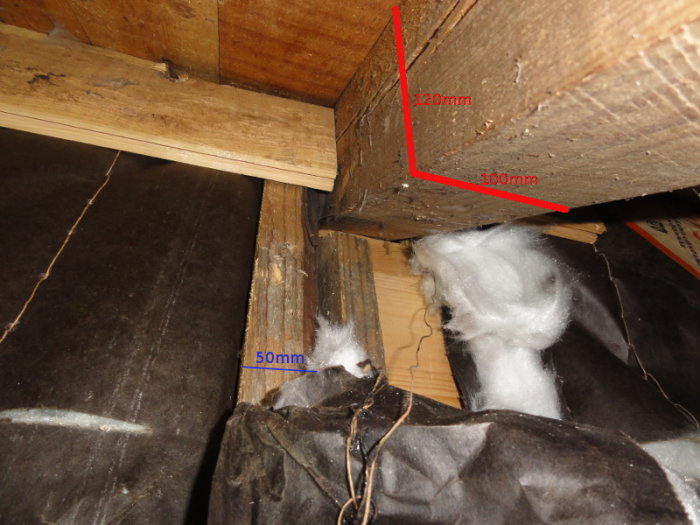
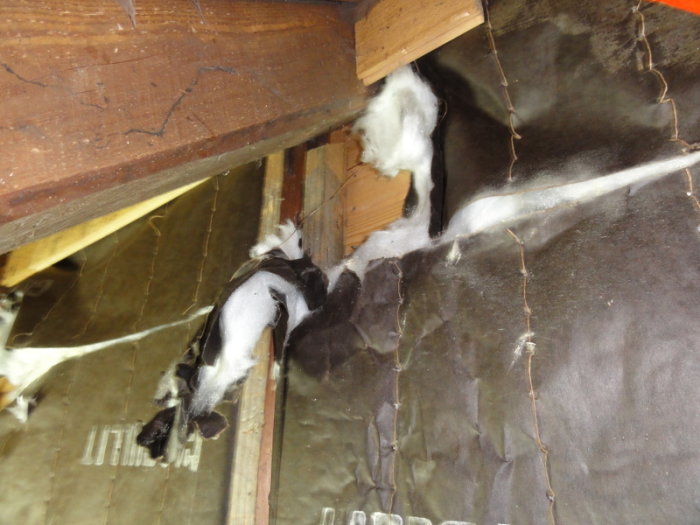
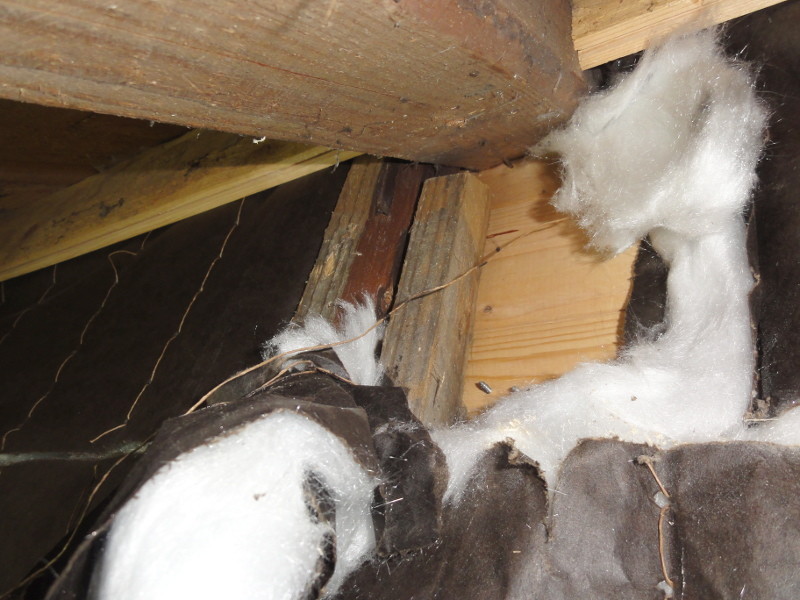
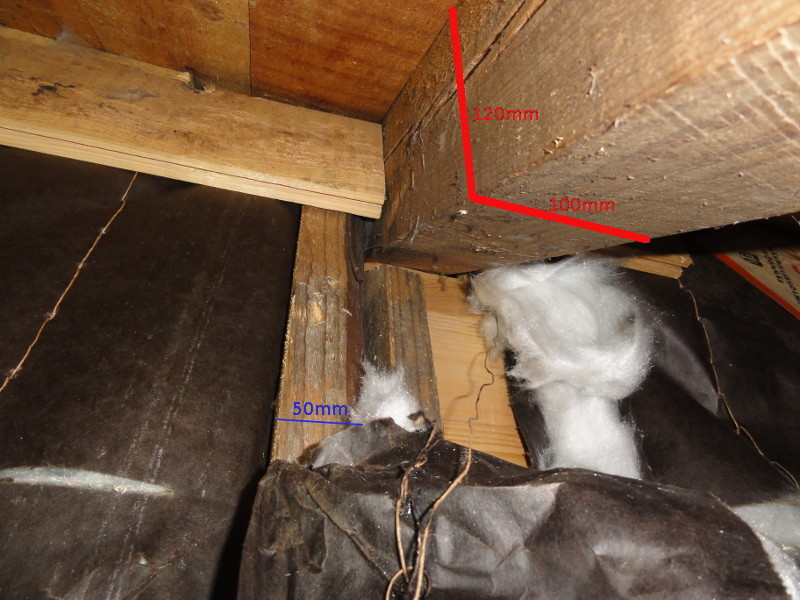
If you look at the wall studs, they are not under the rafter, but nailed at the side. If it's meant to be load-bearing, the shear forces on the nails would be quite high.
The studs are about 50x65 mm BxD, and the rafter 100x120-130mm BxD.
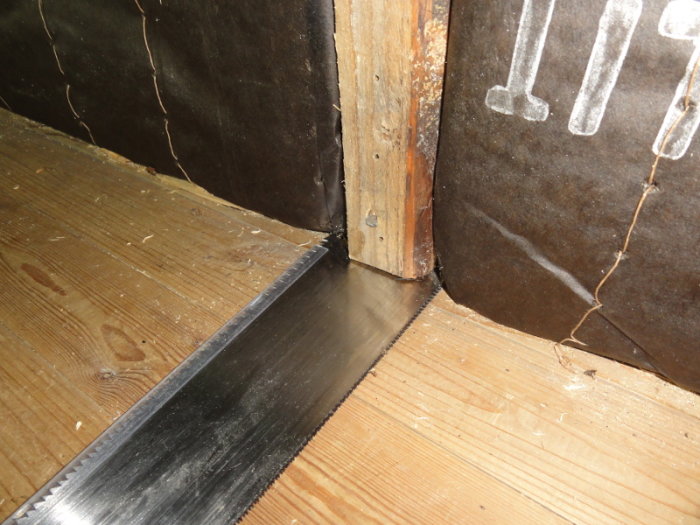
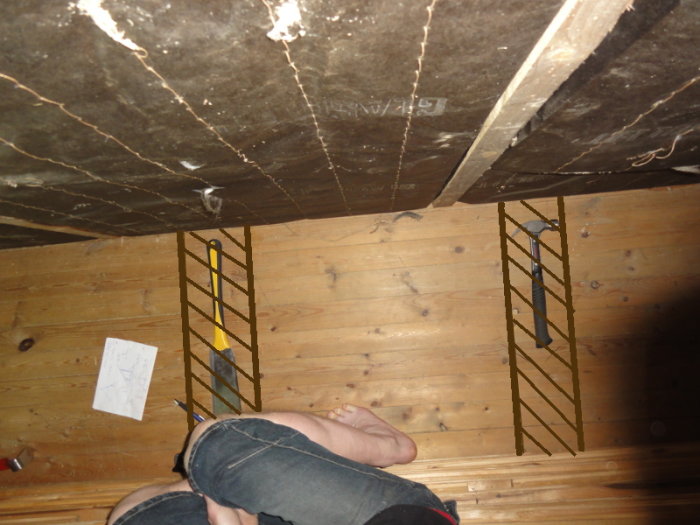
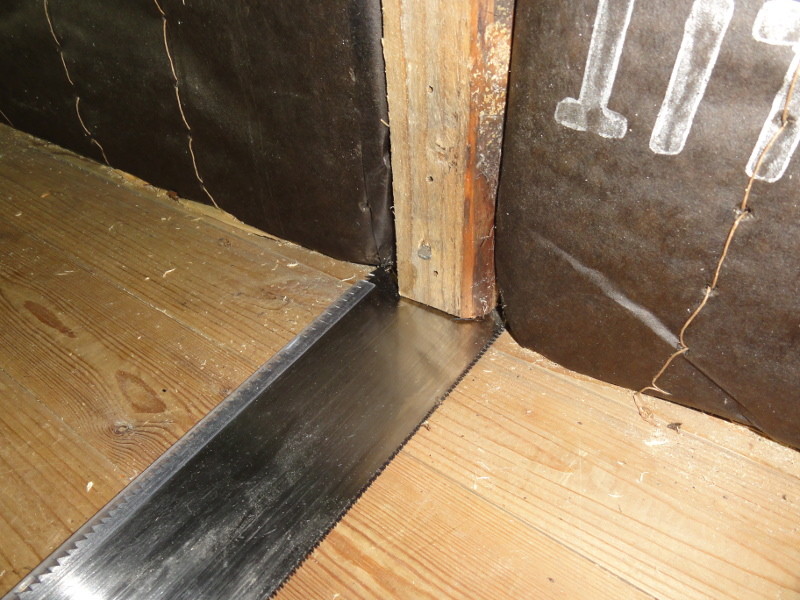
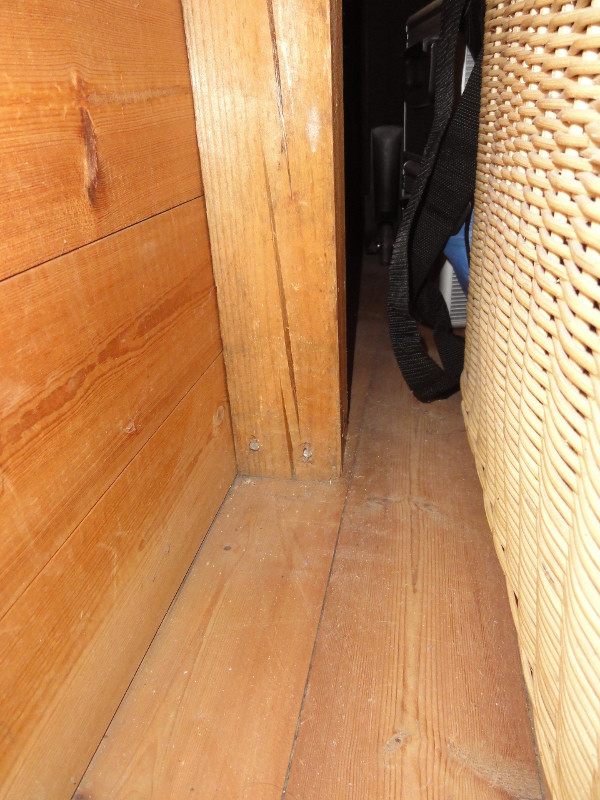
There is no horizontal stud under the wall, and no load on the standing studs. You can slip a saw blade underneath until it touches the skew nail.
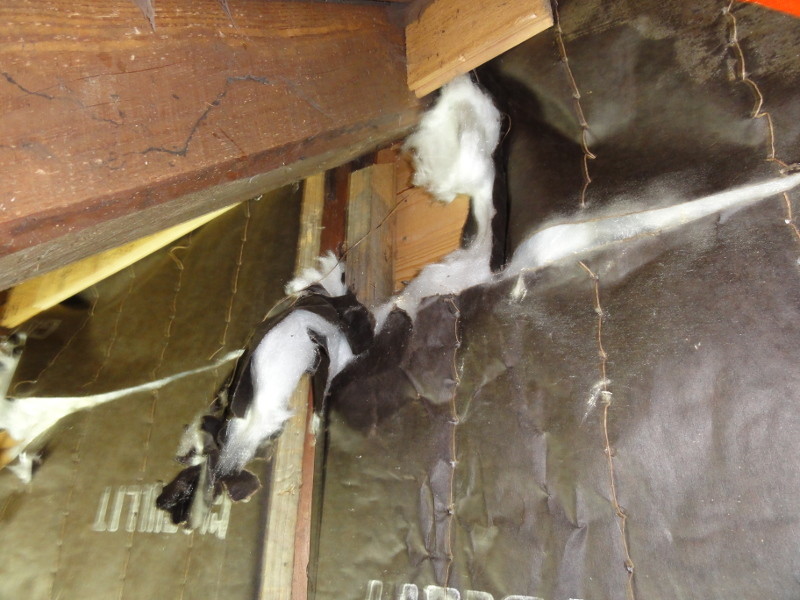
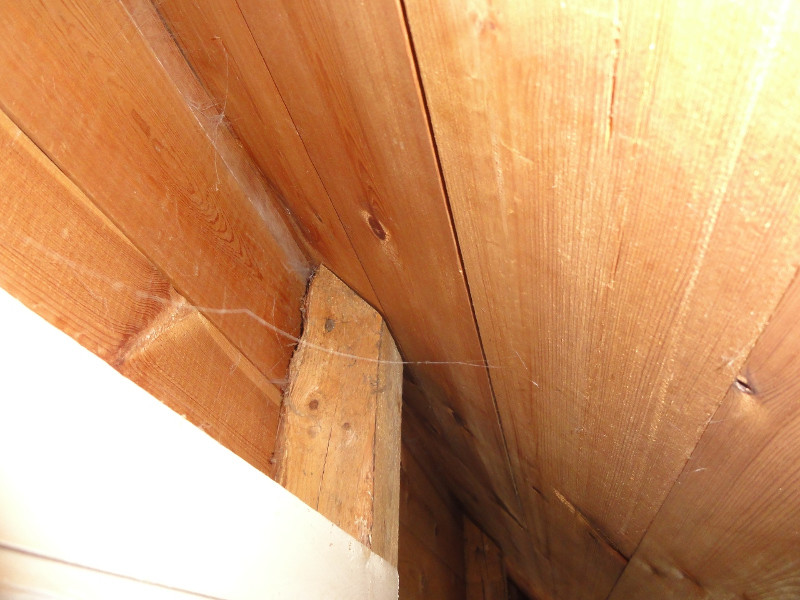
Another view of the wall stud. They used a smaller stud to nail the glass wool insulation.
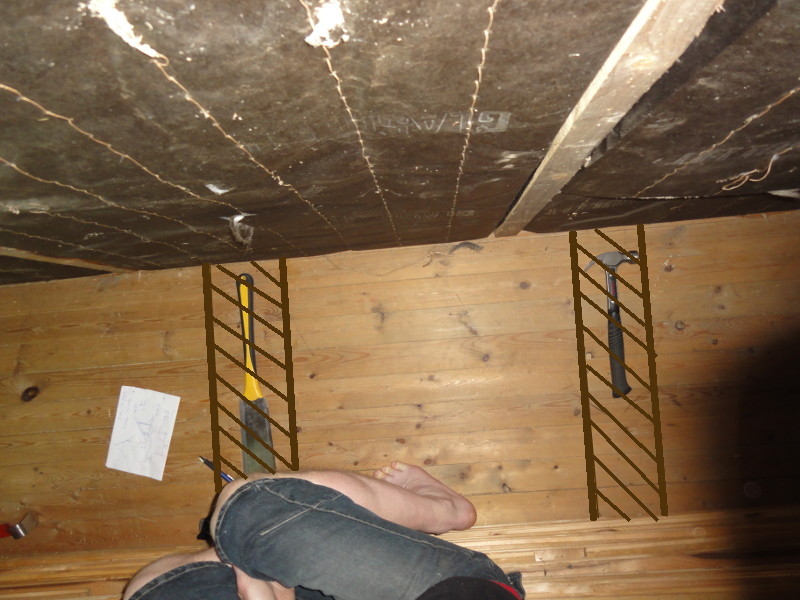
The wall studs are not directly on the floor joists, but a little beside them.
Other data:
the house was built in 1934
roof pitch 45 degrees, A-shaped rafter, CC 90-98 cm between rafter legs
the wall under 2 rafters, total 280 cm, planning to move 70 cm outwards where (new) support wall (height 80 cm) is built of 45x220 C24.
on the ground floor, there is no wall under the kattvind wall
What do you think? It can hardly be load-bearing -- or will it collapse if I move those 2 wall studs?
They don't seem to be load-bearing... you probably wouldn't have been able to fit the saw under the post if they were load-bearing. If you have joists that span across the entire floor between the walls, they most likely support the floor of the upper level.
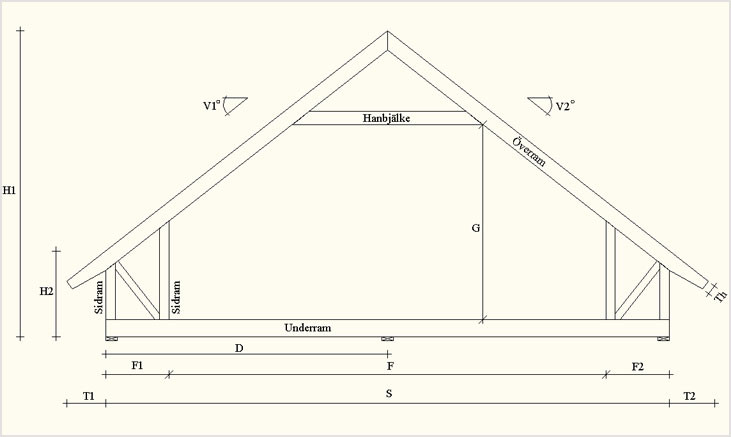
How is the roof truss constructed and what do the fastenings look like? How wide is the house, and so on?
The roof truss forms an A, and if I look here, the construction most resembles a framework.
The difference is that I don't have any side frame at the outer wall, i.e., the top frame is attached directly to the wall plate. I also don't have any braces in the attic. And I don't have attics on all sides.
The house is 8 m wide.
In the meantime, I have tried to find a constructor who can look at it, but unfortunately, I haven't succeeded. No one has time, or they give outrageous quotes (25,000 just to calculate it? :x I'd rather over-dimension it significantly).
I don't believe they are load-bearing, but I still greatly appreciate opinions.
it is not load-bearing, because you have several things that clearly show it is not load-bearing, and there is nothing to suggest that it is load-bearing. so you can relax and move the wall.
Doesn't seem to be load-bearing, but it's a bit odd that there's no support under the top beam.
Yes, but maybe it's not needed.
On about 40% of the upstairs on one side, there's no side wind. For example, where the stairs go up, and behind a small toilet built sometime in the 60s. But we have a dormer (original 30s) on the opposite side of the toilet, so maybe this offsets in some way.
mycke_nu said:
How high are the collar beams?
The collar beams are about 148 cm from the ridge, and about 220 cm from the bottom beam/intermediate floor. They are quite sturdy, the lumber has exactly the same dimension as the top beam.
This is how it looks in another side wind (uninsulated, simple plank wall):
That is, the same thing. Standing studs directly on the floor, with contact to the inner panel nailed to the top beam, but again 20-30 cm "beside" the top beam. Also, no horizontal stud across the intermediate floor (unless it somehow lies under the floor?).
Yes, the walls have not been load-bearing from the start. Over time, they might have experienced some pressure, but you can tell when you start sawing into the posts. If it pinches, the roof is pressing down.
Yes, the walls were not load-bearing from the beginning.
I think exactly the same.
mycke_nu said:
There might have been some pressure on them over time, but it becomes noticeable when you start cutting into the studs. If it pinches, the roof is pressing.
On the roof are tiles; the under-roof is the original shingle/board roof. So, not a particularly heavy roof. Plus, I'm "only" planning to move the wall 70 cm outward, not remove it.
If one nails/screws a 45x220 on each side of the top plate from ridge to tie beam, it should be fine to move the wall, right?
Brick is certainly considerably heavier than shingles, but if the wall only needs to be moved 70 cm, then 2 pieces of 45x220 are surely far more than what's needed. However, it's smart to use wide studs since you can fit more insulation.
Perhaps I didn't express myself clearly. The roof is currently (from outside-in) constructed like this:
roof tiles
batten
shingle roof
batten
rafter
inner panel
When the roof is eventually redone, the shingle roof will be replaced with tongue-and-groove board.
mycke_nu said:
but if the wall is only going to be moved 70 cm, then 2 pcs of 45x220 are likely far more than needed. However, it's smart with wide studs because you get more room for insulation.
Yes, as previously mentioned, I can't find a constructor in Northern Skåne who wants to help with a "such a small piss job," so it will probably be over-dimensioning instead. And yes, it can only result in more insulation -- currently, there is no insulation at all in the sloped roof :x:eek:
mycke_nu said:
It will become both warm and strong!
Hehe... it will be like hot curry sauce
But if a couple of 45x220 is the solution, how do I handle the transition to the wall plate?
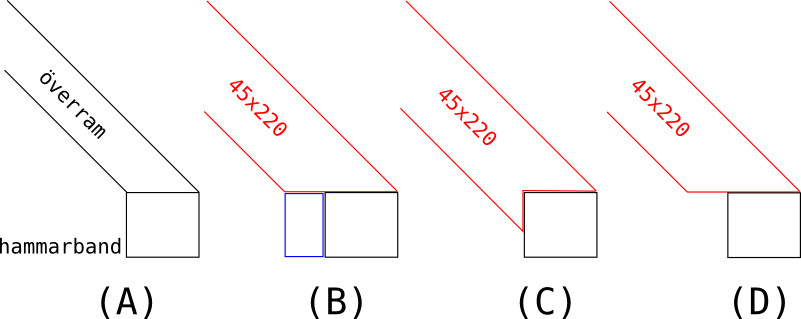
Today, the top beam fits perfectly onto the wall plate (A), but the 45x220 is wider. Is it best to try to make the wall plate a bit wider (B), or do you cut the new stud to fit (C)? Or does it not matter, and you can do it like (D)?
The transition to the hammarbandet does not matter, do it in the way that's most attractive/easiest. (B) probably makes it easiest to screw in the gypsum, or whatever comes next.
The transition to the hammarband doesn't matter, do what looks best/easiest. (B) probably makes it easiest to screw the drywall, or whatever comes next.
Exactly as I thought.
An additional question, which might be completely off the wall, but is it enough to reinforce the top frame only where I'm going to move the wall? The purpose of the reinforcement is to prevent the top frame from breaking under the roof's weight.
Or is it absolutely necessary to reinforce both top frames?
Vi vill skicka notiser för ämnen du bevakar och händelser som berör dig.