
5,109 views ·
29 replies
5k views
29 replies
The roof above the patio door is sinking

It would be interesting to get a picture of what you describe as an "iron beam," given that the settlement is in the middle. That's where you should focus and also expose to see what has been put into the wall. You have carpenters involved and could let them do it. It needs to be done anyway to address the issue. Presumably, it's not an iron beam, or two, because over such a short distance it would hardly settle.
If one is allowed to guess, I think they placed two angle irons on each side of a wooden beam, and that this is not sufficient. But now these are just guesses, tear down the interior wall and take a look. It would be unfortunate if you get a real settlement.
A AndersS said:Would be interesting to get a picture of what you refer to as "järnbalk" considering the sagging is in the middle.
That's where you should focus and also uncover to see what has been put into the wall.
You have carpenters involved and could let them do it. It must be done anyway to be able to rectify.
Probably, it's not a järnbalk, or two, because over such a short distance it would hardly bend.
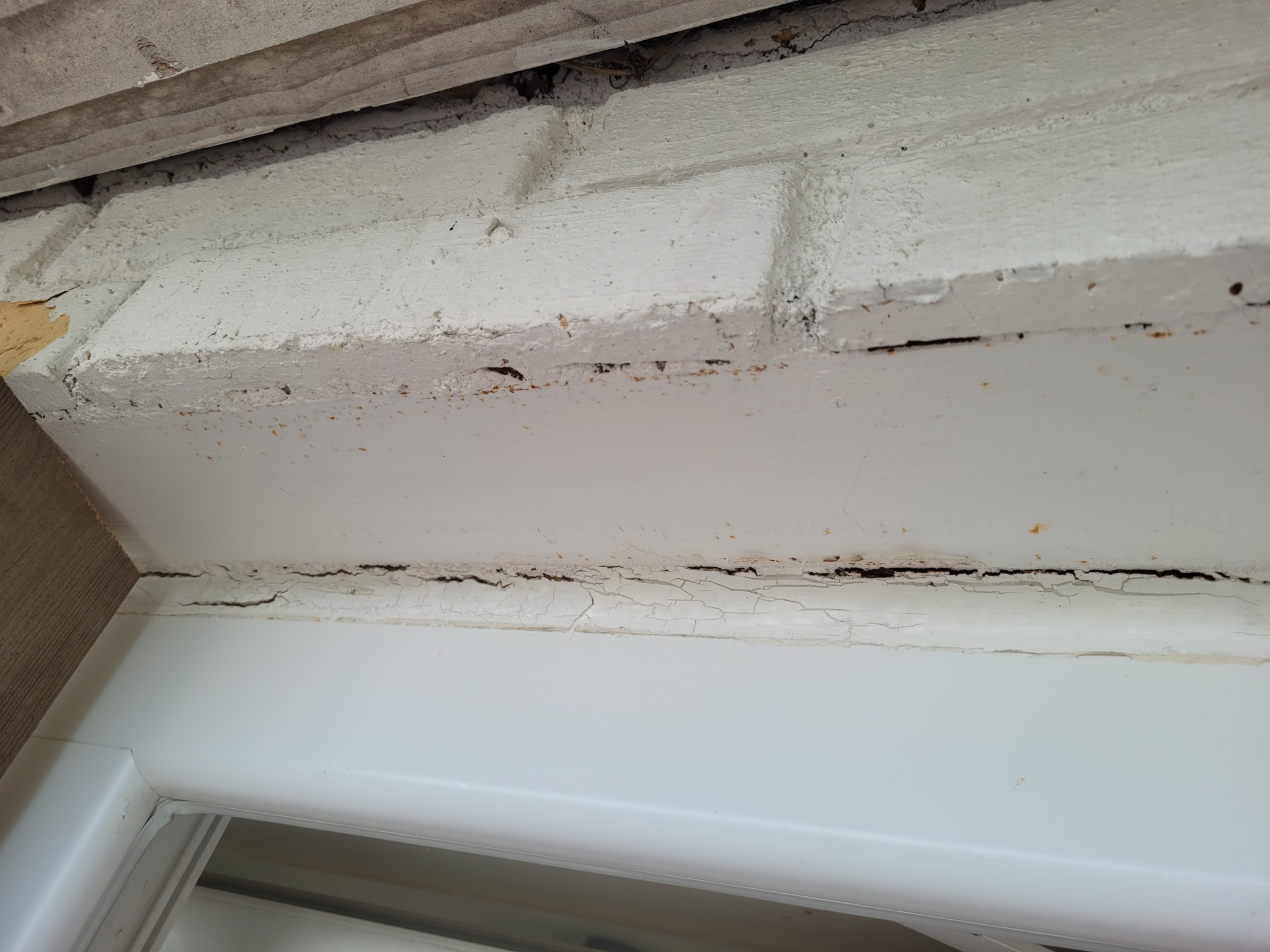
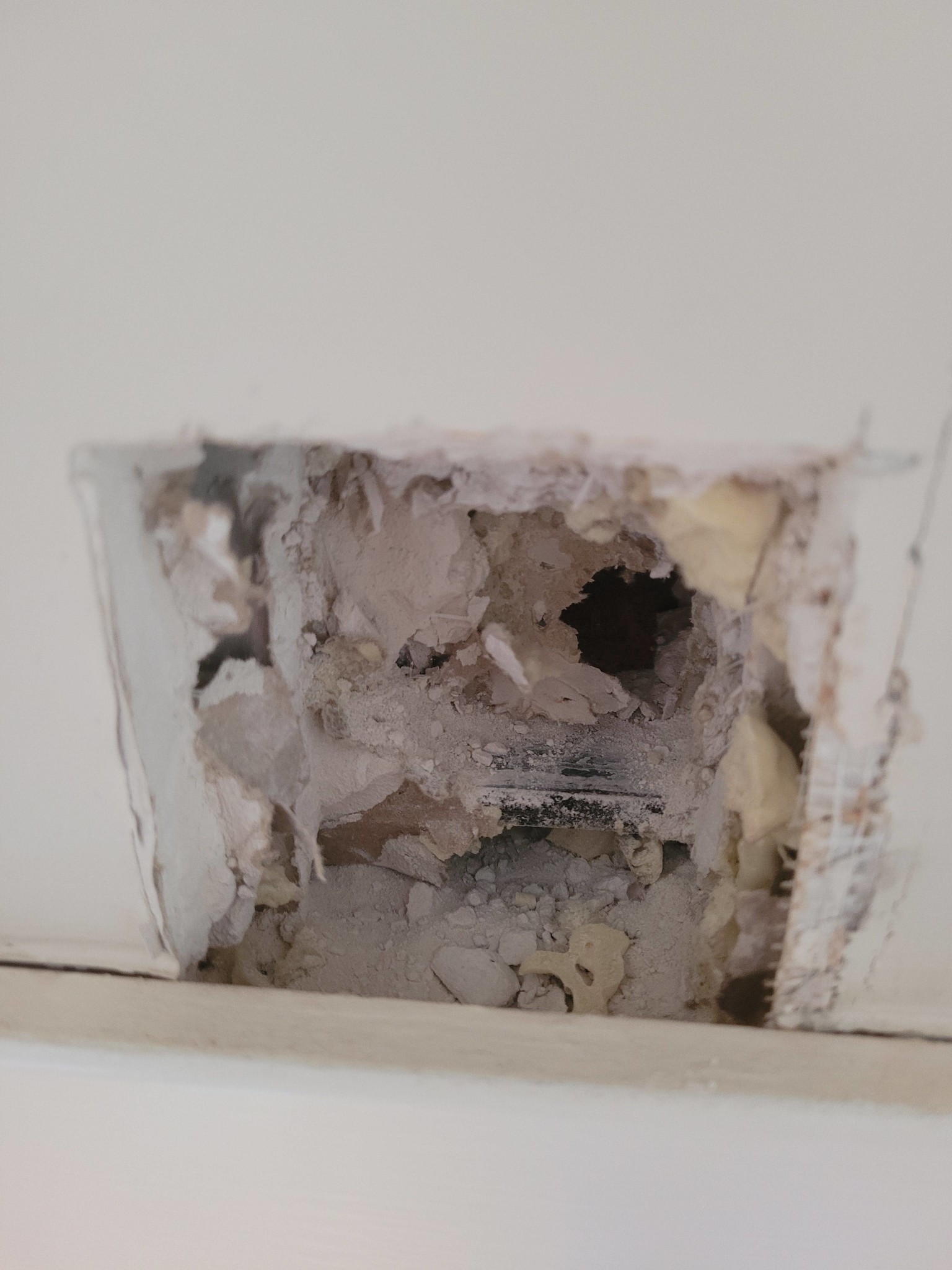
Hello,
Thank you.
Sending two pictures of the steel beam, one from the inside and one from the outside.
Investigating further by reaching out to the builders who constructed the solution.
Yes, we probably need to demolish and rebuild in some way, want to be able to schedule before we make any impact on the dining room.
Regards
Thank you.
Sending two pictures of the steel beam, one from the inside and one from the outside.
Investigating further by reaching out to the builders who constructed the solution.
Yes, we probably need to demolish and rebuild in some way, want to be able to schedule before we make any impact on the dining room.
Regards
Hello again!
After further investigation, we see that the beams are straight but the frame of the patio door is crooked. Pressure comes on one side, the one inside the house. We guess that one of the rafters is pressing down on the middle of the door. Will open up and look further / confirm.
After further investigation, we see that the beams are straight but the frame of the patio door is crooked. Pressure comes on one side, the one inside the house. We guess that one of the rafters is pressing down on the middle of the door. Will open up and look further / confirm.
don't quite understand. If a roof truss is pressing on the door so that it cannot be opened, the beams cannot be straight.David Noorzoy said:
Hello again!
After further investigation, we see that the beams are straight, but the frame of the patio door is crooked. There is pressure on one side, the one inside the house. We guess that one of the roof trusses is pressing down on the middle of the door. Will open up and check further / confirm.
Isn't it the case that they've just put in a small "iron beam" to hold up the bricks?
So they haven't put in any beam to take the load. 280cm isn't a huge span, and I can't understand why they would choose an iron beam in this situation.
So they haven't put in any beam to take the load. 280cm isn't a huge span, and I can't understand why they would choose an iron beam in this situation.
Something doesn't add up in your description. The brick beam on the outside is also affected.
It shouldn't be much work to expose the inside above the door so you can see what's been done. Whether they've recessed a beam? If they have recessed a beam, it spontaneously feels like the beam isn't in contact with what it's supposed to support.
Can't find a better explanation unless the beam is too weak, of course. But I don't think so.
Yes, it's logical as you write. The pressure is on the chipboard and the air gap this side of the beam, the surface that is above the trim of the patio door. The frame of the patio door is bent, not the beams.Viktor.J said:
Hi, thanks. Is the question why the beam wasn't placed to bear the weight of the roof truss? The builder who installed the beam thinks it was placed correctly, but I believe something over the years has impacted the roof truss, we will open up a bit more to check.Krille-72 said:
Something doesn't add up in your description. The brick beam on the outside is also affected.
It can't be much work to expose the inside above the door so you can see what’s been done. Whether they've inserted a beam? If they have inserted a beam, it spontaneously feels like the beam isn't in contact with what it’s supposed to support.
I can't find a better explanation unless the beam is too weak, of course. But I don't think it is.
How have you been doing?
Hello! Thanks for the question.
We have removed panels in the ceiling outside the house and crawled down to the edge of the roof in the attic.
We do not see any problem with sagging trusses or steel beams.
The problem with the sagging ceiling in the dining room appears from the middle of the dining room to the patio door.
We now believe it's because the previous owner removed a load-bearing wall in the kitchen when they wanted to open up and create a kitchen island.
One measure is to lift and find the support in the attic, which involves rebuilding ventilation ducts. We believe it will stop sagging in the middle of the kitchen ceiling, and we will address the patio door by removing the inner wall (4-5 cm drywall and air gap) and replacing it with 45mm studs along the entire inner wall for support. A consequence will be that the kitchen wall will move inward by 2-3 cm.
It doesn't feel safe in any way, but it is quite likely that the ceiling by the patio door will stop sagging.
We have removed panels in the ceiling outside the house and crawled down to the edge of the roof in the attic.
We do not see any problem with sagging trusses or steel beams.
The problem with the sagging ceiling in the dining room appears from the middle of the dining room to the patio door.
We now believe it's because the previous owner removed a load-bearing wall in the kitchen when they wanted to open up and create a kitchen island.
One measure is to lift and find the support in the attic, which involves rebuilding ventilation ducts. We believe it will stop sagging in the middle of the kitchen ceiling, and we will address the patio door by removing the inner wall (4-5 cm drywall and air gap) and replacing it with 45mm studs along the entire inner wall for support. A consequence will be that the kitchen wall will move inward by 2-3 cm.
It doesn't feel safe in any way, but it is quite likely that the ceiling by the patio door will stop sagging.
Click here to reply