Hello!
There are so many knowledgeable people here, so I thought I'd ask if someone can answer a question. We have a house from 1908 that has been renovated several times over the years, new wiring, basement excavation, etc.
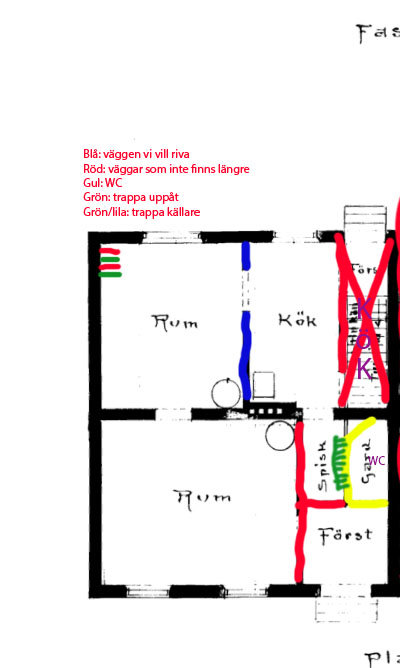
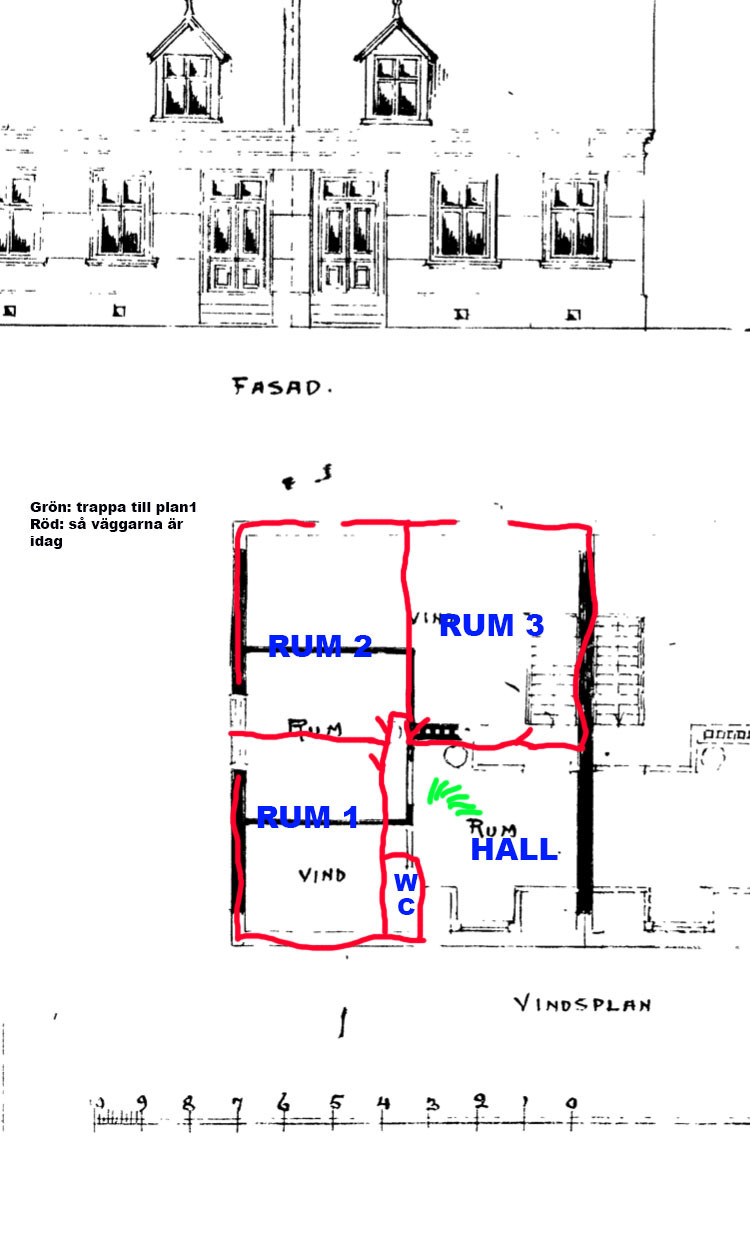
We've lived here for a year now and have gotten some ideas on how we want it to look to feel comfortable. To my problem: We want to remove the wall between our kitchen and kitchen hall to create one large space, but I'm a bit worried it might affect the house's structure. I have all the plans for the house and have drawn on the images how our floors look in the house. Note: I apologize right away for it not being nicely done, but I hope you understand, ask if there's anything you need to know
Grateful for answers
Impossible to assess without more facts and conditions, which need to be seen on site.
Contact a structural engineer and ask for an assessment.
You will also get suggestions on how a change could be implemented (if possible).
For example, it is common to use a glulam beam in the ceiling for support.
Impossible, I hope not :-0
Hate being so ignorant in these areas and don't want the house to collapse, but I feel that if you install a larger model of a limträbalk, you should be good to go
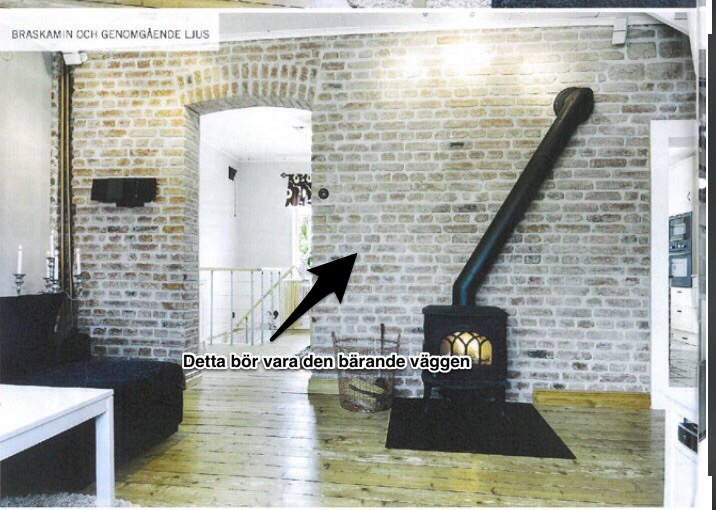
It seems that the trusses and beams run in the opposite direction, and that the wall in the middle horizontally is the load-bearing one.
The easiest way is probably to make a larger hole in the ceiling near the wall you want to demolish and see if there are any beams that load it perpendicularly and thereby use it as support.
No need to bring an engineer there if it turns out you won't be altering the load-bearing structure.
Seem a bit agitated response?
I didn't mean to just slap up a glulam beam without advice, I mean even if it's not a load-bearing wall maybe it's better to put one up anyway for stability
Hehe. If it's not load-bearing, a beam doesn't provide much extra stability. The entire roof is probably full of stabilizing beams in the same direction.
I agree that one or more peepholes to see the load directions on the floor joists is the best. It might be possible to see the direction of the floorboards if they are visible (perpendicular to the beams). The floor joists over the "kitchen" are likely parallel to the blue wall because it has apparently been possible to remove the wall between the kitchen and the stairs, and the flooring in the adjacent room likely has the same direction if the trusses are similar, but it's hard to be completely sure... In our house from 1868, the load direction varies in different rooms next to each other in the flooring between the 1st and 2nd floors...
I agree that one or more inspection holes to see the load-bearing directions of the floor joists is the best option. Maybe it's possible to see the direction of the floorboards if they are visible (perpendicular to the joists). The floor joists over the "kitchen" are probably parallel to the blue wall since apparently, they were previously able to remove the wall between the kitchen and staircase, and it is likely that the joists in the adjacent room have the same direction if the roof trusses are the same, but being completely sure is difficult.
In our house from 1868, the load-bearing direction varies in different adjacent rooms in the joists between the 1st and 2nd floor
I'll send pictures if it helps
Last edited:
Click here to reply
Vi vill skicka notiser för ämnen du bevakar och händelser som berör dig.