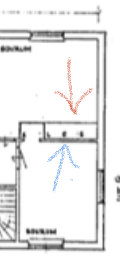
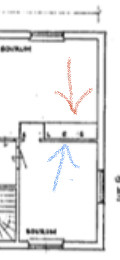
We have a built-in wardrobe that we want to reverse, i.e., close off from one side (children's room and red arrow) and open it up towards our room (blue arrow). We received a quote from a construction company to put up a new wall and open it up according to our wishes, and according to them, the wall is not load-bearing. However, the quote was way too expensive (36,000 SEK to tear down, set up a drywall, and plaster the seams, excluding materials), so we're doing it ourselves.
Now I want to ask you about two things:
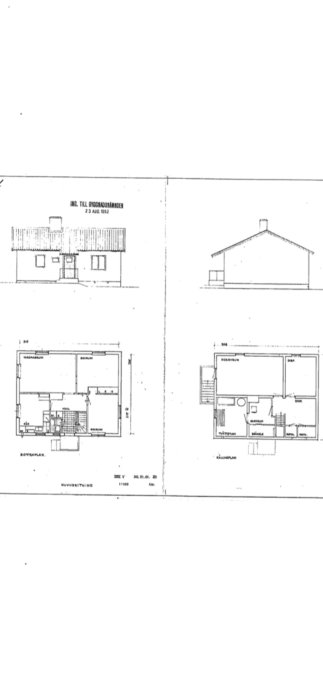
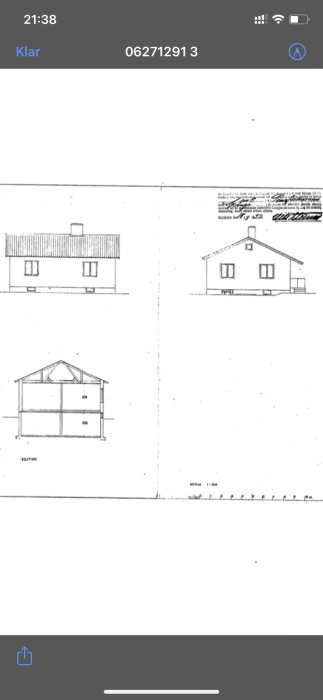
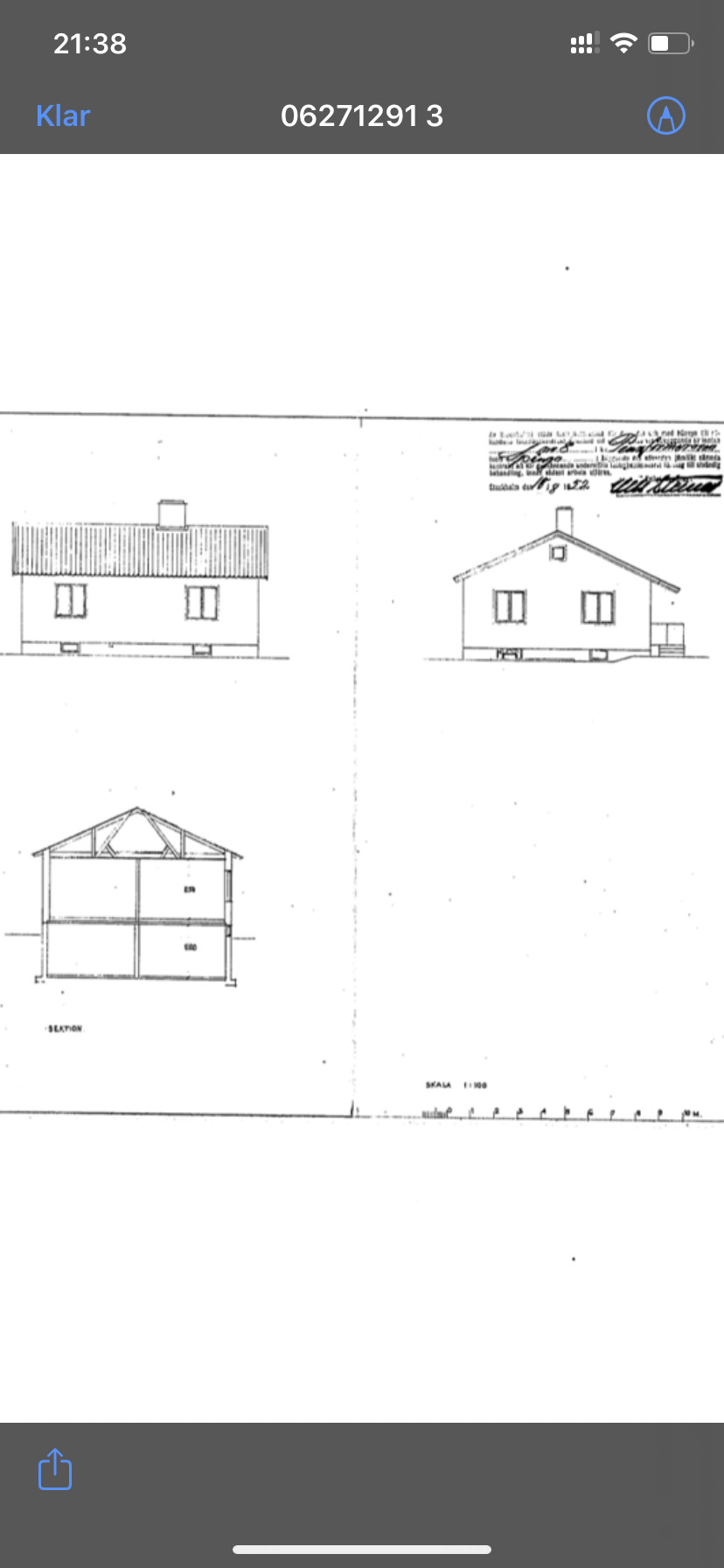
Is there a risk that the wall is load-bearing? See pictures.
The wall is (like almost all walls here at home) made of lättbetong - how do I prevent excessive dust?
I was thinking of using a reciprocating saw and a rotary hammer..
The wall is likely non-load-bearing. The truss is according to the drawing self-supporting, and the load is carried by the outer walls. Assuming, of course, that it is built as it is drawn...
The wall is probably non-load bearing. The truss is freestanding according to the drawing, and the load is taken up by the outer walls. Assuming, of course, that it is built as it is drawn...
Thanks, I'm a bit concerned about "Assuming, of course, that it is built as it is drawn" - does it often happen that there are significant deviations, or what did you have in mind? Otherwise, it sounded like the company that was here...
Click here to reply
Vi vill skicka notiser för ämnen du bevakar och händelser som berör dig.


fahlis said: