I have been hit with a building halt because my wife is questioning the wisdom of tearing down an interior wall. So I'm posting some info here in the hopes of getting more insights.
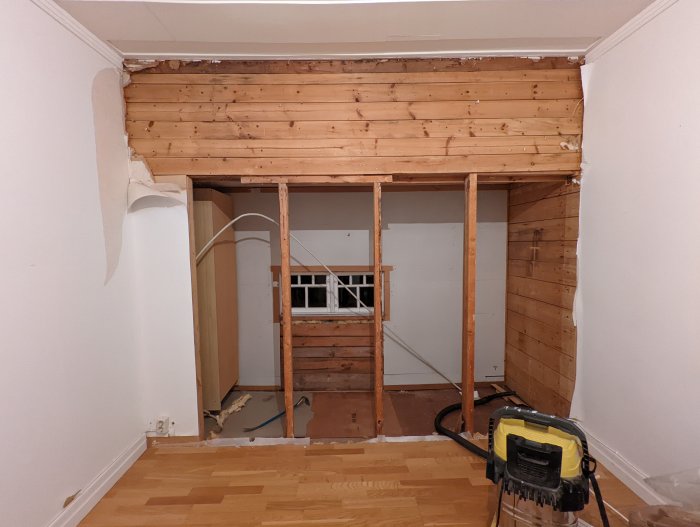
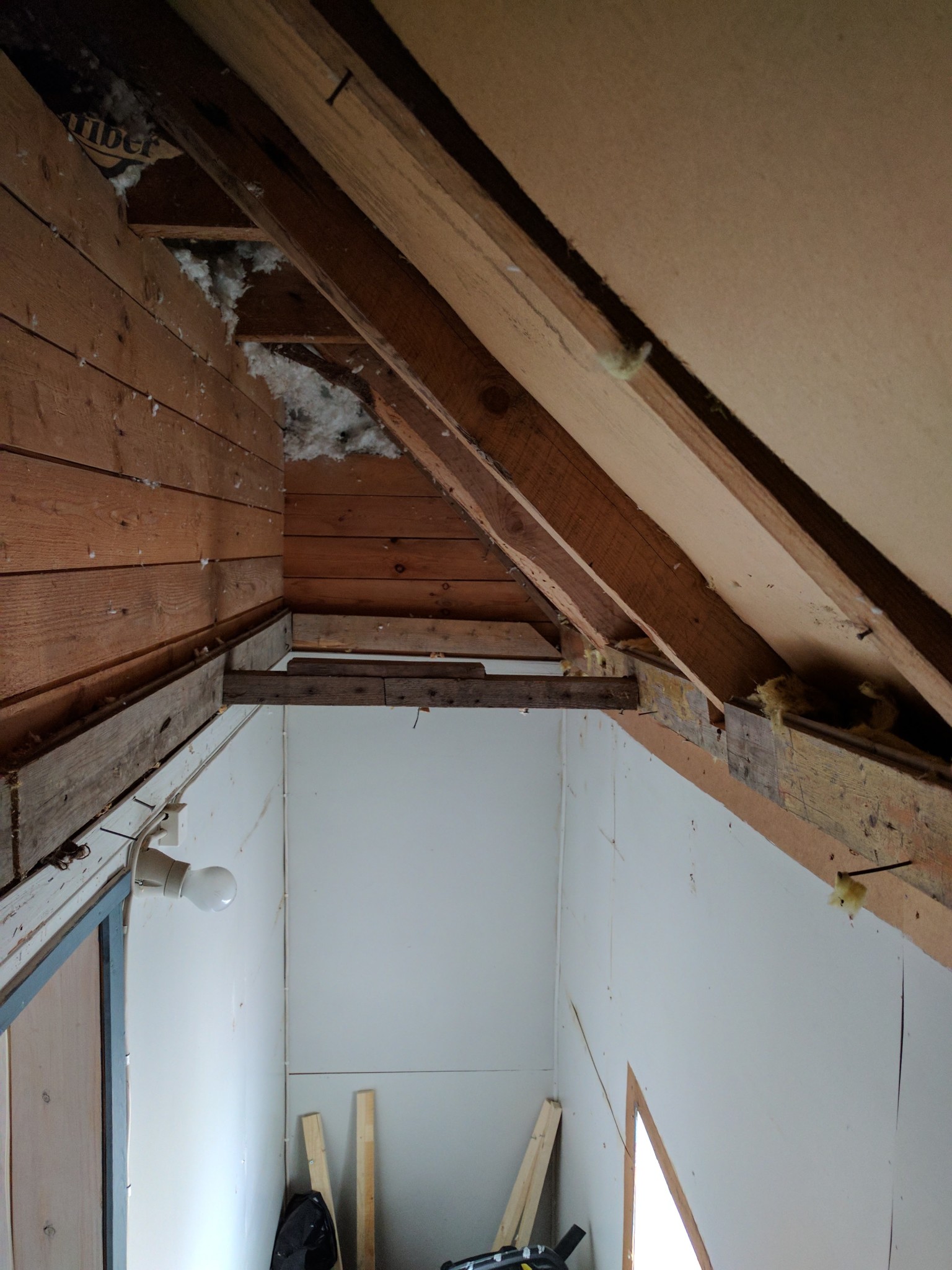
The wall is on the second floor and is commonly referred to as a knee wall. It is a narrow space, maybe about a meter wide, where the ceiling has been lower and a wall.
I have modified such a space before. I didn't tear down the wall but just converted the lower ceiling into a sloped ceiling based on the angle of the roof truss. My opinion then was that the plank wall didn't have any load-bearing function.
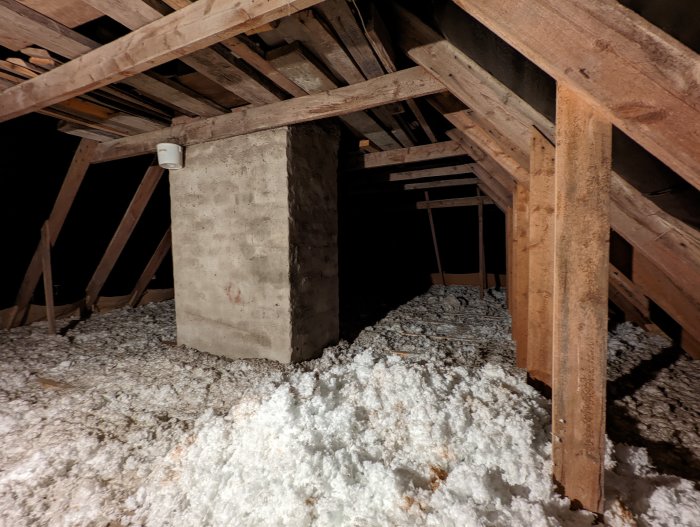
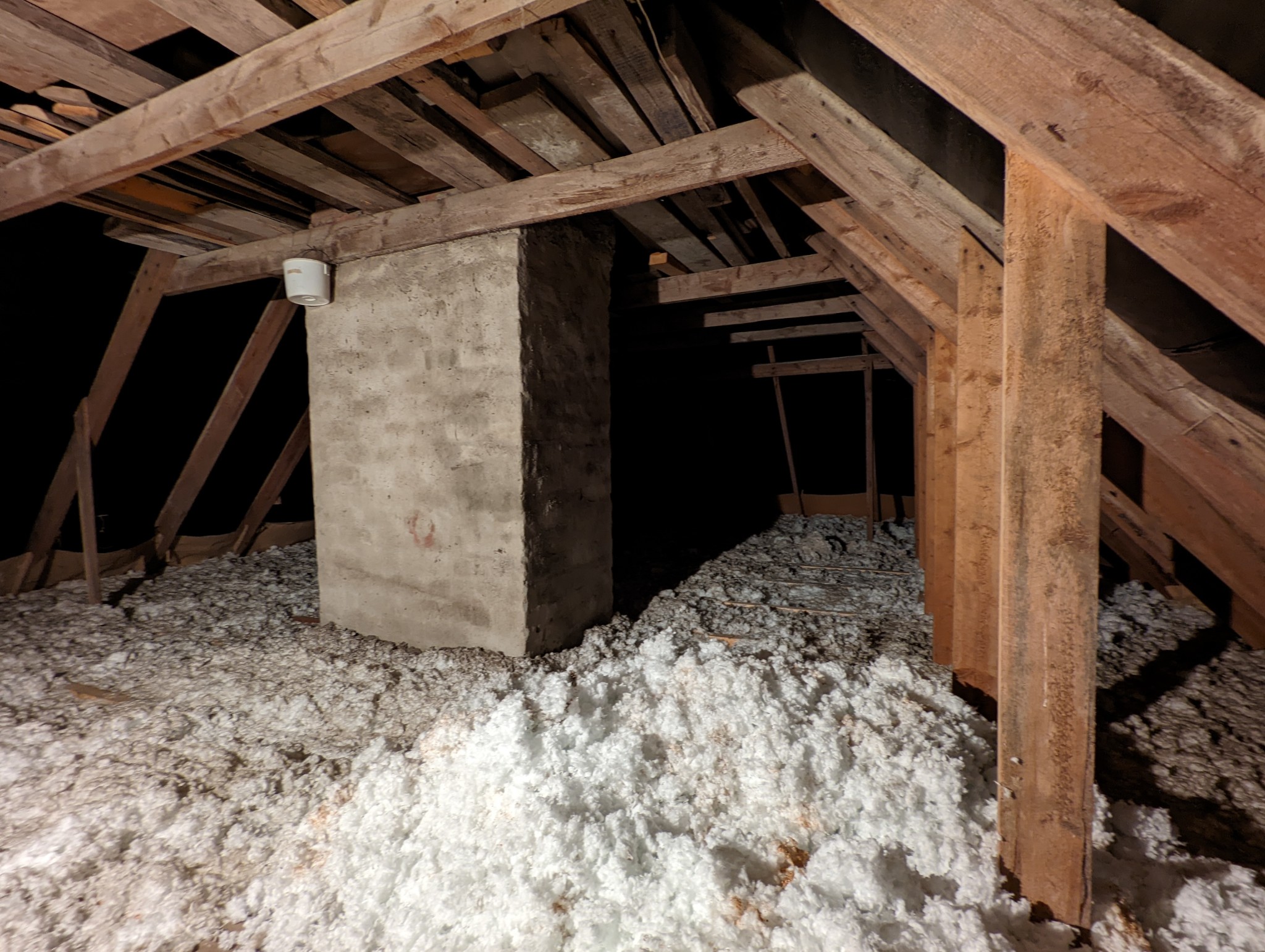
This is on the second floor of a house from 1926. I am sending a picture from the attic that might reveal something essential about the construction of the roof truss.
On the floor below, there is nothing that takes up the loads from the interior wall on the upper floor, only a regular outer wall.
I could write more but I am so incredibly tired right now so I'll end it for this time to avoid confusing more than I explain. But feel free to ask questions and give feedback!
The wall above has been adjusted before as there were four built-in closets there.
A slightly unusual construction with double collar beams. In what way do the vertical studs visible in the first image have contact with the lower collar beams?
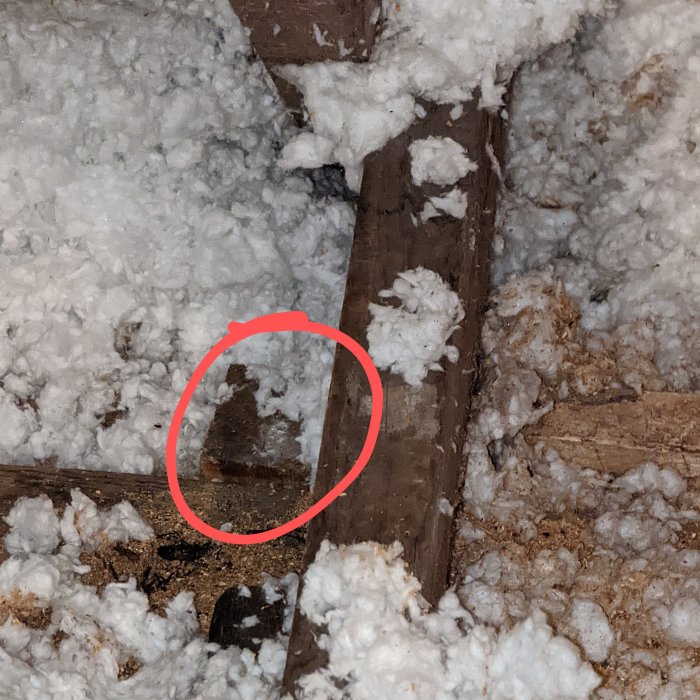
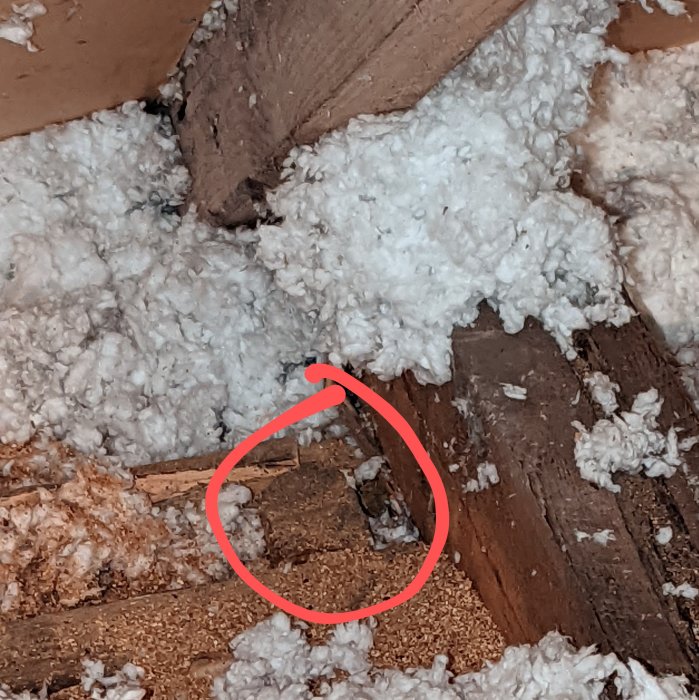
I have now rummaged around the insulation in the attic and found that two of the posts, as far as I can understand, do not have contact with the rafters at all but end at the level of the wall's top plank.
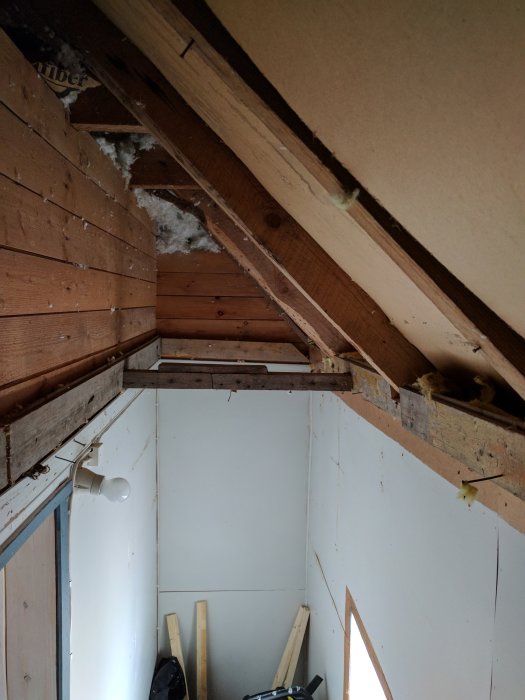
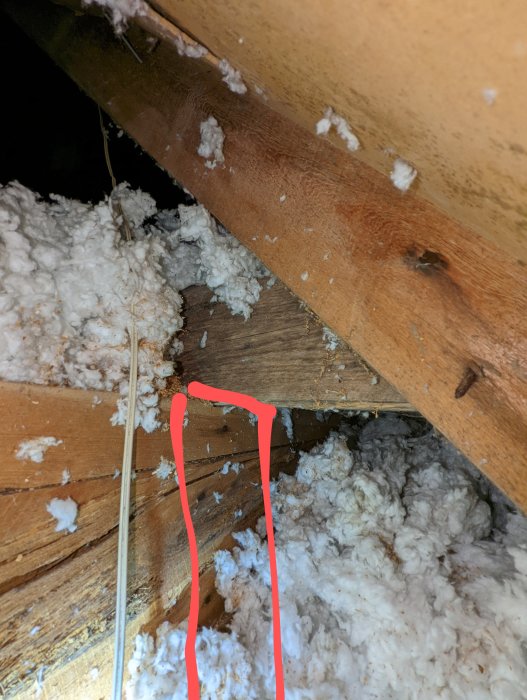
Now I'm a bit uncertain myself. I have opened up the lower ceiling and in the picture, the red marking shows how one of the regler goes up and rests against the horizontal lower part of the roof truss.
At the other end of the truss, there is no beam or interior wall as shown in the picture, but instead, the weight is supported solely by the outer wall. However, that doesn't necessarily mean it's correct. Looking forward to more input from those of you who know about this!
At the other end of the roof truss, there's no beam or inner wall as shown in the picture; instead, the weight is supported solely by the outer wall. But that doesn't necessarily mean it's correct. Looking forward to more opinions from those who know about this!
Handle this with great care, a high risk of serious subsidence in the roof and outer wall, seek help from a competent designer!
SS_B_O said:
I've been hit with a construction stop because my wife questions the wisdom of tearing down an inner wall. So I'm posting some info here hoping to get more solid ground.
The wall is on the second floor and is, well, what you usually call a type of knee wall. It's a narrow space about a meter where it's been lower in the ceiling and a wall.
I've redone such a space before. I didn't tear down the wall but just transformed the lower ceiling to a sloped ceiling based on the roof truss's angle. My impression then was that the plank wall didn't have any load-bearing function.
This is on the second floor of a house from 1926. I'm sending a picture from the attic that might reveal something essential about the roof truss's construction.
On the floor below, there's nothing that takes up the loads from the inner wall on the upper floor, just a regular outer wall.
I could write more but am so insanely tired right now that I will stop for this time to not confuse more than I explain. But please come with questions and comments!
[image]
The wall above has previously been opened since there were four built-in wardrobes there.
Collar ties are primarily subjected to tensile forces. They are not meant to lift the roof truss. My interpretation is that the rafters of the roof trusses rest directly on the outer walls, meaning that your knee walls or parts of them are not load-bearing.
Tie beams are primarily subject to tensile forces. They are not meant to lift the roof truss. My interpretation is that the rafters' high legs rest directly on the outer walls, meaning that your knee wall sections or parts of them are not load-bearing.
My hope is that they align as you describe. But I will wait a little longer before proceeding. Hopefully, I can find someone to check it on-site.
Collar beams are primarily subject to tensile forces. They are not meant to lift the roof truss. My interpretation is that the rafters rest directly on the exterior walls, meaning that your knee walls or parts of them are not load-bearing.
Is there any picture I could upload that might help you determine how things stand?
As @justusandersson wrote, the forearm being only subject to tension can be a truth with modifications; you need to know what the construction looks like with the salvage on the floor below. But apart from this, regardless of what you intend, support wall legs in old, rickety buildings tend to become load-bearing even if you don't want them to. I consider it impossible to assess from the pictures, so my advice remains: seek qualified help!
If right should be right, he didn't just write, but primarily. But I take to heart what you write and am working on getting someone home to look at it. Thanks for your input!
Vi vill skicka notiser för ämnen du bevakar och händelser som berör dig.