
Hello
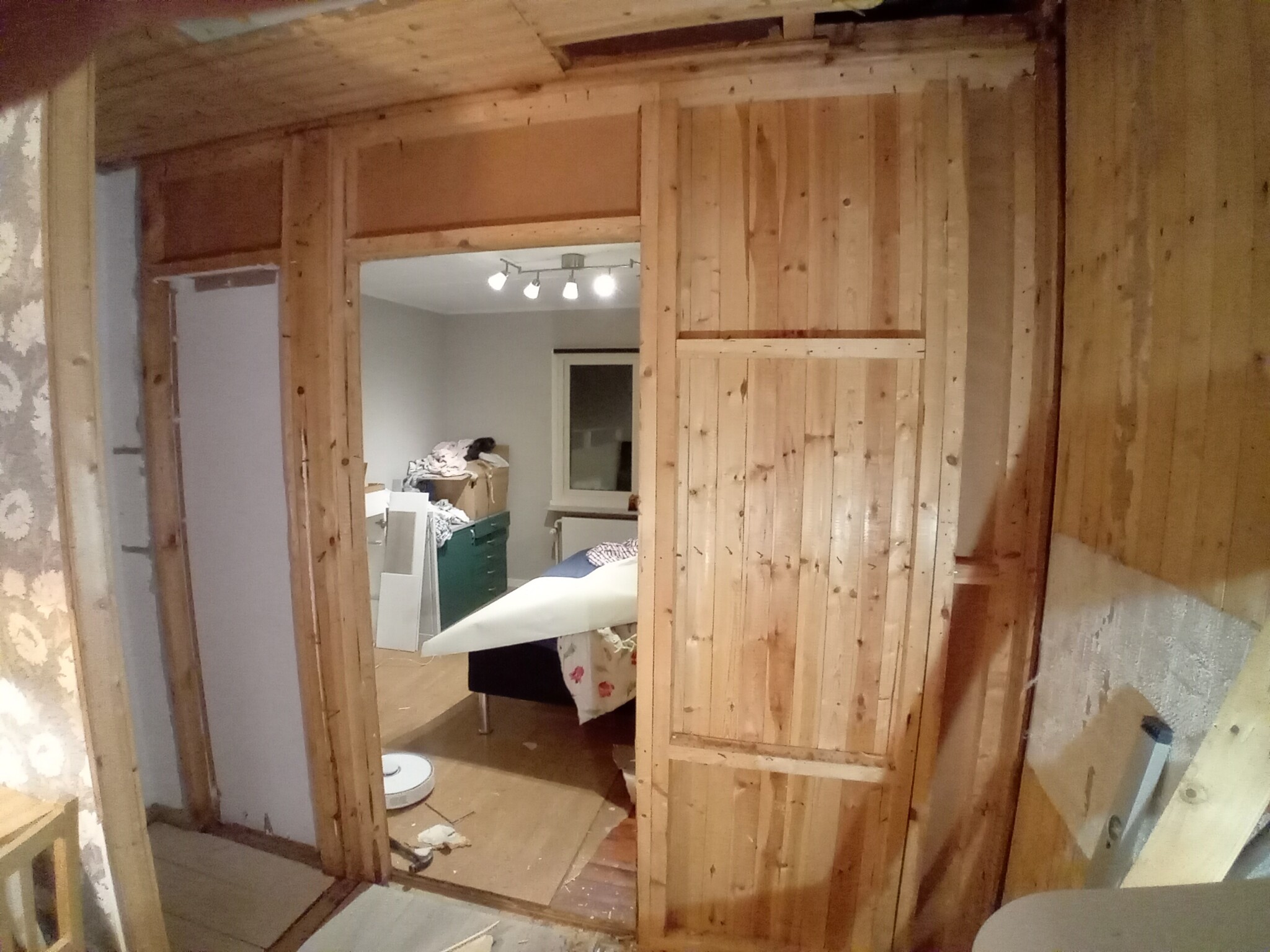
I have a wall that I want to take down, I'm quite sure it's load-bearing. The house is built of wood, from the 50s, with an upper floor and a basement.
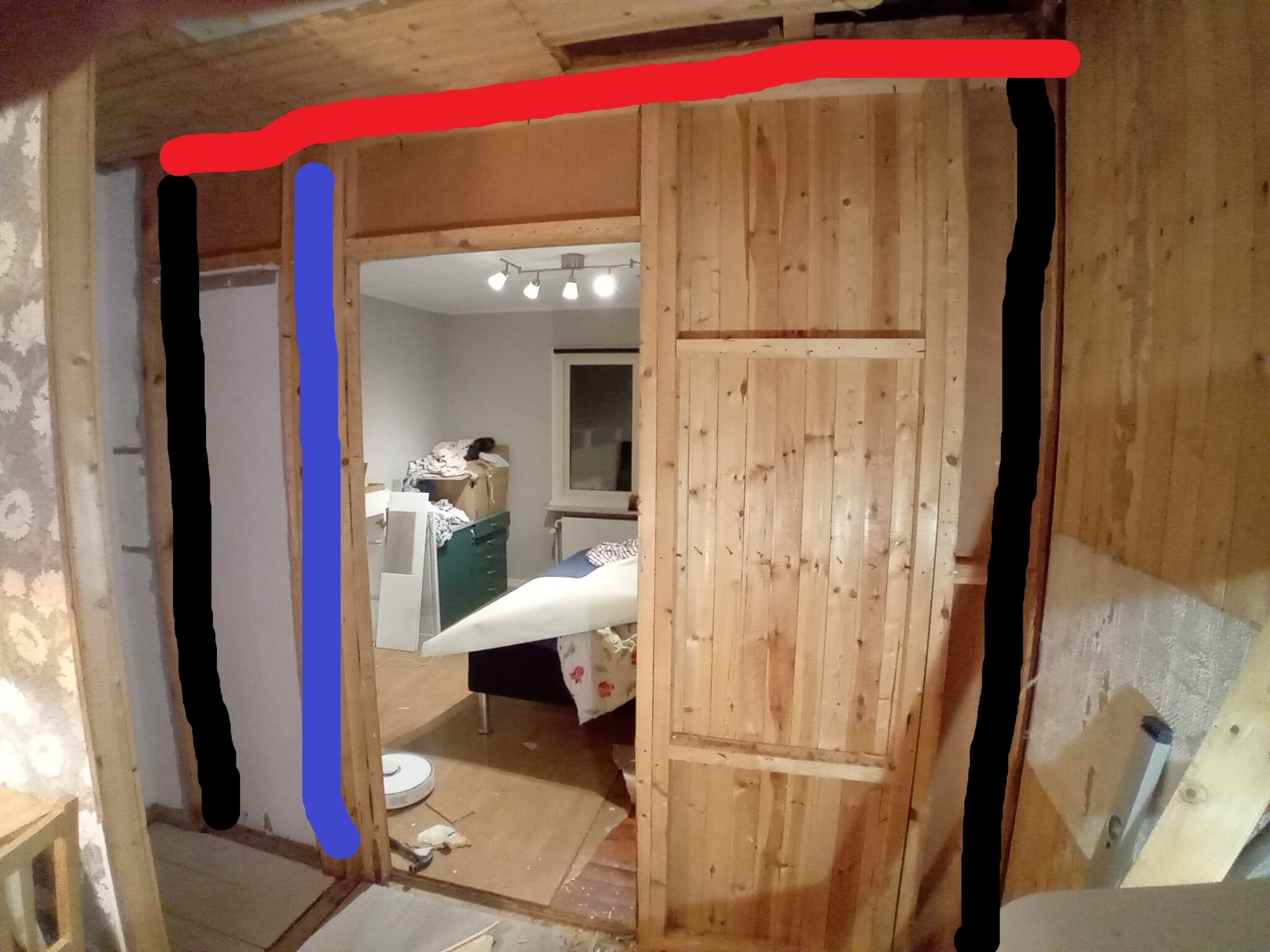
I'm planning to build a new wall about 500 mm to one side and another one 700 mm to the other side, as it will become a bathroom.
I don't think they can bear the load since they are positioned outside the wall in the basement, I assume the load from the load-bearing wall is there precisely because it rests on the wall in the basement.
So I'll need to offload it with a glulam beam or steel I-beam, the ceiling is high (2500 mm), so there is room.
The first picture shows how the wall looks, and the second picture shows how I plan to offload it.
Blue = Larger stud 95x95 mm, the remaining studs are 58x46 mm, clad with rough boards on both sides.
Black = new studs (pillars)
Red = new beam, 2700 mm
Far left in the picture stands the chimney.
The question is what dimensions should I aim for? I think it's better to go a bit bigger.
I have a wall that I want to take down, I'm quite sure it's load-bearing. The house is built of wood, from the 50s, with an upper floor and a basement.
I'm planning to build a new wall about 500 mm to one side and another one 700 mm to the other side, as it will become a bathroom.
I don't think they can bear the load since they are positioned outside the wall in the basement, I assume the load from the load-bearing wall is there precisely because it rests on the wall in the basement.
So I'll need to offload it with a glulam beam or steel I-beam, the ceiling is high (2500 mm), so there is room.
The first picture shows how the wall looks, and the second picture shows how I plan to offload it.
Blue = Larger stud 95x95 mm, the remaining studs are 58x46 mm, clad with rough boards on both sides.
Black = new studs (pillars)
Red = new beam, 2700 mm
Far left in the picture stands the chimney.
The question is what dimensions should I aim for? I think it's better to go a bit bigger.


I would say that there is too little information to know the appropriate dimensions as it also depends on things like the weight of the roof, snow zone, etc.
Intervention in load-bearing structures should normally be reported to the municipality, which must approve it before the demolition begins.
Intervention in load-bearing structures should normally be reported to the municipality, which must approve it before the demolition begins.
Overall, it looks weak to be a load-bearing wall...
Possibly you have a load-bearing column (where you yourself thought of placing a column) but I don't see anything else that looks sturdy enough to be load-bearing...
Do you have any drawings of the house?
Possibly you have a load-bearing column (where you yourself thought of placing a column) but I don't see anything else that looks sturdy enough to be load-bearing...
Do you have any drawings of the house?
HiViolina said:
Yes, that was my first thought as well, but the floor joists on the upper floor seem to rest on it, although it's strange that it should support 1/3 of the entire upper floor, especially since it's weak with many layers. See pictures below.
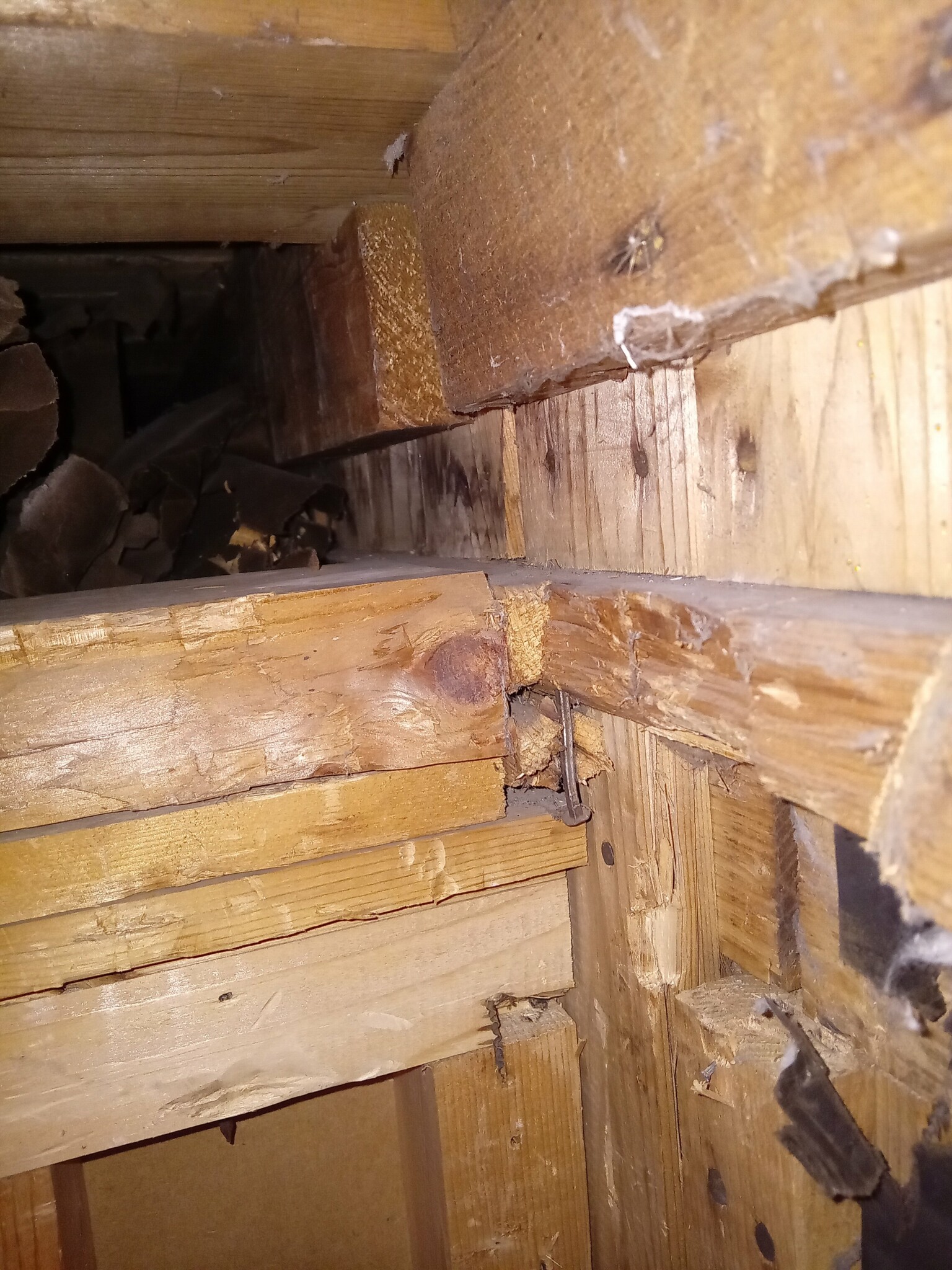
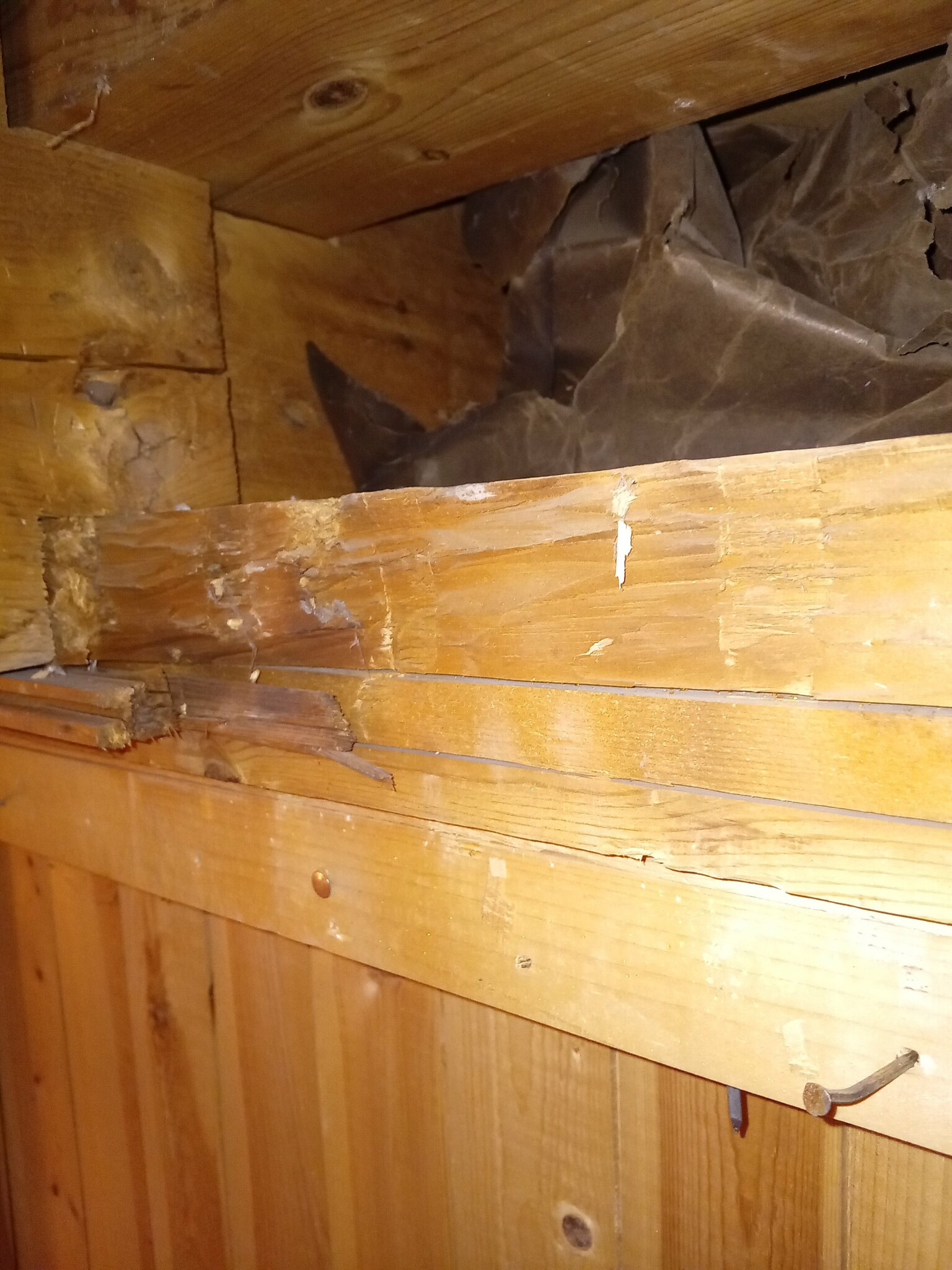
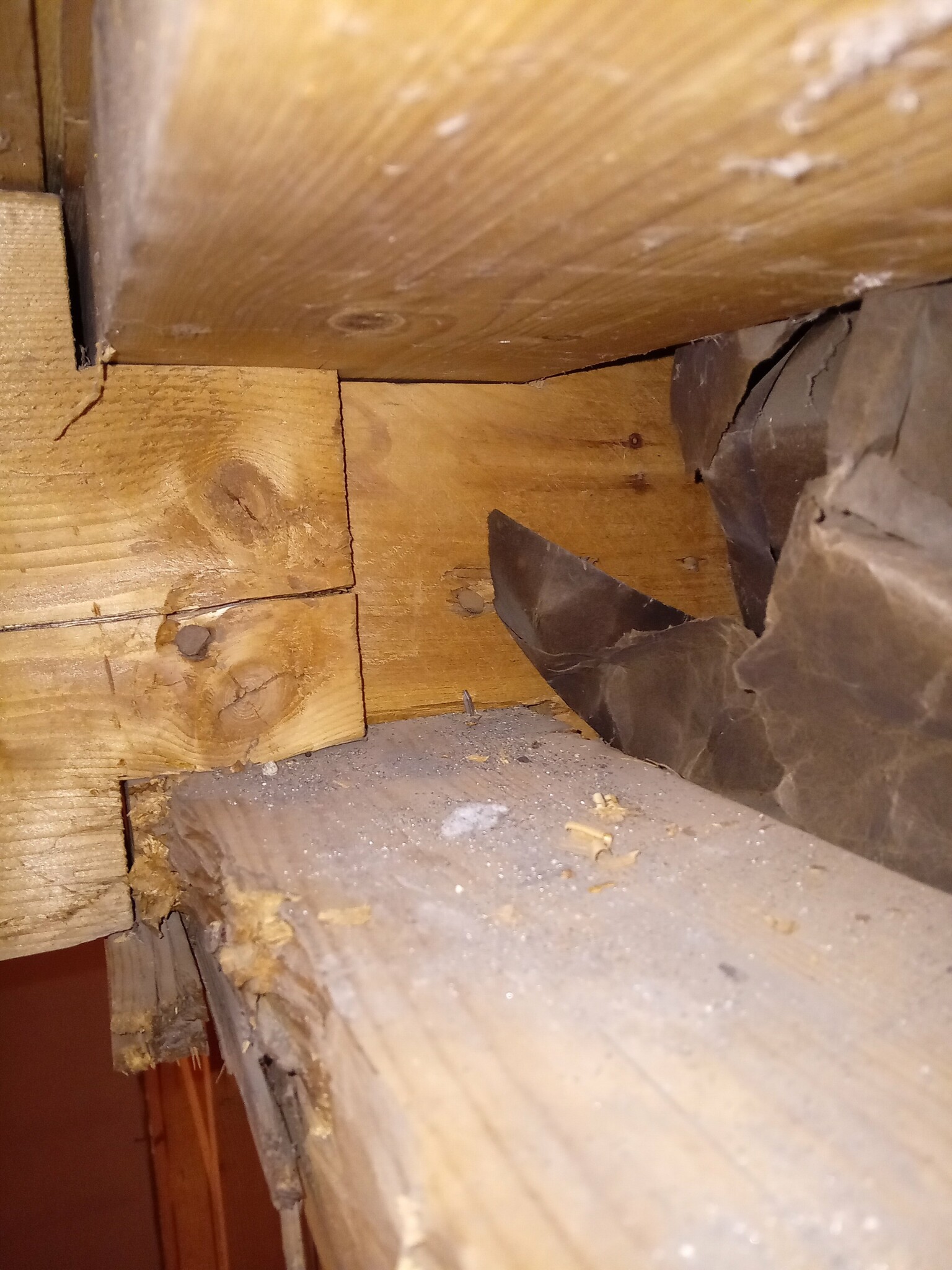
As mentioned, you need an engineer before proceeding, but the conditions looked essentially identical from what I can see in your pictures of a place where I did the same maneuver and we had a very good engineer involved. It's a plank wall, and the floor joists seem to run across the wall, making it most likely load-bearing. Snow zone affects the dimension.
If you're only opening between the blue line and the right black one you've drawn, there's probably no reason to extend the beam to the left, as the beam only supports the opening—unless there are practical reasons.
Otherwise, just brace on each side; the brace should ideally stand on double planks over most of the length you're removing. Place them so you can securely insert the beam later, or lay the beam inside against the brace first. Dismantle carefully and be alert if the saw pinches — that's a sign there's load on the wall.
But again, contact an engineer to get a calculation.
If you're only opening between the blue line and the right black one you've drawn, there's probably no reason to extend the beam to the left, as the beam only supports the opening—unless there are practical reasons.
Otherwise, just brace on each side; the brace should ideally stand on double planks over most of the length you're removing. Place them so you can securely insert the beam later, or lay the beam inside against the brace first. Dismantle carefully and be alert if the saw pinches — that's a sign there's load on the wall.
But again, contact an engineer to get a calculation.
Yep, looking for someone who can check it. Thanks for all the ideas.mexitegel said:
As mentioned, you need a designer before you proceed, but the conditions looked practically identical from what I can see from your pictures, to a place where I did the same maneuver with a very good designer involved. It is a plank wall and the floor joist seems to go across the wall, so it is highly likely to be load-bearing. The snow zone affects the dimension.
If you're just going to open between the blue rule and the right black one you've drawn, there's probably no reason for you to extend the beam past the left, as the beam just relieves the opening - unless there are practical reasons.
Otherwise, you just support each side, the support should preferably be on double planks over most of the length you plan to remove. Position them so you can surely fit the beam afterward, or place the beam inside the support first. Tear down carefully and be alert if the saw binds, as that's a sign you have load on the wall.
But again, contact a designer so you get a calculation.
Click here to reply