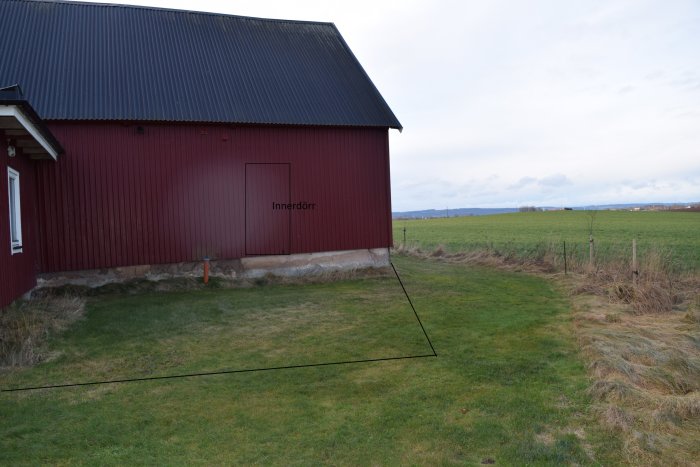
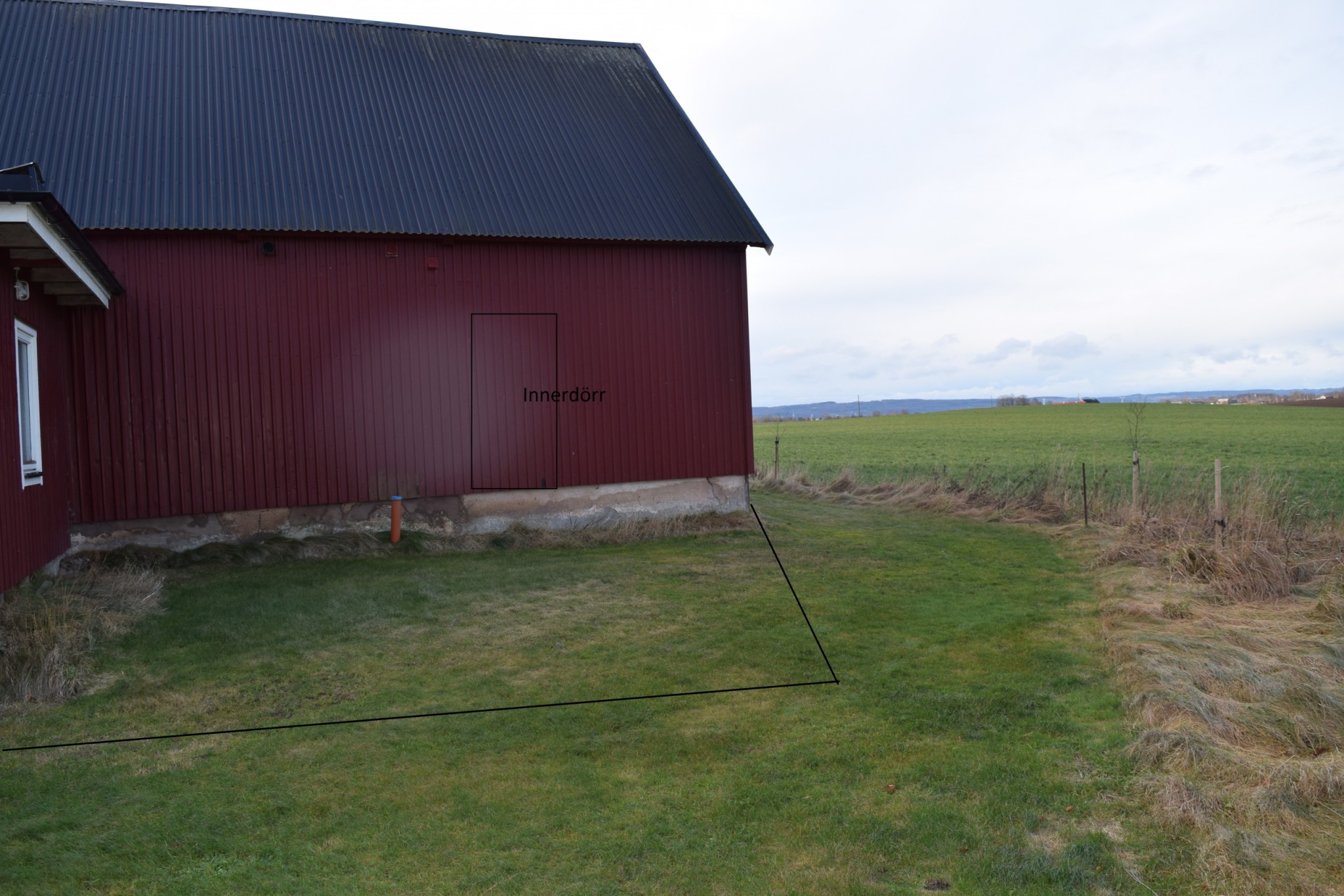
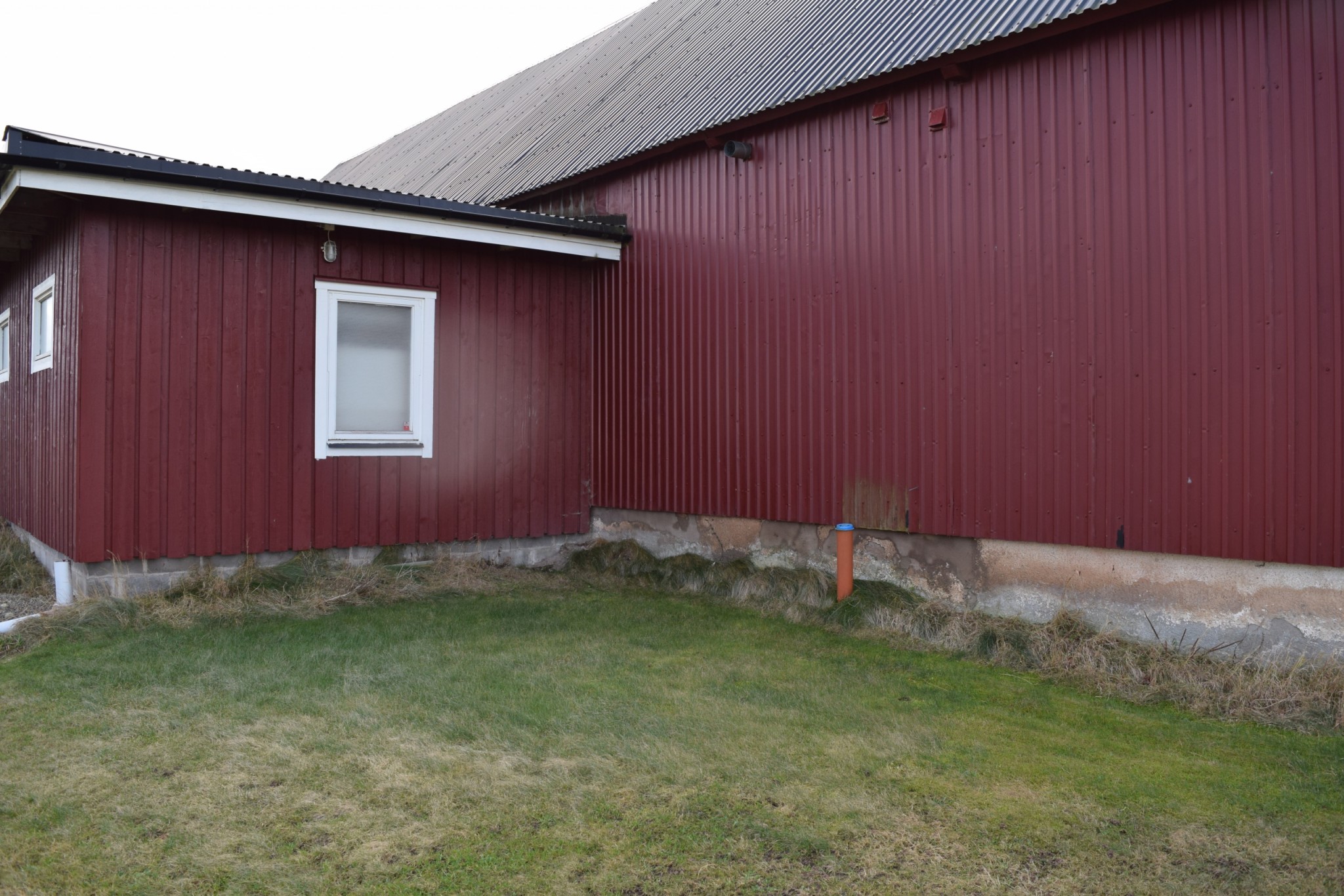
I am at the starting point for this year's various small planning projects. This includes building two bedrooms totaling about 40sqm in an existing apartment.
The question is, how would you solve the foundation here most economically?
The rest of the apartment has an old potato cellar underneath it, which could be called a crawl space foundation. The floor level in the apartment is about 60cm above ground level where there is a framed joist floor.
There are considerations of pouring concrete in another part of the property at the same time, and I'm thinking that if the concrete truck is coming here anyway, I might as well pour a slab on grade?
One could say that the apartment is built inside the barn's shell. On this side, there are temporary planks with metal sheets outside as the exterior wall.
Is it insane to cast an uninsulated slab on grade, then build up three rows of leca and then frame a floor structure on the lecablocks? This would place the floor level at about 60cm, which is in line with the rest of the apartment floor....
I will cast another garage slab at the same time and thought it doesn't cost much to let the concrete truck pour concrete for these extra 40sqm. Then I have to frame up 60cm to avoid level differences and thermal bridges in the apartment.
Have searched online but can someone explain the simplest way to create a crawl space?
Material under foundation wall? Fill in the crawl space? Procedure for casting foundation wall?
I will have a concrete truck on site that will pour another slab on grade and I am thinking I can also get concrete for, e.g., the foundation wall in this project at the same time.
In my project, I assume that I only need foundation walls on 2 out of 4 sides, not the sides that border adjacent buildings?
As I understand it, a crawl space is a risk construction, and there are two ways to minimize the risk of moisture problems:
1) Warm foundation
2) Dehumidifier
I consider a warm foundation the only acceptable solution for new construction. A dehumidifier is an emergency solution for existing foundations.
An alternative to a warm foundation is to fill the foundation with Leca balls or Hasopor, (but I have the impression that Hasopor is more expensive). The method has been used in some old farmstead foundations. If you intend to lay tight floors, the floor should probably be ventilated underneath. Ventilated baseboards are likely sufficient.