
7,462 views ·
36 replies
7k views
36 replies
Supporting beam for 10 meters with a column in the middle?
Yes, then it will probably be necessary to find a mexibalk that is similar, and you need to make a transition in the load-bearing part of the wall (the mexi doesn't carry anything and is just for appearance)
The load-bearing part is probably easier than the tegelbalk, mexi is not always easy to work with...
The load-bearing part is probably easier than the tegelbalk, mexi is not always easy to work with...

The red-marked wall is the only part of the supporting central structure that is constructed as a wall. Otherwise, there are beams that rest on columns. The base slab is reinforced with footings under the column attachments and under the red-marked wall to handle the increased load. If you also want to replace the red wall with a beam, the columns on either side will probably need to be doubled. Removing any of these columns is unrealistic because the increased span will require a very high beam, roughly 215x585 mm in glulam. Looking at the floor plan, it's hard to see how it would improve.
Ok, so if I keep all the current beams and place 1 identical beam right next to the 2 beams on either side of the red wall, can I manage with a smaller dimension steel beam in between? About 3600 mm.J justusandersson said:The red-marked wall is the only part of the load-bearing central structure that is constructed as a wall. Otherwise, there are beams resting on columns. The foundation slab is reinforced with thickened areas under the column bases and under the red-marked wall to handle the increased load. If you want to replace the red wall with a beam, the columns on either side probably need to be doubled. Removing any of these columns is unrealistic as the increased span would require a much taller beam, approximately 215x585 mm in glued laminated timber. Looking at the floor plan, I struggle to see how it would be improved.
And what do you think about the entrance opening?
Can I close up the current one and just build the outer wall to later open up the current window to 1400 mm and place the entrance door there without any support beams anywhere? Or how should I proceed?
Yes, it's about HEA 160-HEA 180. To question two, I answer: it depends. I assume the house has a wooden frame with an exterior stone facade? In that case, there is probably already a lintel above the window today. Then it depends on how it is constructed and at what height it is located. But there are no principal problems, only practical ones. You will have to expose the wall cladding on the inside and repair as needed. The spans are so short that no large beams are required. Restoring the stone facade to look nice is another challenge.
So should I go for an HEA 180 to be on the safe side?J justusandersson said:Yes, it concerns HEA 160-HEA 180. To the second question, I answer: it depends. I assume the house has a wooden frame with exterior facade stone? If so, there is probably already a lintel above the window today. Then it depends on how it is constructed and at what height it is. But there are no principal problems, only practical ones. You need to expose the wall cladding on the inside and repair according to the situation. These are such short spans that no large beams are required. Repairing the facade stone to make it look nice is another challenge.
Just to clarify, these new pillars are placed on the concrete slab? On some form of plate or directly on the concrete?
Should I still bring in a structural engineer to look at it or is a skilled carpenter enough?
What does it mean to expose the wall cladding on the inside and repair according to the situation?
Repairing the facade stone is only a visual challenge that I should be able to manage and the facade is also to be painted. Nevertheless, I wonder if a lintel is really needed?
You need to calculate more accurately using detailed drawings. HEA 160-180 is just a ballpark estimate based on the drawing you have posted in the thread. All steel columns need a baseplate to distribute the pressure. How you proceed depends on the appearance of the existing columns. I absolutely think you should bring in an engineer to inspect the site. These are issues that carpenters typically do not have the expertise for. However, I believe they can handle framing for a new door. You need to remove drywall and whatever else may be necessary to expose the wall studs. Depending on what it looks like, you can decide with the carpenter how the door opening should be secured. Some form of reinforcement should be placed over the opening in the masonry. The advantage of a brick lintel is that the reinforcement is embedded within the stones; otherwise, you must place reinforcement in the joint between the first and second layer.
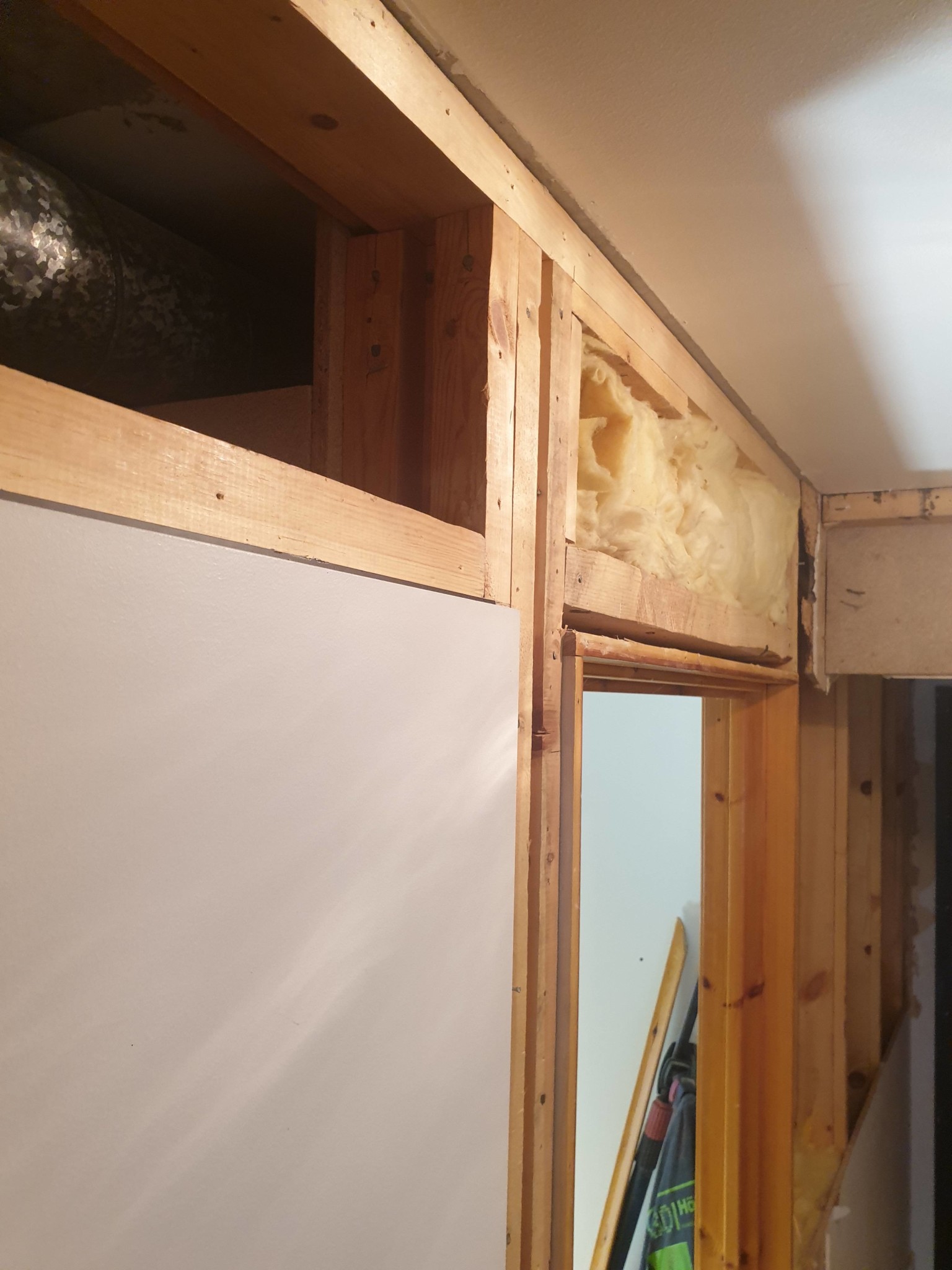
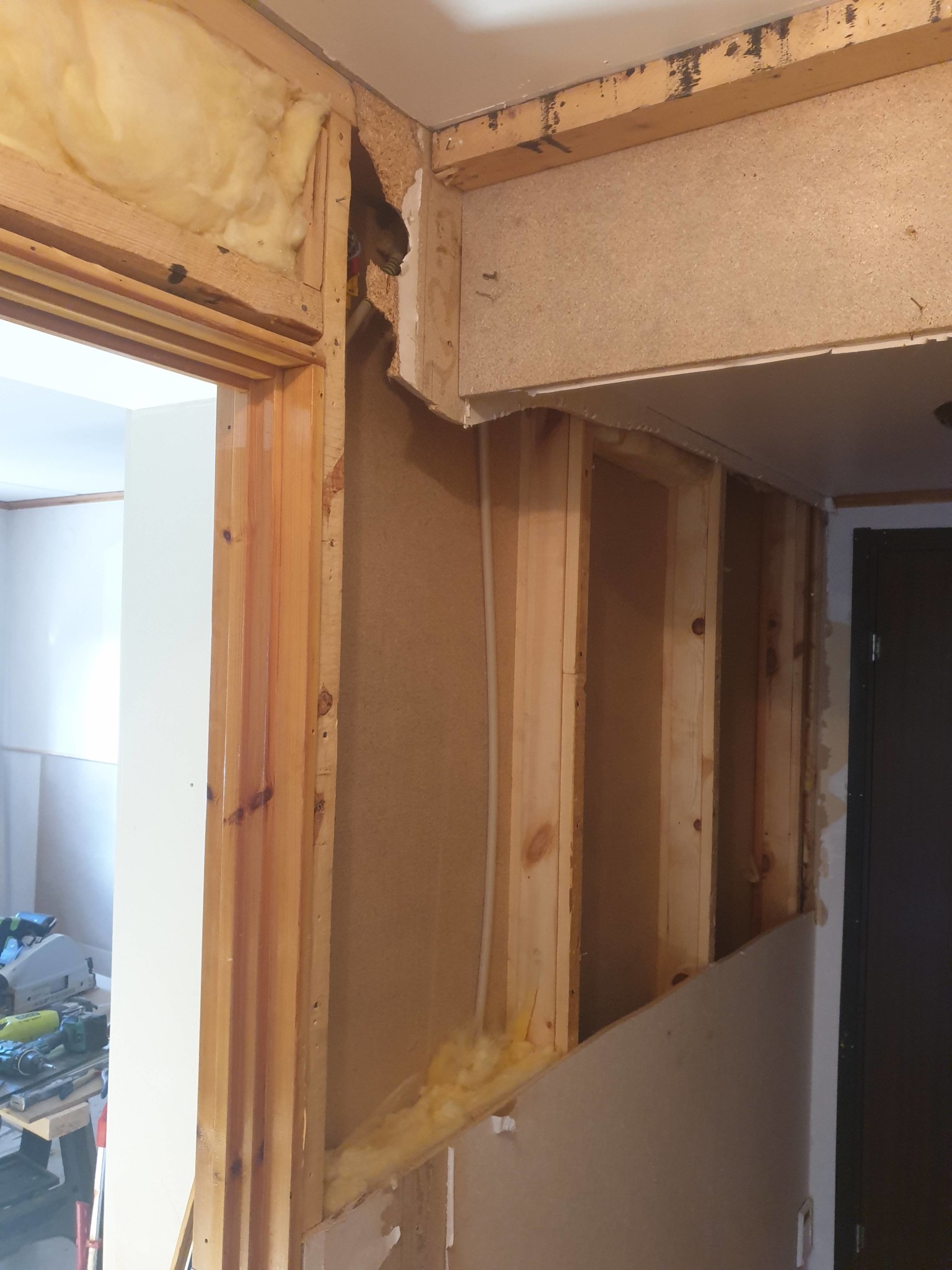
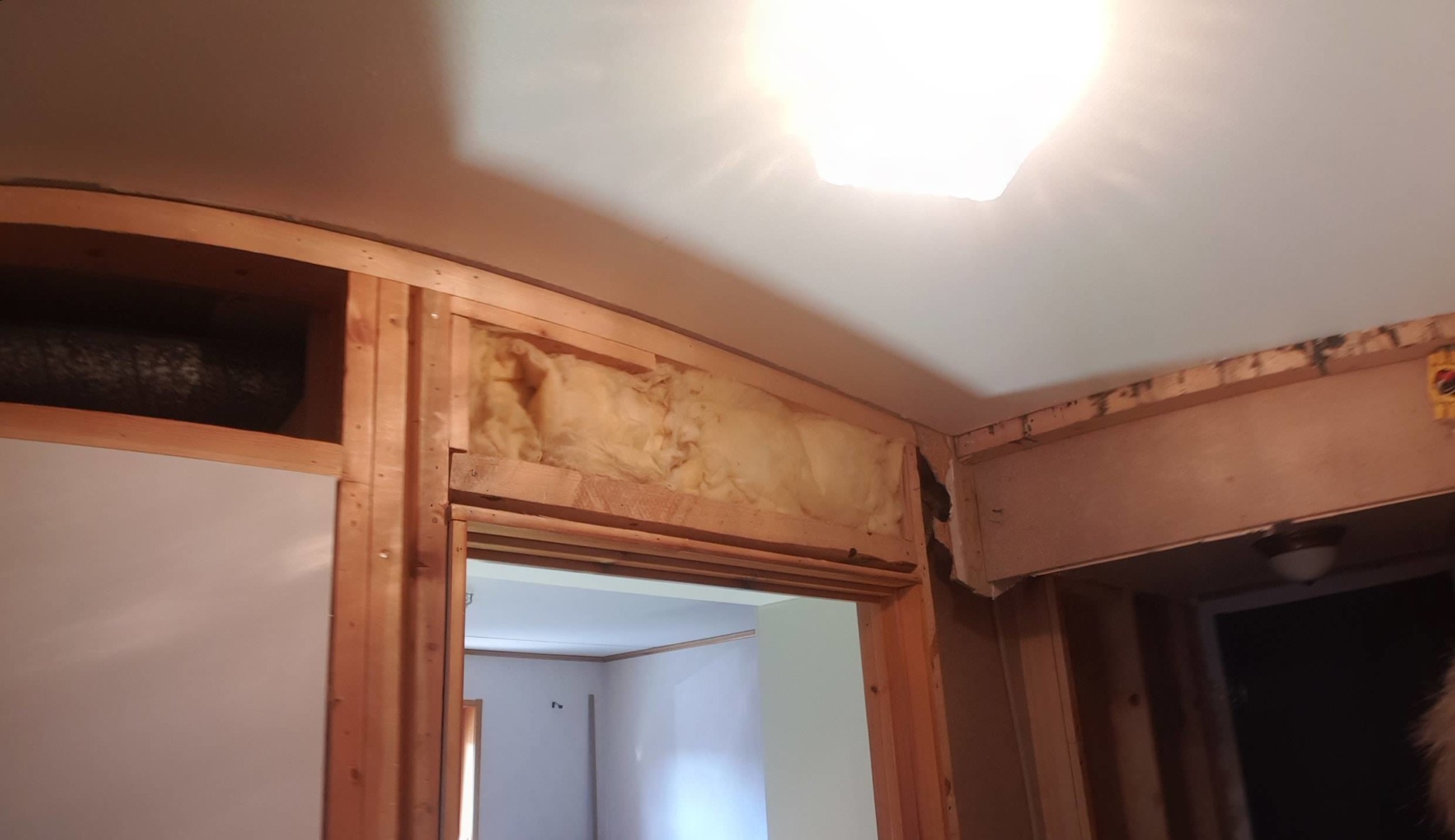
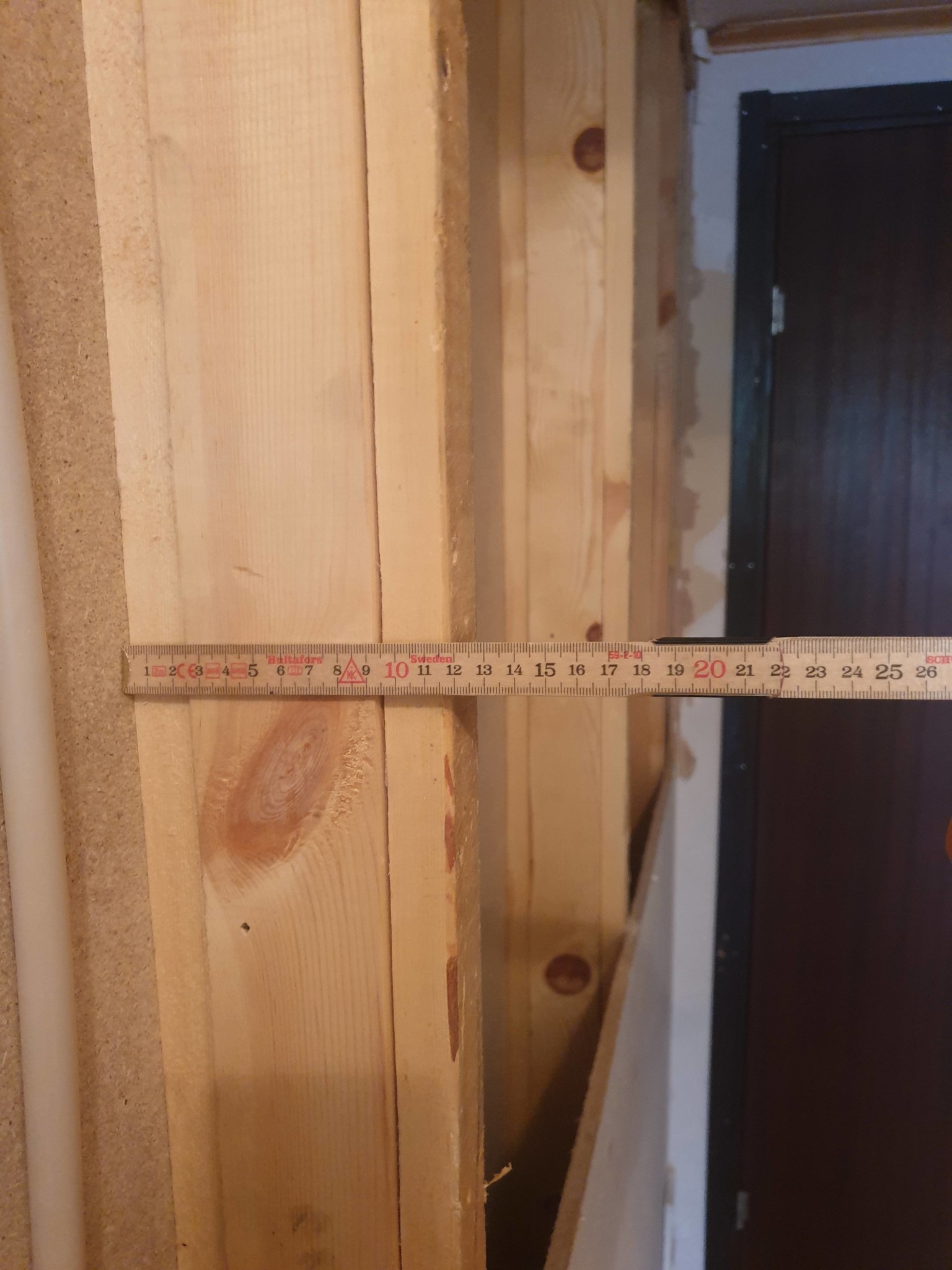
The beams are likely built into the floor structure, so they are not visible. Examining the construction after removing the drywall should be done by a technically competent person. Mention where your photos were taken.
Don't skimp when you're planning to do such an operation! Get an engineer who knows their stuff and can calculate it. There's a risk you could destroy the entire house if you make a mistake, causing the roof to sag or, in the worst case, endangering your life when everything collapses.
Don't rely on your own guesses that it'll probably hold or trust some people on a forum. As a DIY enthusiast, you can attempt many things. A bathroom, for example, involves a lot to consider, but the worst that can happen is water damage to large parts of your house.
But for an operation like this, you MUST bring in an engineer. Don't just hire a carpenter who tricks you into believing they can solve it. This sounds like a house that could appear on Fuskbyggarna if you continue on this path.
Then you're planning to paint the house as well. Just think about the amount of work you're giving yourself with all the painting that will be required later. Right now, you have a maintenance-free facade.
Don't rely on your own guesses that it'll probably hold or trust some people on a forum. As a DIY enthusiast, you can attempt many things. A bathroom, for example, involves a lot to consider, but the worst that can happen is water damage to large parts of your house.
But for an operation like this, you MUST bring in an engineer. Don't just hire a carpenter who tricks you into believing they can solve it. This sounds like a house that could appear on Fuskbyggarna if you continue on this path.
Then you're planning to paint the house as well. Just think about the amount of work you're giving yourself with all the painting that will be required later. Right now, you have a maintenance-free facade.
When you say that the beams are probably built into the floor structure, do you mean like in the rest of the house? And that the wall itself is not load-bearing? The photos were taken outside the "red wall" against the WC.J justusandersson said:
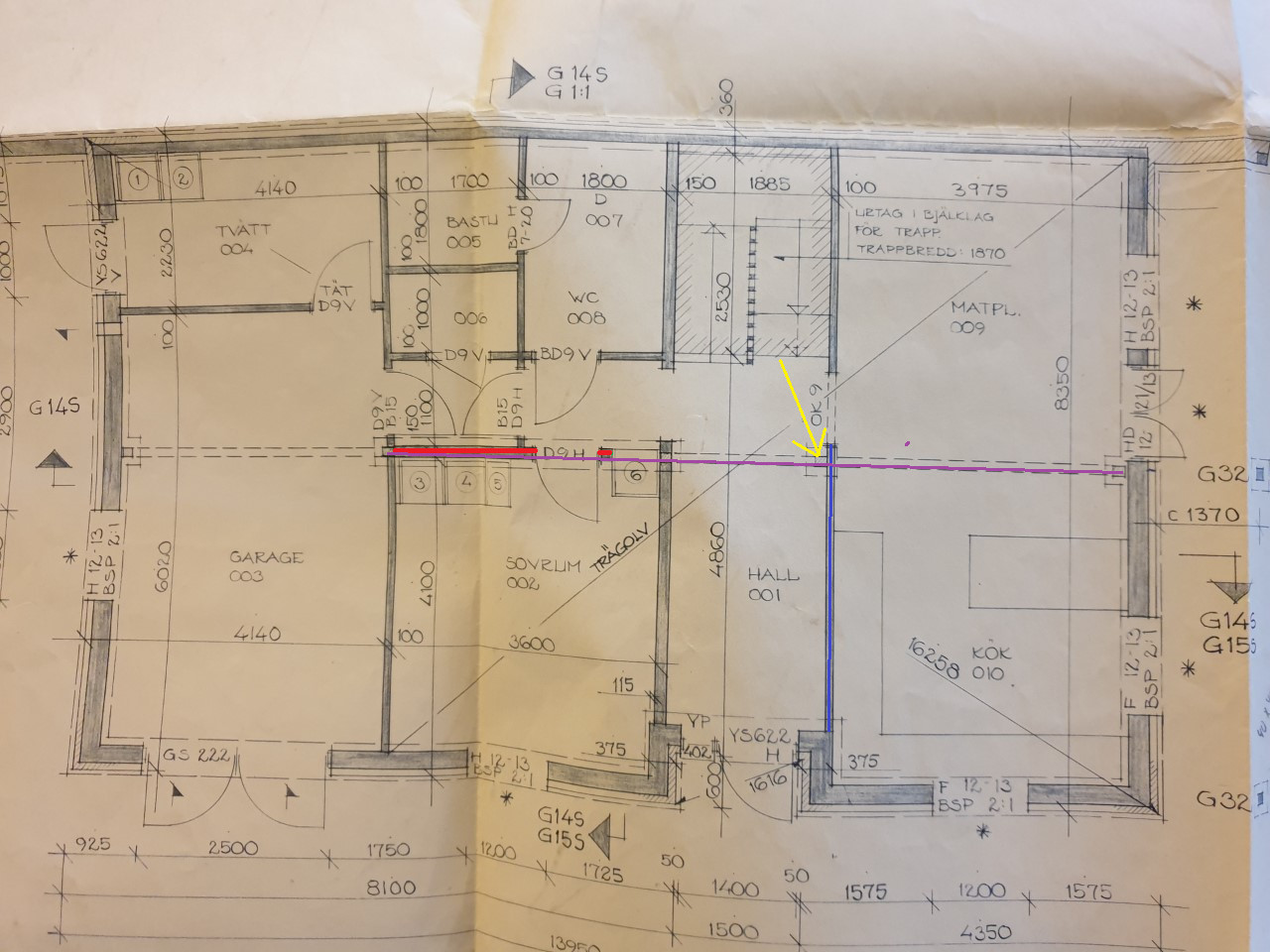
According to the drawing, the red wall is load-bearing. The wood dimensions in the wall are sufficient for this. If the floor joists in the ceiling above are aligned with an upright stud in the wall, no beam is needed.
According to the builder, it is the blue wall and all other vertical walls that are load-bearing, as a blueprint states "brädrives under bärande I-väggar" and that it is reinforced under these walls. This ruined my entire plan as I primarily wanted to demolish the blue wall to enlarge the kitchen and move the entrance. However, he said that anything is possible but that you need to reinforce under the columns as there will be a large point load. (I should add that I have a vaulted ceiling on the upper floor and the columns go straight through to a laminated beam.) I chose not to proceed with this at this time, so no thorough analysis was made.
If I wanted to demolish the "blue" wall, how do I make a reinforcement under the columns and how much work might this entail? The house stands on gravel (0.5-2.2 m to bedrock)
If I wanted to demolish the "blue" wall, how do I make a reinforcement under the columns and how much work might this entail? The house stands on gravel (0.5-2.2 m to bedrock)
I find it very hard to believe that the blue wall would be load-bearing considering how the drawing looks. Can you post a section drawing?
