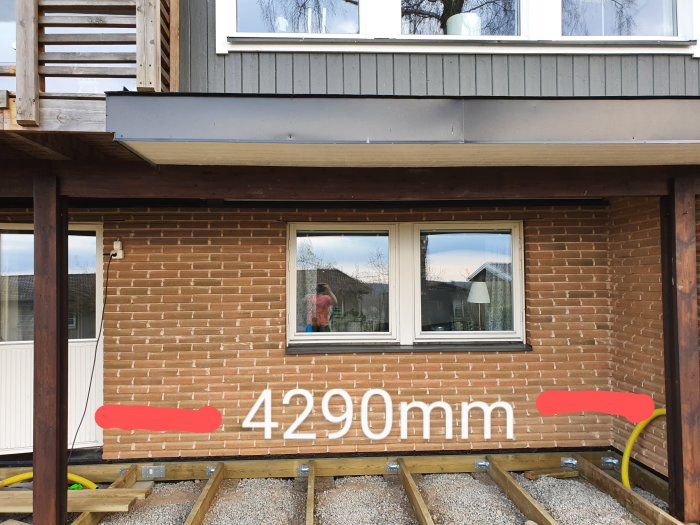
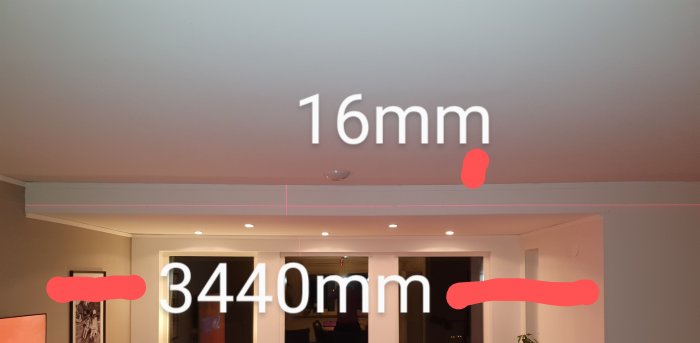
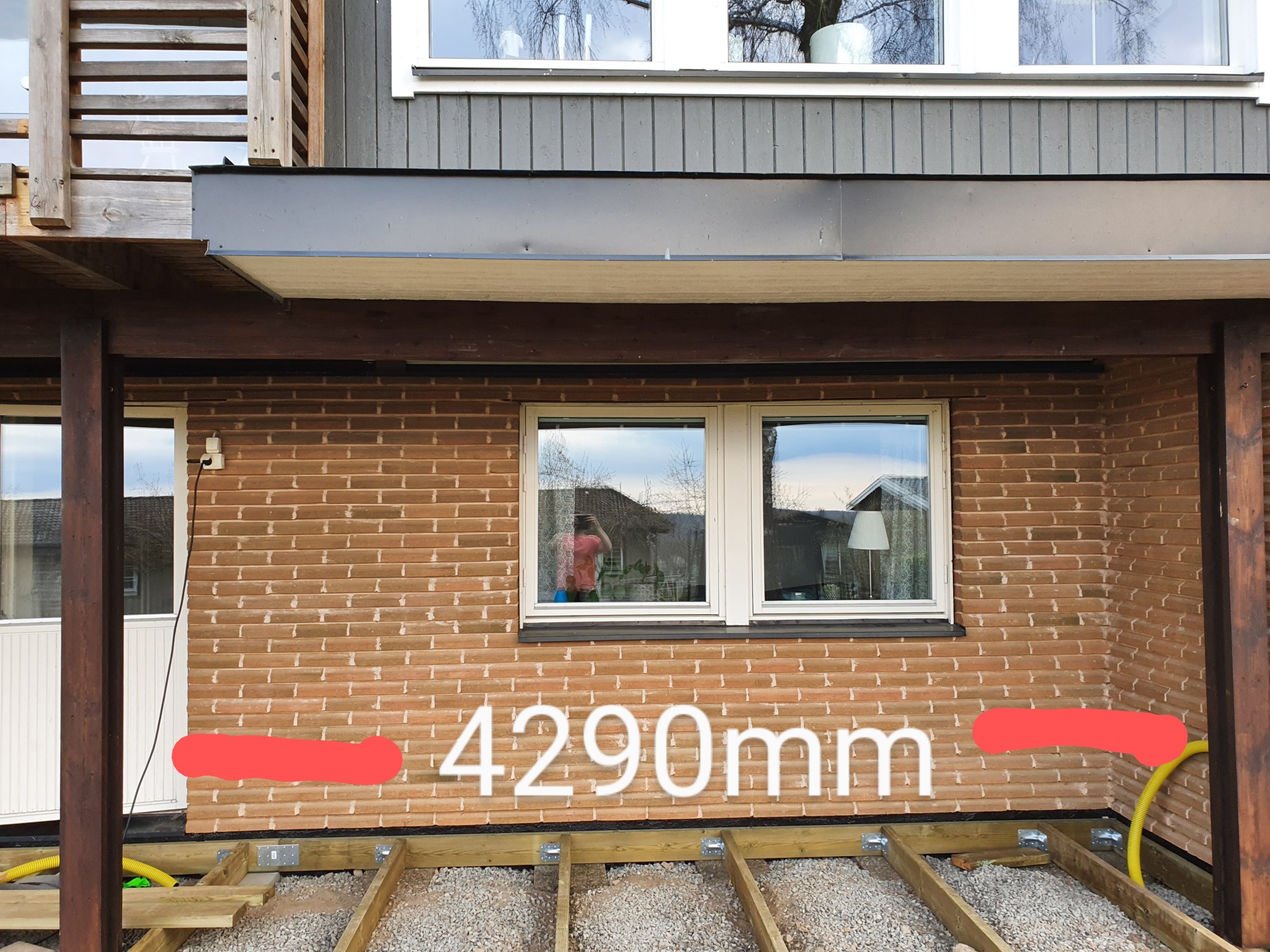
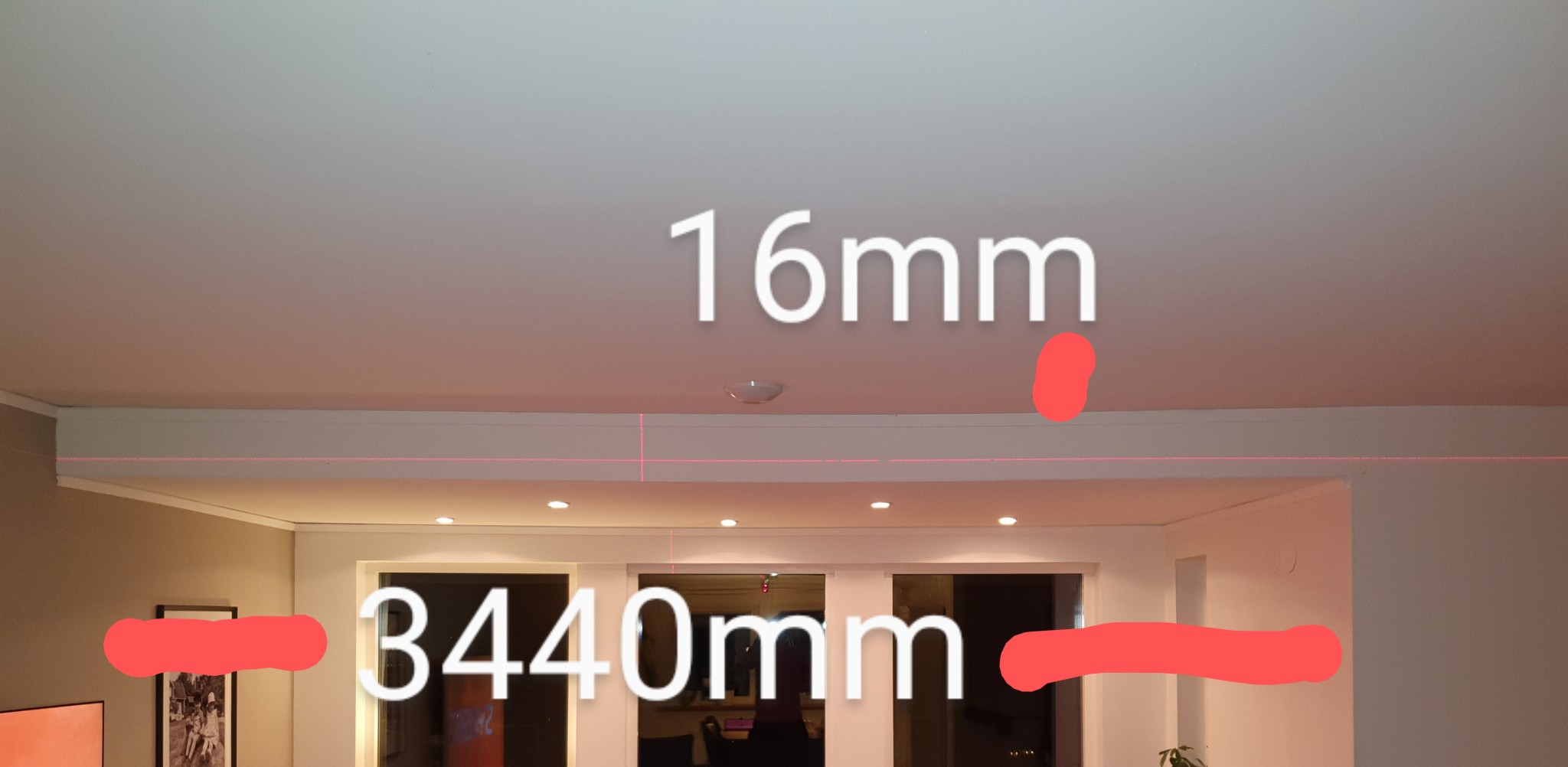
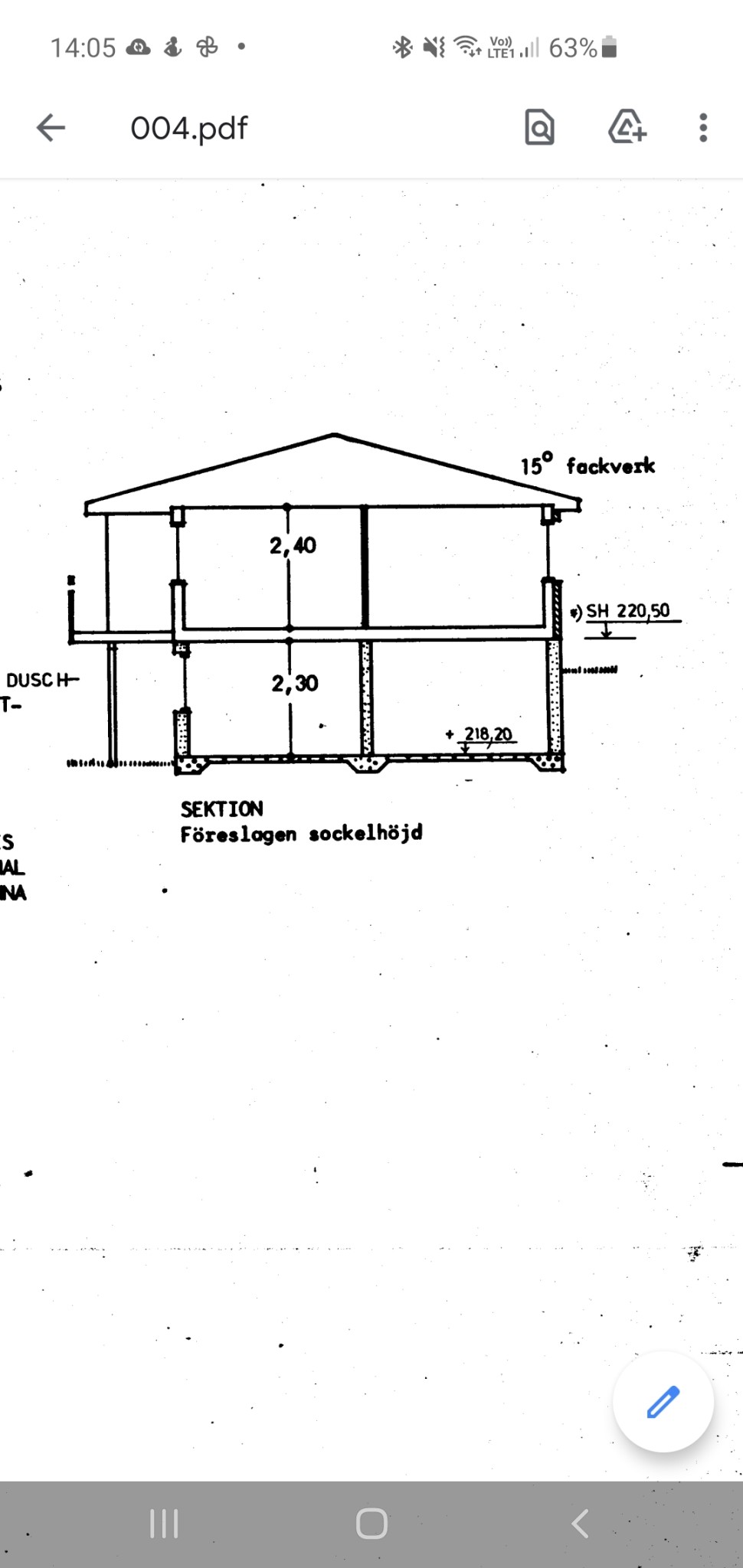
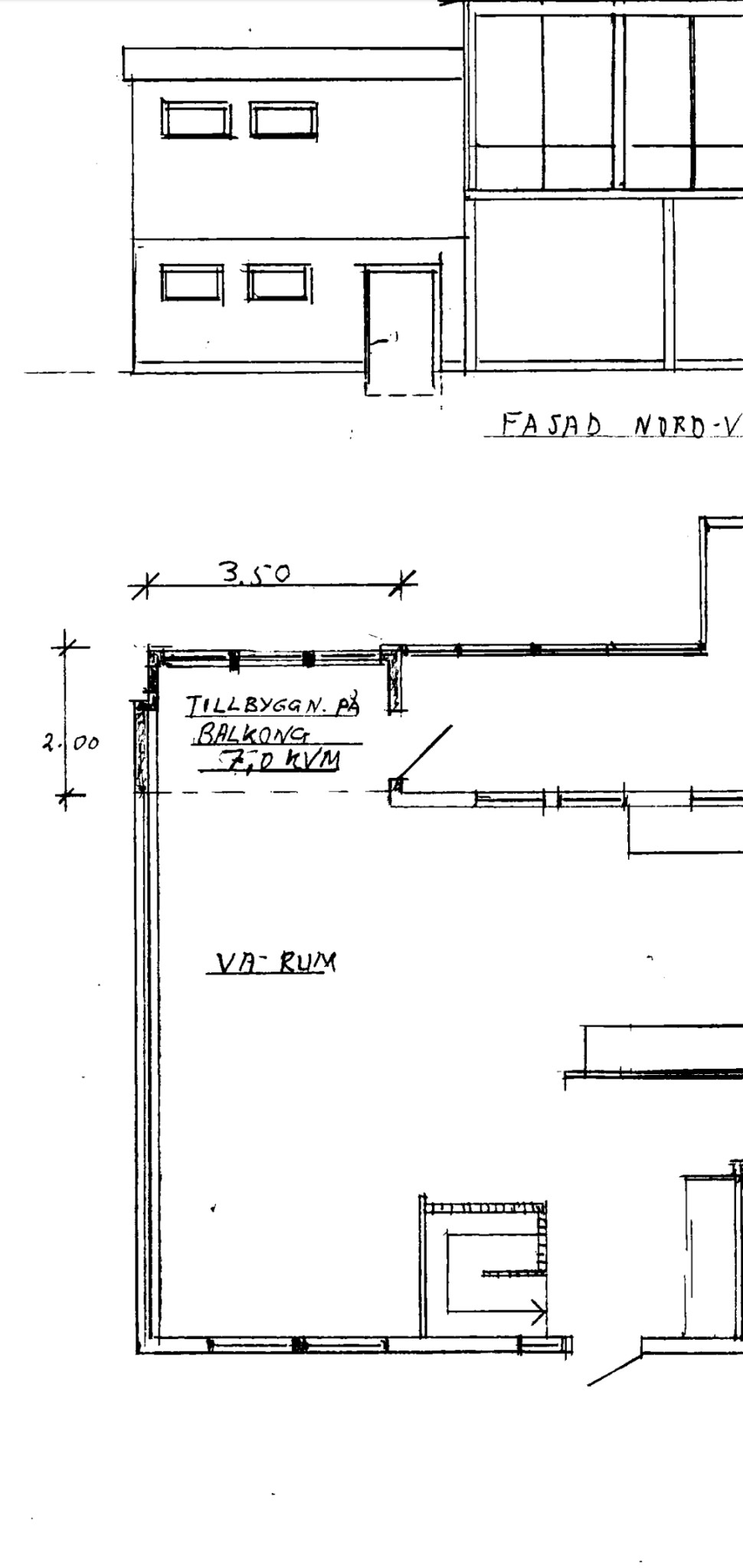
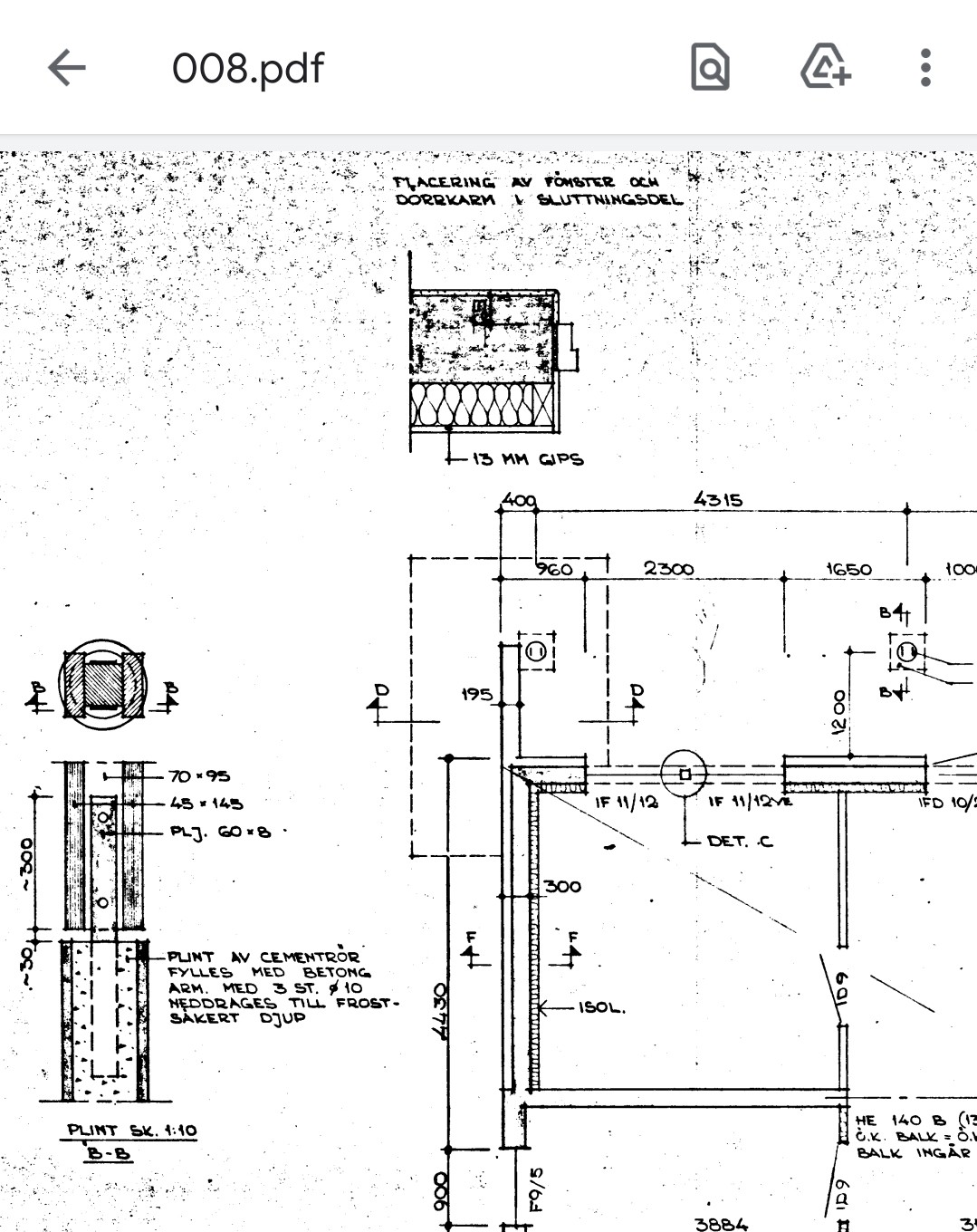
I have a small dilemma. I live in a Myresjö house built in '78 with a patio on which an extension has been made (3440mmx160mm interior dimensions) onto the patio. The roof trusses are of the truss type with bracing that according to this description: \/\ on each side of the ridge. It should be self-supporting up to about 9m according to the building description, which is the length of the short side at the extension. The roof construction has not been altered but used to hang over the old patio before.
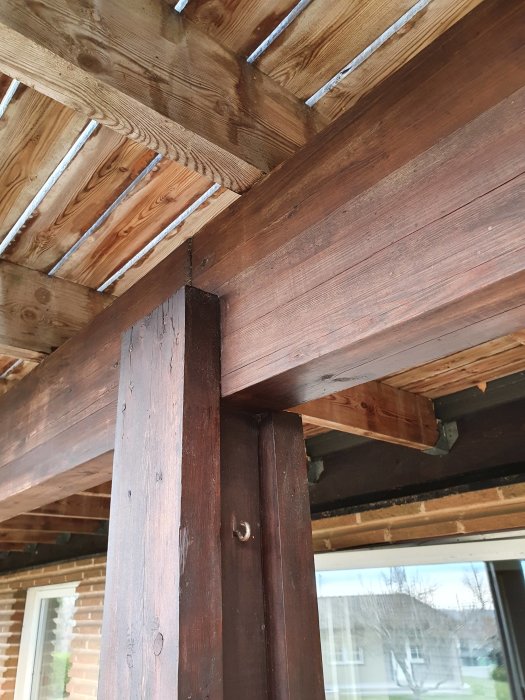
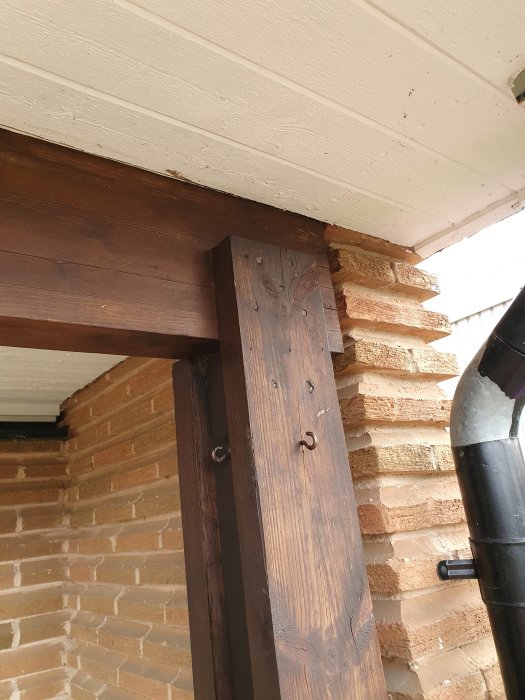
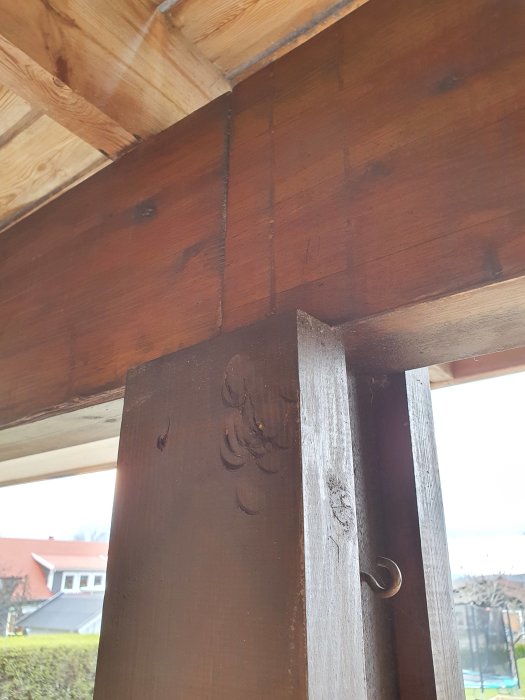
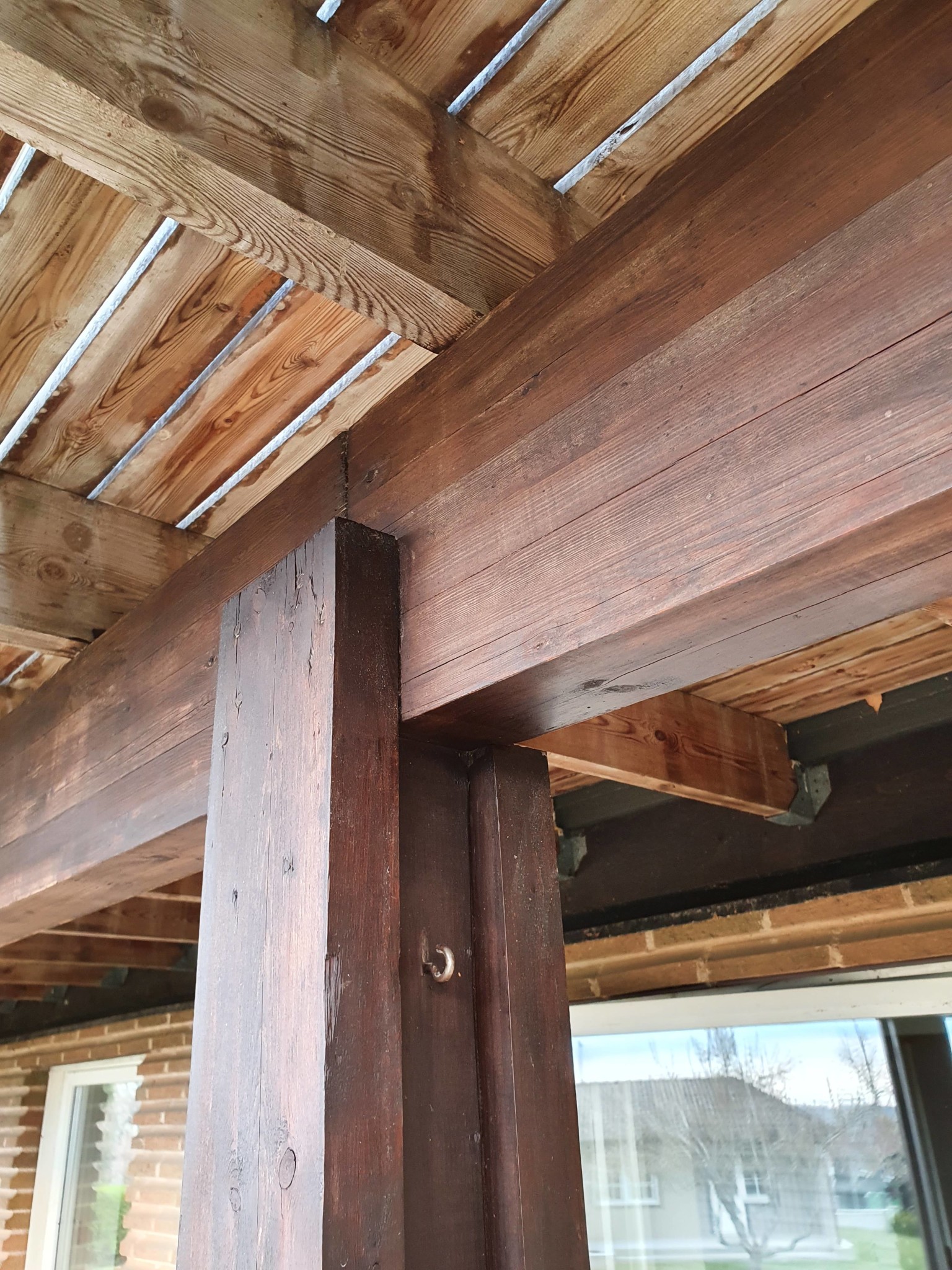
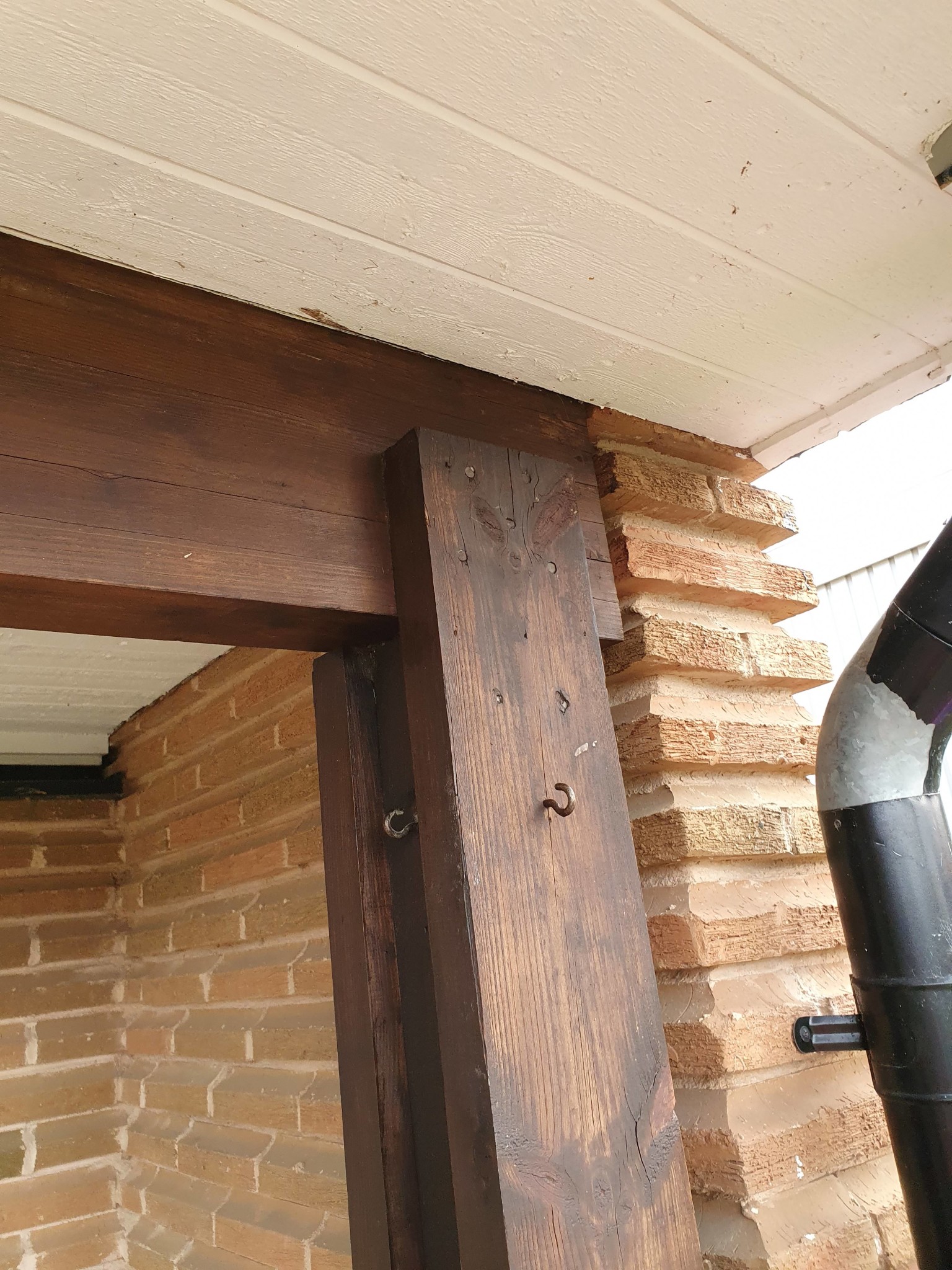
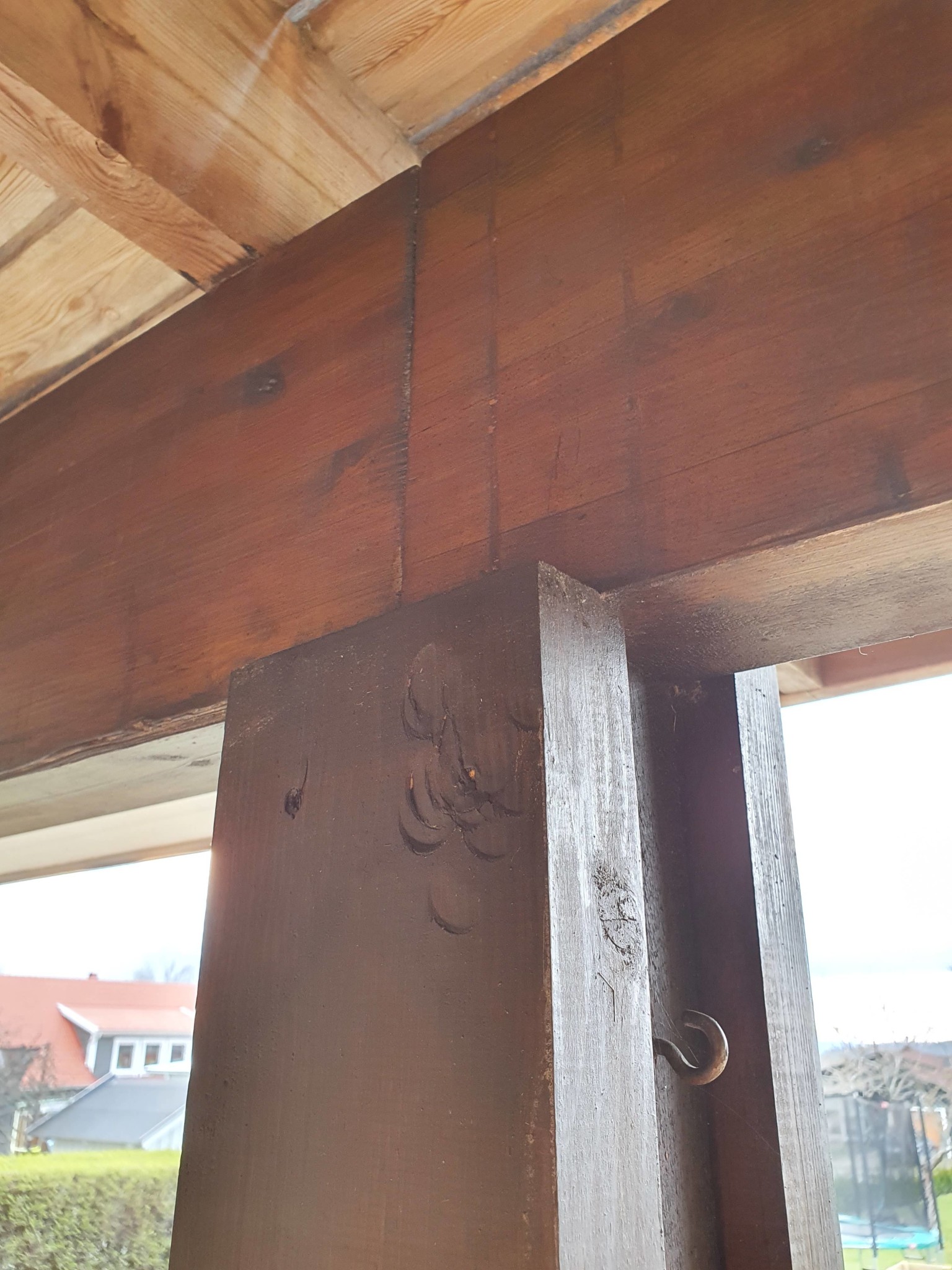
My problem is the glulam beam (240x95) which sags down about 6-7mm. It is supported as you can see by two pillars 90x70 on which they have two 145x45 on the outside. The opposite side exterior wall has the glulam beam with less support than half the 90x70 pillar. Also, internally a sag of up to 16mm is visible.
I think the glulam beam feels slightly weak and it doesn't have any direct weather protection from above for the last section to the interior pillar.
Is there anyone who can calculate whether the beam's dimensions are sufficient and advise me on reinforcement (if it is needed) that does not involve a new pillar in the middle of the beam? I have an idea of extending the pillar between 145x45 with a 70x70 and screw-gluing it to 90x70, and also to screw-glue a 190x45 on each side of the glulam beam with support on 145x45. What do you think about that?
One also needs to know the depth measurements to be able to double-check. Generally speaking, a glulam beam of that length and those dimensions requires a load of approximately 170 kg per meter to bend down 6-7 mm. That is guaranteed to be inadequate given that a balcony like this should have been designed for at least 400 kg per square meter. The fact that the beam is partially weather-exposed is a major disadvantage as it weakens the load-bearing capacity.
You need to know the depth measurements as well in order to cross-check. Generally speaking, a glue-laminated beam of that length and those dimensions requires a load of about 170 kg per meter to bend down 6-7 mm. It is guaranteed to be inadequate considering that a balcony like this should be designed for at least 400 kg per square meter. The fact that the beam is partially exposed to weather is a major disadvantage as it weakens the load-bearing capacity.
If we take the internal measurement of 1600mm (didn't I write that somewhere?), the beam extends about 1400mm out, which gives an overhang of 200mm before the "new" outer wall begins.
One must be careful with the measurements in contexts like these. However, the glulam beam is too weak and has always been, even when it was a balcony. Then one must compensate for the exposed location. 90x360 is a more suitable dimension.
You have to be careful with the measurements in these contexts. The glulam beam is too weak, and has always been, even when it was a balcony. Then you have to compensate for the exposed location. 90x360 is a more suitable dimension.
If I rethink and cast a footing at half the distance, shore up and set a pillar with the same construction as the others. Do the dimensions work?
Might as well take the opportunity to update the case for the sake of it. Had a carpenter and constructor here who said that the inner beam framing is probably too weak and that the glulam beam below definitely is. He suggested reinforcing the beam on one side with flat steel(?) In a coarse dimension that is screw-glued and extended over the left post.
Will update when it's in place.
Click here to reply
Vi vill skicka notiser för ämnen du bevakar och händelser som berör dig.