
1,272 views ·
4 replies
1k views
4 replies
Support the intermediate floor from above. Possible?
To avoid affecting the ceiling height in the future workshop, I am considering the following solution:
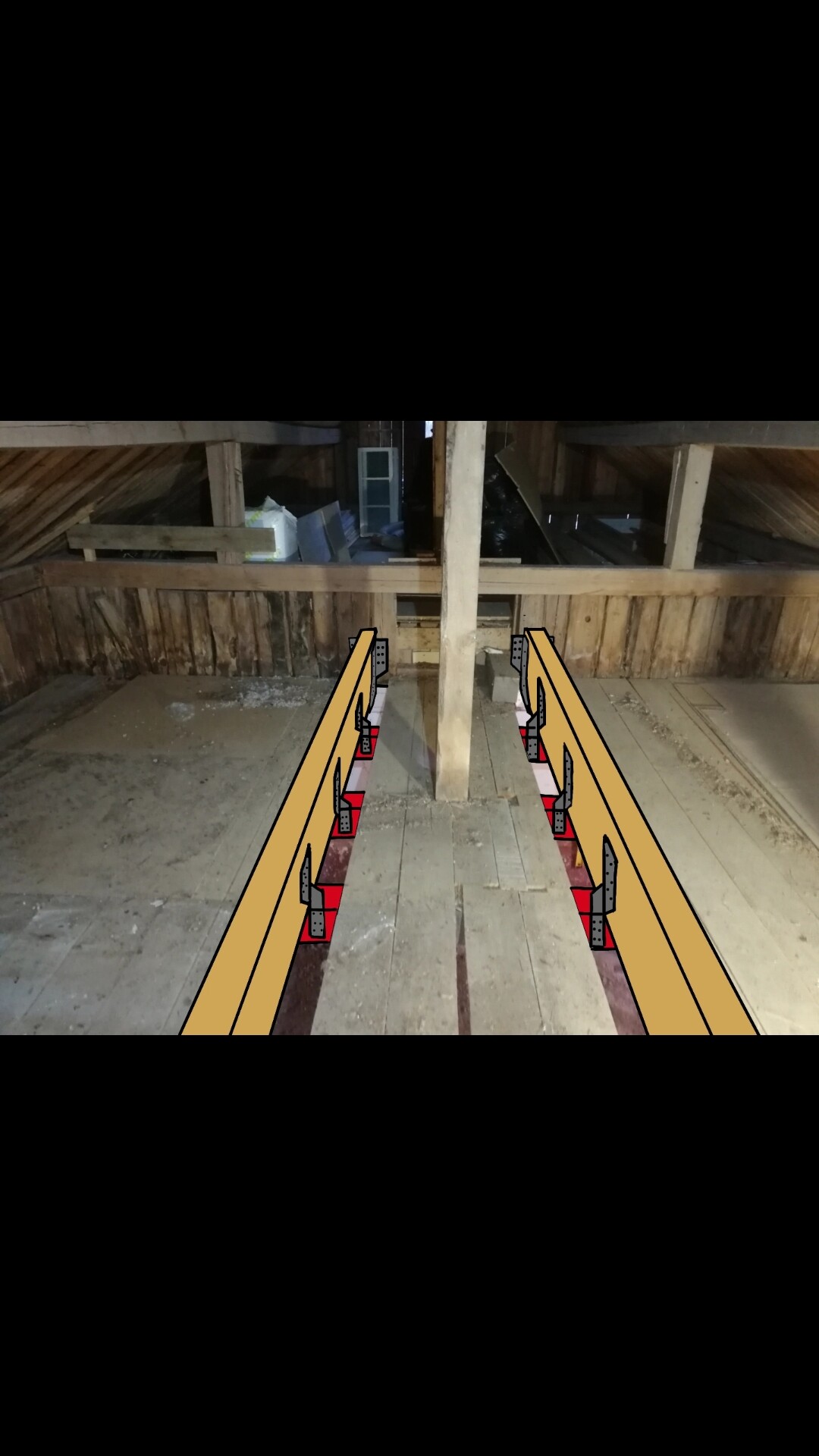
Supported by the existing log walls, two glulam beams will be mounted above the current load-bearing beams and anchored to the glulam beams in an appropriate manner.
The glulam beams are also intended as a framework for a walkway in the attic, possibly becoming a full floor with additional joists.
Can this work?
Glulam beams 2 pcs 42x225 Walkway only.
Alternatively
Building joists 45x195 cc 600 with a board floor.
The space previously consisted of 3 smaller rooms/storage areas on a concrete slab.
Slab removed, ceiling dismantled, interior walls removed and the wood shavings collected in bags.
Outbuilding with a log frame, pitched roof.
Previously tile roof, now metal.
Best regards, Anders
Supported by the existing log walls, two glulam beams will be mounted above the current load-bearing beams and anchored to the glulam beams in an appropriate manner.
The glulam beams are also intended as a framework for a walkway in the attic, possibly becoming a full floor with additional joists.
Can this work?
Glulam beams 2 pcs 42x225 Walkway only.
Alternatively
Building joists 45x195 cc 600 with a board floor.
The space previously consisted of 3 smaller rooms/storage areas on a concrete slab.
Slab removed, ceiling dismantled, interior walls removed and the wood shavings collected in bags.
Outbuilding with a log frame, pitched roof.
Previously tile roof, now metal.
Best regards, Anders


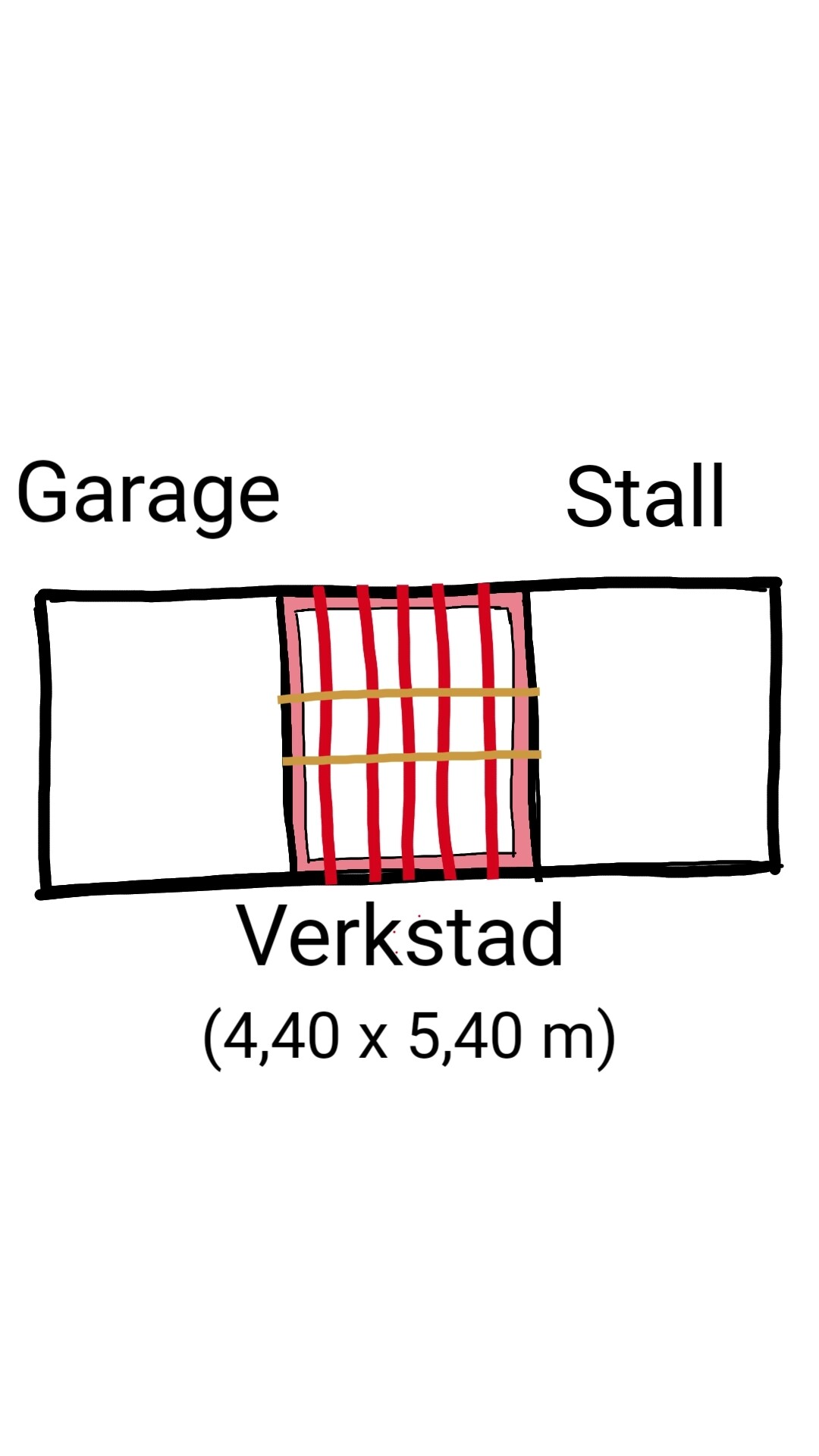
A pillar goes up to the ridge. Then two more pillars (blue in the picture). However, they don't bear much weight. Old heavy tile roof which is now a metal roof in snow zone 2.
The first thought was to support from below with pillars and a beam, but I thought it would affect the ceiling height too much.
Before demolition, there was support on two of these 5 beams in the form of an inner wall (red in the picture).
The first thought was to support from below with pillars and a beam, but I thought it would affect the ceiling height too much.
Before demolition, there was support on two of these 5 beams in the form of an inner wall (red in the picture).
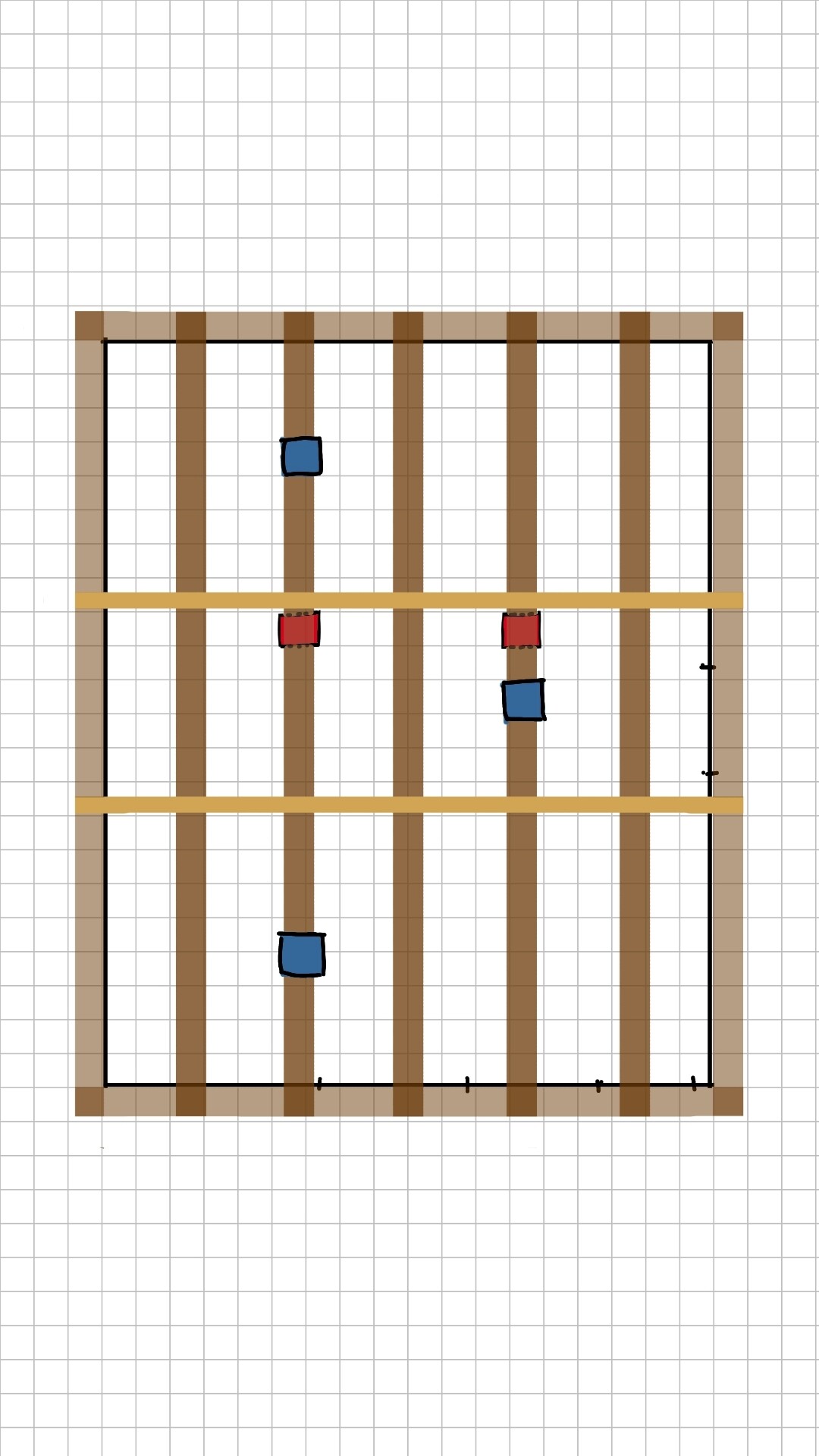
If the wall only supported the beams that take roof load, I would consider strengthening only these two beams.A Anders_cc said:A column goes up to the ridge. Then two more columns (blue in the picture). However, no major load. An old heavy tile roof that is now a sheet metal roof in snow zone 2.
The first thought was to support from below with a column and beam, but I thought the ceiling height would be too affected.
Before demolition, there was support on two of these 5 beams in the form of an inner wall (red on the picture).
Where the blue roof columns come down near the wall, it might be enough to just reinforce the beam locally between the wall and the roof column by gluing and screwing something on the existing beam.
For the beam where the column impacts in the middle, reinforcement is needed along its entire length by gluing and screwing something on. Alternatively, you can insert some braces between the floor beams and the beam in the roof, so you get a type of truss/roof truss.
I think it will be difficult to financially justify the two initial suggestions you had, as well as the one I presented now. It will probably require significantly heavier materials to handle the roof load.
Do you have snow guards on the roof, and is it relatively easy to shovel it?
No snow guard rails, most of it slides off the roof. Yes, easy to shovel.
Maybe reinforce the beam with the central column load (green sketch) and the other two beams you suggested, as well as laminated beams/joists as my basic idea.
If the beams sag over time, they can probably be supported more. I believe/hope the roof won't cave in.
I'm wondering if this solution with the above load-transferring beam is reasonable, or if it needs to be on the underside...? Then the question becomes what dimension is required.
Maybe reinforce the beam with the central column load (green sketch) and the other two beams you suggested, as well as laminated beams/joists as my basic idea.
If the beams sag over time, they can probably be supported more. I believe/hope the roof won't cave in.
I'm wondering if this solution with the above load-transferring beam is reasonable, or if it needs to be on the underside...? Then the question becomes what dimension is required.


Click here to reply