We want to lay granite tiles in front of and under the stove that we will install. It's just an area of about 1 sqm (0.8x1.3 m). The substrate is 22 mm chipboard on wooden joists with 600 mm spacing. The height of the adjacent wooden floor is about 16-17 mm. We would like the granite to be somewhat level with the wooden floor (maybe a maximum of 2-3 mm higher?) and only have a silicone joint between the granite and wooden floor. Granite tiles usually seem to be 10 mm thick. However, we have not chosen these yet. I don't know how much the adhesive builds up - 2-3 mm? How would you solve the construction?
1. Renovation gypsum board 6 mm + adhesive + tiles -> about 18 mm
2. Fermacell fiber gypsum board 10 mm + adhesive + tiles -> about 22 mm
3. Fiber-reinforced levelling compound 5-6 mm + adhesive + tiles -> about 18 mm
4. Fiber-reinforced levelling compound with reinforcement 6-7 mm + adhesive + tiles -> about 19 mm
Or in another way? I don't want to tear up the chipboard and add more joists.
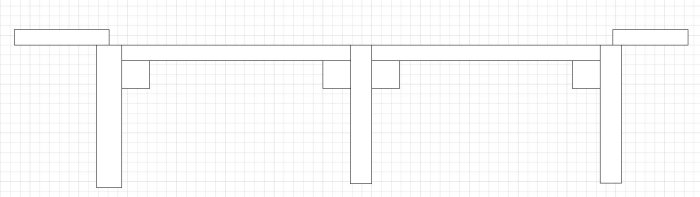
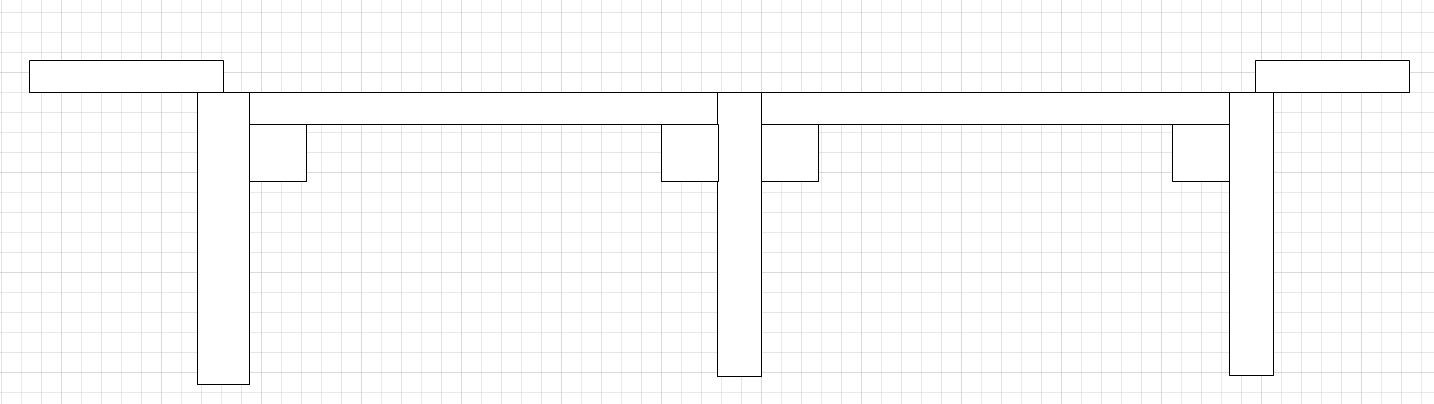
I lowered the chipboard to the level of the floor joists and filled with mesh to provide sufficient support for the tile floor and level with the parquet.
Ok. Does my sketch below match how you lowered the chipboard? In my case, the floor joists don't align well with the area I want to lay tiles on. I don't know if your solution means I have to lower a larger area than desired and then use self-leveling compound up to the chipboard height again over the entire area and a bit more on the area where I will lay the tiles. The weakened divided chipboard is compensated by the reinforced layer of self-leveling compound.
It's such a small area that needs to be stiffened, so can't you switch to a thinner but slightly more exclusive material than plaster/filler?
Go to the tinsmith/blacksmith and buy a 0.8X1.3 m sheet (maybe with a fine checkered surface or perforated with holes for the fix?) in solid material and glue it with construction adhesive onto the floor chipboard. It only builds a few mm but becomes really stiff to tile on, I think.
How large is the expansion? I read that the coefficient of linear expansion is around 12*10^-6 mm per degree and meter for steel and roughly the same for dry concrete. So does it differ in reality from tiling on a concrete-based slab?
Right now, it's leaning towards the sheet metal. I need to check if I can find a suitable sheet. As a second option, I'm considering cutting a series of 3-5 mm deep grooves in the particle board with a circular saw. Then using a chisel to remove the chips. After that, self-level with mesh.
An important factor in this context is the weight of the stove. We have a stove ourselves that weighs 550 kg, and we reinforced the base plate by making it 200 mm instead of 100 mm where the stove would be placed.
Sheet metal, I think, is a bad idea, at least at the thickness you want. To make it torsionally rigid, it should probably be 8-10mm. You typically estimate a 13mm construction height with tiles and adhesive if the slab is 7-8mm, so maybe 15mm in your case. The alternatives are to float with a mesh, which gives about a 28mm total height, or to take a chance with a flexible adhesive. From experience, I can only recommend doing it properly, as there's a lot of movement around a heavy stove with a lot of radiant heat.
only have a silicone seal between granite and wooden floor.
Has anyone done that?
I wonder what happens when the wooden floor moves throughout the year depending on how the humidity varies. Normally, you have closer to a cm movement margin along walls and other fixed objects.




Stefan N said: