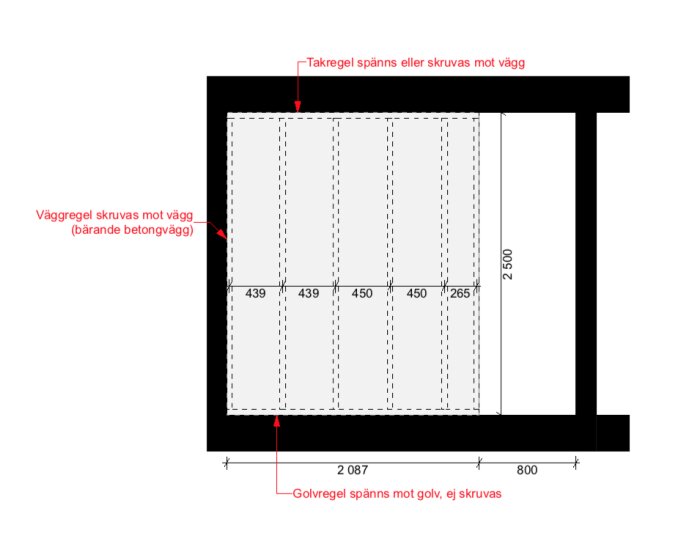
I am going to build a stud wall in my apartment as a room divider. Since it is unclear how long we will stay, I want to make it as reversible as possible, so I plan to follow this guide where the wall is braced rather than screwed.
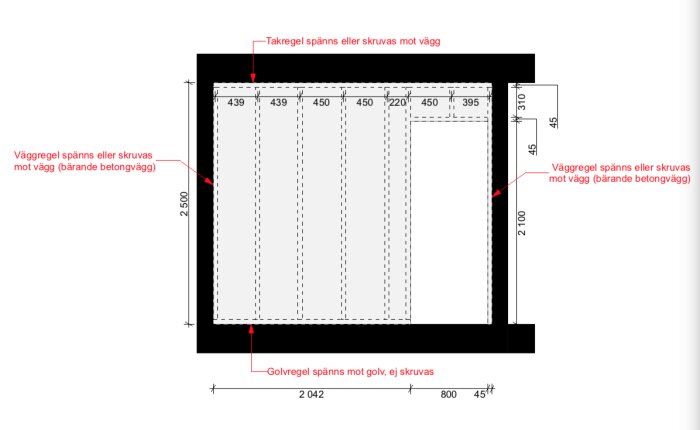
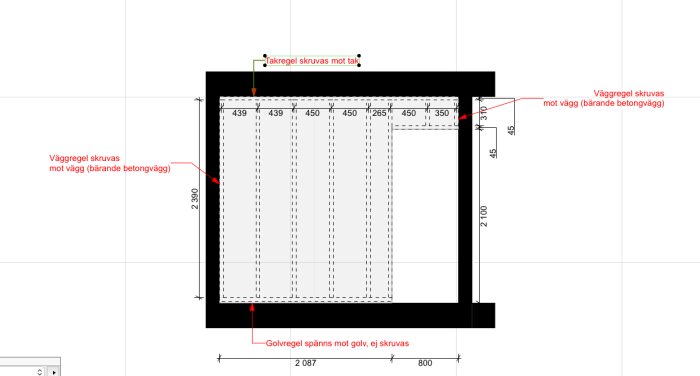
However, the thing is that I don't want the wall to cover the entire length of the room, so I thought of leaving an opening of 80 cm, which means I cannot brace it against one of the walls.
Therefore, I am seeking advice on whether you think this wall can still be stable enough - it will be in a child's room, and I would like to have the option to hang something on it, although not any heavy items.
I plan to build the wall using 70*45 studs and cover one side with OSB+gypsum and one side with just single gypsum.
I am open to screwing into the ceiling stud and wall stud, but screwing into the floor is out of the question.
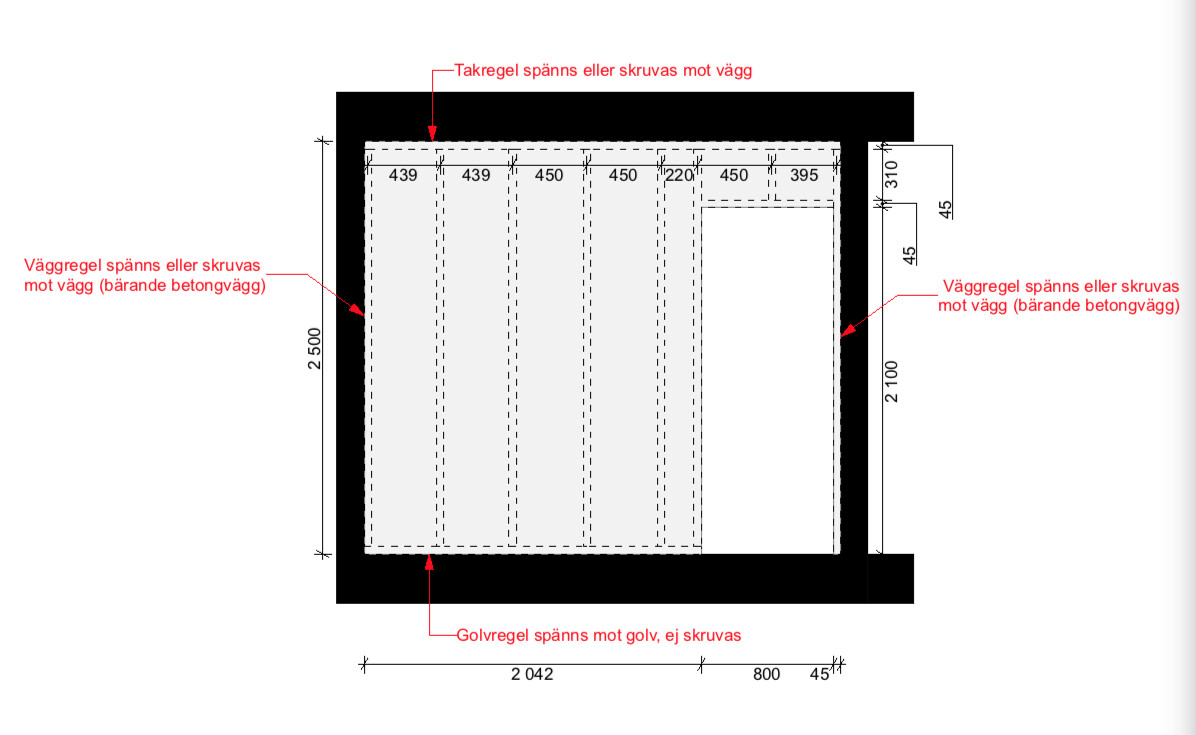
I have sketched two options, preferring Option 1 but open to Option 2 if there is a risk it would become too unstable otherwise. In Option 2, wall studs can be attached to both walls and the ceiling stud can go all the way between them.
What do you think? Can Option 1 be stable enough if you screw into the wall and possibly the ceiling?
As an addition to the above, you can also ensure that the studs stretch between the floor and ceiling, for example by using wedges, before you screw it to the ceiling.
A 70 stud that is well-tensioned, and additionally mounted with adhesive tape (if you dare, risk of affecting the floor) it doesn't move easily.
In addition to the above, you can also ensure that the studs stretch between the floor and the ceiling, for example, using wedges, before screwing it into the ceiling.
A 70 stud that stretches well, and is also mounted with adhesive tape (if you dare, risk of affecting the floor) doesn't move easily.
Exactly, I was planning to follow this guide and secure the ceiling and floor studs, and also screw the ceiling stud if needed.
But it sounds more reassuring that you think it will be stable; I would prefer to avoid the double-sided tape to not risk damaging the floor.
Then it is probably concrete in the vault that can withstand pressure, with a carpet between the ceiling joists and the floor, and there should be a couple of heavy turnbuckles that are tightened in reverse. They are attached to perhaps 3 standing studs. There should then be a hatch for it, so it can be tightened more if necessary, two mounts in the ceiling are not wrong, so the wall can't collapse.
Then it's probably concrete in the vault that can withstand pressure. with a felt mat between the roof beam and the floor, and there should be a couple of thick turnbuckles that are tightened backwards. They are attached to maybe 3 standing beams. There should then be a hatch for it. so it can be tightened more if needed, two attachments in the ceiling is not wrong, so the wall cannot fall.
Now I'm not quite following, what do you mean by concrete in the vault? And where do you mean there should be a hatch?
Right now, I'm actually leaning towards option 2, with an 8*21 opening. Then I can install wall beams that are attached/secured in the existing concrete walls on both sides with a ceiling beam in between.
Now I'm not quite following, what do you mean by concrete in the vault? And where do you mean there should be a hatch?
Right now, I'm actually leaning towards option 2, with an 8*21 opening. Then I can get wall studs that are attached/tensioned to the existing concrete walls on both sides with a ceiling stud in between.
If you go with that, it will be good, and the wall will have fastenings at the ends. What I wrote was to tension between the ceiling and the floor, with a hatch to tension more. Wood can give a little, and the wall can start to loosen.
Now it's time to start building! I've settled on this option, but I thought I'd check if anyone has tips for the best approach.
If one made a temporary wall that is braced against existing walls on all sides, one could assemble the entire wall lying down, then raise it and tighten the screws. If, instead, one made a permanent wall to be screwed into existing walls and floor, one could screw in the frame studs first and then place the vertical studs.
Now it will be a bit of a mix between these options, since I'd like to screw into the walls and ceiling to make it stable despite the opening, but I don't want to screw into the floor.
Here is what I plan to do:
1. Assemble the frame lying down, 20 mm shorter than the ceiling height.
2. In the floor stud, attach French wood screws with the head on the side that will be against the floor - these can then be tightened against spacers on the floor when the frame is raised.
3. When the frame is raised and tightened between floor and ceiling with the help of the wood screws, I will attach the ceiling and wall studs into the concrete.
It is mainly step number 3 that I need advice on - one option is to pre-drill and plug holes in the concrete walls/ceiling, and pre-drill holes in the floor and ceiling studs at corresponding points. However, it seems likely that the studs' holes might not completely align with the plugs in the concrete once the wall is up.
How would you do it? The same problem would actually occur even if the wall were screwed on all sides, but it would be easier to resolve then. Someone mentioned expansion nails and that you can then nail the studs once the wall is up and taut, without needing to pre-mark anything. Could that be an option? I've never used them, so I don't know if they work on such hard concrete.
The walls are load-bearing and made of solid, hard concrete, so probably not lightweight concrete.
No problem in your idea of raising the wall and bracing it against the ceiling. However, with French, it doesn't work well; it should be a strong bolt with a nut and washer against the stud, then it should be directly next to a standing stud so it becomes firm. After maybe 1/2 year, the wall will start to want to fall as the wood has changed. It needs to be tightened afterward. The wall also needs to be anchored to the sides to prevent any accident. It's best with some long screws in the ceiling and floor + the sides, then the wall will remain standing, even if the studs dry and become a few millimeters shorter.
Nothing wrong with your idea of erecting the wall and bracing it against the ceiling. But with French screws, it doesn't work well, it should be a strong bolt with a nut and washer against the stud, then it should be directly next to a standing stud so it is firmly supported. After maybe 1/2 year, the wall will want to fall as the wood changes. Needs to be tightened. The wall also needs to be anchored on the sides to prevent any accidents. Best is with some long screws in the ceiling and floor + the sides, then the wall will stay even if the studs dry out and become a few millimeters shorter.
Thanks for the input!
I based it on this guide where they use French wood screws, and I've also seen several others using it for similar temporary walls. But you still don't think it will be stable enough? I do have an opening in my wall, but I'm thinking it should at least partially compensate by being anchored on 3 of four sides.
How did it go with the wall, is it still standing?
It certainly is! Built according to option 1 in my first post, attached to the wall and ceiling, and tightened against washers on the floor with French wood screws. So far it has stood very stable!
Click here to reply
Vi vill skicka notiser för ämnen du bevakar och händelser som berör dig.