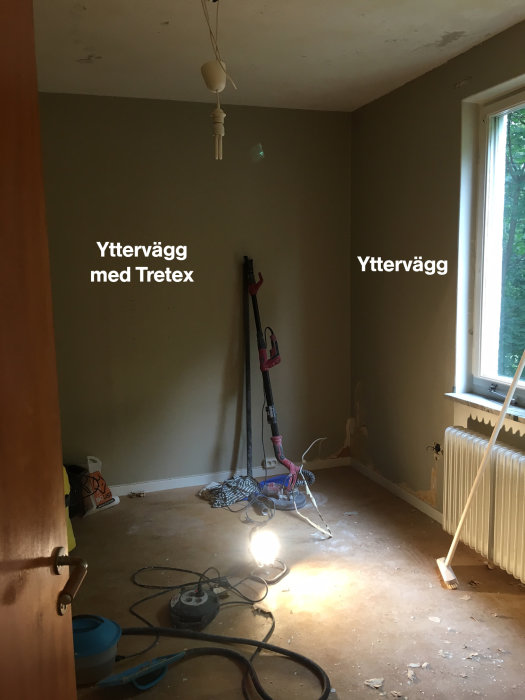
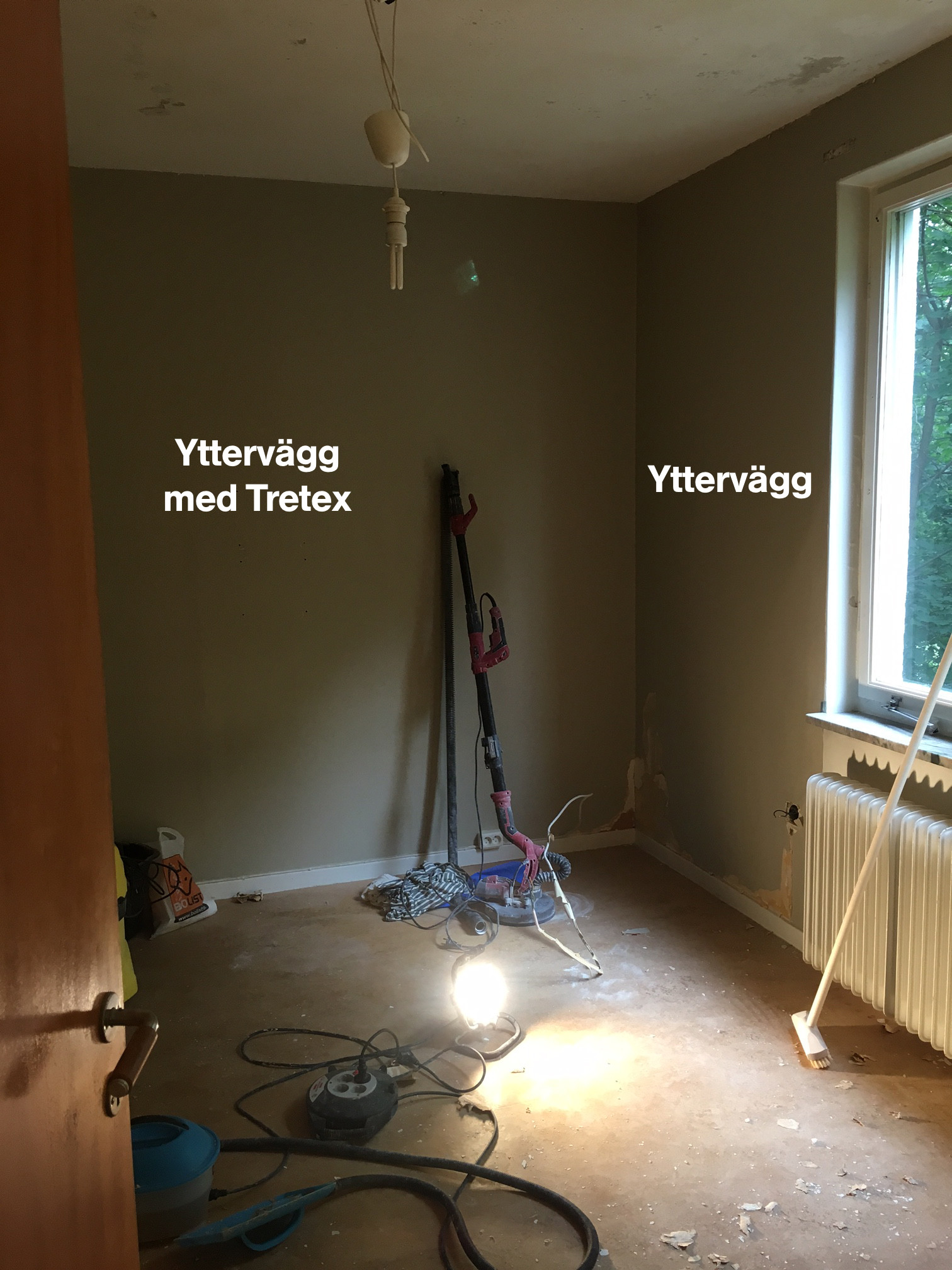
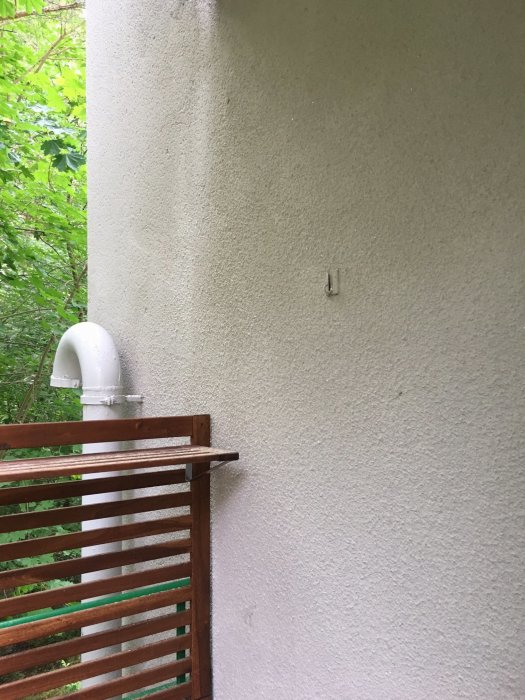
I'm renovating my bedroom. The plan was to tear down all the wallpaper, fill and paint. But when I started tearing down, I realized that one of the exterior walls is covered with tretex, probably a quick solution from long ago because the room was cold.
I'm considering whether I should:
1) Leave the tretex in place, fill over the existing wallpaper, and paint.
2) Remove the tretex, install a moisture barrier, frame, and insulate.
Both walls are very cold in the winter, the wall with the window doesn't matter much, but the tretex wall is where I rest my head when I sleep. I've noticed that the pillows against this wall feel damp, which is not particularly pleasant.
Therefore, the best option would be to tear down and frame with insulation. But I'm wondering if there's a risk of mold/moisture if I just frame and insulate the tretex wall? I don't want to do anything with the wall with the window because it's a bit tricky due to the window.
This brings me to a third option, remove the tretex, buy a headboard so that I move away from the wall a bit and let the wall breathe as intended (stone house) and live with the room being a bit colder when it's cold outside.
But ideally, I want to do option two, if it doesn't pose a risk of moisture and mold issues in the future.
I'm wondering if we mean the same thing. I mean placing plastic directly against the wall, then framing and insulating inside this, finishing with plywood or similar material that is spackled and painted.
That's how I interpreted you. The moisture barrier should be on the inside of the wall. It's usually said that it's okay to have it up to 1/3 into the wall, considering the insulation capacity. But with your placement, it might end up deeper.
If you are going to use plastic, it should be placed inside the insulation. I'm not sure if it's needed. But most importantly, it should not be placed behind the insulation.
Click here to reply
Vi vill skicka notiser för ämnen du bevakar och händelser som berör dig.