
16,396 views ·
45 replies
16k views
45 replies
"Strength" glulam 115x115?
Thank you for the quick response. Looks great! Glad it seems to hold.
/O
/O
Old thread but I'm asking a question, hope you see and answer if you can. I'm going to remove a wall between two small rooms to make one larger room. The wall is not load-bearing, but can a 115x115 glulam post be used as a glulam beam? 3.5 long. I want to use something as small as possible and can support.K Knight said:
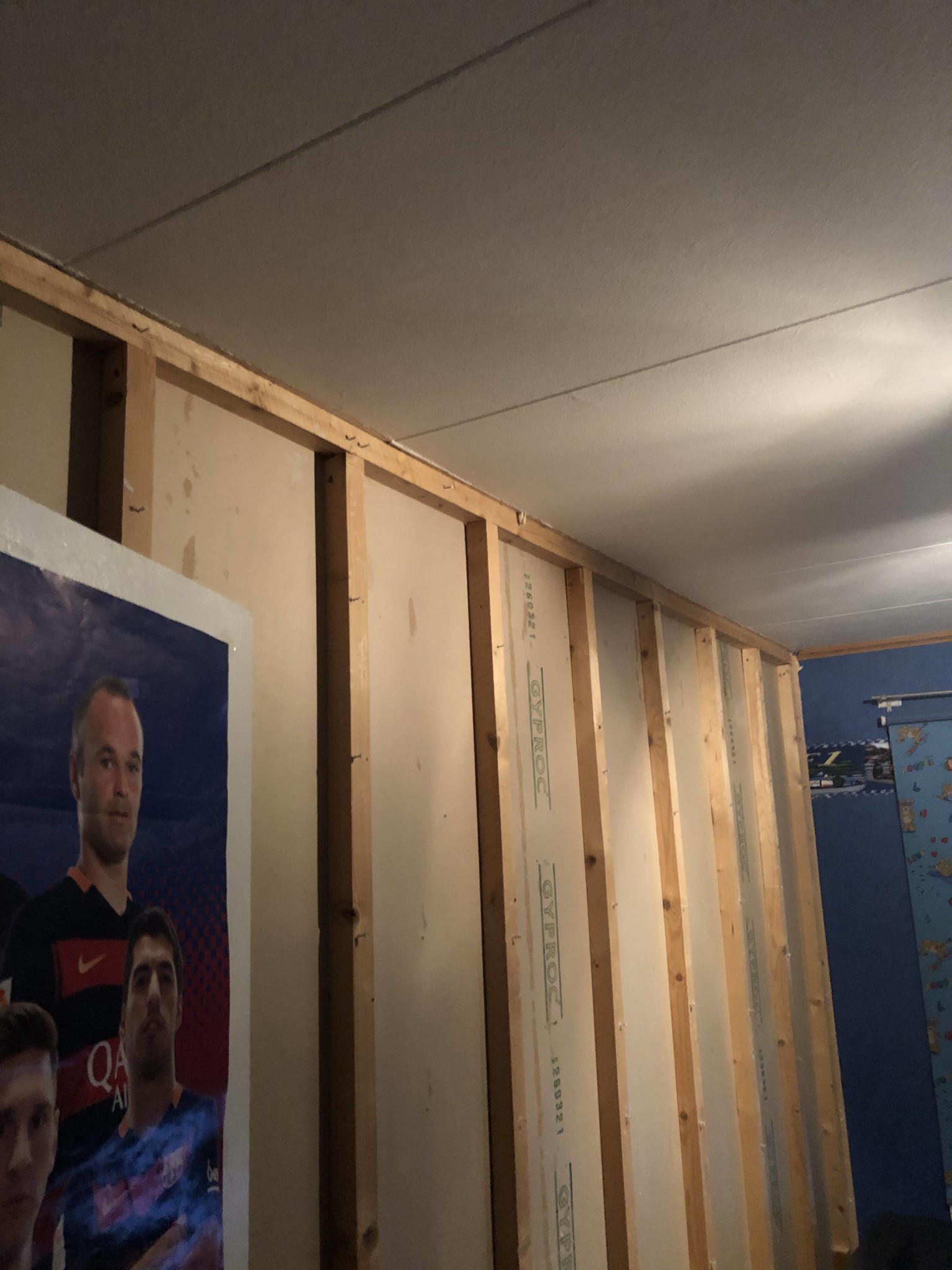
Hi!Z Zoki_ said:Old thread but asking a question, hope you see and answer if you can. I'm going to remove a wall between two small rooms to make one a little larger. The wall is not load-bearing but can you use a 115x115 glulam post as a glulam beam?
3.5 long. I want to use something as small as possible and can support.
If the wall is not load-bearing, why would you use a glulam beam?
It's because I want to feel better even though I don't want to see anything there. Now that I removed the plasterboard on one side, I noticed the wall is a bit flexible and the question is whether it's because one of the children's beds has pushed on one side or if it's due to something else. The wall is built with 45x45 battens and plasterboard so it can't be load-bearing; moreover, the ceiling plasterboard goes all the way into the other room.Per Sandwall said:

But a 115 “balk” probably won't make a difference at that span.
H hempularen said:
Per, I am an amateur, can you please explain what you mean by that? Are you saying it won't have any function even if I put up such a glulam beam? My brother-in-law has a glulam beam lying at home, and I can get it; it's 12cm wide, over 30cm high, and 4m long. My thought was to cut a piece of it to about 15cm high (getting at least three 45 ribs laminated at that height), trim it to my needed length, which is 352cm, groove it into the plasterboard and install it, then support it with two 45x120 studs on the sides. Am I off track? What would you do, Per?H hempularen said:
In principle, there is nothing to prevent using a glulam column as a beam. The glulam column is intended to be a column since it has a square cross-section, but otherwise, it is essentially the same. As a beam, however, 115x115 has very limited stiffness. It can be compared to a 42x160 mm glulam beam. With a span of 3.5 meters, it can withstand at most about 100 kg per meter. That is not much to go on.
What would you do in my place? I'm worried, I've already removed a load-bearing wall between the kitchen and living room (had a company do it, it became an H beam).J justusandersson said:In principle, there's nothing stopping you from using a glulam column as a beam. The glulam column is intended as a column because it has a square cross-section, but otherwise, it's pretty much the same thing. However, as a beam, 115x115 has very limited stiffness. It can be compared to a 42x160 mm glulam beam. With a span of 3.5 meters, it can handle at most about 100 kg per meter. It's not much to go on with.
I talked to a guy at the municipality (building committee) and he told me it's not load-bearing, but if you remove the wall and go upstairs and walk, see if the floor gives way any. I'm just looking to support so I don't have to think about it when we're a few people upstairs.
As I wrote, I have access to a glulam beam that I cut in height to 15cm high (at least 3 glued ribs) and it's 12cm wide. 352cm long. I was thinking of grooving in the ceiling plaster 12cm wide, placing your glulam beam there and supporting it with 45x120 on the sides (I'll groove the plaster for these too) so the wall plaster doesn't have any support underneath. I thought I could screw above the plaster or??
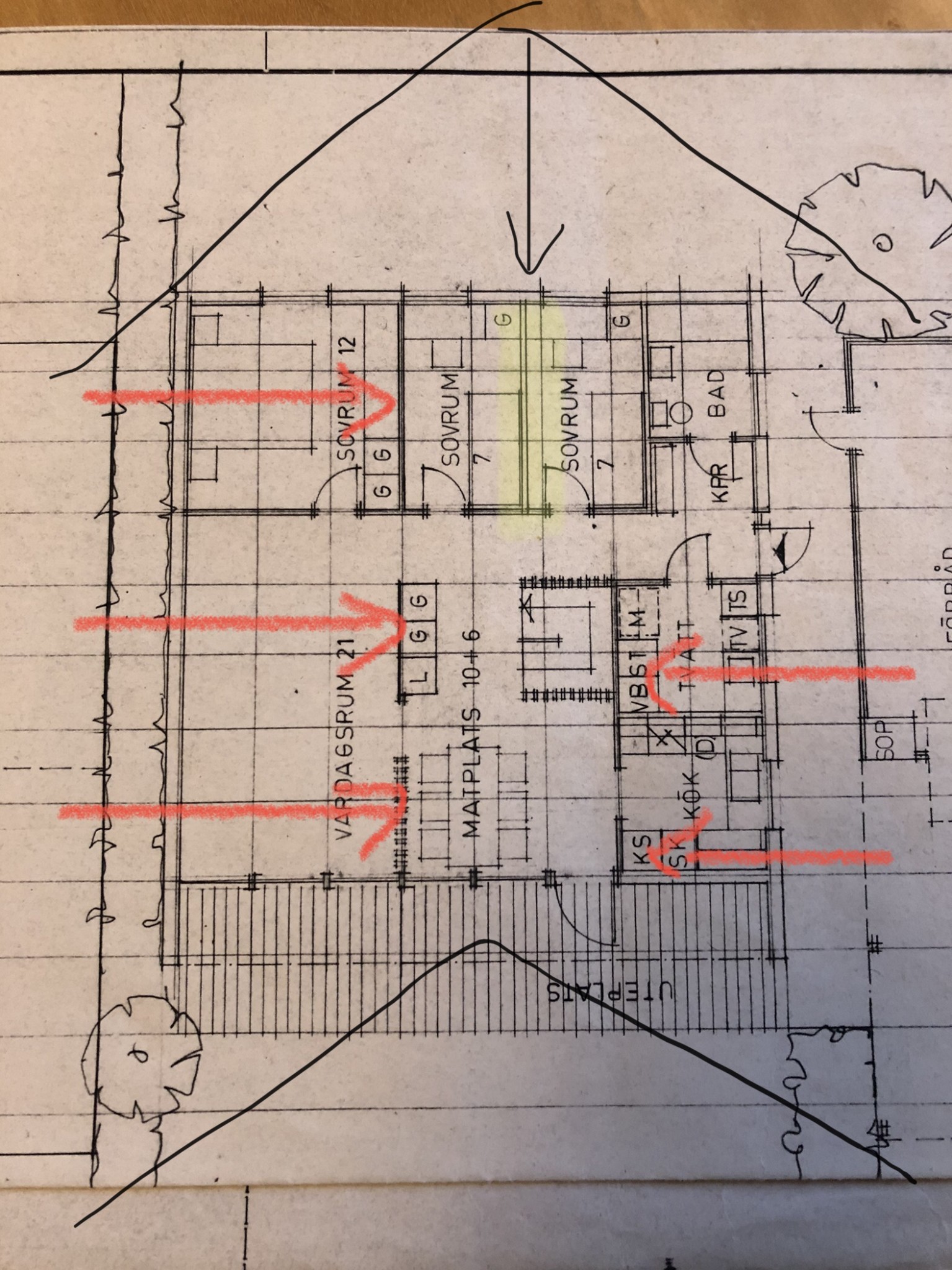
If you suspect that the wall is load-bearing, you should also size the beam as if it is. There's no point in installing your split beam; it’s too weak. You can choose an extra-wide glulam beam that is not as tall (though taller than the one you split). Provide the house's interior dimensions, snow load zone, and show a photo of the house's exterior for an indication of what it involves.
The wall is not load-bearing, but for my peace of mind and to avoid the floor bending when you're on the upper floor, I wanted to do as I said. Please just tell me if my example with the laminated beam will provide less support than what I have now? It's a 45x45 and gypsum on either side that's currently holding. If you were to use an H steel beam, would H100, which I believe is almost 10cm wide and 10cm high, be sufficient? I'm considering a maximum of H120.J justusandersson said:If you suspect that the wall is load-bearing, you should also dimension the beam as if it is. There's no point in setting up your split beam; it's too weak. You can choose an extra wide laminated beam that isn't so high (though higher than the one you've split). Tell the dimensions of the house, snow zone, and show a photo from the outside of the house, and you'll get an idea of what it's about.
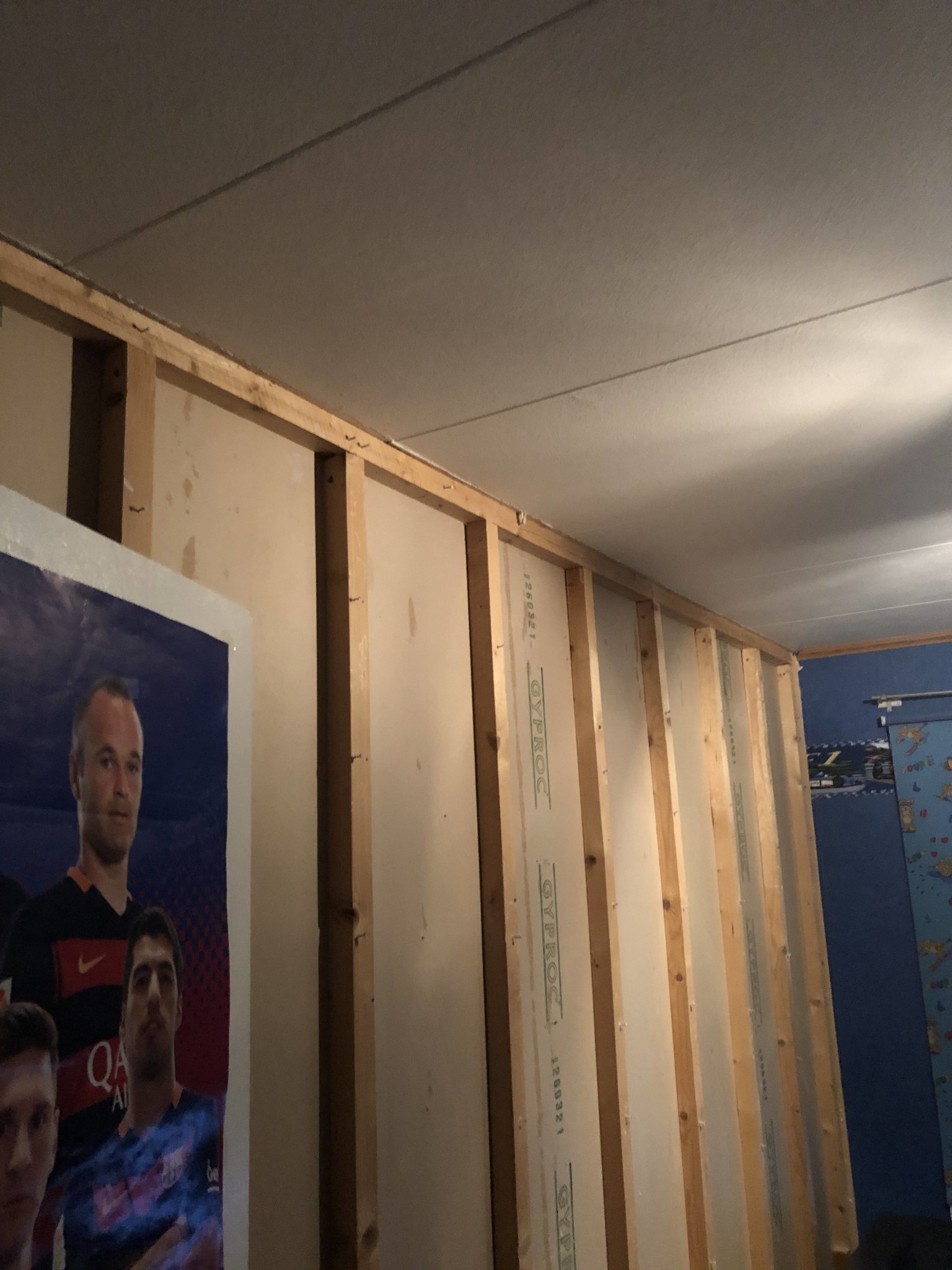

Yes, a 115x115 glulam beam, a few meters long with support at each end, holds significantly less than the existing wall. To fully replace the existing one, I roughly estimate, without precise calculation, that you need a glulam beam with at least a 220 height. But I personally have a glulam beam of 315x115 to support a width of 4.5 meters across the middle floor of the house.Z Zoki_ said:
Your only task now is to find out if the two other walls on either side also/instead support the structure so that the wall you want to remove can be taken down without additional reinforcement. In that case, you can skip the glulam post entirely, or put it there if it feels better. Or you can assume no support from these walls at all and instead install a proper glulam beam with dimensions in the range of 220 to 315 in height, or alternatively a steel beam for a lower profile.
If I'm interpreting your drawing correctly, at least one of the walls between bed/bed/bed/bath should be load-bearing, I would even have guessed the yellow-marked one you want to remove, otherwise, the span for the floor structure would be long. But the dimension of the wall seems too small to be a load-bearing wall, how thick are the other walls?Z Zoki_ said:What would you have done in my place? I am worried, I have already removed a load-bearing wall between the kitchen and living room (I hired a company, it became an H-beam)
I talked to a guy at the municipality (building committee) and he told me, it is not load-bearing but if you remove the wall and go upstairs and walk, see if the floor gives at all. I just want to support it so I don't think about it when we have several people upstairs.
As I wrote, I have access to a glulam beam that I split in height to 15cm high (at least 3 glued ribs) and it is 12cm wide. 352cm long. I planned to cut into the ceiling plaster 12cm wide, place the glulam beam there and support it with 45x120 on the sides (I also cut the plaster to these) so the wall plaster has no support underneath. I thought I could screw above the plaster or ??
Z Zoki_ said:What would you have done in my place? I'm worried, I have already removed a load-bearing wall between the kitchen and living room (I hired a company, it became an H-beam).
I talked to a guy at the municipality (building committee) he told me, it is not load-bearing, but if you remove the wall and go upstairs and walk, see if the floor gives a little. I'm only after support so I don't think about it when there are a few of us upstairs.
As I wrote, I have access to a laminated beam that I split in height to 15cm high (at least 3 glued beams) and it is 12cm wide. 352cm long. I thought about routing the plaster ceiling 12cm wide, placing your laminated beam and supporting with 45x120 on the sides (I will also route the plaster for these) so that the plaster has no support underneath. I thought I could screw above the plaster or ??
What kind of foundation do you have, do you have a basement, crawl space or slab foundation? You can see which walls are load-bearing in the foundation, as the load-bearing walls need to have support under them in the foundation.
I don't have a basement, it's a concrete slab and there is no load-bearing wall.M mattoys said: