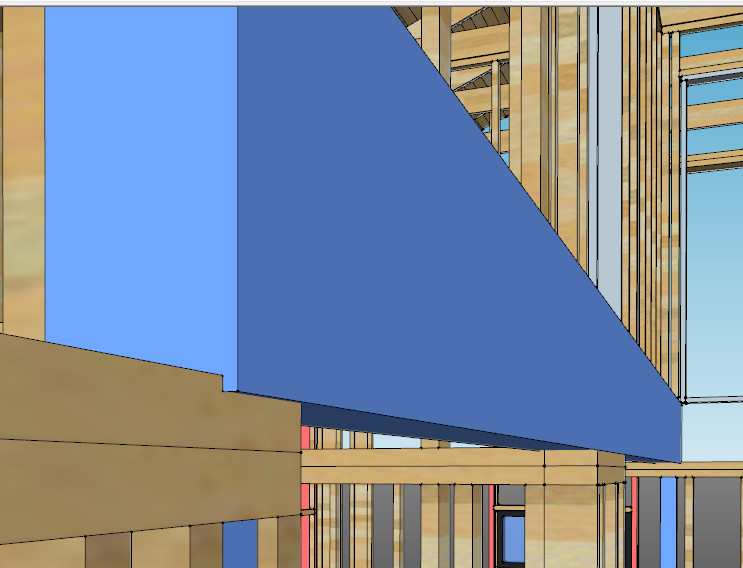
In the spring, I will build my own house and am now planning how best to perform certain tasks. I have now reached the point of deciding the best way to lay out my glulam beam that spans over two openings. The first opening is for the stairs, and the second is for an open kitchen.
The glulam beam has been dimensioned by the engineer to 140x360. The floor joists are 350 mm high from Masonite Beams, and the attachment to the glulam beam will be with joist hangers. As you can see, there is a 10 mm difference between the floor joists and the glulam beam.
My consideration now is what would be best; to let the glulam beam stick up 10 mm above the floor joists or go down 10 mm below the floor joists?
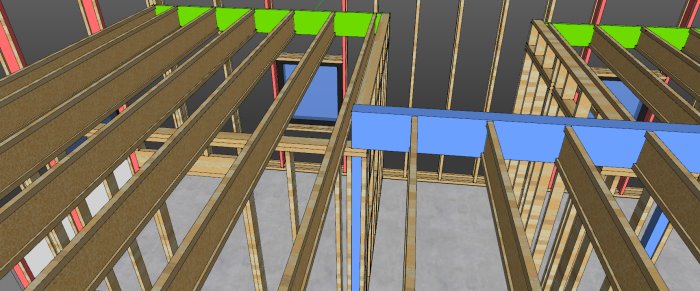
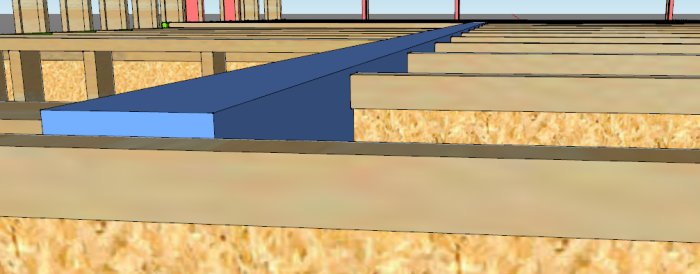
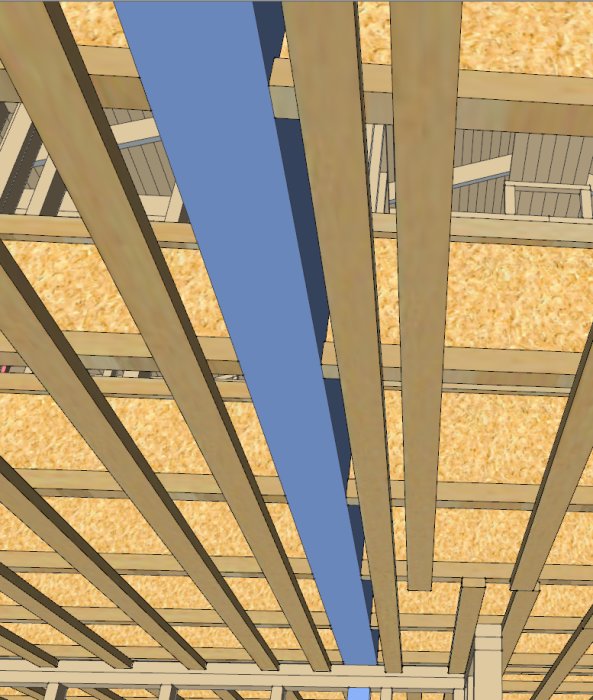
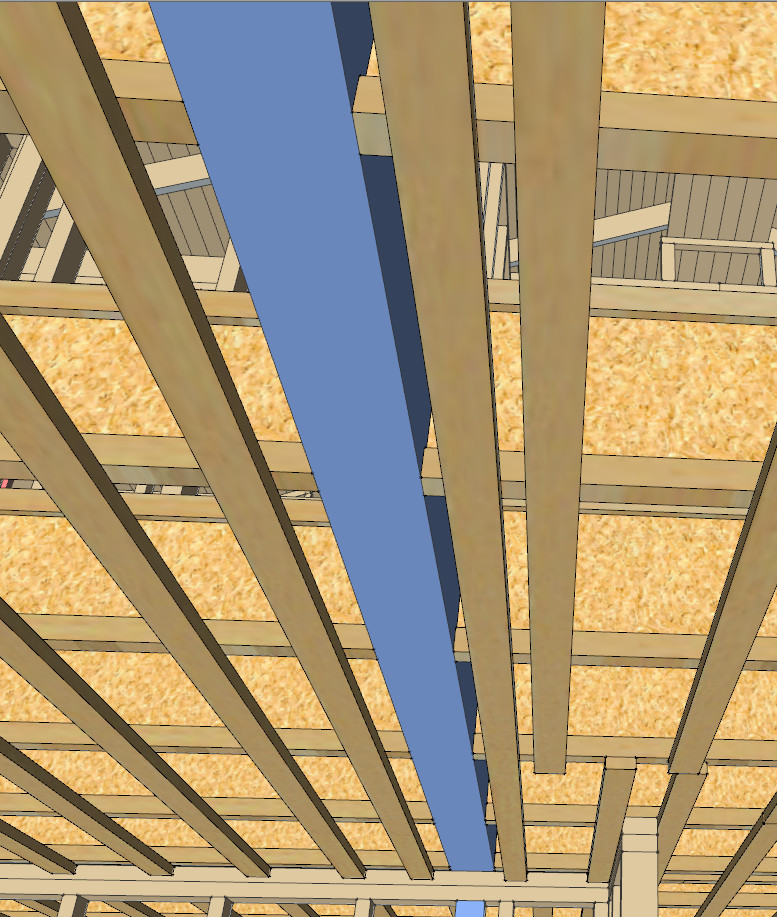
Advantages as I see it with letting the beam stick up 10 mm are that I can easily build all the load-bearing walls with the same length of studs and assemble them. Also, I can level and set it correctly before placing the glulam beam directly on these walls. It feels like the assembly will be best this way. Another advantage is that I can install the sparse paneling in the ceiling of the ground floor a few cm from the glulam beam and run electrical wiring under the beam and then up into the floor structure again to easily get power into the kitchen. (see image 7)
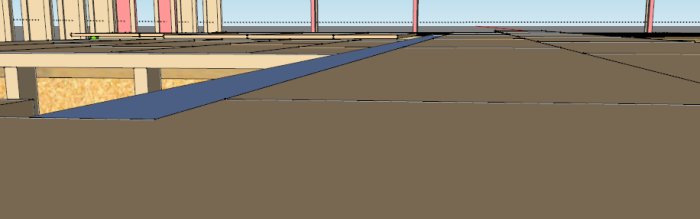
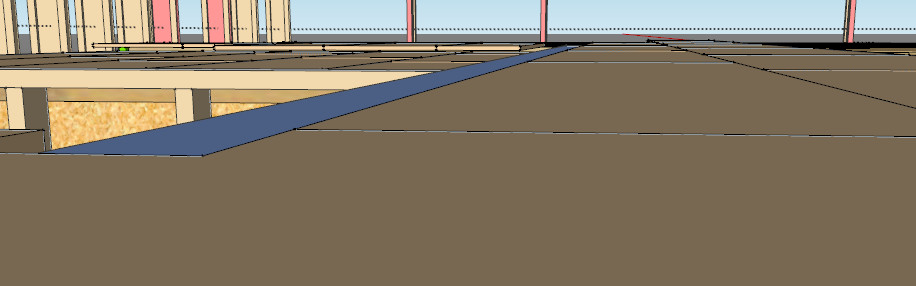
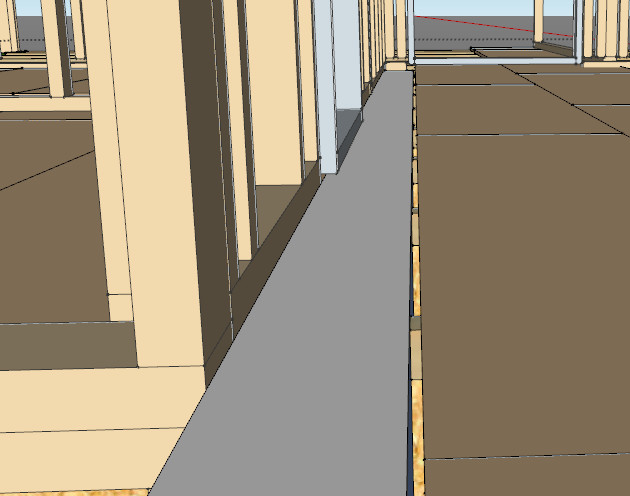
Since the beam is 10 mm higher, I can solve the flooring situation by laying a strip of 12 mm chipboard directly on the beam, making it flush with the rest of the flooring which is 22 mm (10 + 12 = 22). The only downside there is that the flooring isn't screw-glued on the glulam beam, but I don't think that matters at all since the floor joists are securely screwed with joist hangers there. Instead, there will be an expansion joint of 10 mm against the beam.
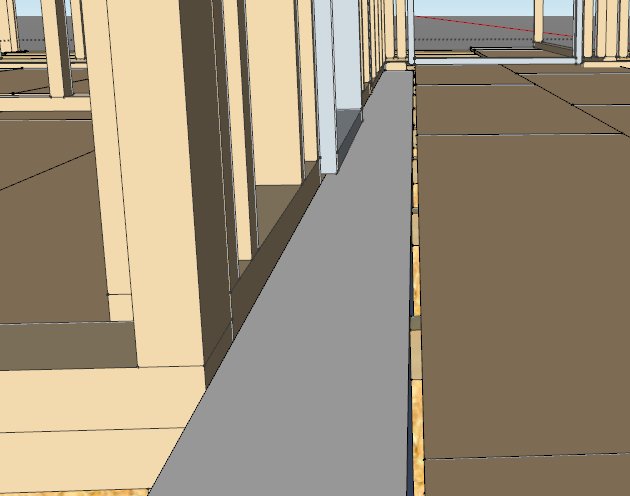
I should also note that on one side of the beam, there will be a bathroom, and there the floor joists are 300 mm high instead of 350 mm. In other words, I must divide the floor at the glulam beam. See image 6, to the right of that wall the joists are 350 mm, and to the left they are 300 mm.
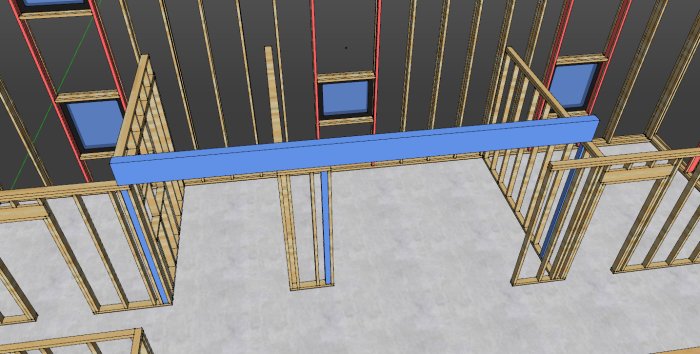
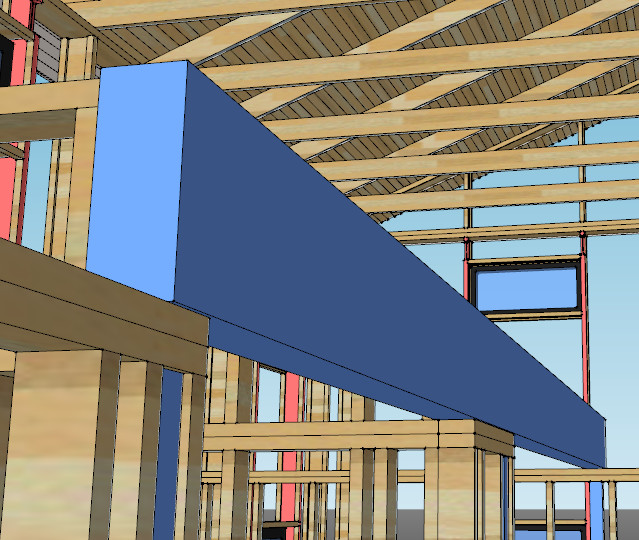
If I instead install the glulam beam so that it is flush with the top of the floor joists, I will have to end the top plate before the glulam beam in image 2 and make the glulam column higher and place the beam directly on the column. It won’t be as good a solution to connect the corner of that wall then. Also, it will be very cramped to run conduits under the beam, leaving only 18 mm between sparse paneling and beam then.
Can I get some comments and feedback on this? I’m all alone with these thoughts and need to hear some opinions!
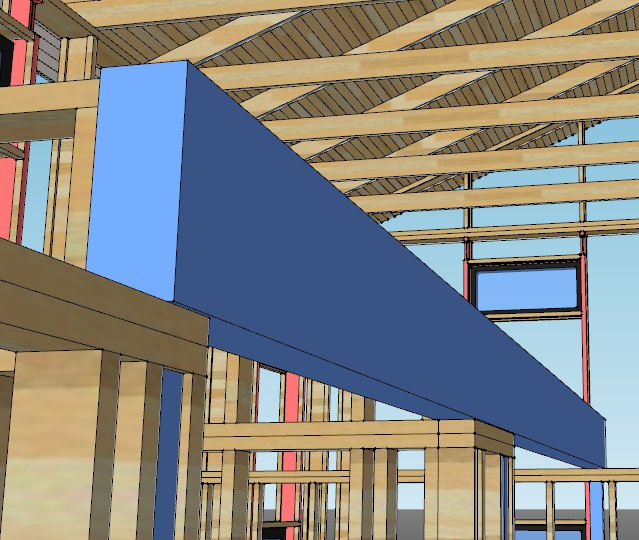
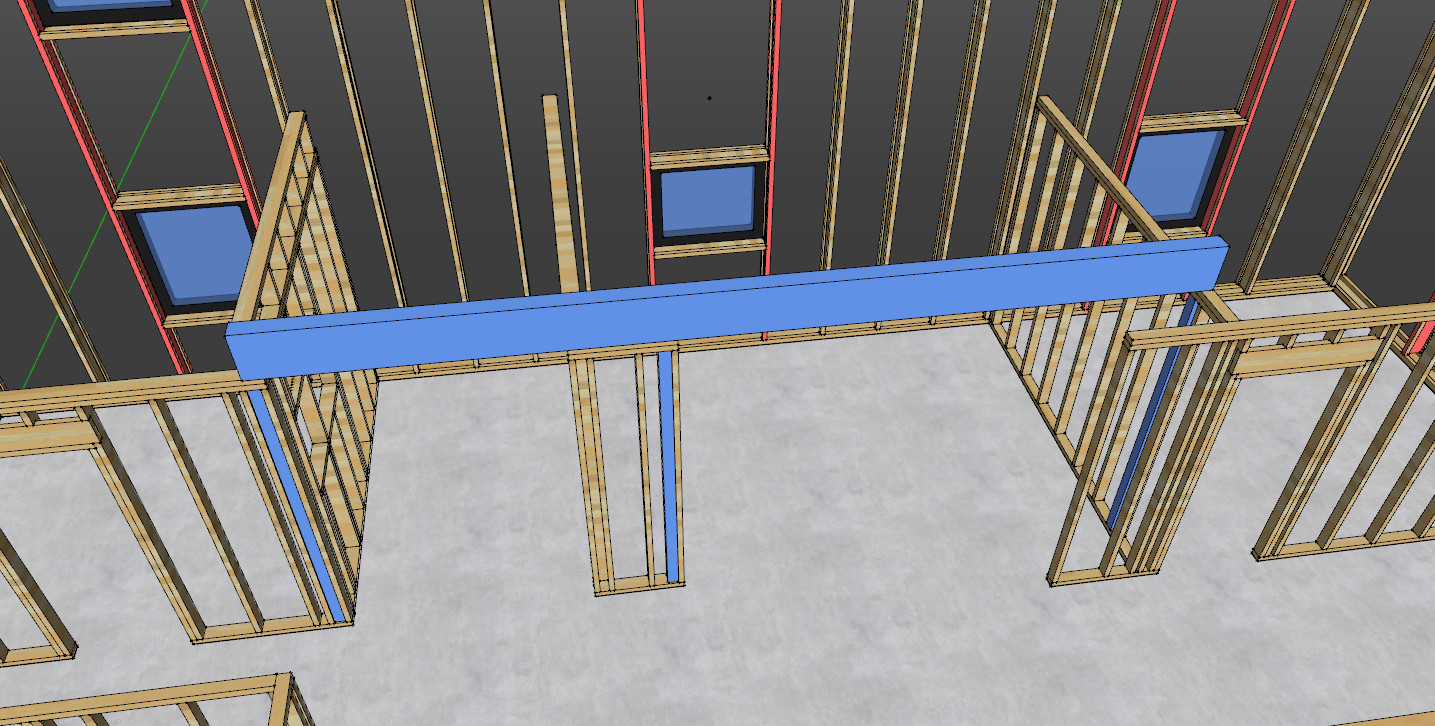
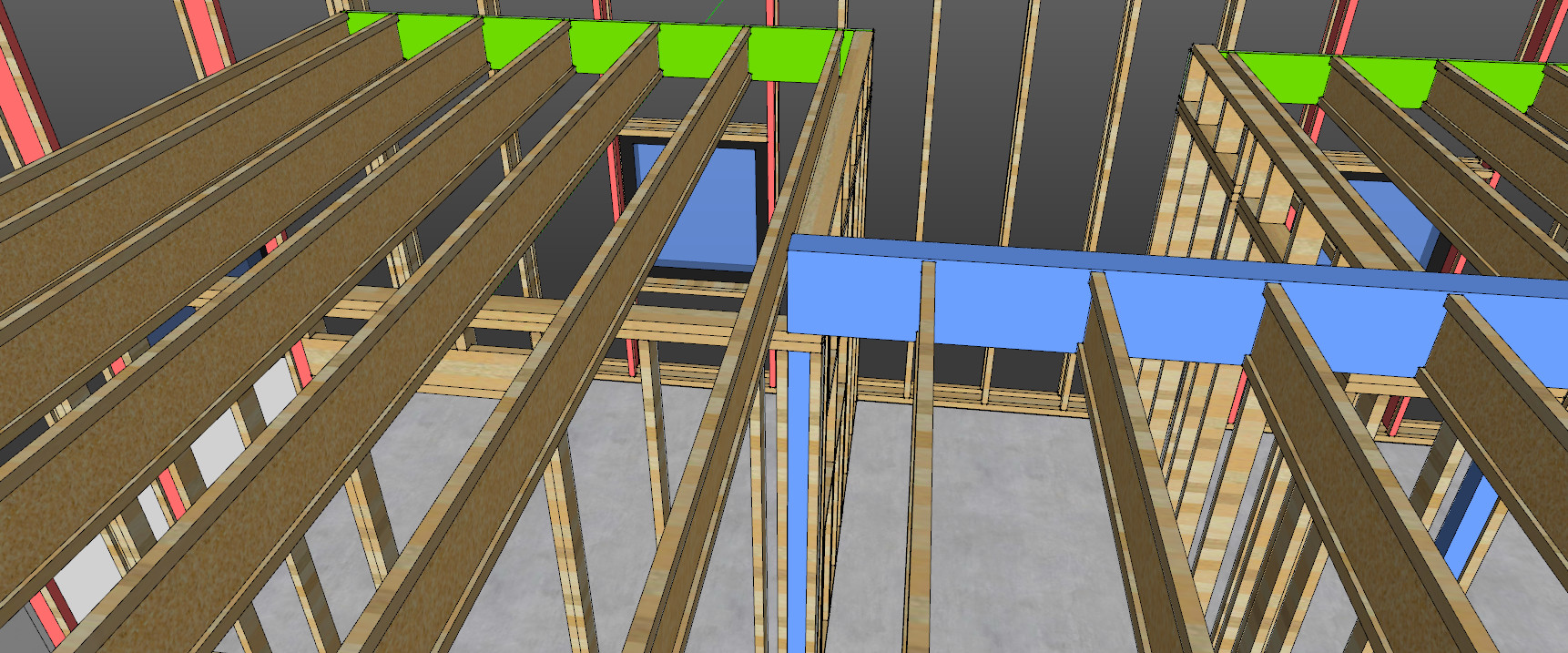
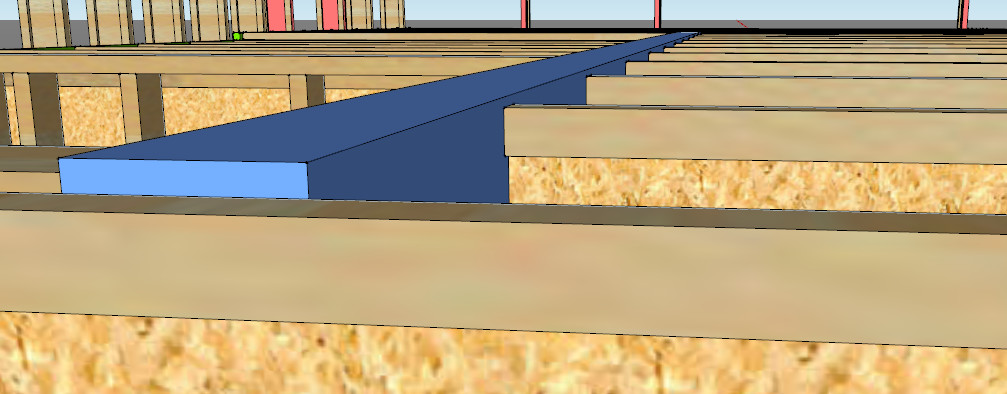
Here come a bunch of illustrations from the model I've made. For clarity, I've made the glulam beam blue. There are also 3 glulam columns that are blue. Captions below the pictures.
Image 1: Overview of the glulam beam and its supports
Image 2: Support on the top plate. I have double horizontal top plates (USA style) to facilitate attaching boards.
Image 3: Shows how the wall that the beam rests on is also a load-bearing wall for the floor joists. Will recess a reinforcement (45x195) in that wall or place a stud under the floor joist.
Image 4: Shows how the glulam beam sticks up 10 mm above the floor joists.
Image 5: Layer of chipboard flooring has been added. The glulam beam is then 12 mm under the chipboard flooring.
Image 6: 12 mm chipboard flooring has been placed on the glulam beam (gray/white color). Also shows the framing of the bathroom wall which will be to the left of the beam
Image 7: Sparse ceiling paneling on the ground floor, here I can easily run electrical wiring into the kitchen under the glulam beam and back up into the floor structure.
Glued laminated timber is available in a number of standard dimensions, and the designer has chosen the nearest dimension that is at least as strong as needed. You could check with him if a height of 350 mm is OK, which is likely as there are fairly significant steps between dimensions. If so, you can reduce the height by 10 mm to make everything fit perfectly. It can be sawn from two sides if you don't have a monster saw.
I think you have found a good solution. I would probably have dropped the beam into the hammarband, since the floor is more sensitive than the inner ceiling, but I really think your method works.
In the same way that it's nice to let all walls be the same and just throw up the between-floor joist, it's quite nice to just throw out 22mm chipboard over the entire surface, so I think those two take without each other.
Glulam exists in several standard dimensions, and the constructor has chosen the nearest dimension that is at least as strong as needed. You can ask him if a height of 350 mm is OK, which is likely since there are fairly large steps between the dimensions. Then if you want, you can reduce the height by 10 mm so everything aligns perfectly. It can be sawed from both sides if you don't have a monster saw.
I will check with the constructor if it's possible to reduce it to 350. I will purchase the glulam together with the Masonite beams from Masonite Beams, and they might even have the ability to cut off 10 mm for me before delivery.
JJKrister said:
I think you have found a good solution. I would probably recess the beam in the wall plate, as floors are more sensitive than ceilings, but I think your method will really work.
In the same way that it's nice to let all the walls be the same and just throw up the intermediate floor, it's also nice to just lay out 22 mm chipboard over the entire area so those two I think match up well.
Exactly, I'm worried that it might have a negative impact on the floor. But as I have shown, the floor ends after the glulam beam and is then recessed by 50 mm. Since it's only the area that the glulam beam occupies; 140 mm wide and 6647 mm long, I think it shouldn't affect much, right? There shouldn't be any risk of squeaking? The screw-gluing effect on the beam should be very good since the entire 12 mm chipboard rests against the glulam.
If you can't get the beam 350 mm high, I would also set it into the top plate and get the floorboards perfect.
If it's tight to pass with electricity under the beam, I would, without hesitation, notch a few mm in the beam right where pipes/conduits pass.
It just feels like a very tedious process to set the beam 10 mm down on three different walls.. At least compared to screw-gluing 12 mm floorboard on top of the beam and having a movement joint between the beam and the rest of the floorboard.
It becomes more work to set in the beam, and also I think it must be harder to get the beam completely flat and level with the floor joists, right?
My thought was to put up all the load-bearing walls and the beam for the floor joists and level this before I lift up the glulam beam because then it should fit directly. It's quite heavy and difficult to move, so it would be nice if its base is perfect before lifting it into place. But I'll definitely consider setting it in, but my proposal is still a good solution?
It just feels like a very tedious process to recess the beam 10 mm on three different walls...
At least compared to screw-gluing 12 mm floorboards on top of the beam and having a movement joint between the beam and the rest of the floorboards.
It would be more work to recess the beam and also I think it must be harder to get the beam completely flat and aligned with the floor joists, right?
My thought was to erect all the load-bearing walls and the main beam for the floor joists and level this before lifting the glued laminated beam, so it should fit well directly. It's quite heavy and difficult to move, so it would be nice if its support is perfect before lifting it into place.
But I will definitely consider recessing it, but isn't my suggestion a good solution anyway?
[image]
Maybe I'm missing something, but it seems fairly simple to notch the top plate for the beam? Score with a circular saw and chisel away the remaining part, or rout it down with a hand router. If you're reasonably careful it will be a flat and nice support.
One aspect if you're thinking about laying the floorboards on the beam is the tolerances. The wood guide specifies +4 mm to -2 mm on the height measurement. That's a lot on a short piece of floorboard.
Click here to reply
Vi vill skicka notiser för ämnen du bevakar och händelser som berör dig.



Bernieberg said:
Glulam exists in several standard dimensions, and the constructor has chosen the nearest dimension that is at least as strong as needed. You can ask him if a height of 350 mm is OK, which is likely since there are fairly large steps between the dimensions. Then if you want, you can reduce the height by 10 mm so everything aligns perfectly. It can be sawed from both sides if you don't have a monster saw.