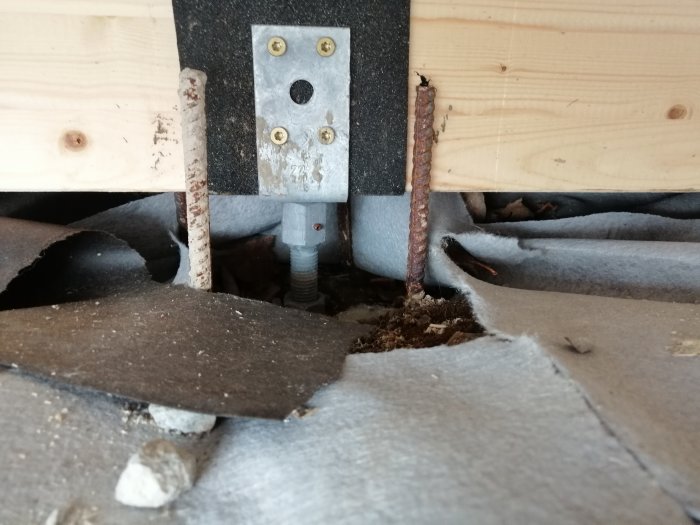
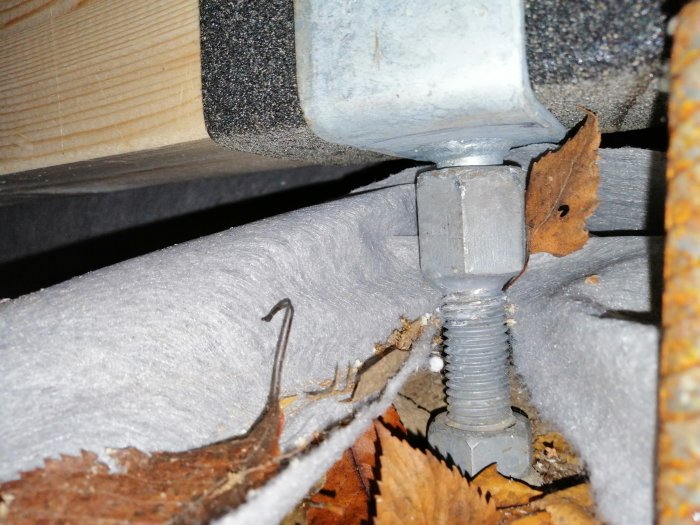
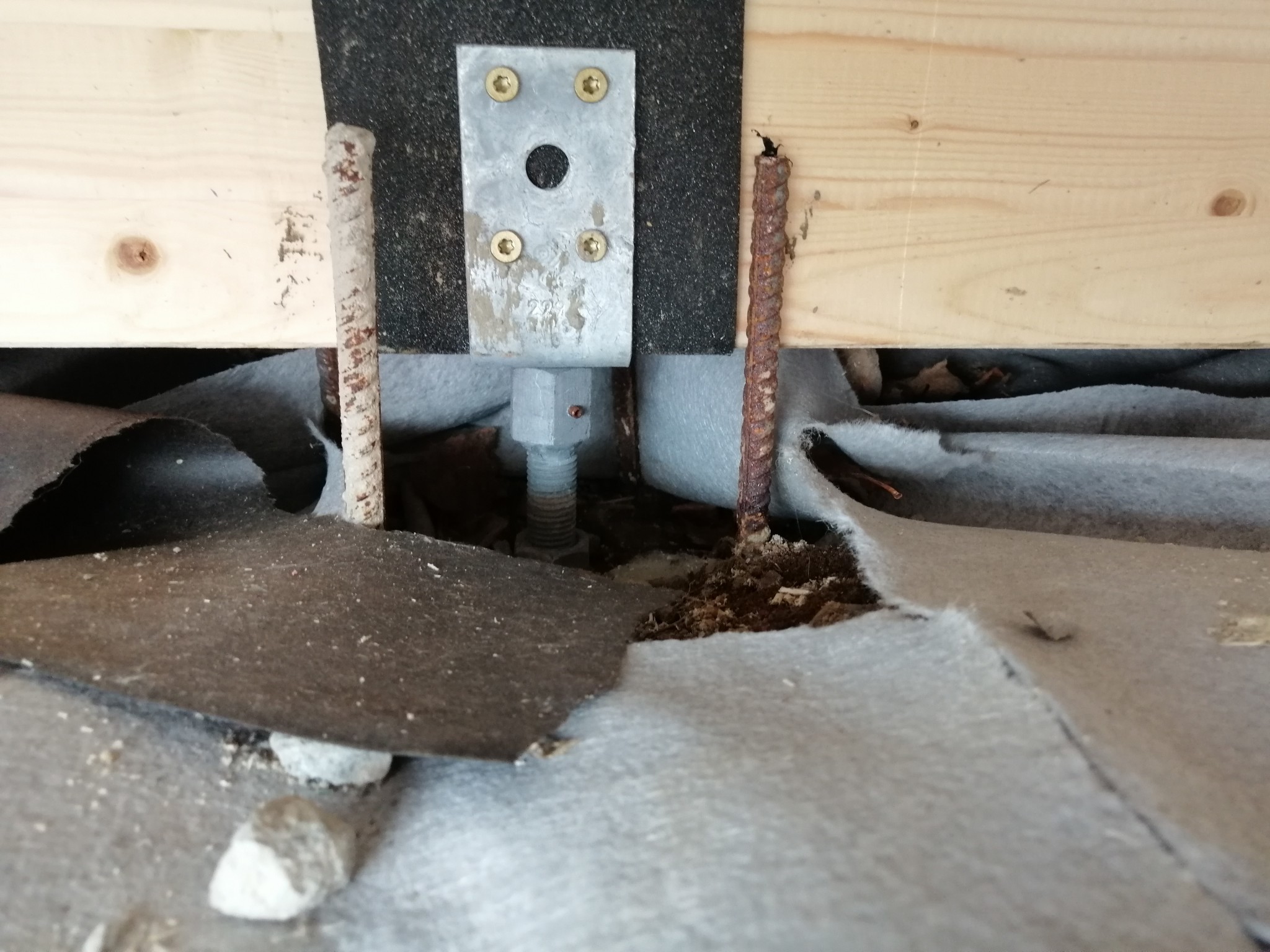
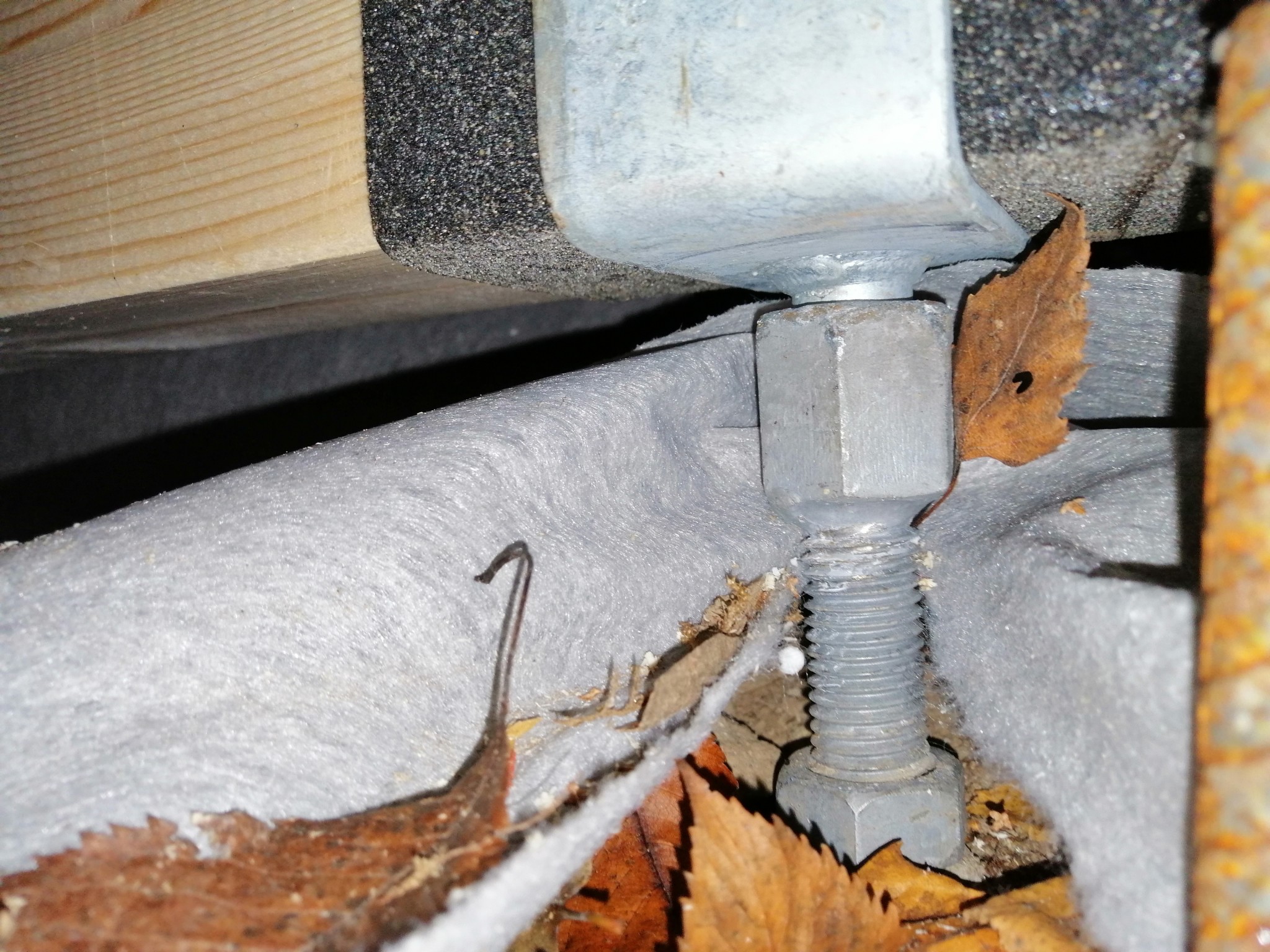
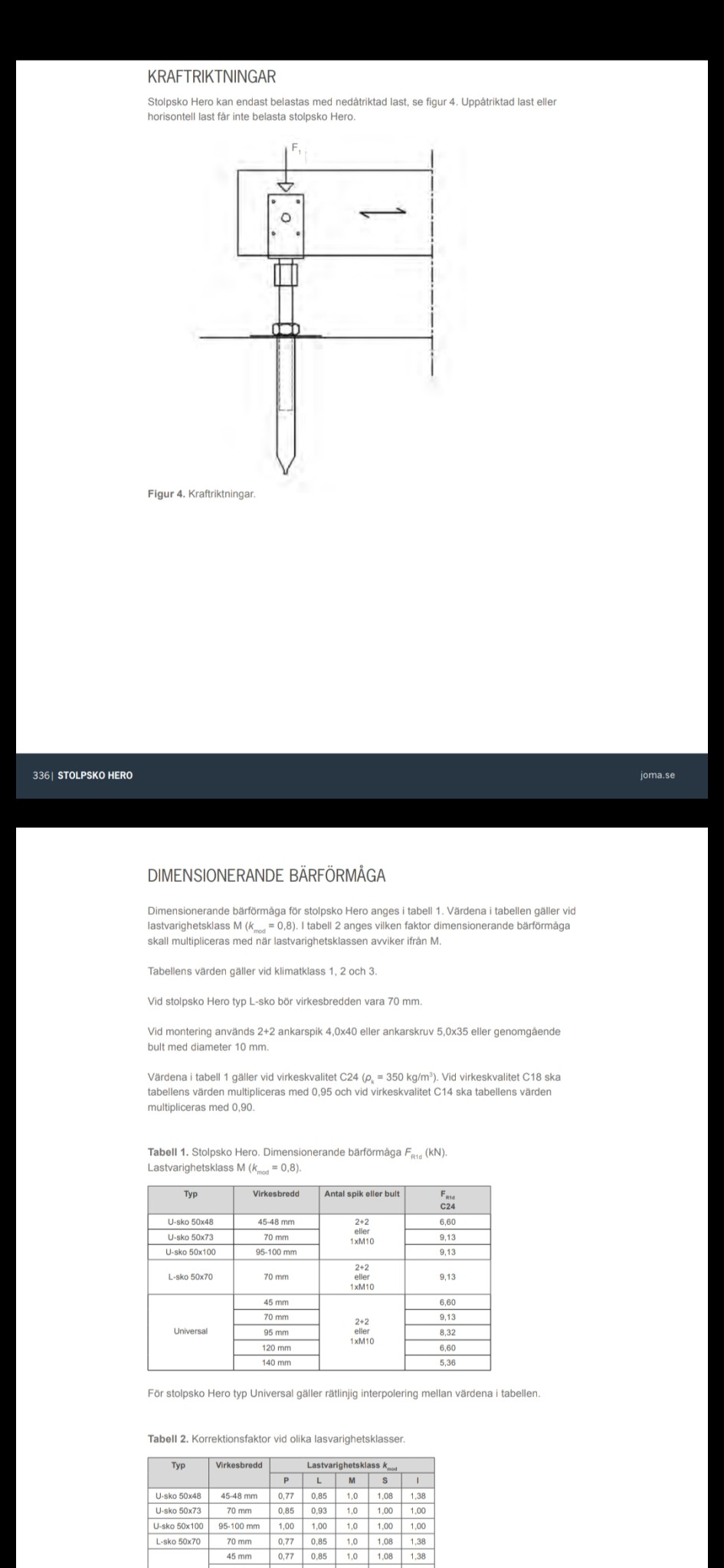
I have an extension that rests on these post shoes. It is of the "joma hero" brand.
The concrete foundation is very substantial. It's mostly the actual post/beam shoes that concern me, as I want to clad the inside with triple-layer drywall. (roof of concrete tiles etc.)
The extension is 15 square meters (outer dimensions) and there are a total of 4 post shoes.
There are different variants of the post supports with varying load capacities. There must be a model designation or similar that provides more guidance. When I quickly looked at the manufacturer's website, I found ones that could handle 20 and 30 kN respectively. With 20 kN per post support, 4 post supports are not enough.
There are different variants of the post shoes with different load capacities. There must be a type designation or something similar that provides more guidance. When I quickly looked at the manufacturer's website, I found ones that handled 20 and 30 kN. With 20 kN per post shoe, 4 post shoes are not enough.
I understand, what does "kn" mean?
Attached is a picture of information regarding my post shoes. I believe I have the largest size of them.
I'm not the one who built this. But I had trouble trusting the builders' expertise, hence my concern
kN is pronounced kilonewton and is a measure of load. 1 kN corresponds to approximately 100 kg. The values in the table you attached vary depending on the model. You need to find out which model you have.
kN is pronounced kilonewton and is a measure of the load. 1 kN corresponds to about 100 kg. The values in the table you attached differ depending on the model. You need to find out which model you have.
Okay, thanks. It's likely "U-sko 50x100" that I have. I read in another thread that they should handle 7-9 tons each... But maybe that's not true.
No, rather 900 kg each. You can assume that your extension represents a load of about 100 kN, i.e., about 10 tons. Then you need more than 10 post shoes. The easiest way is to complement with other types of footings that can handle a larger load.
No, rather 900 kg each. You can assume that your extension represents a load of about 100 kN, i.e., about 10 tons. Then you need more than 10 post bases. The simplest is to complement with other types of foundations that can take a larger load.
That sounds logical, but it doesn't make sense to me. It has been almost completely built for over half a year now without any problems. The requirement of 10 cannot be correct.
Do you have an example of a post base that can handle a higher load, for comparison's sake?
The largest loads consist of snow and what is referred to as live load, i.e., furniture and people. Compared to that, the house doesn't weigh particularly much. Where is it located? That determines the snow zone and snow load.
According to my simple (very simple) calculations, the extension should not weigh more than maybe a maximum of 3 tons. Then approximately 40 percent of the roof rests on the old house, which eases the weight. The building is also partially attached to the old house, which eases it.
So out of a maximum of 3 tons (if that is correct), maybe 2 tons should rest on the post supports.
A 15 sqm detached building in the Stockholm area should weigh about 6 kN/sqm including dead weight, snow load, and live load (2 kN/sqm), i.e., a total of 90 kN or about 9 tons. If it is partially supported by the existing house, the situation obviously changes. However, it can hardly involve more than half the weight.
Yes, 9 tons at most with all loads. If the extension is not used, no useful load arises. The snow loads can be considered as maximum values over a 50-year period. The roof design also has significant importance for how snow load is calculated. So it's not surprising if the construction hasn't been tested yet. If you want to refine the reasoning, drawings are needed.
Vi vill skicka notiser för ämnen du bevakar och händelser som berör dig.