Is it possible to replace a glulam beam with a steel beam?
1.5-story house
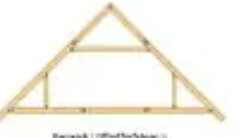
Rafter similar to this with 220 joists
The current glulam beam is 3 meters long and the house is 8 meters wide, which means there are 4 meters on each side of the beam.
I have seen threads and found inspiration for a solution like this:
I understand that the load-bearing capacity is reduced if the intermediate floor is split, but how do you do it in new houses where a steel beam is installed to avoid having a glulam beam under the floor?
Is it possible to replace a glulam beam with a steel beam?
1.5-story house
Roof truss similar to this with 220 joists
[image]
The current glulam beam is 3 meters long, and the house measures 8 meters wide, which means there are 4 meters on each side of the beam.
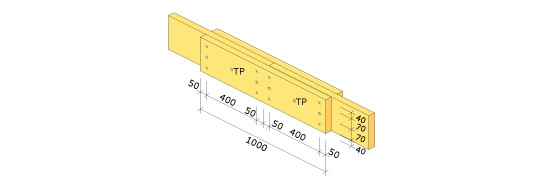
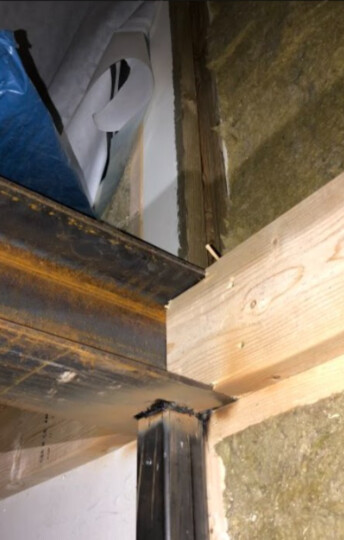
I have seen threads and found inspiration for a solution like this:
[image]
I understand that the load-bearing capacity becomes worse if you split the intermediate floor, but how do you then do in new houses where a steel beam is installed to avoid having a glulam beam under the floor?
Tips and ideas?
Don't really understand what you want to do? Remove a load-bearing interior wall?
So there is a glulam beam under the bottom chord today. So you want to remove it and "embed" a steel beam to achieve a smooth underside?
In that case, the tension in the bottom chord must be transferred via the steel beam. Besides handling vertical loads. Welded plates that are screwed to the truss, for example. But the screw must not be too close to the edge.
So there is a glued laminated timber beam under the bottom chord today. So you want to remove it and "recess" a steel beam to have a flat underside?
In that case, the tensile force in the bottom chord must be transferred via the steel beam. In addition to handling vertical loads, welded plates that are screwed to the truss, for example. But the screw must not be placed too close to the end.
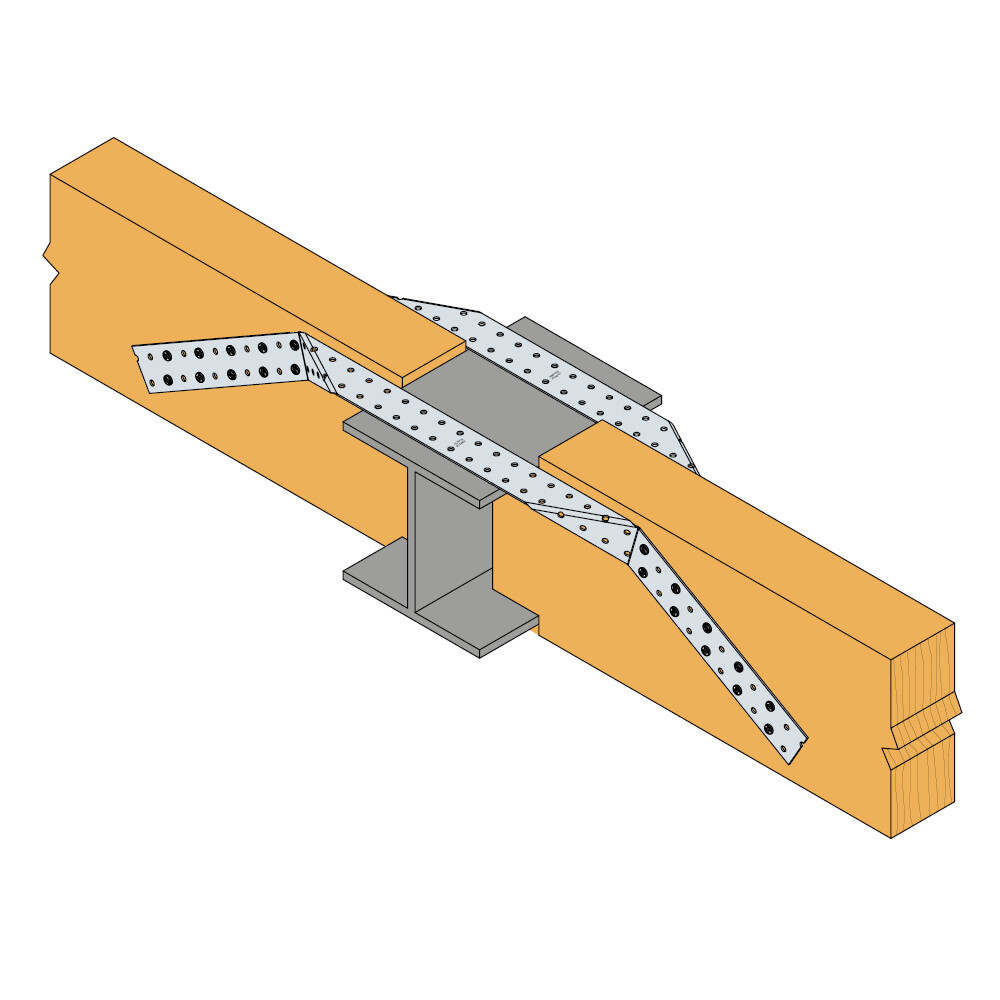
Do you mean, for example, to use those for the tensile force?
Sure, it's possible to change, but an engineer must calculate it, and it must also be reported to the municipality. So first of all, you should consult with an engineer to see how much smaller a steel beam can be compared to glulam. It might not differ that much, so it might not be worth the cost.
You mean for example using those for the tensile force?
[image]
There you go. Looks like a simple and good solution. The screws are placed far from the end of the wood. The tensile force is transferred via the perforated metal strap.
See there. Looks like a simple and good solution. The screws are placed far from the end of the wood. The tensile force is transferred via the perforated band.
The question is just how you get the beam in?
That's it.. I guess you'll have to cut the beams, lift the beam up, make a splice according to the wood guide. It probably won't be possible to replace the entire length in a reasonable way.
That's it.. I guess you have to cut the beams, raise the beam, make a splice according to the wood guide. It probably won't be possible to replace the entire length in a reasonable way.
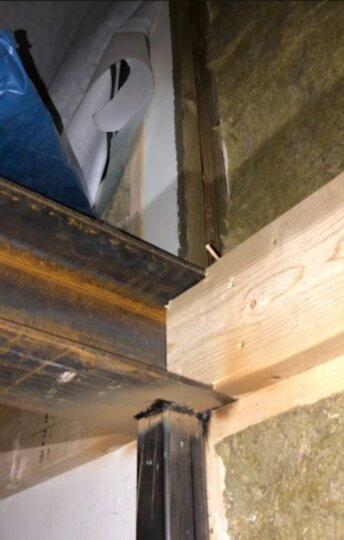
[image]
Possible that you should look at another solution. A VKR tube (square) with welded-on ears. A pity to add more splices. It might be necessary to have a temporary tie rod so that the truss doesn't split. In addition to stamps underneath.
It might be worth considering another solution. A VKR tube (square) with welded ears. It's a shame to add more joints. It might be necessary to use a temporary tie rod so the truss doesn't split. Apart from props underneath.
I haven't even read about that, and regarding dimensions, there's currently a glued laminated timber that is 90x315, which I calculate should correspond to an HEA160 or alternatively 180. However, if one were to embed the wood into the beam through a joint, it would be advantageous to go for an HEA220. On the other hand, if using VKR, it should be possible to reduce the height a bit.
If you recess a beam into a floor structure, then HEA 180 is preferable, as you get the top side flush with wood for the floor chipboard and it becomes easier to pass electrical wiring...
If you embed a beam in a flooring structure, then HEA 180 is preferable, partly because you can have a continuous wood surface for the floor and it becomes easier to pass with electrical wiring..
I haven't even read about that, and when it comes to dimensions, there is currently a glulam beam that is 90x315, which I figure should correspond to an HEA160 or alternatively 180. However, if one were to recess the wood into the beam through a joint, it would be advantageous to go with an HEA220. On the other hand, if you use VKR, you might be able to reduce the height a bit.
Do you have experience with VKR?
VKR is often used for columns. But it works just as well for beams.
Vi vill skicka notiser för ämnen du bevakar och händelser som berör dig.

StrukturalAB said:
So there is a glued laminated timber beam under the bottom chord today. So you want to remove it and "recess" a steel beam to have a flat underside?