
12,430 views ·
22 replies
12k views
22 replies
Stair renovation 50s house
I'm fully involved in renovating a 1950s house.
Now I've come to the staircase.
Wooden stair nose, but the steps seem to have a glued plastic carpet?
Ideally, we would like to have a wooden staircase. What do you think is underneath?
Grateful for suggestions on how we can proceed.
Alternatively, we could paint, but I'm unsure if the paint will stick to the glued plastic carpet.
One of the pictures is taken from underneath (the basement).
Now I've come to the staircase.
Wooden stair nose, but the steps seem to have a glued plastic carpet?
Ideally, we would like to have a wooden staircase. What do you think is underneath?
Grateful for suggestions on how we can proceed.
Alternatively, we could paint, but I'm unsure if the paint will stick to the glued plastic carpet.
One of the pictures is taken from underneath (the basement).

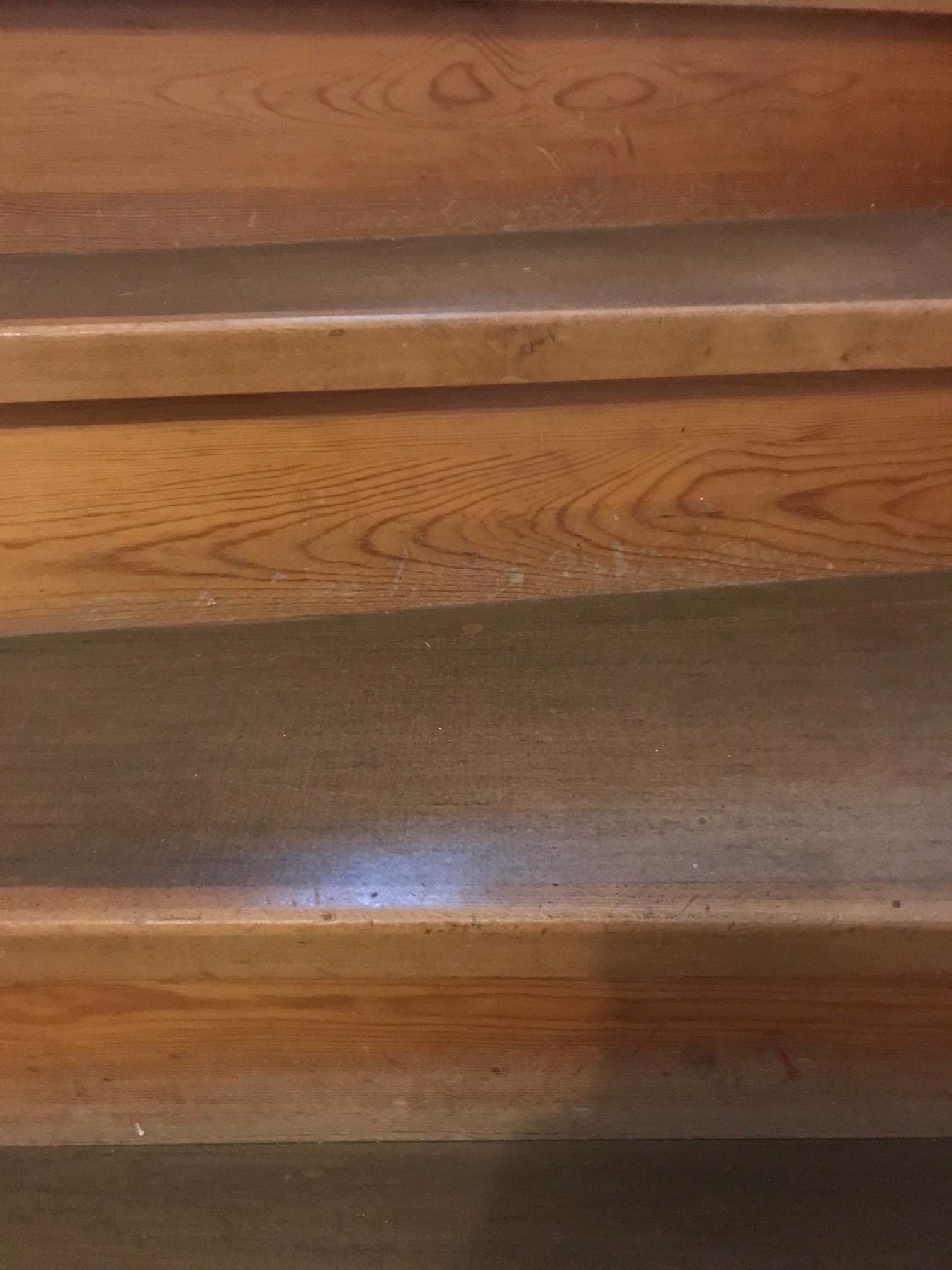



Certainly linoleum. Plastic hardly existed in the 50s. Where it did, it was called plastic! The stair nosings can probably be removed and then lowered to the wood level of the tread.
Hello and thanks for the response!Jonatan79 said:
Do you think the staircase will be "thick"/strong enough then? I think you might reach the planks you can see from the basement.
Do you need something where the stair nose is currently?
Linoleum has no load-bearing capacity. It is the wood in the staircase that bears the load today as well. There will be no difference.
Thanks for the answer. That could certainly be true.J justusandersson said:
Great tip! I don't see any screws on the stair nosings. Perhaps they're glued?
If it breaks. Do you have any tips for new ones?
You can make new noses, for example, from planed lists available at all better hardware stores. Use sandpaper to round them off. If the old ones are glued, try dissolving the glue with water or mild heat. The glues from the 50s were not particularly durable.
Hardwax oil type Osmo is superb! Easy to touch up.
Thanks.J justusandersson said:
Can they be made to match the color shade of the steps?
From the pictures I cannot determine if the staircase is both stained and varnished or if it is just natural yellowing of the pine. You probably can't determine this for sure until you've sanded the staircase. It is possible to stain first before applying hard wax oil. Such is also available pigmented. It is probably best to experiment.