
11,878 views ·
14 replies
12k views
14 replies
Soundproofing between two rooms?
Hi,
I have two bedrooms that are adjacent to each other; one is occupied by a 6-month-old baby and the other by an 11-year-old going through puberty. You could say they have somewhat different daily rhythms and interests.
I need to soundproof between these rooms. The house is from 1981, and the wall consists of boards, not drywall but some form of plywood boards attached to the studs.
The thing is, the room for the little one was just renovated before she arrived this summer, and I would prefer not to redo that work.
- Will adding drywall in the older kid's room have any effect?
- Can some form of insulation be sprayed into the wall for soundproofing?
- I've looked at acoustic panels, but they cost quite a bit and I'm a bit doubtful about their effectiveness.
I would appreciate any tips.
I have two bedrooms that are adjacent to each other; one is occupied by a 6-month-old baby and the other by an 11-year-old going through puberty. You could say they have somewhat different daily rhythms and interests.
I need to soundproof between these rooms. The house is from 1981, and the wall consists of boards, not drywall but some form of plywood boards attached to the studs.
The thing is, the room for the little one was just renovated before she arrived this summer, and I would prefer not to redo that work.
- Will adding drywall in the older kid's room have any effect?
- Can some form of insulation be sprayed into the wall for soundproofing?
- I've looked at acoustic panels, but they cost quite a bit and I'm a bit doubtful about their effectiveness.
I would appreciate any tips.
That's a whole science, and soon the thread will be full of experts  Here's how I did it, with very good results.
I framed a wall against the existing wall but kept an air gap between them. I attached the new studs with silicone, making sure they didn't touch the floor and surrounding walls. I added insulation, google which type insulates sound best, I can't remember. Then I slapped on double drywall. Make sure the seams overlap and apply latex generously in all holes and gaps. Almost completely silent. And I only did it from one side.
Here's how I did it, with very good results.I framed a wall against the existing wall but kept an air gap between them. I attached the new studs with silicone, making sure they didn't touch the floor and surrounding walls. I added insulation, google which type insulates sound best, I can't remember. Then I slapped on double drywall. Make sure the seams overlap and apply latex generously in all holes and gaps. Almost completely silent. And I only did it from one side.

As mentioned above, double plasterboard and insulation is a good start.
Perhaps also add a layer of plasterboard on the little one's wall; it's not too much work unless you've used patterned wallpaper or something?
I've got a bunch of kids in the house myself, and it's not exactly quiet at home, but rarely has anyone woken up from noise.
Friends who tiptoe around their only child have to resettle them every time someone flushes the toilet or a door opens...
So you can get them used to a bit of noise like that...
Edit: https://www.isover.se/isolera-mot-buller-och-storande-ljud
Perhaps also add a layer of plasterboard on the little one's wall; it's not too much work unless you've used patterned wallpaper or something?
I've got a bunch of kids in the house myself, and it's not exactly quiet at home, but rarely has anyone woken up from noise.
Friends who tiptoe around their only child have to resettle them every time someone flushes the toilet or a door opens...
So you can get them used to a bit of noise like that...
Edit: https://www.isover.se/isolera-mot-buller-och-storande-ljud
Last edited:
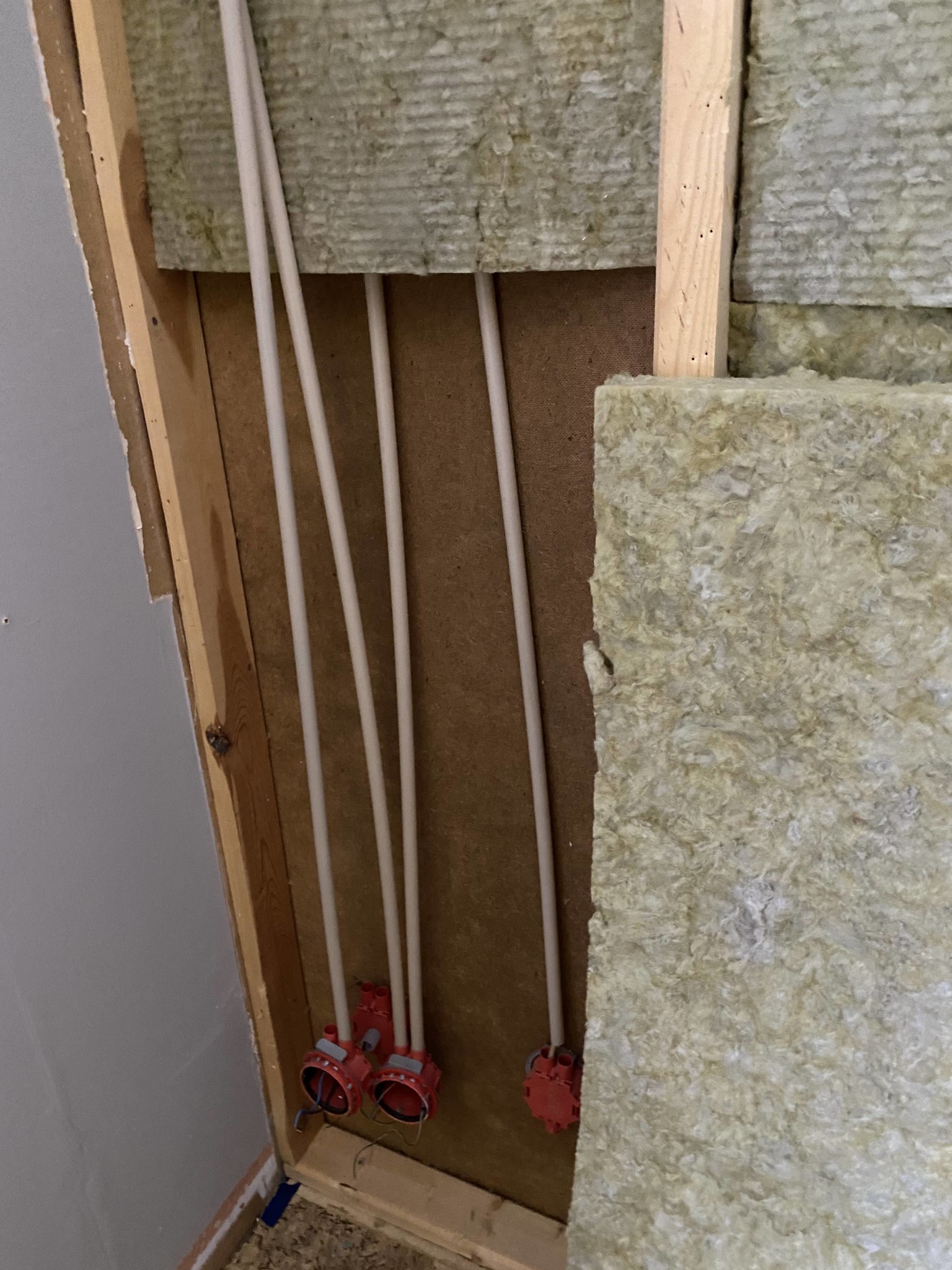
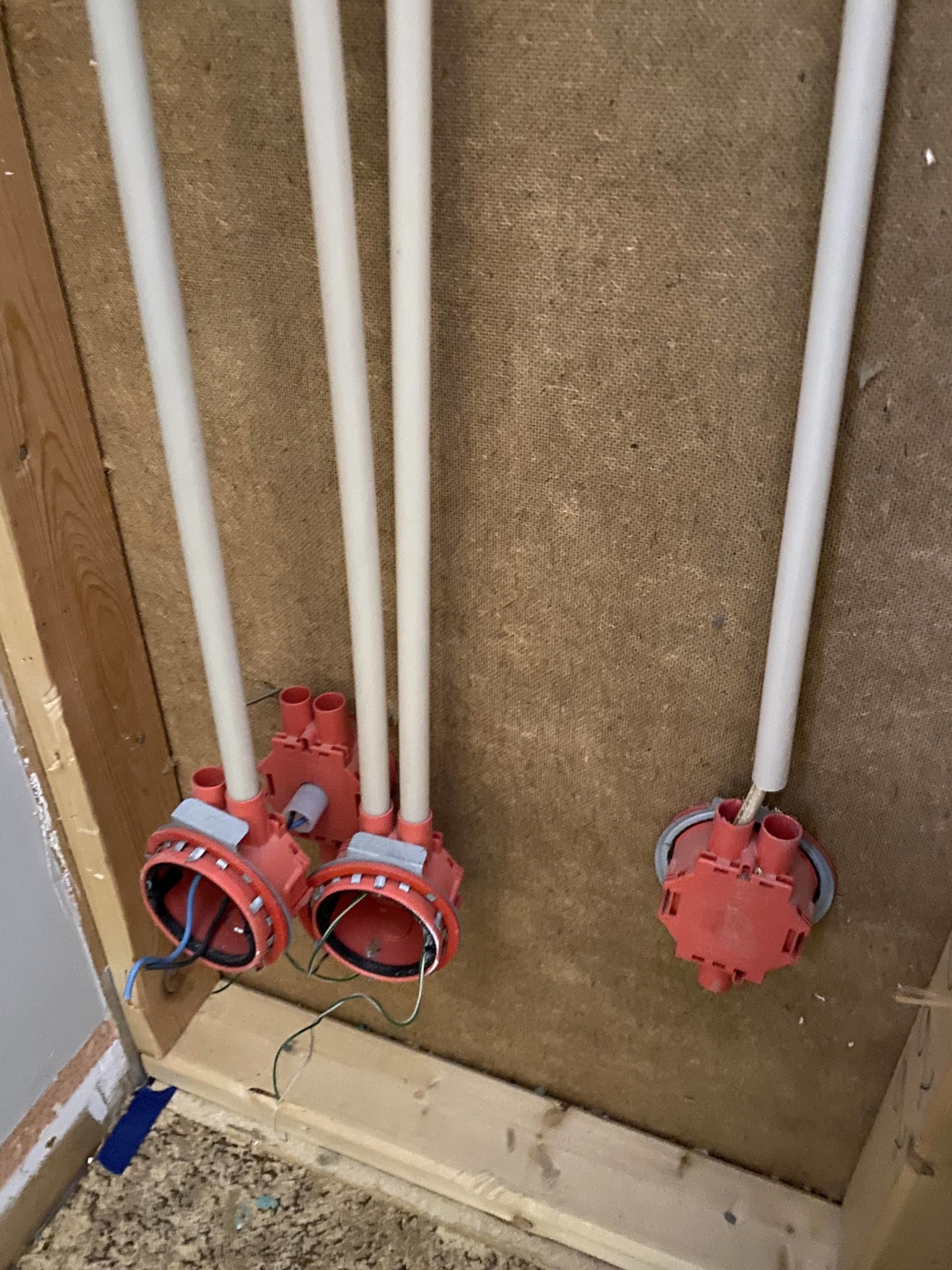
The actual telephone line is no longer needed, but if you haven't laid network cables before, it's time to pull some cat6 using the old cables as a pull wire. Many are probably envious of you for having a good opportunity to achieve this.
My solution is, therefore, 2 layers of 45 insulation, OSB board, and gypsum.
1. Should there be a gap between the OSB board and the floor?
2. For the gypsum, I understand there should be a gap between the floor and the gypsum?
3. Should there be a small gap between the OSB boards? If so, should this be sealed with acrylic sealant afterwards?
4. Should you seal with acrylic sealant between the floor and the gypsum?
1. Should there be a gap between the OSB board and the floor?
2. For the gypsum, I understand there should be a gap between the floor and the gypsum?
3. Should there be a small gap between the OSB boards? If so, should this be sealed with acrylic sealant afterwards?
4. Should you seal with acrylic sealant between the floor and the gypsum?
1. Yes, space between the floor and OSB, nothing should touch the floor, use silicone between the floor and the board.
2. Yes.
3. Not really sure what you mean, but everything should be sealed, otherwise sound will leak through.
4. Yep. Or silicone.
The entire new wall should "float" so that sound doesn't propagate.
2. Yes.
3. Not really sure what you mean, but everything should be sealed, otherwise sound will leak through.
4. Yep. Or silicone.
The entire new wall should "float" so that sound doesn't propagate.
it was a shame that I managed to put all the OSB boards in before I saw your answer. How big of a difference does it make? Is it worth loosening the boards and screwing them back up with a small gap to the floor?Robert63 said:
1. Yes, gap between the floor and the OSB, nothing should touch the floor, use silicone between the floor and the board.
2. Yes.
3. Not sure exactly what you mean, but everything should be sealed, sound will leak otherwise.
4. Yep. Or silicone.
1. Yes, gap between the floor and the OSB, nothing should touch the floor, use silicone between the floor and the board.
2. Yes.
3. Not sure exactly what you mean, but everything should be sealed, sound will leak otherwise.
4. Yep. Or silicone.
The entire new wall should "float" so that sound does not propagate.
The entire new wall should "float" so that sound does not propagate.
Yes, I think it's worth it. Now the sound waves will propagate through the floor.T TheCed said:

Tool enthusiast
· Stockholm
· 1 399 posts
Some tips:
For the best sound reduction, you should install a separate wall next to the existing one, or use staggered studs so that the drywall on each side doesn't short-circuit each other via the studs. The larger the air gap between the board materials (between the two walls), the better the sound reduction. Loosely packed insulation in the stud cavities improves sound insulation. Stone wool (e.g., Flexibatt) is somewhat better than glass wool.
If you do it this way, the drywall on the existing wall should be removed. The formula is mass/air gap/mass. What you can do while you have the wall open is to glue drywall on the back of the existing wall. This way, you can reinforce it with drywall without destructive interventions on the side you've already fixed. If music will be played in the future, you can take the opportunity to build airtight drywall boxes around the junction boxes. If possible, try to move the boxes so they are not directly opposite each other.
For the best sound reduction, you should install a separate wall next to the existing one, or use staggered studs so that the drywall on each side doesn't short-circuit each other via the studs. The larger the air gap between the board materials (between the two walls), the better the sound reduction. Loosely packed insulation in the stud cavities improves sound insulation. Stone wool (e.g., Flexibatt) is somewhat better than glass wool.
If you do it this way, the drywall on the existing wall should be removed. The formula is mass/air gap/mass. What you can do while you have the wall open is to glue drywall on the back of the existing wall. This way, you can reinforce it with drywall without destructive interventions on the side you've already fixed. If music will be played in the future, you can take the opportunity to build airtight drywall boxes around the junction boxes. If possible, try to move the boxes so they are not directly opposite each other.
I have crammed in 2 layers of 45 insulation in the stud bays, will it be better soundproofed if I only have one layer? The stud bays are about 90.Some tips:
The best sound reduction is achieved if you build a separate wall next to the existing one, or alternatively use staggered studs so that the plasterboard on each side does not short-circuit each other via the studs. The larger the air gap between the panel materials (between the two walls), the better the sound reduction. Loosely packed insulation in the stud bays improves sound insulation. Stone wool (e.g. Flexibatt) is slightly better vs glass wool.
If you do it this way, the paneling on the existing wall should be removed. The formula is mass/air gap/mass. What you can take the opportunity to do when you have the wall open is to glue plaster on the back side of the existing wall. In this way, you can reinforce it with plaster without destructive intervention on the side you have already fixed. If you plan to play music in the future, you can take the opportunity to build tight plaster boxes around the socket boxes. If possible, try to move the boxes so they are not directly opposite each other.
Tool enthusiast
· Stockholm
· 1 399 posts
The function of the insulation is to absorb sound and therefore should not be packed. In separate stud frames, the insulation should not be in contact with each other. It is sufficient if the insulation is 2/3 of the depth of the compartment. Have you built separate stud frames?
No, I removed the plywood, put in insulation, and put on an OSB board.
I will put drywall on top of the OSB boards later.
should perhaps add that it is frame compartments today where I have put in insulation.
Click here to reply