
3,241 views ·
24 replies
3k views
24 replies
Should there be a slope on the surface where the accumulator tank stands?

Hello
I am messing around with self-leveling compound in the boiler room and wondering if there should be a slope on the surface where the tank itself stands?
That would make the tank tilt a bit since it has a flat bottom?
I am messing around with self-leveling compound in the boiler room and wondering if there should be a slope on the surface where the tank itself stands?
That would make the tank tilt a bit since it has a flat bottom?
I'm thinking of building a frame and casting a concrete footing about 5-10 cm under the tank, with a "moat" against the interior wall for any potential water leak, and then laying a 10 cm thick S200 foam board for the tank to stand on. 20 cm regular insulation around and up to the ceiling.
The boiler should just stand evenly. That means the slope starts about 20 cm from the boiler.
This should be enough, so I can avoid my headache later I'm not stressed at all, haha.
The boiler should just stand evenly. That means the slope starts about 20 cm from the boiler.
This should be enough, so I can avoid my headache later
I'm not stressed at all, haha.It became cellplast s200.
I will fix them evenly and cast it in with about 8 cm on top.
Close to buying a form board class 250 due to better long-term load but it only withstood 70 degrees.
Then I rather shielded myself with 80 degrees and a concrete slab on top
Right or wrong, vettefan.
I will fix them evenly and cast it in with about 8 cm on top.
Close to buying a form board class 250 due to better long-term load but it only withstood 70 degrees.
Then I rather shielded myself with 80 degrees and a concrete slab on top
Right or wrong, vettefan.
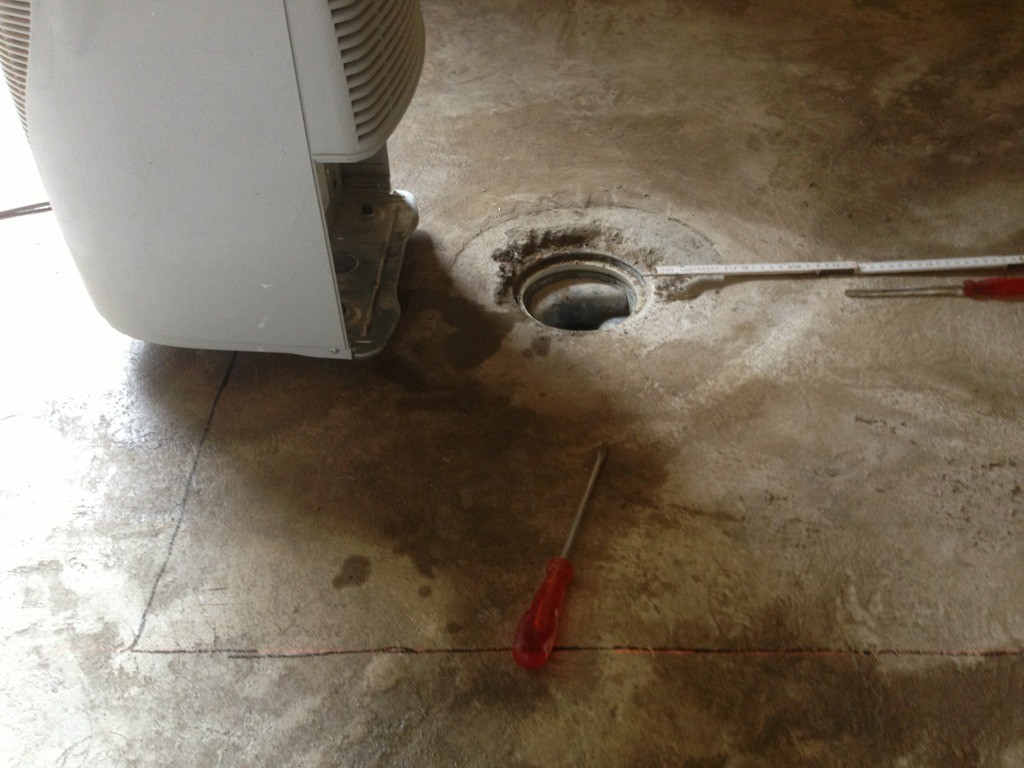
How would you do it here?
I'm going to cast a plinth of 20 cm, 10 of which are polystyrene.
The black line is where the casting starts.
Should I cast in a pipe for the floor drain (like a 160 pipe cut in half)
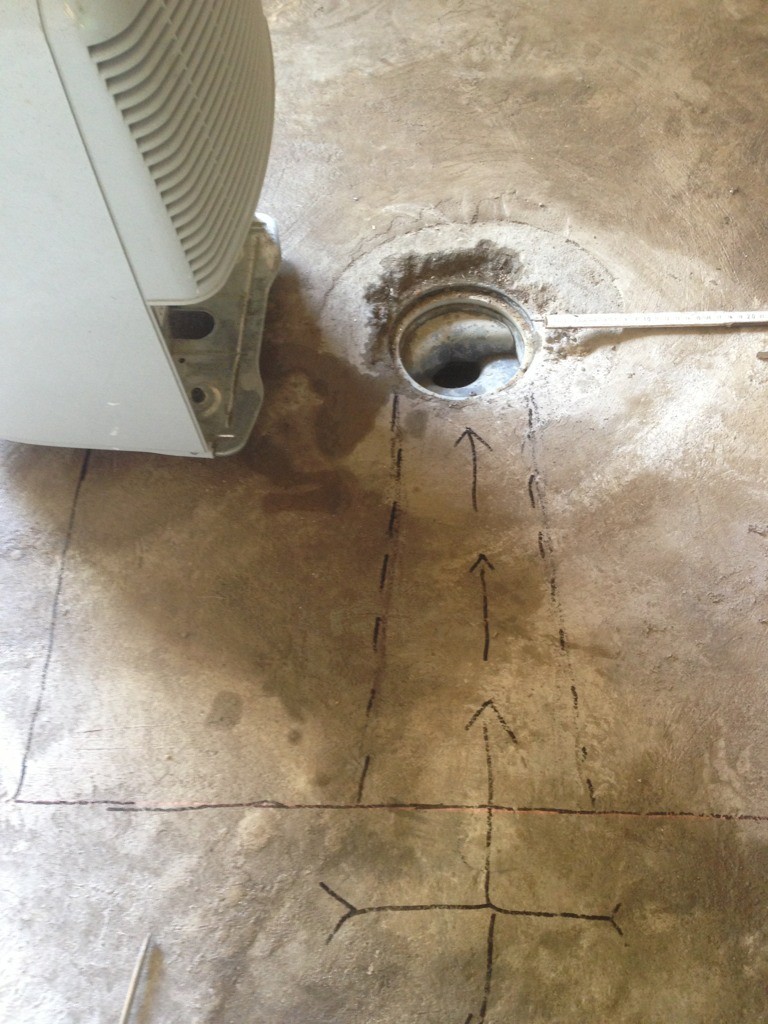
The advantage of casting in a pipe for the floor drain is that it reduces the amount of piping (cheaper installation) and provides more insulation around the tank.
The downside is that access to the floor drain becomes limited.
If I move the setup, the pros and cons are the opposite...
What do you think?


it can easily become a lot of debris in a boiler room that can settle in the floor drain, it can be difficult to reach and clean.