I have started replacing the panel on my house as much of it is in poor condition, and I want to change the appearance with a different type of lockläkt. The house is originally a cottage (timrat) from the late 1800s but has been extended and rebuilt in different time periods.
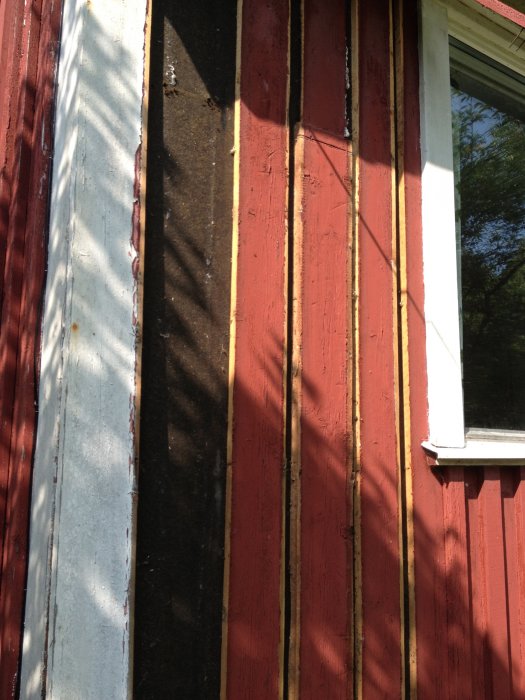
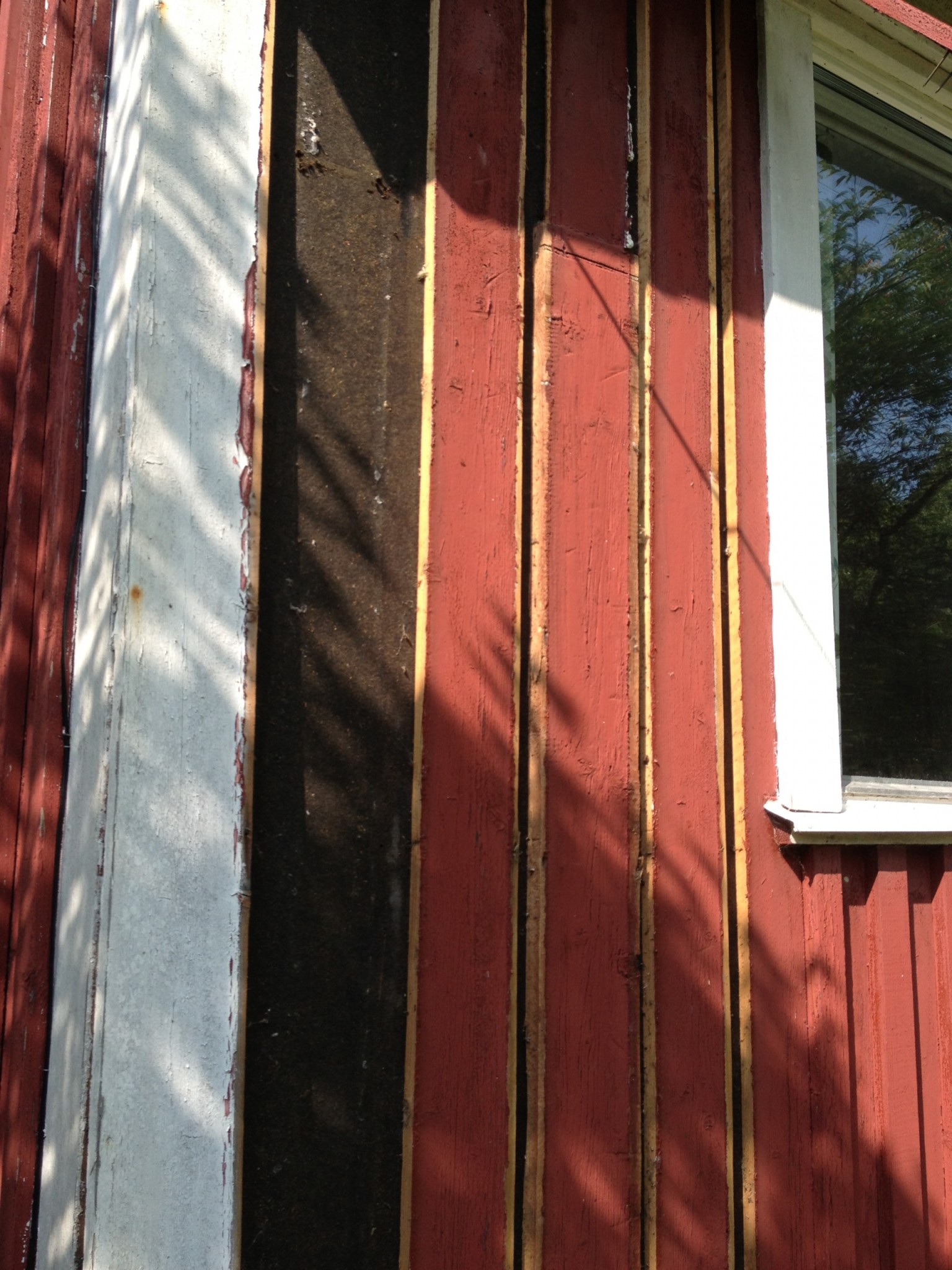
On the first section I have dismantled (an extension), the panel is nailed directly onto an asfaboard. I don't know how it will look in other places but suspect that it will look very different on the various parts. I was recommended to use a spiklist but didn't quite understand why I should have it and what its function actually is. Considering the different constructions, I will encounter, I am wondering whether I should have a spiklist in some places and not in others?
It should still ventilate, it depends on how big the gaps are between the foundation boards.
Distance is necessary; one wall on my house had some rot due to the lack of distance.
I've now dismantled the entire panel on the section visible in the picture. I guess the panel has been there since the late 70s. Apart from some bad end grain, the dismantled panel is otherwise completely healthy. Based on that, I think I'll probably skip the nail strip anyway.
Now I have taken down the entire panel on the section shown in the picture. I guess the panel has been there since the late '70s. Apart from poor end grain, the dismantled panel is completely healthy otherwise. Based on that, I think I'll probably skip the nail strip after all.
Thank you for your advice and comments!
/Thomas
Noo! Don't do that.
The cost is almost zero. Do it as well as possible, i.e., with an air gap.
Noo! Don't do that. The cost is almost zero. Do it as well as possible, i.e., with an air gap.
Do you think I should install a nail strip regardless of the construction? So far, I've found three different wall constructions:
1. Panel directly on the logs with building paper in between.
2. Panel directly on standing tongue and groove boards with building paper in between.
3. Panel on asphalt board which in turn is attached to studs (with fiber insulation between the studs).
I also don't want to have to move the windows (lack the knowledge) or install moldings to compensate for a panel that is positioned further out.
When I try to find knowledge about whether a nail strip truly has a proven functional difference, I find nothing! Anyone know where to find this information?
Do as KnockOnWood wrote. The air gap is important. You've been lucky not to have any problems. The air gap is there to prevent moisture from penetrating the asfaboard and further into the insulation and the frame.
I read somewhere that a ventilation gap isn't needed when using slamfärg that allows the wood paneling to breathe.. but I can't remember where I read it.. I have installed/am going to install battens on mine just in case..
Before the replacement on my house, the paneling was rotted 10cm up at the ends, resting on the foundation wall and not beveled, perhaps not even painted there, painted with some plastic paint, insulation right behind but actually no problems there, the paneling was otherwise in great condition.. I was a bit surprised. http://www.gardochtorp.se/index.aspx?article=4233 http://www.byggnadsvard.se/fråge-forum/material/asfaboard-och-luftspalt
Do as KnockOnWood wrote. The air gap is important. You've been lucky not to have any problems. The air gap is there so moisture doesn't penetrate the asfaboard and further into the insulation and frame.
There is another aspect as well, which isn't so fun.
Personally experienced on one of my houses:
Built in 1969, standing Z-panel, admittedly an idiotic construction method, I think.
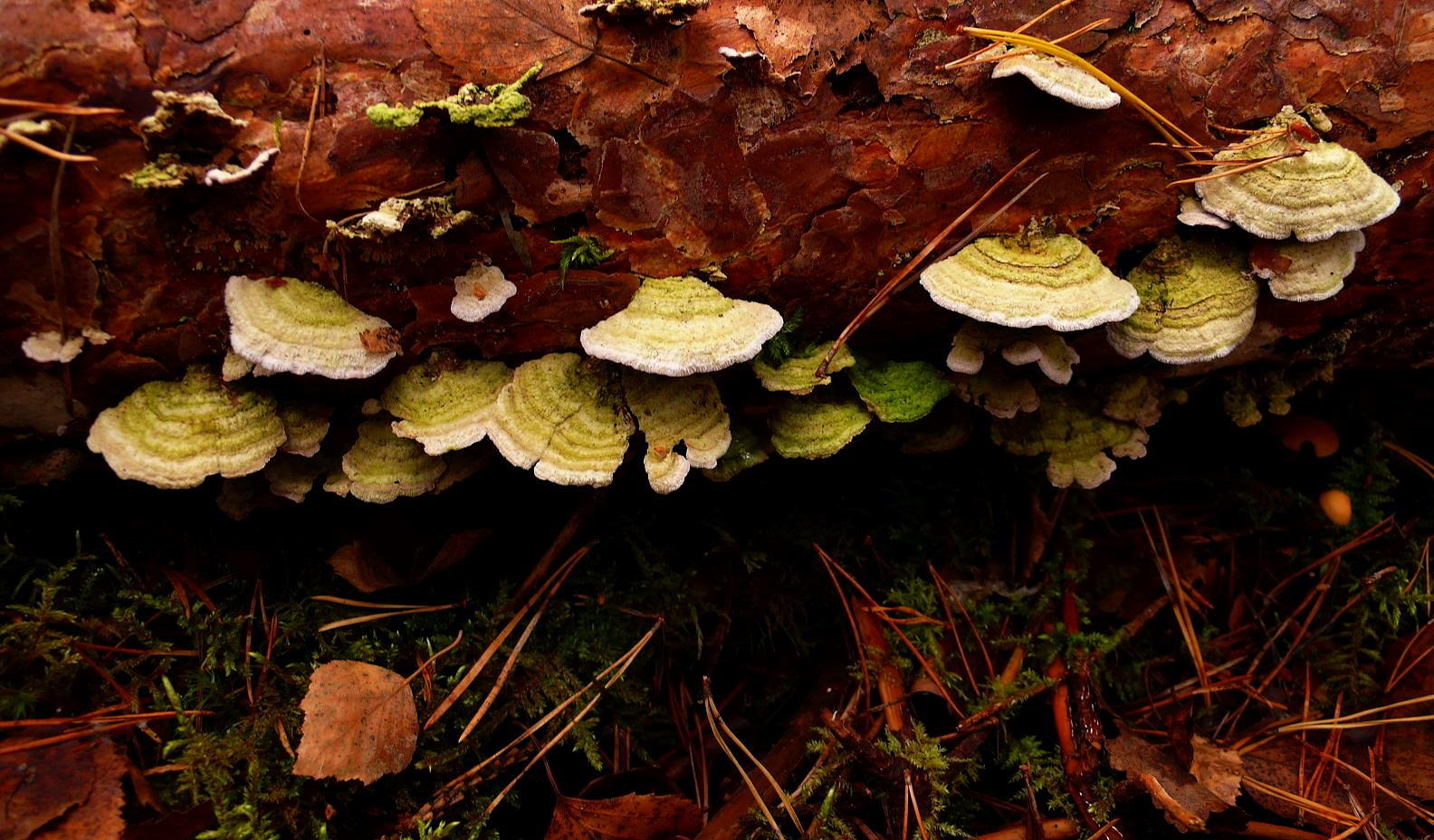
In the fall after we moved in, large mushrooms started to grow on one gable wall, which was shaded by the neighbor's house and had poor conditions to dry. They looked like some sort of polypores, similar to these
Perhaps it was an unusually rainy fall, who knows? Anyway, we thought a few panel boards needed to be replaced.
But when the carpenter started to remove the affected boards, it was clear that the fungal mycelium had spread across the entire wall. That is, a white thread-like coating between the panel and the windproof paper. There was no air gap, so by capillary action between the panel and the paper, the panel was always damp on the back. It was like a cultivation box for fungi.
The entire wall, with studs, insulation, and everything, had to be replaced up to the interior wall gypsum boards.
The work was done in 1999 when the house was 30 years old. It was expensive.
I also live in a house (built in '81) where the single groove panel (long word) is nailed directly against the fiberboard. The entire block is built the same way, and so far, not a single house has had any problems with the panel. I've removed a few panels during construction, and they have all been bone dry on the backside.
I was a bit concerned when I discovered the construction but will leave it be until problems arise.
I've heard around a bit and googled, etc., and not a single person knows of a concrete example where a panel directly on fiberboard caused problems. However, there are many more examples of people having problems with paneling directly on roofing felt.
Could the fiberboard somehow make it function okay anyway?
I also live in a house (built in -81) where the enkelfasspont panel (long word) is nailed directly against the asfaboard. The whole block, by the way, is built in the same way, and so far not a single house has had any problems with the panel...
Interesting that we have such different experiences!
Simple question: Is the enkelfasspont vertical or horizontal?
Interesting that we have such different experiences!
Simple question: Is the single-phase tongue and groove vertical or horizontal?
It's horizontal. But you had wind barrier when you encountered that, right? People who have had paneling directly on wind barrier seem to have more frequent problems compared to those of us who have it directly on asfaboard (?). At least if you Google around a bit. Haven't yet found anyone who has had problems with asfaboard, but they can obviously exist.
Moreover, I live in northern Norrbotten, so we have quite a dry climate here.
Vi vill skicka notiser för ämnen du bevakar och händelser som berör dig.