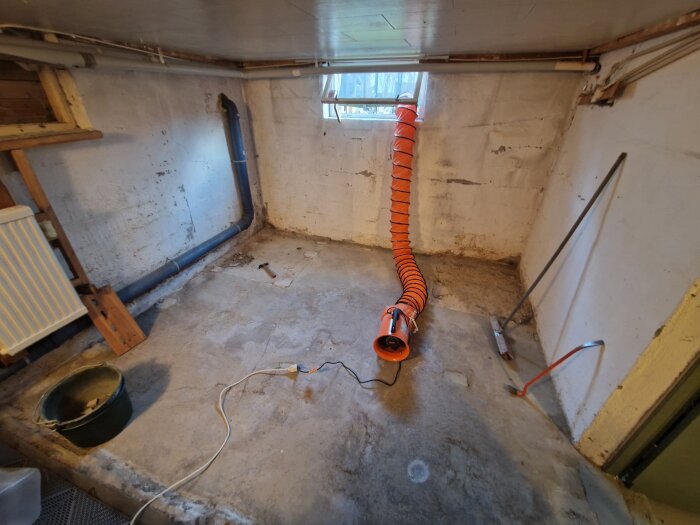
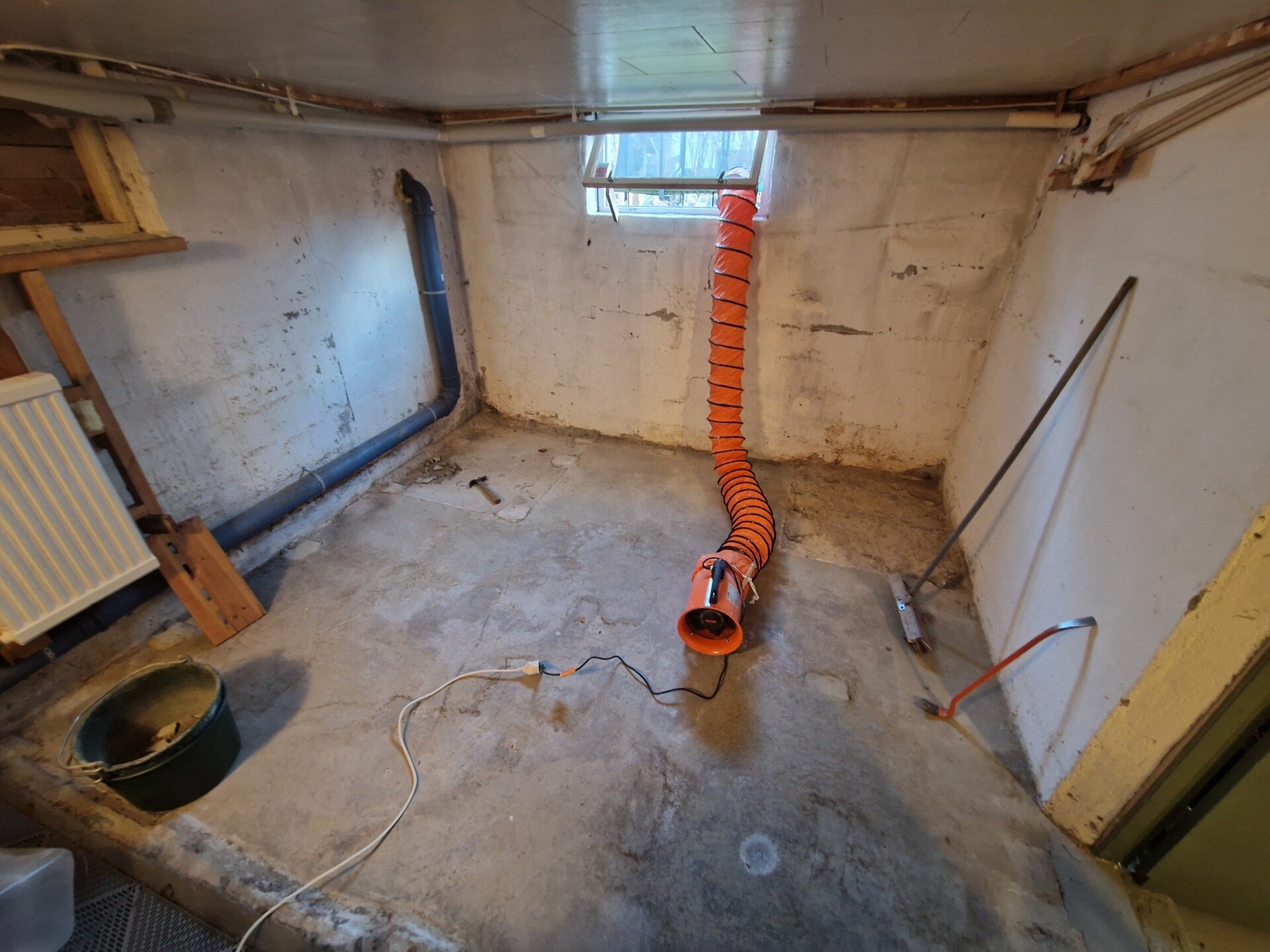
Hello hello! Recently moved into a house from 1937. Renovating the basement by tearing everything out. I suspect that the basement floor was originally the type of earthen floor. This should also mean that the basement walls stand on a footing. Currently, all rooms in the basement have concrete floors at different levels, which indicates that the floors were poured according to needs. The ceiling height in the basement is just over 2 meters overall.
The purpose of the renovation is to utilize the space (about 70 sqm) for various hobby activities and a laundry room. There is some radon in the basement, and all the walls had rotten/moldy wooden studs with insulation and plasterboards against the exterior. All that needs to be removed and done "correctly." The house is also in the midst of drainage work.
My question: Should I break up the floor? Can you even do it yourself?
The advantages are that I can insulate the foundation, get a little more ceiling height, replace the drainpipes, and achieve a uniform floor height (and maybe underfloor heating, etc.).
The disadvantages are that it will take a lot of time and be extremely hard to move all the material. There is an independent entrance to the basement, after all. But is it worth it?
The alternative is to lay a thin layer of concrete over the current floor (there is a gap in the floor that is right down to the ground under the house), and then level with leveling compound before putting up new walls and insulation.
I have done exactly that, or am still working on it really, because it's a project that never ends. The house was built in the 30s, and the basement floors are very cold.
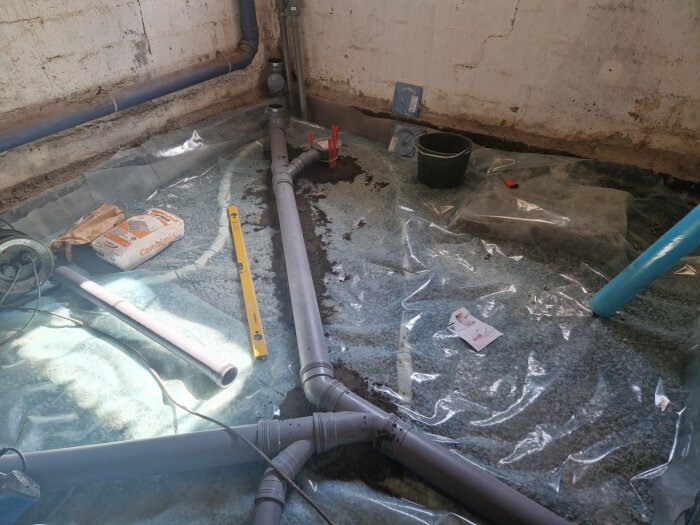
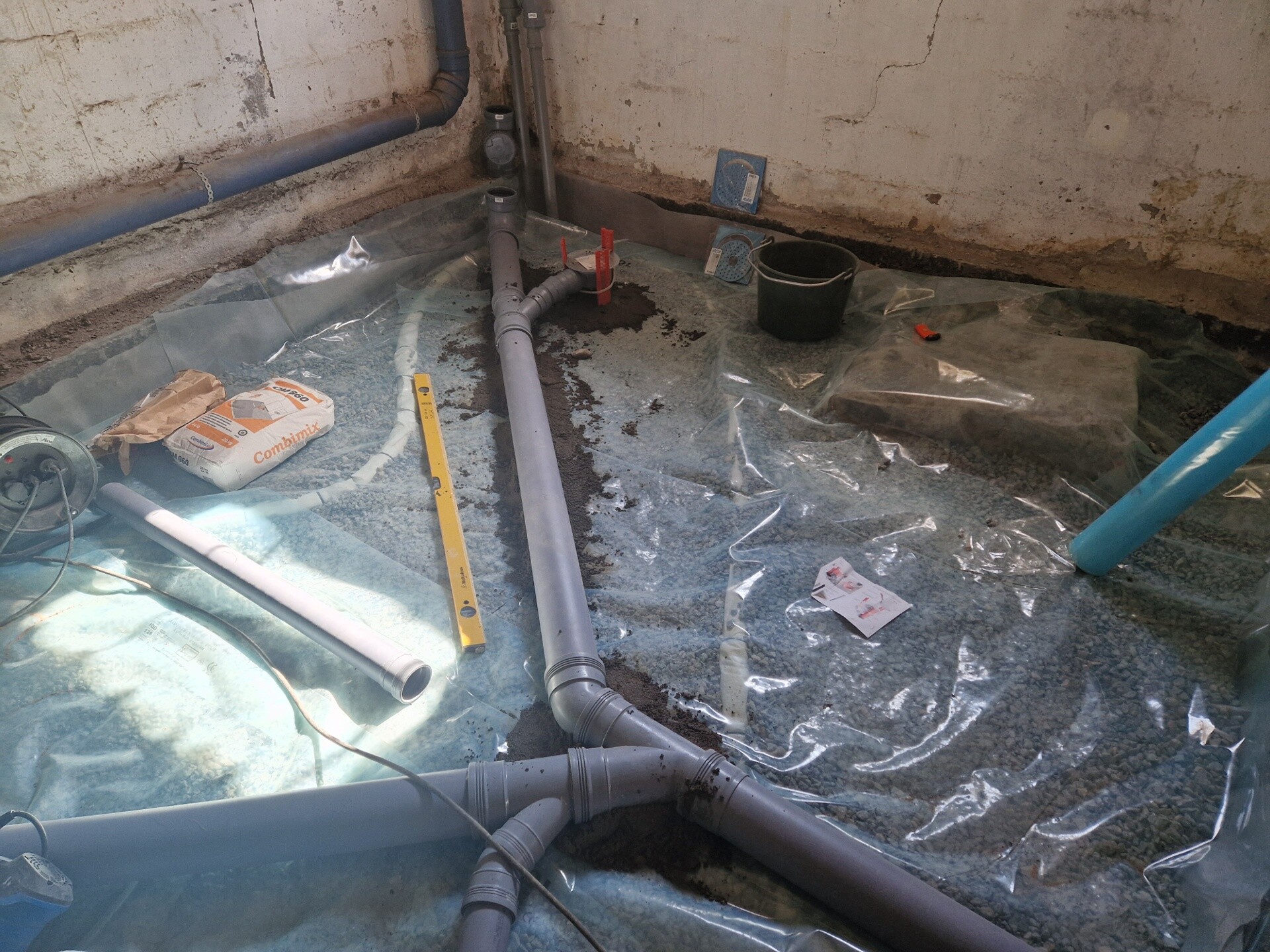
I dug up the floor which consisted of ~20mm concrete, excavated the gravel underneath and some of the clay beneath it. Put in drainage and radon extraction pipe, geotextile, gravel, and insulating concrete (EPS cement). So far, I'm very satisfied, but one should not underestimate how much soil, stone, and concrete weigh.
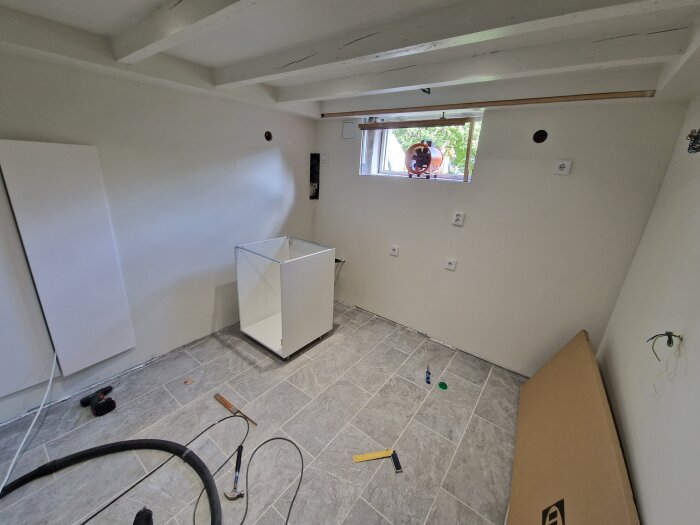
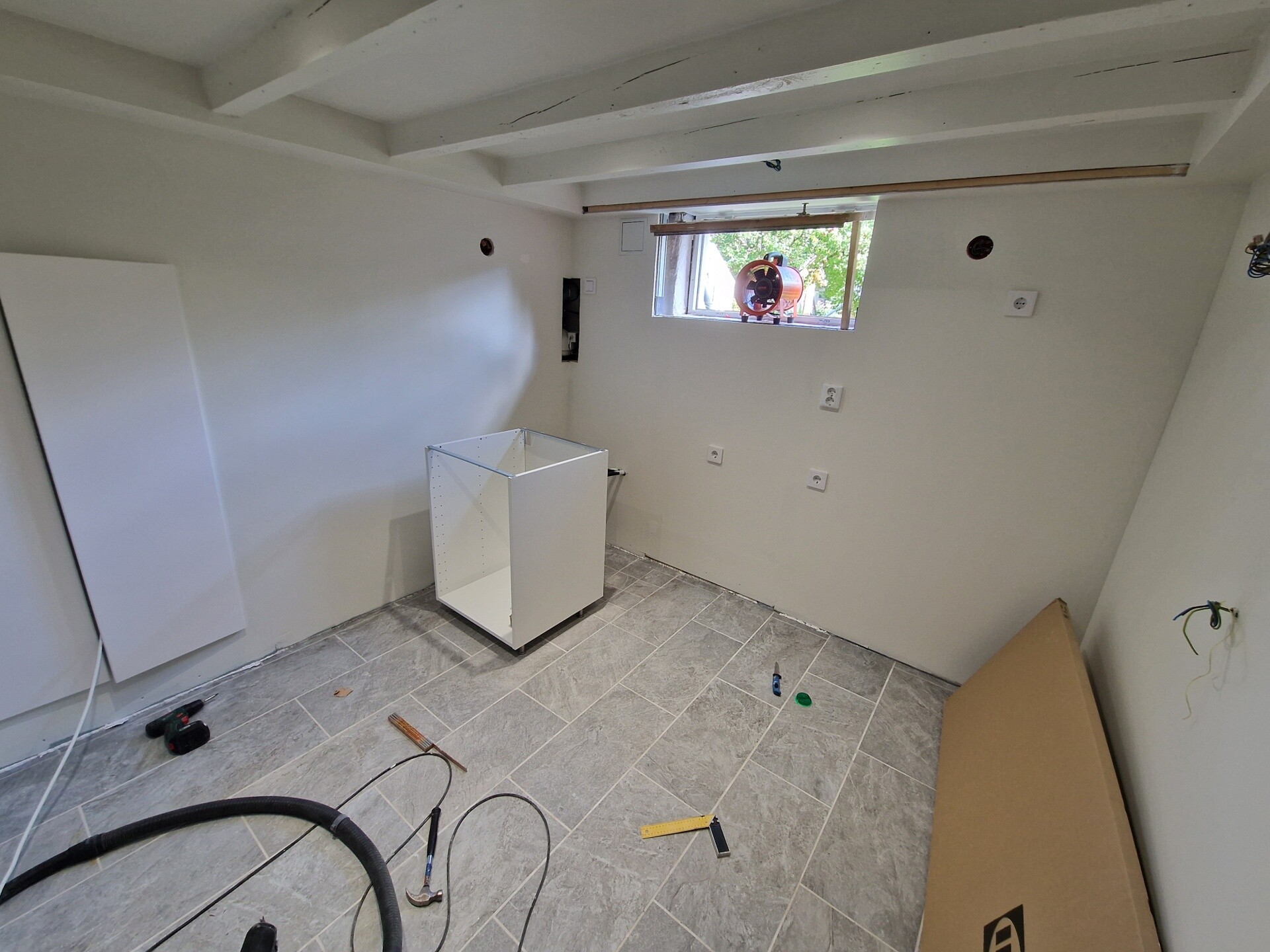
For us, it was driven by the need to replace the sewer line, and I already had half the floor torn up. Taking the opportunity to divide the laundry room into a bathroom section and am now working on the rest of the basement.
Of course, you should use a bil! You should always use a bil.
And use the tools. I tried with a rotary hammer first and damn, what hard work. Now there's a big demolition hammer at home and it goes through the slab like butter.
I would have made a test hole first near an outer wall (about 50x50cm) to see how it is constructed. If the foundation of the basement walls is level with the current floor, it will be much more work if you want to gain ceiling height, insulate, etc.
I would have made a test hole first near an outer wall (around 50x50cm) to see how it is built. If the basement wall's footing is level with the current floor, it will be much more work if you want to gain ceiling height, insulate, etc.
I found a big damn stone just under the surface when I dug a test hole.
Since there is a drainage project ongoing right now, I got the chance to measure and inspect. It turned out that there is no footing at all. The brick walls originally stood directly on the bare ground as it seems.
How are you doing, Dallas84? I'm asking because I have similar thoughts about my own house from 1935 that I recently bought. I initially considered draining and breaking up the entire basement floor to insulate, install a radon vent, and possibly lay down floor heating. But I have changed my plans and will instead just install radiators in conjunction with switching the heating source from oil/electric to an air source heat pump and replace the water pipes. I hope that will be enough to dry out the basement. Drainage will have to wait. However, I have acquired a demolition hammer to break up the sewage pipes in the basement, an Einhell TC-DH 43.
How are you doing, Dallas84? I'm asking because I have similar thoughts about my own house from 1935, which I recently bought. I initially considered draining and breaking up the entire basement floor to insulate, install a radon fan, and possibly lay underfloor heating. But I've changed my plans and will instead just install radiators in connection with changing the heating source from oil/electricity to an ASHP and replace the plumbing pipes. I hope that will be enough to dry out the basement. Drainage will have to wait. However, I have acquired a demolition hammer to break up the drain pipes in the basement, an Einhell TC-DH 43.
Why aren't you installing underfloor heating?
It's incredibly nice once you've done the work.
I've done exactly the same!
Why not install underfloor heating when you have the opportunity?
It's incredibly nice once you've done the work.
I've done exactly the same!
I would need to dig up the entire basement and remove a large amount of soil to make room for the insulation that should be at least 300 mm when installing underfloor heating, if I understood correctly.
There's so much else with the house that needs to be done now and over time that necessity takes precedence over comfort. Radiators will probably be sufficient in my small house, even though the plan is to drain eventually.
Need to dig out the entire basement and remove a large amount of soil to make room for the insulation, which should be at least 300 mm when installing underfloor heating, if I understand correctly.
There's so much else with the house that needs to be done now and over time that necessity takes precedence over comfort. Radiators will probably suffice in my small house, even though the plan is to drain eventually.
Go down to 200mm insulation if it's easier.
Not wrong at all in any way.
Aim for underfloor heating every day of the week if you can choose initially.
Click here to reply
Vi vill skicka notiser för ämnen du bevakar och händelser som berör dig.


Krilleman said: