
1,201 views ·
4 replies
1k views
4 replies
Shifts in basement walls after newly applied plaster
Hello,
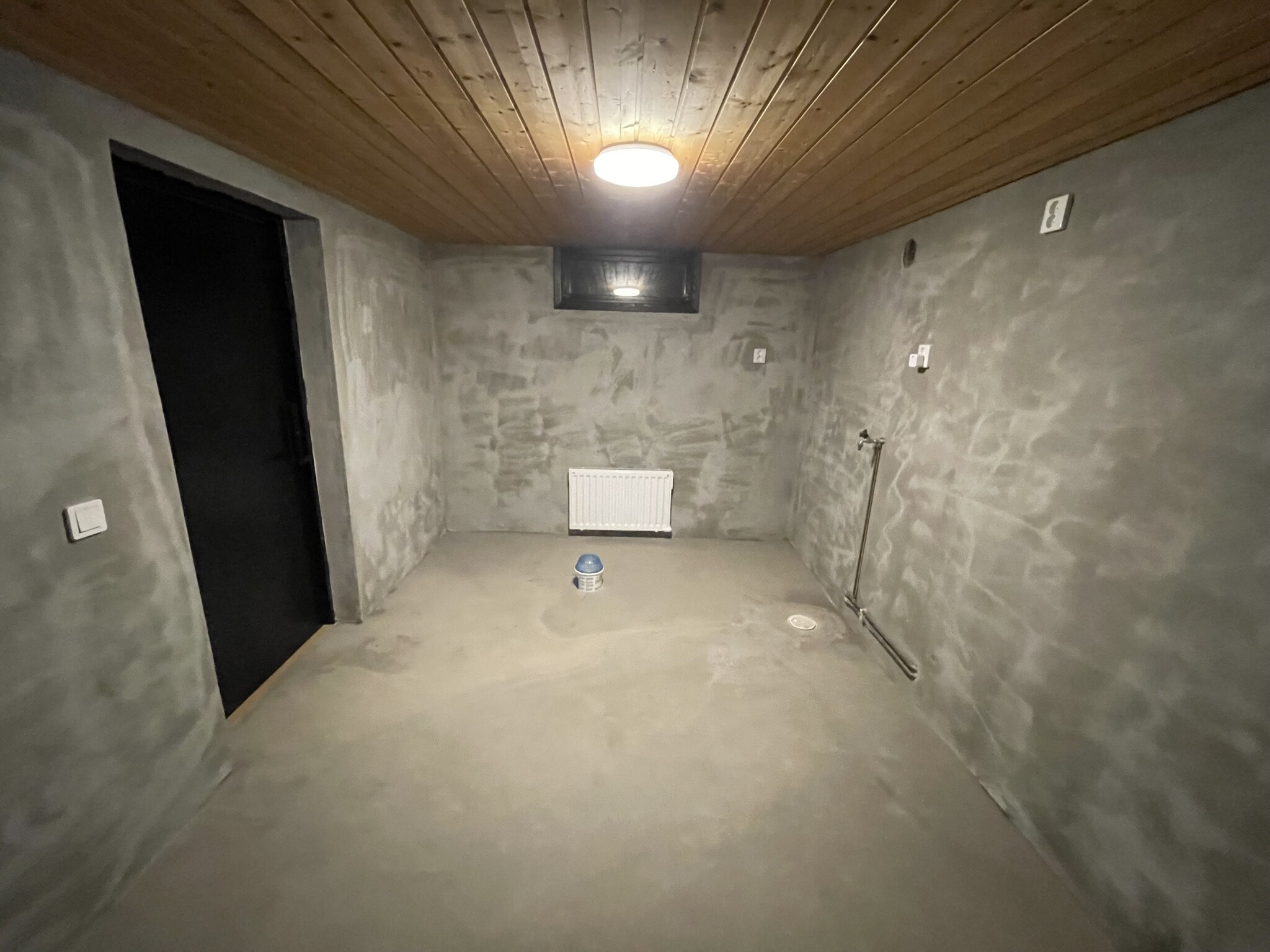
Had the basement walls and floor repointed just over two years ago, shortly after the drainage. No treatment of either floors or walls has been done yet. A bit puzzled about the shifts on the walls - looks the same whether it's against the ground or separating rooms.
Is it okay? Can you dare to paint?
Had the basement walls and floor repointed just over two years ago, shortly after the drainage. No treatment of either floors or walls has been done yet. A bit puzzled about the shifts on the walls - looks the same whether it's against the ground or separating rooms.
Is it okay? Can you dare to paint?

Start by measuring the moisture content in different places in the walls. Low, high, and in-between.
Then you should choose a diffusion-open paint, i.e. silicate.
Were the walls insulated from the outside during the redrainage?
Then you should choose a diffusion-open paint, i.e. silicate.
Were the walls insulated from the outside during the redrainage?
I don't see anything abnormal, what I'm checking for are noticeable shifts depending on the position on the wall, like towards the floor. But I don't see anything like that. Just make sure the area is thoroughly dried out after the plastering, as it requires a lot of water application for the plaster to adhere and some time to dry out properly.
After that, as mentioned, preferably silicate paint, which is considered a diffusion-open type of paint and which I have used myself with great success in equivalent basement spaces (i.e., it has worked excellently over decades).
After that, as mentioned, preferably silicate paint, which is considered a diffusion-open type of paint and which I have used myself with great success in equivalent basement spaces (i.e., it has worked excellently over decades).
Click here to reply