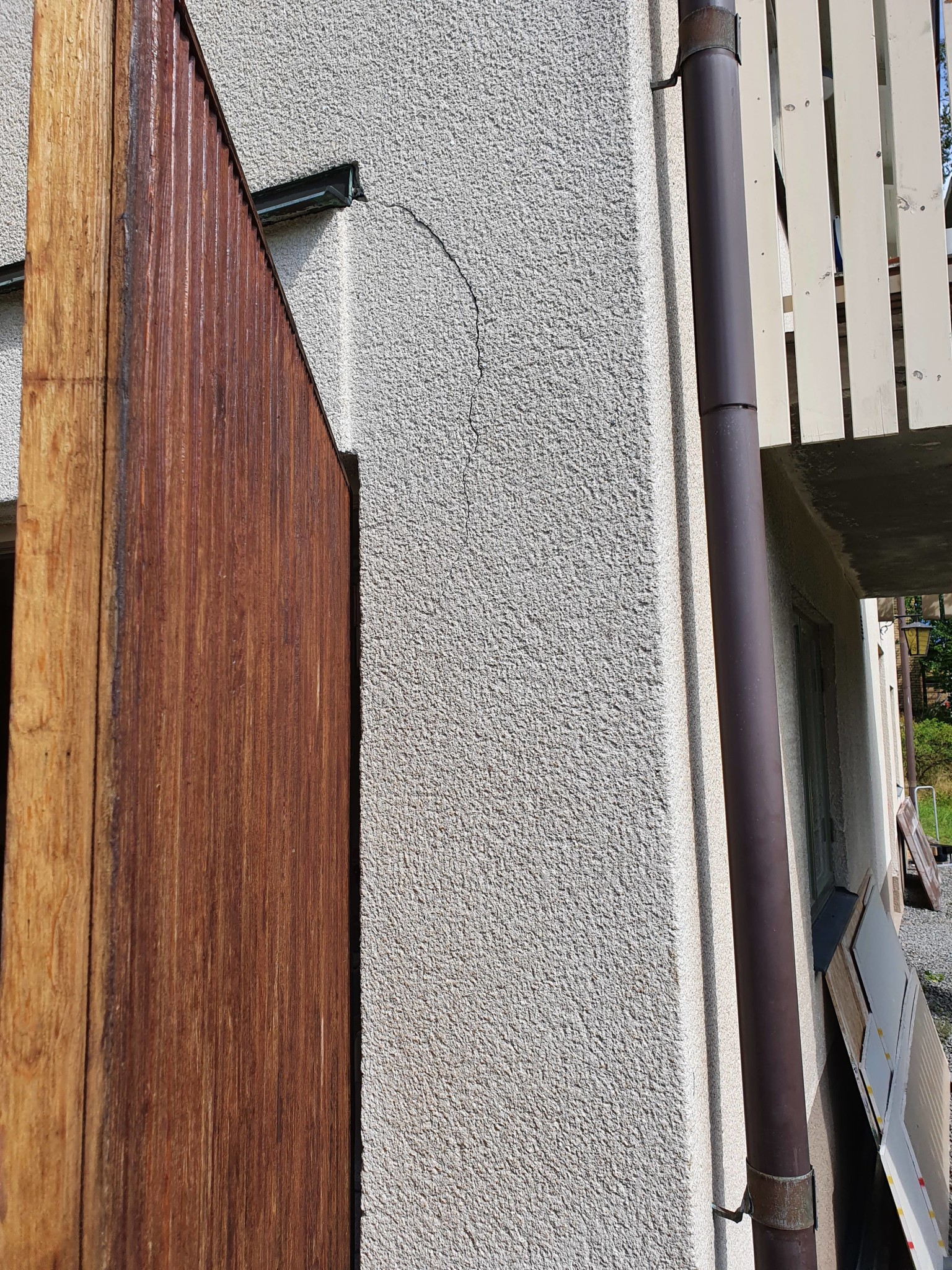
In my lightweight concrete house from 1955, there are a couple of older settlement damages that haven't moved during my 4½ years in the house.
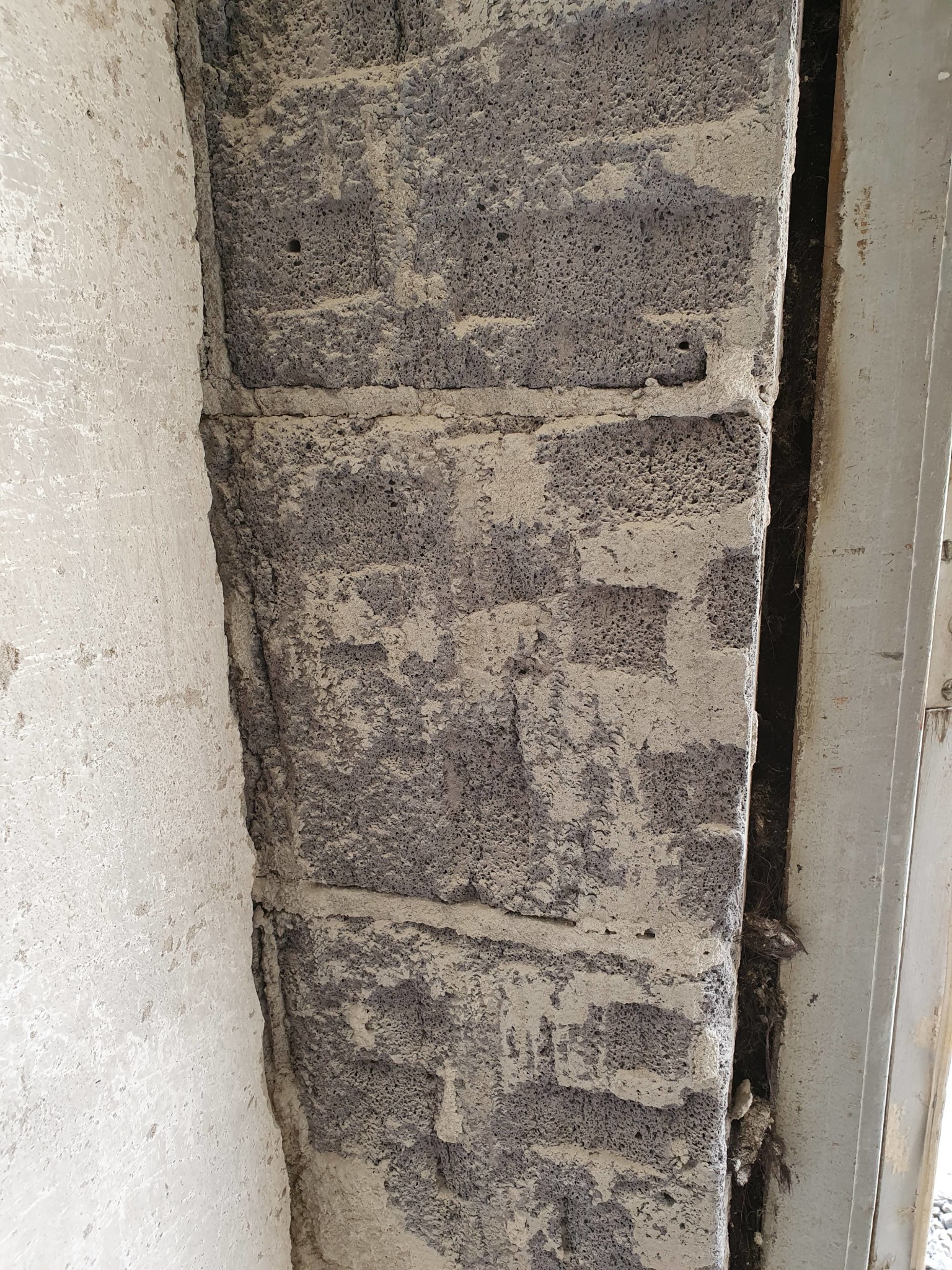
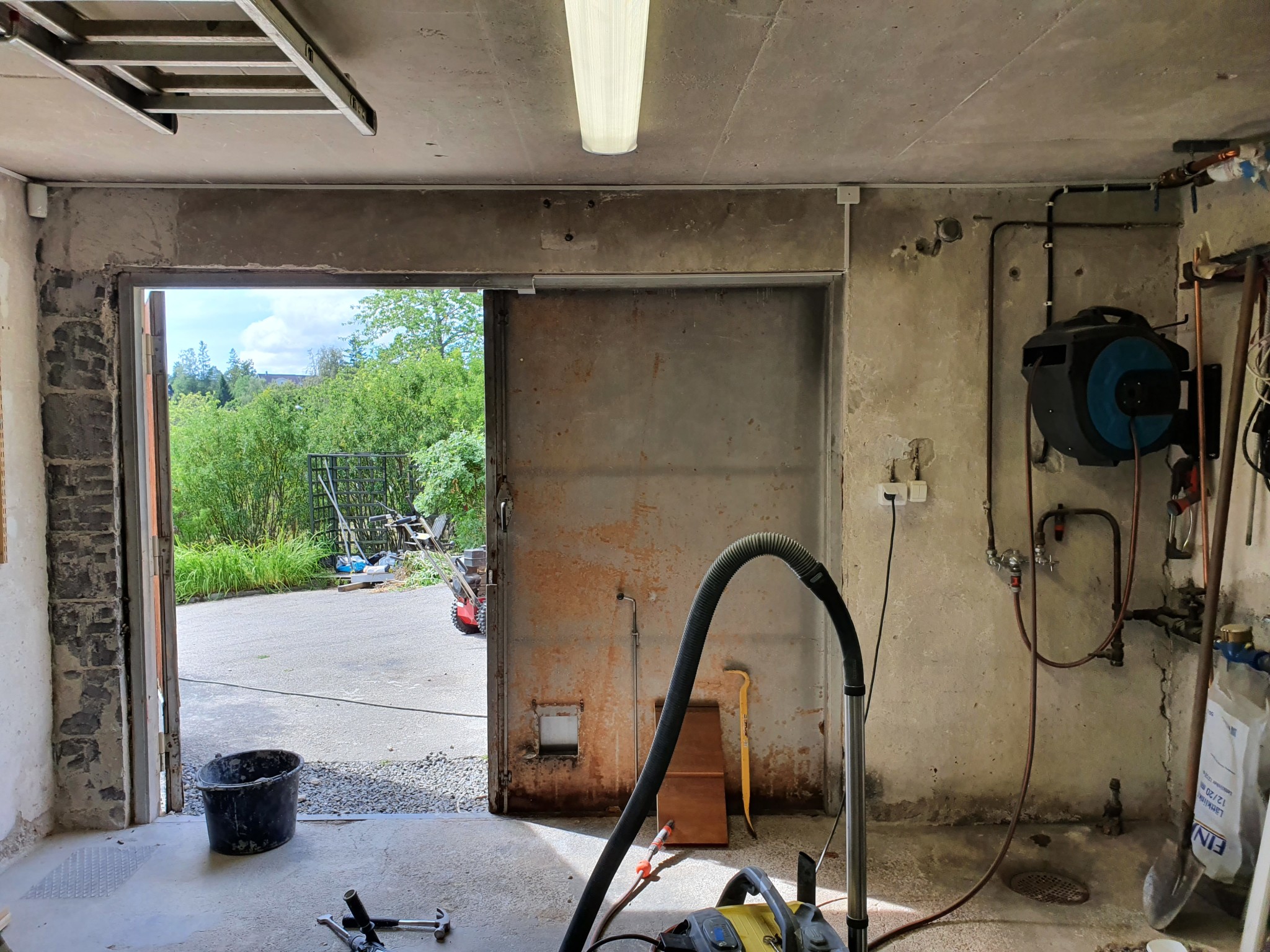
Today I started chipping away old plaster around the garage door in preparation for replastering that wall. I then noted that the house's outer corner, which is bonded in brickwork, can now be regarded as a general joint.
Above the garage door, there is a cast-in-place concrete beam. From what I can see, the beam has only been placed on the short wall section, not all the way across to the opposite wall's brickwork. However, it extends all the way up to the ceiling slab without a crack in the ceiling angle, so I suspect it might be cast together with the slab, which is also concrete. If so, maybe the beam support isn't something to worry about?
The short wall section sounds fairly hollow when tapped from both sides. The blocks are about 250mm thick.
The question is, can/should/must this be addressed? I imagine that even if you support the beam and remason, it becomes a general joint, a bit difficult to remodel in bond in the corner?
The plan is to install an overhead garage door, and the swing door will go. The overhead garage door should place less stress on the wall than the swing door (when it's open and the wind catches it, etc.).