Considering using self-supporting sheet metal as the load-bearing part in a roof/floor. To reduce the height of the construction, I'm thinking about whether it's possible to insulate between the flanges as well. Since it will be a compact solution (no air gaps - unventilated roof), no organic material can be involved. Initially, I thought that there was insulation available for the chosen TRP profile to buy (but can't find anything).
I have no problem cutting "wedge-shaped" insulation, but not with mm precision. I then thought to "glue" the insulation in the flanges to complement with PIR insulation (good insulating value) and "felt" on top to place a wear layer/clinker/decking or...
But it's the insulation in the metal flanges between the webs that I'm stuck on. What solutions/options are there?
There are poles available to order that fit several different types of berry plates, such as rockwool. We often use them for fire insulation or edge insulation on roofs. However, I can imagine it can get really expensive if you need large areas.
What do you mean by unventilated? Stone wool is very common between paper and bearing plates if that's what you're wondering. Stone wool doesn't absorb moisture at all but is also not moisture-proof, so if you have a situation where moisture is continuously "pushed" into it, it will of course eventually become wet/damp.
I don't really understand what you're planning to build, so it's hard to make recommendations.
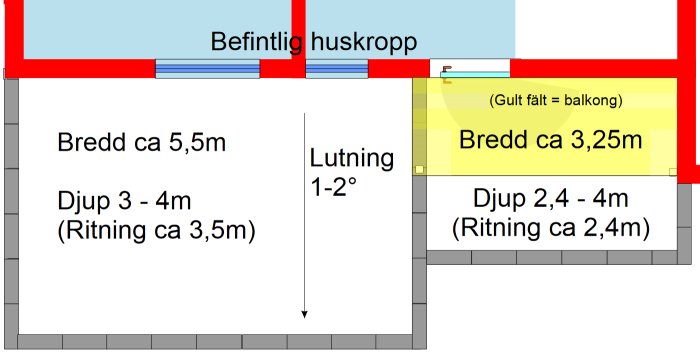
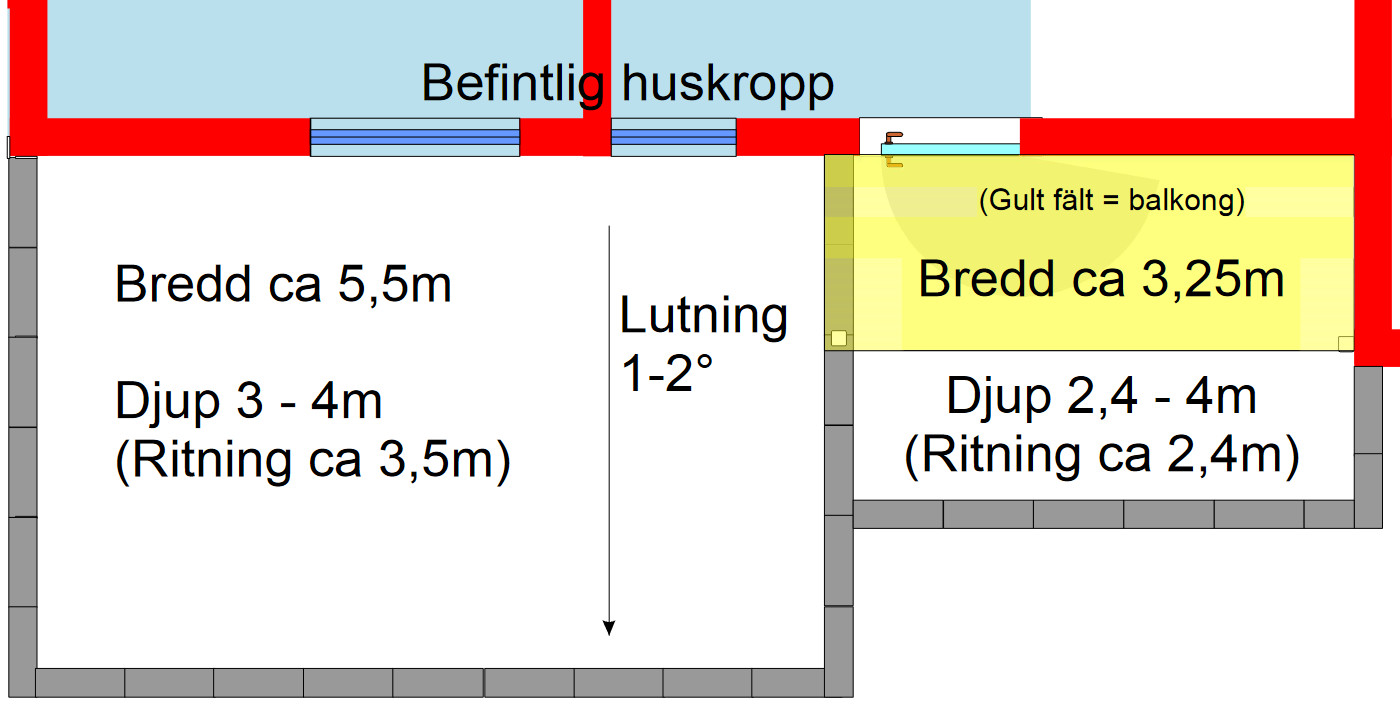
The wish is to possibly build a basement under the veranda. (for various reasons) The problem is that the measurement between the "veranda floor" and the basement ceiling is only about 35cm. (wasn't planning on lifting the house.... or thawing the snow on the deck.) The veranda becomes more useful if it extends 4m from the wall.
Sending a sketch - the measurements are not "final".
Currently, it doesn't feel relevant to lay wooden beams (and insulate around the rafters.) TRP metal sheets seem better as a carrier and to build an inverted roof (or use some Sandwich construction)
I'm not sure if TRP70 x 1mm is sufficient or if one should go up to TRP130. (in terms of strength) The slope of the roof/floor will not be many degrees. Whether it will be decking or tiles on top as flooring is not decided, but I'm counting on tiles (heavier). A description from bottom to top
a) Currently, I'm considering a wooden ceiling (glued against TRP metal sheets? or maybe there are mounts that can be glued?) with insulation in the flanges. (want to avoid screwing many holes in the metal)
b) The TRP metal sheet rests on a beam against the house - with 2 screws / valley (56mm thick ?? high / of laminated wood?)
c) On the other side 3.5-4m out, the sheet rests on the sill around the basement wall (it might be that the basement wall is built at 3.5m but the veranda is 4m.) There will probably be some sort of edge on the roof to hold it against the sill? (not just nails through the sheet)
d) At the end of the TRP metal sheet, away from the house, seal strips that match the metal profile are placed.
e) Above the TRP sheet, insulation in the flanges.
f) Above this, perhaps a waterproof layer (felt?) to get a smooth surface.
g) Above this, foam insulation up to the max thickness on the roof. (possibly PIR insulation)
h) Above this, I am again a bit unsure - either some felt or why not thin flat metal? If the thin metal is glued to the insulation and the insulation is glued to the TRP metal sheet (if the felt underneath is skipped) the floor becomes very rigid. (or is it wrong to use metal and felt?) If a "clump of ice" falls from the roof - or a sharp stone under the tile, I don't want it to cause a hole in the felt? - Here I have no clue yet....
If the roof thickness does not manage to be under 300mm, the ceiling height in the basement will probably have to give way... (might also have to calculate more than 50mm for decking/tiles?)
But back to insulating the metal - Wonder how hot the metal has to be for the foam to melt? Since I have no problem cutting foam (I have a large thread cutter on a stand) one could cut the foam slightly larger (a few mm) - gently heat the metal and the fit of the foam would melt into the grooves.... (If there are no disadvantages with rock wool/glass fiber, it's perfectly OK to use in the flanges)
It wasn't an easy topic to discuss over a forum By klinkers, do you mean stone in sand or do you mean real klinker tiles in fix? The latter, I think you can forget without involving concrete. Bearing plates are not a particularly stable surface; they move quite a bit even if they're properly dimensioned.
Personally, I've never done any built-in waterproofing on metal, only on concrete, but of course that doesn't necessarily mean it can't be done, just that I don't know how. A simple decking can of course be thrown on any felt roof.
Avoiding screwing into the metal is pointless as the metal is splice-screwed during installation with a lot of screws. Then the waterproofing would surely also be screwed into the metal even if you're planning to build over it.
To be completely honest, I think there must be a better solution than bearing plates for you, even if I don't know exactly what. Vapor barriers and roof edges always cause trouble with metal unless you want to build a warm roof with internal drainage.
Exciting! (seems like you have insight into the subject)
I thought of solving tiles with small stone - possibly just stone around the tiles (don't know why it would be sand underneath in this case.)
I don't think joints are screwed but rather "glued" (or possibly screwed on the side) - not mainly on the ridge or valley. (I want the top of the sheet to be as flat as possible
If I were to cast a concrete arch - How thick would the arch need to be for the same load-bearing capacity?
single or double reinforcement?
Is 8cm enough? (would "only" have 25cm insulation left....)
Would the built-in membrane be easier with an arch?
If the above solutions don't work, only wooden roof/floor joists remain (but it feels complicated with organic material in the construction. (I wouldn't dare use pressure-treated indoors)
You absolutely must not have gravel under paving stones directly against the waterproofing. Sand is also good because it's extremely difficult to set the stones properly in gravel, and such a thin layer is needed that the gravel doesn't contribute anything. I believe the sales name is setting sand, but don't be fooled into buying a bag Regular paving slabs must also not lie directly against the waterproofing, so this is a reasonable solution.
The waterproofing can be solved in different ways depending on the method; if you're using a pier, you can adhere everything according to your first link, but it's an extremely labor-intensive method compared to just screwing and welding the waterproofing, which is often sufficient, for example, if you choose decking instead of stone.
I know two things about concrete: it gets hard, and it cracks, leaving the rest to others With that out of the way, it's much easier on an arch, and it opens up virtually endless alternatives. Sloped insulation on concrete is popular for obvious reasons. https://tatskiktsgarantier.se/riktlinjer here you'll find some useful information about built-in waterproofing, but decking and concrete slabs on spacers are counted as exposed if you're curious about that. But most solutions should theoretically work on metal as well, if the metal and insulation are rigid enough, it's just uncommon. (so uncommon that I've never heard of it)
Whether wood is okay or not probably depends on how high above the ground it ends up. Wood makes it easy with insulation, vapor barriers, and connection to the outer walls, which otherwise become tricky, but I'm not qualified (smart enough) to make these assessments; I'm the one doing the grunt work, not the one deciding what the grunt work will be
Thank you for your time!
Sättsanden - Won't it "wash away" when it rains?
If you place "flat stone slabs" it's one thing, but if you use something like natural stone, there should be something to even out the irregularities (but then it might not be called tiles anymore )
The wife might start glancing towards "sedum roofs" - who knows...
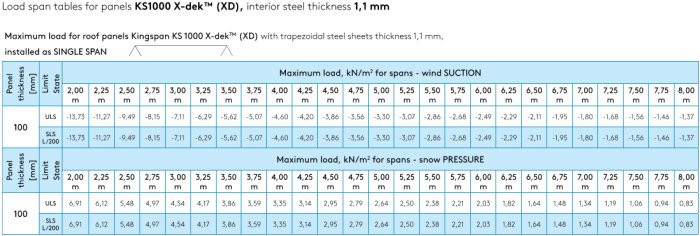
The XD model has a sheet (0.7mm) on top https://ks-kentico-prod-cdn-endpoin...et_KS1000_X-dek_(XD)_IPN_EN_SE_17_03_2021.pdf
If the TRP sheet is glued under the insulation and a sheet is glued on top of the insulation, the stiffness will be very good. (The insulation value also seems good with a λ of 0.020). On top of this construction, it will be easier (I think) to add insulation and top it with an additional waterproof layer at the top under the "wear layer."
What do you think about this?
As the top waterproof layer, there are a variety of solutions, from laying an EPDM rubber membrane to a modified Bitumen solution or regular traditional tar paper (all with very different installation costs - if you need something hot liquid, it quickly becomes "complicated," either as a boiling pot or a special burner)....
All the roofs I've made or seen with tiles (which aren't very many) have had a parapet, but of course you need something that keeps the sand in place. Possibly the same edge finish as for sedum and some kind of ground fabric, but I don't know.
I have no experience with those solutions and don't know if they're interested in manufacturing those for small jobs, but you can call and talk to them.
Feels like the right idea!
I need a "sarg" to keep it all together, and glancing at sedum roof solutions with landscaping fabric doesn't seem wrong either.
I have skimmed through the thread and if I have interpreted everything correctly, the idea is to use TRP sheet metal as a support with a terrace on top? As mentioned earlier in the thread, a load-bearing sheet is incredibly shaky to walk on, and adding more people will make it feel uncomfortable. An alternative could be a main load-bearing structure of steel beams with a smaller center-to-center and with a secondary load-bearing structure, for example, 45mm TRP with suitable load-bearing insulation on top. Between the steel beams, PU insulation can be used.
As mentioned earlier in the thread, a load-bearing sheet is incredibly wobbly to walk on,
Wondering if this also applies to the following product (which I have "gotten a bit stuck on.") https://www.kingspan.com/se/sv-se/produkter/sandwichelement/takpaneler/ks1000-x-dek
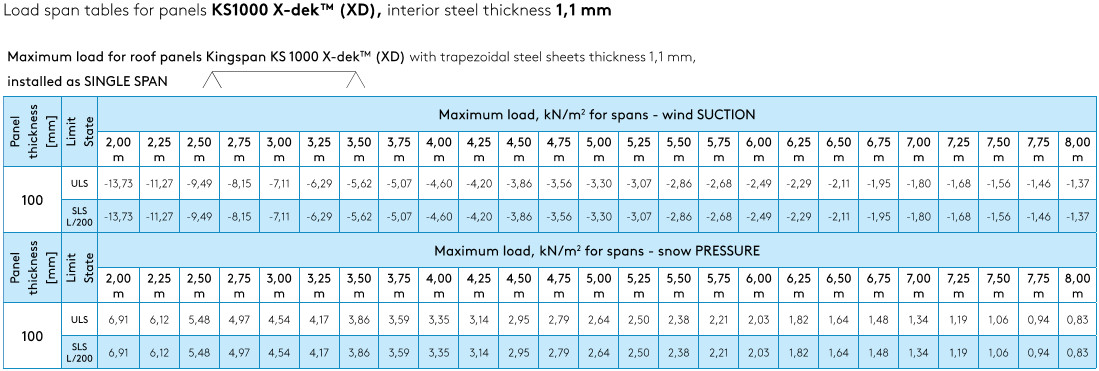
If I understand correctly, the TRP sheet has a profile height of about 100mm, which can be ordered with a sheet thickness of 1.1 mm. On top of the sheet (including in the valleys) there is glued? insulation with a good U-value (0.19W/m2) (140mm U-value = 0.13W/m2) and on top of the insulation (e.g., 100mm up from the TRP) there is a flat sheet of 0.7mm.
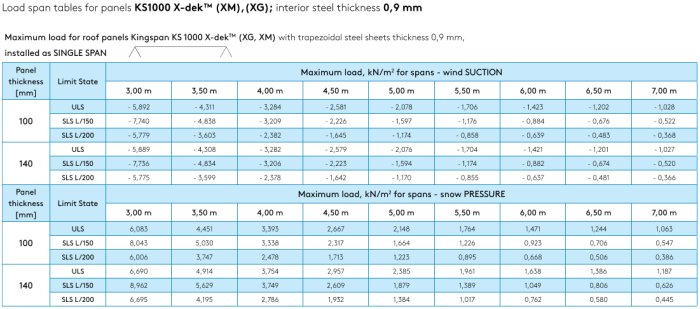
I have tried to interpret the following table.
If I interpret the table correctly, a 3.5m sheet would handle 386kg/m2 at 3500mm/200 => 17.5mm deflection.
Uncertain if that would feel "wobbly". But spontaneously, it seems like it would handle the snow load in the winter and possibly be OK to walk on? (but I could be wrong)
I don't know the difference, but this sheet:
________________________________
On top of this "sandwich," supplement with more PIR insulation. (+ waterproofing, and wear layer like decking / loose tiles - maybe thin mesh reinforcement and sand between? - If it doesn't just become decking)
The valleys under the TRP sheet I had planned to fill with suitable insulation; But if it would improve anything, some valleys can be filled with something for stability.
(I haven't calculated if beams of 195x45 would work / add anything to the ceiling height below) - adds about 10cm more.
An alternative might be a primary support structure of steel beams with a smaller cc



 or thawing the snow on the deck.) The veranda becomes more useful if it extends 4m from the wall.