As a new homeowner and new to the forum, I have a question for you more experienced builders:
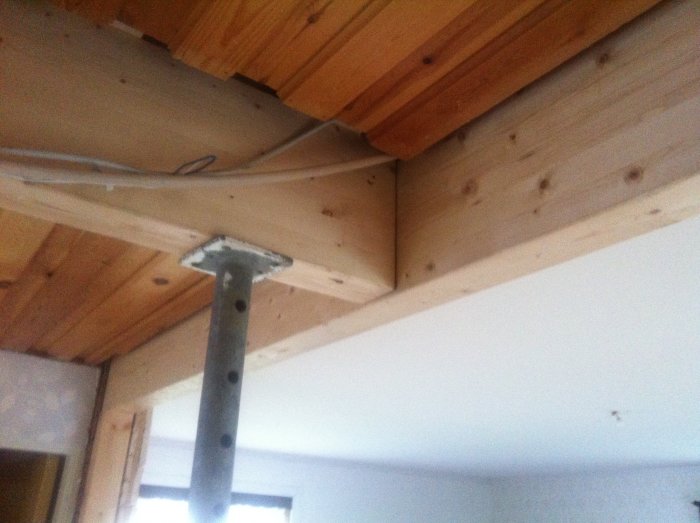
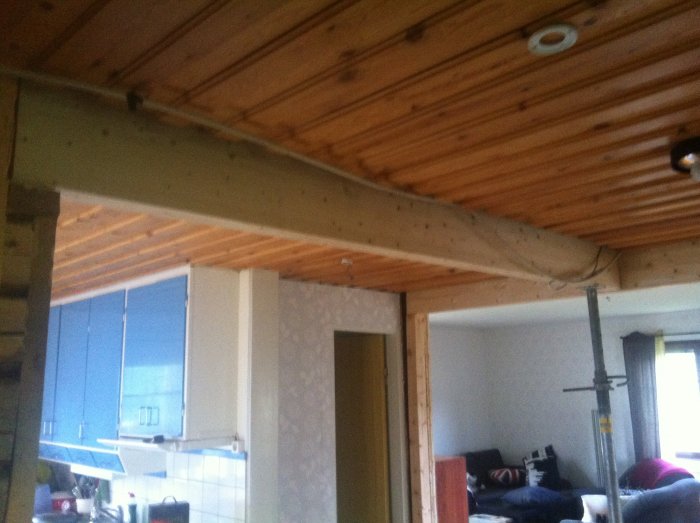
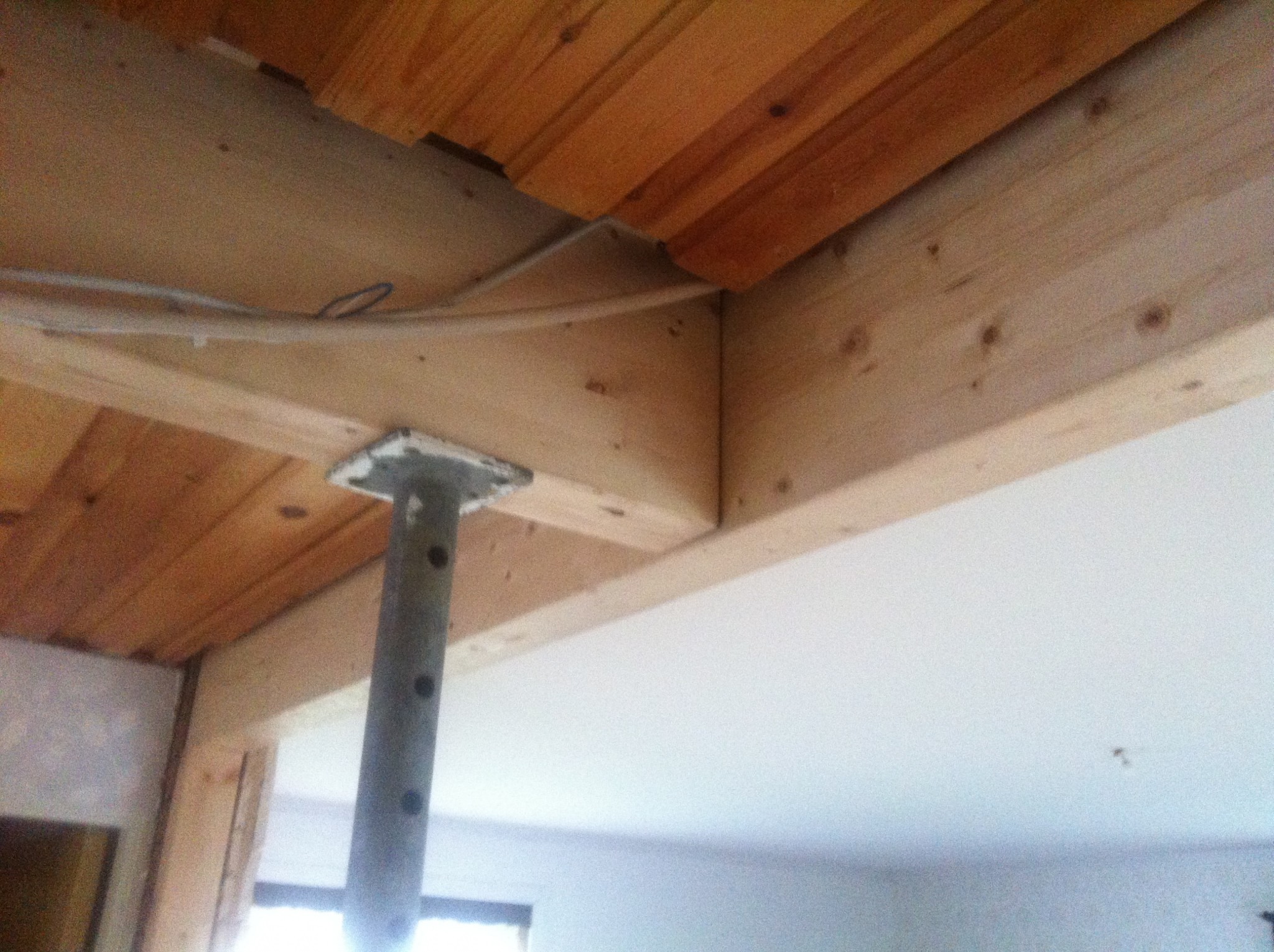
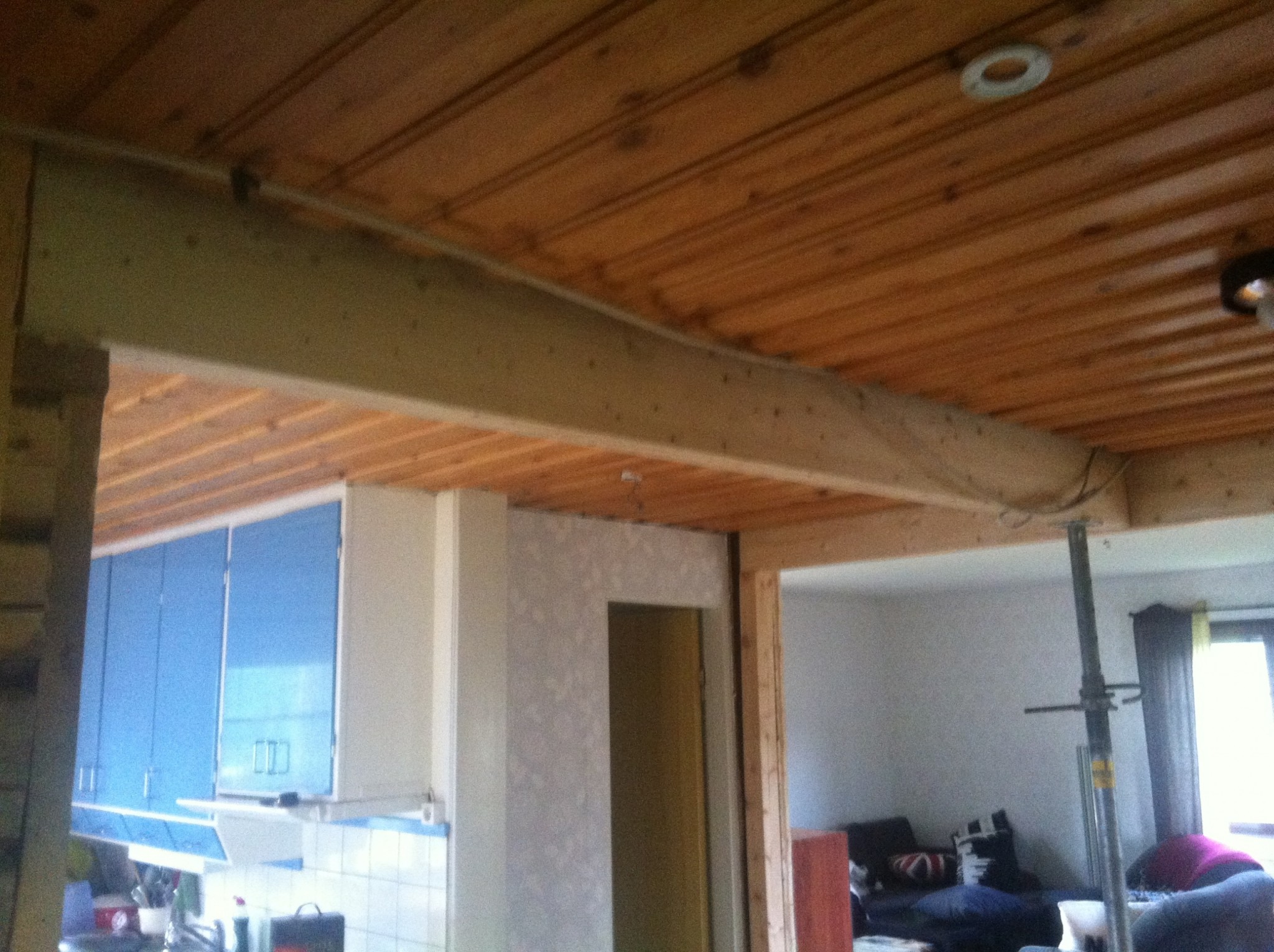
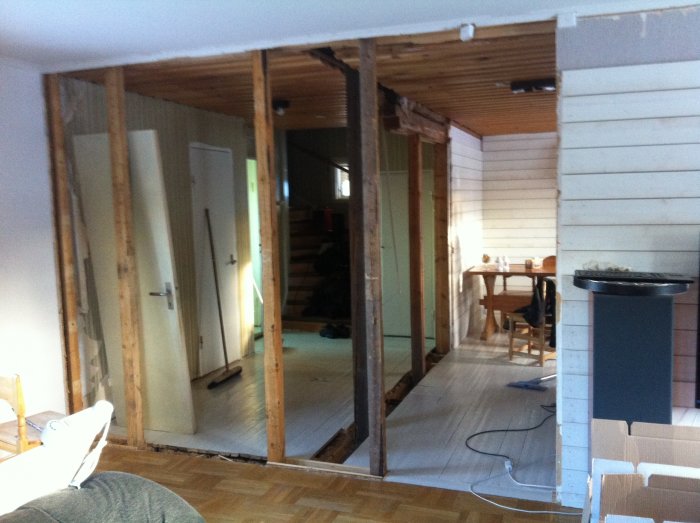
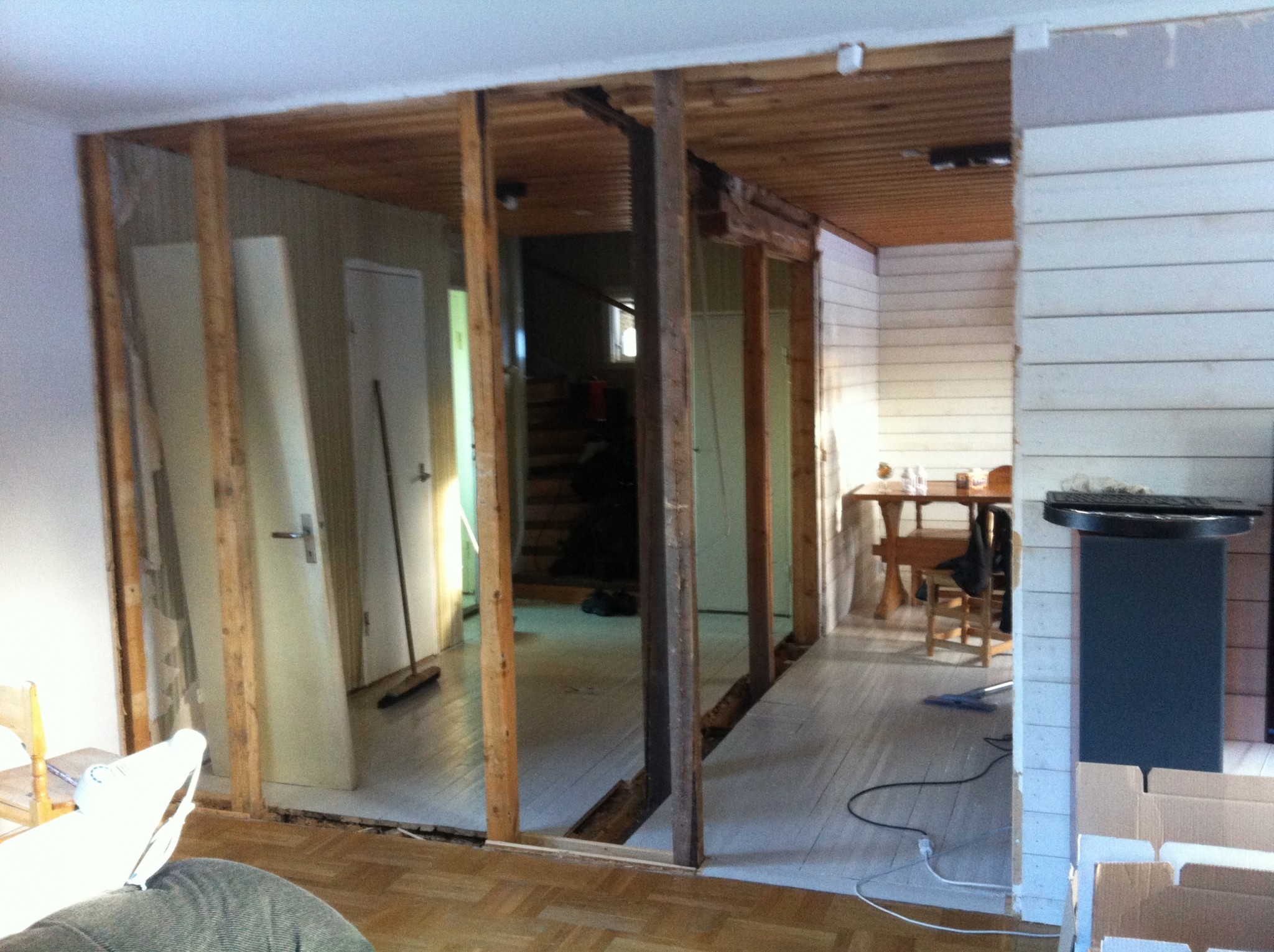
I have removed two partition walls (one load-bearing and the other not) and replaced them with glue-laminated beams. One (standing where the non-load-bearing wall was) is supported by posts on the joists, and the other is recessed into an existing log wall on one side.
My thought is that the one replacing the load-bearing wall should be attached to the non-load-bearing one, thus avoiding having a post in the middle.
Hard to explain, but the pictures should make it more understandable.
Now my question is how I should join these two beams. I had thought of making a strong beam bracket that I bolt with through bolts through the beam that's on posts.
Others say that through carpenter screws into the end grain of the other beam are enough, while some think I should drill and drive in dowels.
What are the dimensions of the beam? There are joist hangers for most widths, these are nailed with anchor nails. Then it depends on how large the loads are.
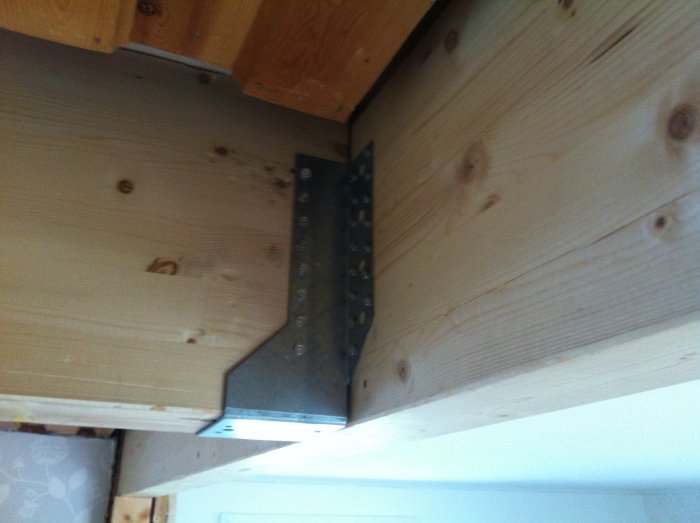
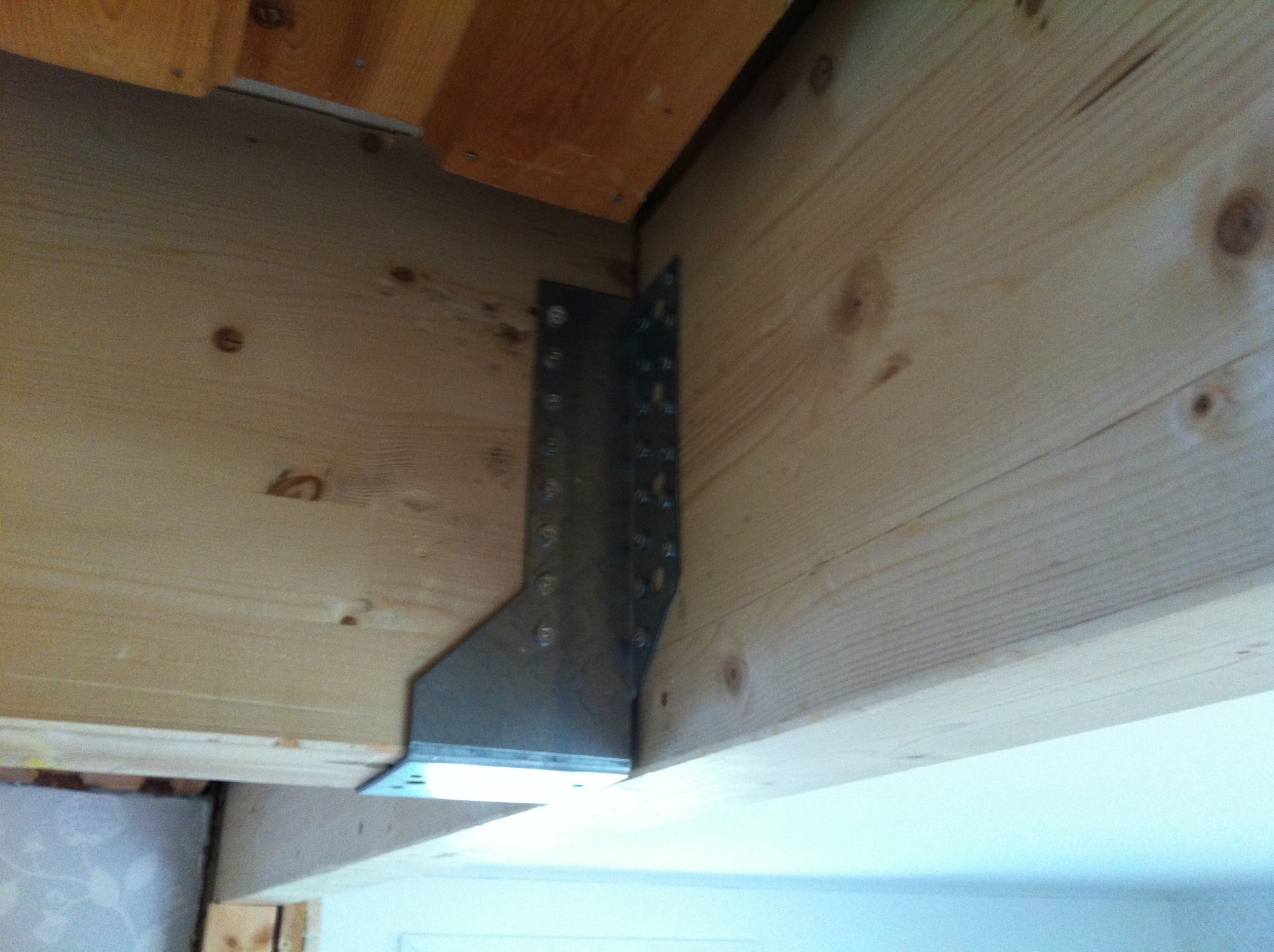
Function had to yield to appearance. It became a joist hanger 90X195 with 50mm anchor nails.
The nicest would have been to place a joist hanger with the "tabs" inward, but since the beam needed to be in place before the hanger could be attached, that wasn't possible.
I had supplemented with some proper French wood screws. Now half of the weight that the load-bearing wall took up is on approximately 30 anchor nails, it spontaneously feels like too small a total cross-sectional area for that dimension of the glulam beam. I haven't calculated this, best to check with Moälven or another glulam supplier, they can easily calculate such things.
Thanks for the tips!
According to the table on träguiden, it seems that the nails currently handle 34.8kN.
This doesn't really tell me much, as I have no idea how big the load on the beam might be. Are we talking about 1 or 10 tons?
In any case, I'll put in some proper screws in the large holes of the beam bracket.
Next time you get the idea to do something like this, it's a matter of taste, but I would have inserted 4 rail spikes from the bearing side, pre-drilled and just hammered them in.....I think they are okay as decoration...
It's a bit concerning that the original poster states he has no idea how much load there will be on the beams. If we assume that it's an intermediate floor so that there's a floor above, you should expect it to withstand 200kg per sqm. Rough estimates from the pictures and assumptions about symmetry. Make me believe that the area above before the beam could be 4x4 m in the direction we see plus as much again in the direction we don't see. That would give about 6.5 tons. Half of that comes on the beam we see. It then transfers half of it back to the connection to the other beam, i.e., about 1.7 tons or 17 kN.
But now we don't know if there's perhaps a load-bearing wall on top as well, and my estimates are very rough.
Personally, I have no idea if the beam is thick enough, is correctly laid out, etc. In my eyes, it looks too weak.
TS, I believe your solution is fully adequate. I would be very cautious about drilling large holes or randomly using French screws as some suggest, there is a risk of weakening the structure. If you have 30 anchor nails holding the joist hanger, I would think it requires enormous forces to shear them off, much more than this joint will ever be subjected to. That doesn't mean the beams themselves are strong enough, but I assume you have done some calculation on that.
Now it's the case that it won't be weakened by drilling and driving in rail spikes, but I understand your concern, one should not make too large interventions in roof structures. The solution with a joist hanger could work but seems a bit weak for the weight we can only speculate that it should support. 1 joist hanger for x amount of tons of pressure at a load-bearing wall is, in my opinion, not sufficient, but I haven't seen the whole picture. I hope Ts knows what he's doing, otherwise there will be settlements or worse still!
If it is as I believe, it appears in the picture to be around 3600 - 3800 between the outer edges, if that's the case, then the beam is not undersized because it's wedged in one end but a little "weak" at the beam shoe, it should hold but feel free to check with a neighbor or someone similar who can see it on site, as we don't know the whole picture of how the house is constructed!
It is a floor structure resting on the beam, which is approximately 3600mm. The beams are 90X270mm. No load-bearing walls above. I determined the size of the beams by inviting a carpenter for coffee when the neighbor was renovating.
Of all the people who have visited and seen the beams, no one reacted as if they were under-dimensioned. However, everyone had different solutions on how they should be fastened together, hence this thread.
This is how the supporting posts looked that were inside the old wall.
Vi vill skicka notiser för ämnen du bevakar och händelser som berör dig.