
8,312 views ·
4 replies
8k views
4 replies
Roof Trusses & Roof Battens - Thoughts on placement...
I would like to have explained to me how it works with rafters and roof battens for a shed roof.
In some drawings/pictures, the rafter has an underlying roof batten, and the whole thing is placed on top of the wall plate (image 1).
In other cases, there is no such roof batten, and instead, a batten (image 2) is placed spanning between the two wall plates, and I assume that a roof batten is then attached to the side of the wall plate to subsequently mount the ceiling onto.
What I wish to know is the underlying batten that spans between the wall plates in image 1. What is the reason for laying it on the wall plates? Is it just that it's more convenient with a horizontal batten when building the rafter in advance, or can it just as well be attached separately?
In some drawings/pictures, the rafter has an underlying roof batten, and the whole thing is placed on top of the wall plate (image 1).
In other cases, there is no such roof batten, and instead, a batten (image 2) is placed spanning between the two wall plates, and I assume that a roof batten is then attached to the side of the wall plate to subsequently mount the ceiling onto.
What I wish to know is the underlying batten that spans between the wall plates in image 1. What is the reason for laying it on the wall plates? Is it just that it's more convenient with a horizontal batten when building the rafter in advance, or can it just as well be attached separately?
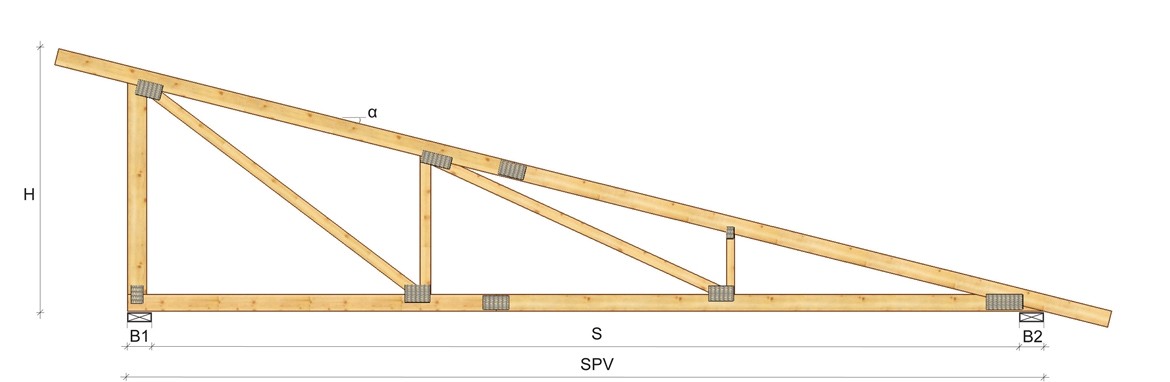
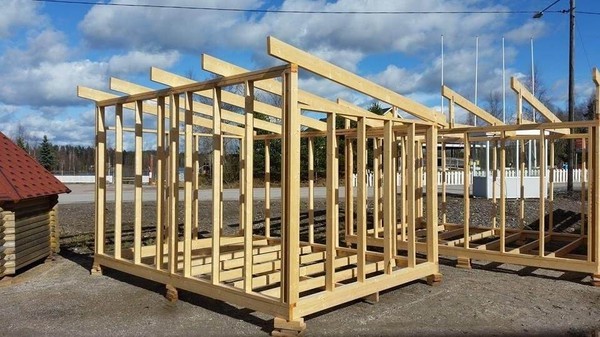
The purpose is for the lower rule to receive weight that is directed onto the wall plate at longer lengths, i.e.Lulaua said:
So on a small house or garden shed, the lower rule does not need to rest on the wall plate as there are no large lengths, provided the roof rules are placed 60cc on top of the wall rules.
Am I understanding this correctly then?



https://www.traguiden.se/konstrukti...rojektering-av-limtrakonstruktioner/fackverk/
Here you can read and learn the advantage of a truss rafter, then you will probably also understand your question, you don't need to delve super deep into the glulam parts but I can't be bothered to sift through it for you
If you build only with studs, each stud must individually withstand the loads it will be subjected to.
Here you can read and learn the advantage of a truss rafter, then you will probably also understand your question, you don't need to delve super deep into the glulam parts but I can't be bothered to sift through it for you
If you build only with studs, each stud must individually withstand the loads it will be subjected to.
Click here to reply