I've encountered a question mark in connection with expanding my bathroom into my walk-in closet. On the upper floor of my 1920s wooden house, there's a strange construction of two pillars and an overhead beam that I assume isn't load-bearing - it almost looks like remnants of a knee wall.
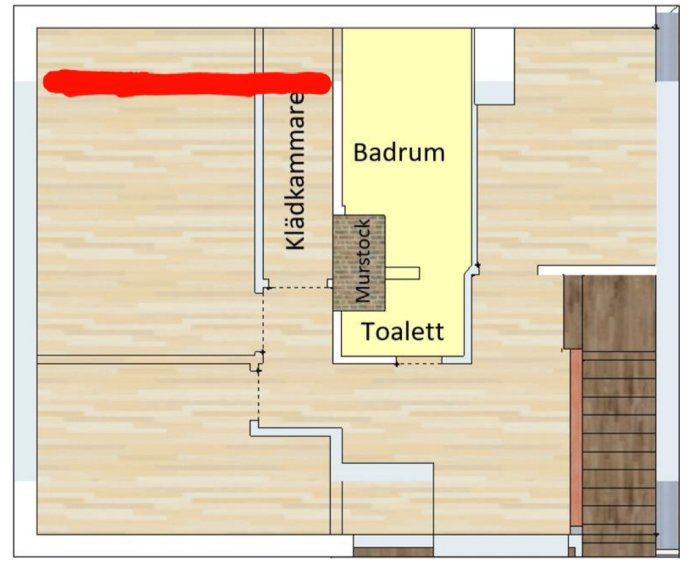
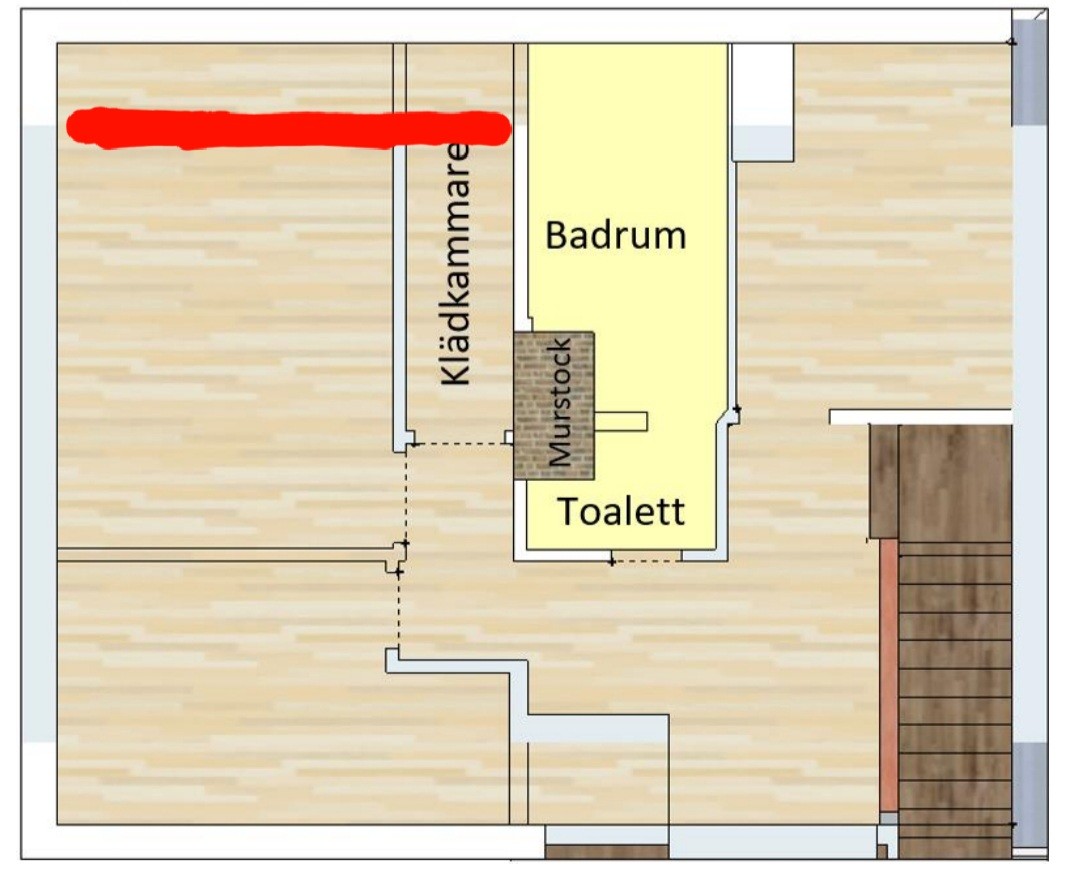
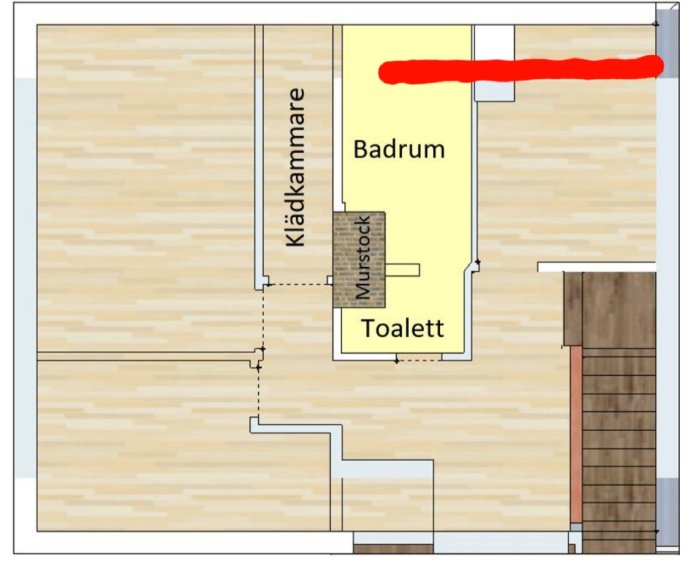
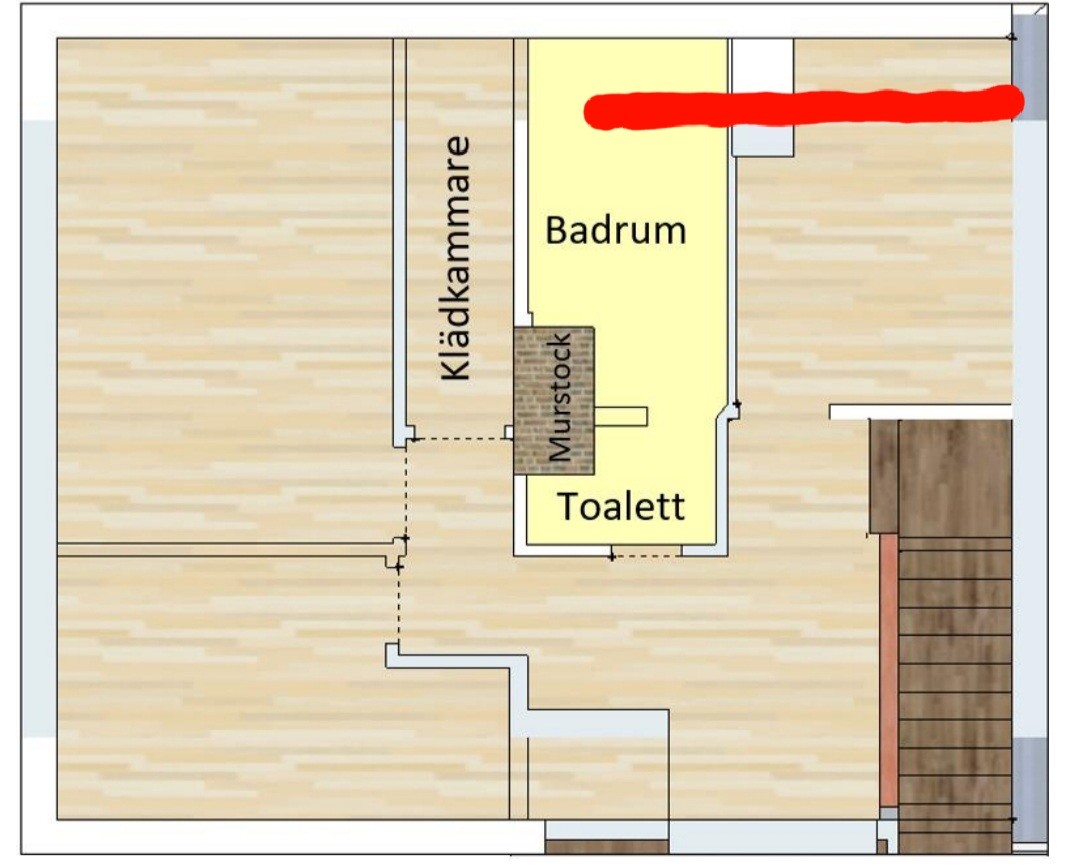
But before I start demolishing, I thought I'd get your opinions. This is how the floor plan looks right now, I've also marked where the two pillars and the beam are located in the floor plan:
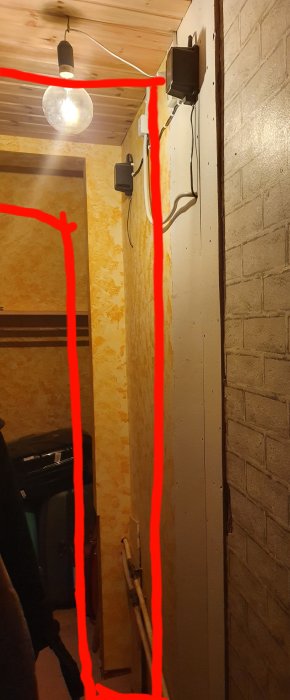
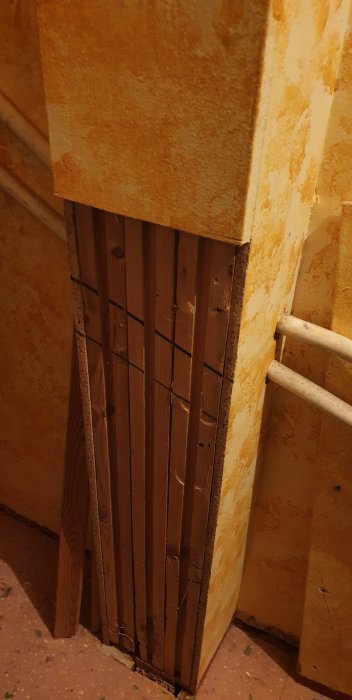
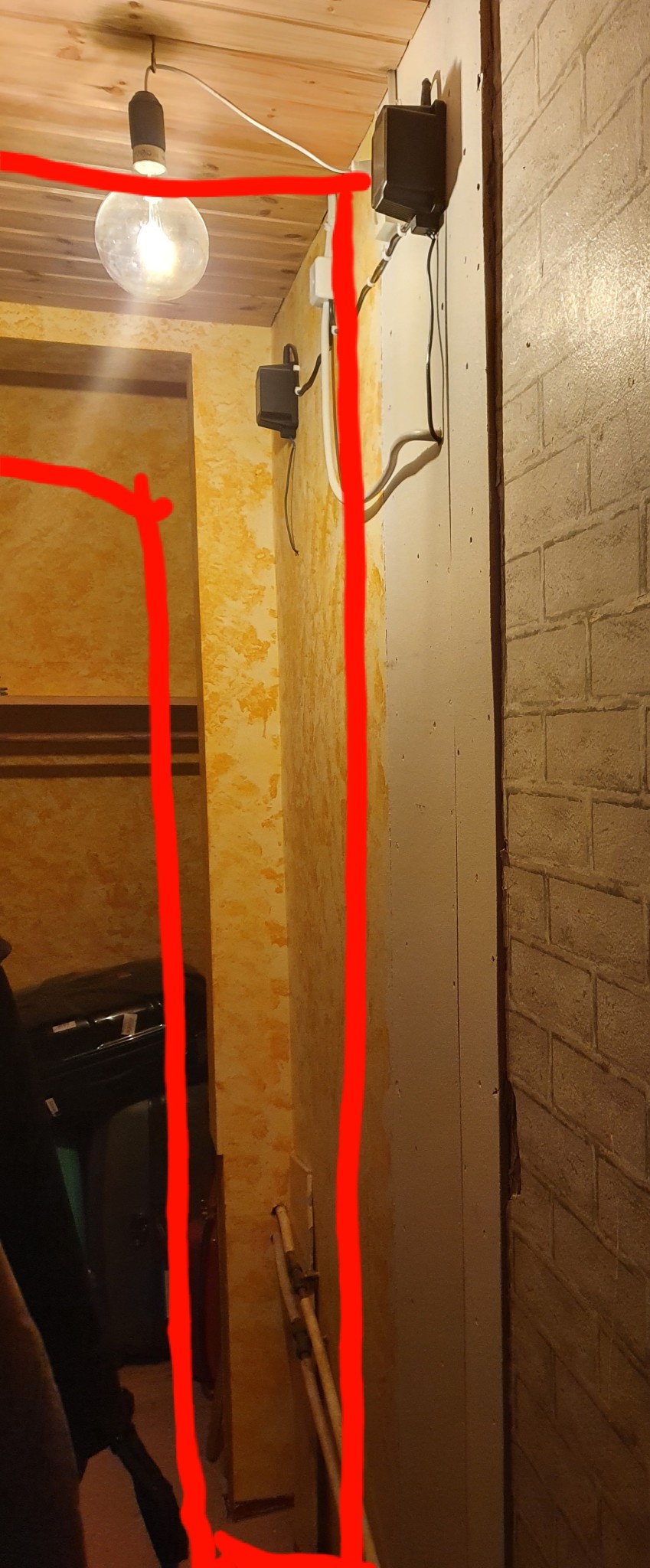
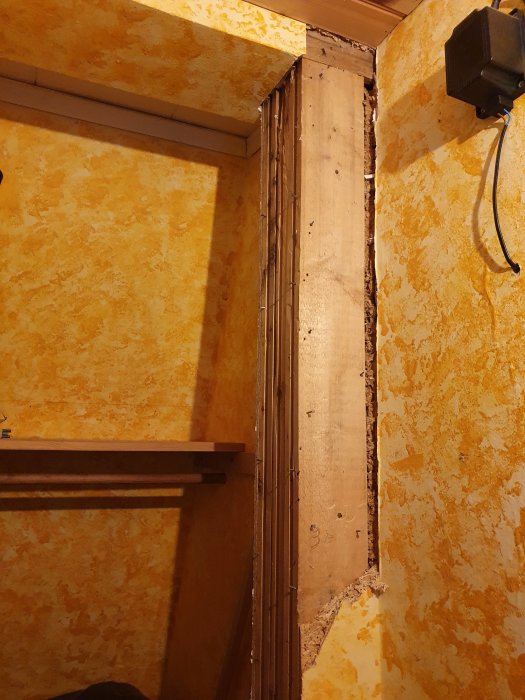
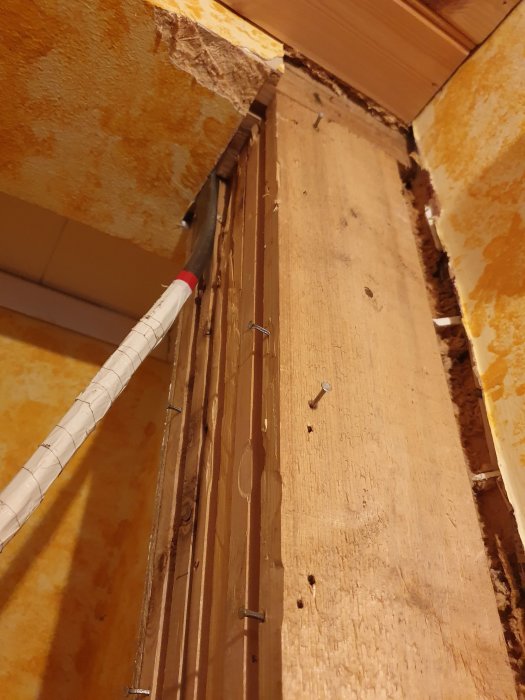
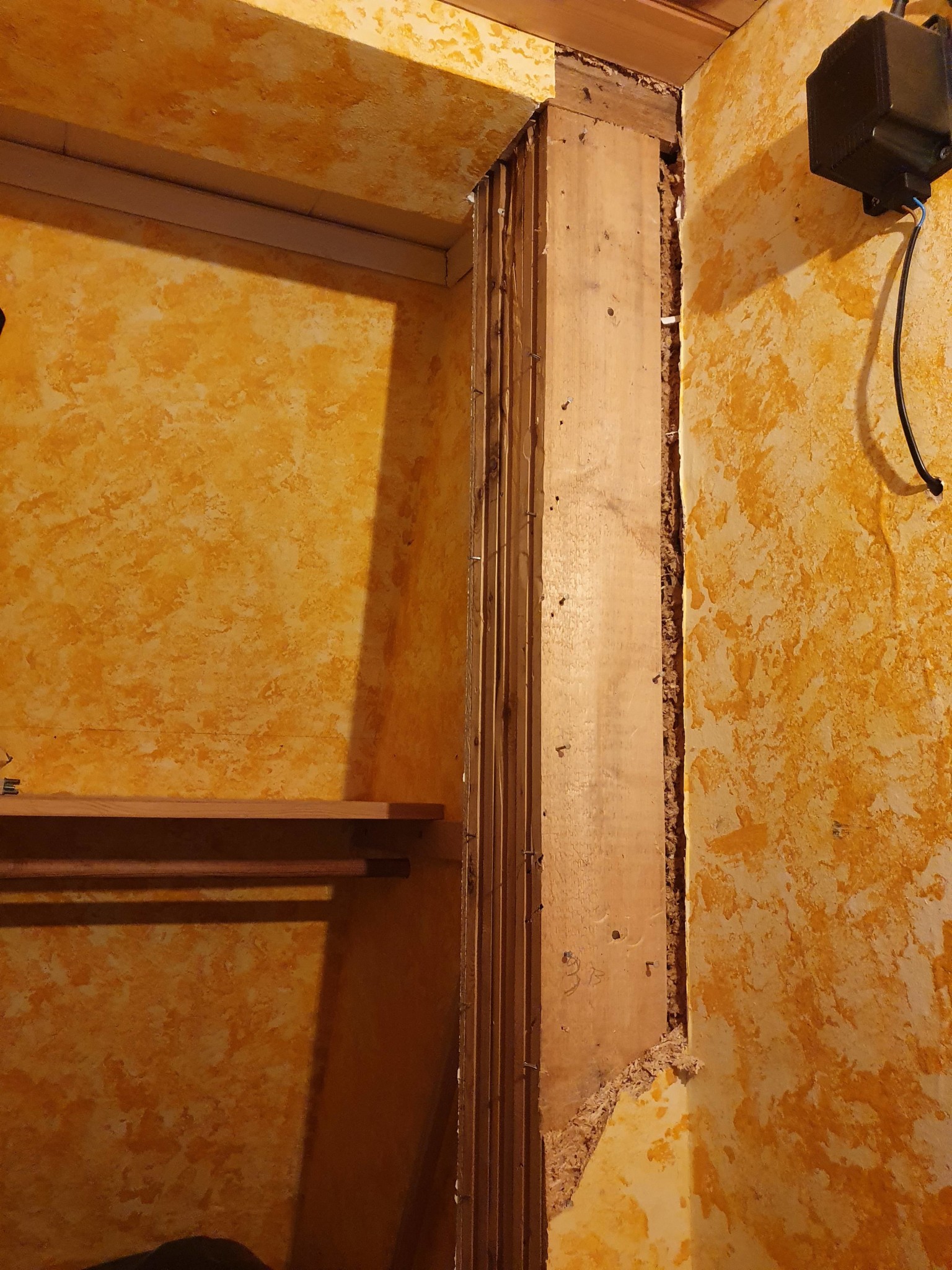
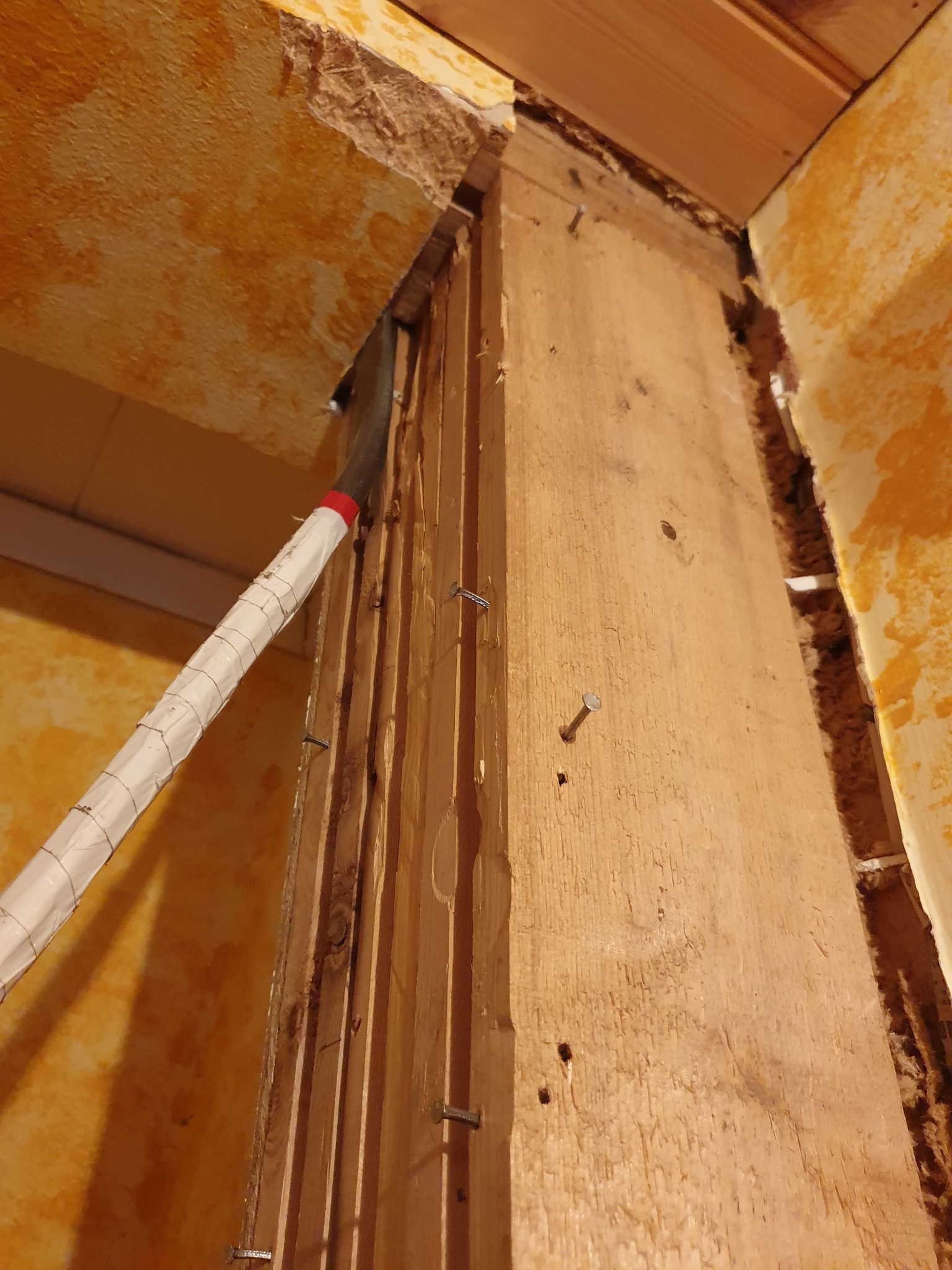
This is how it looks in the walk-in closet/in the marked pillar:
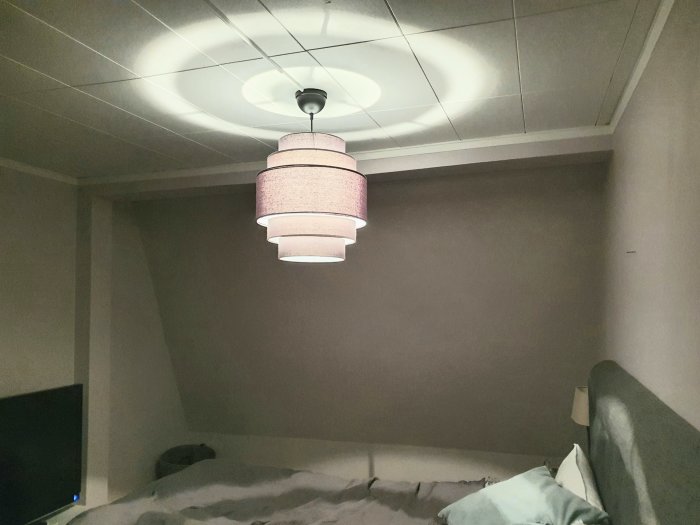
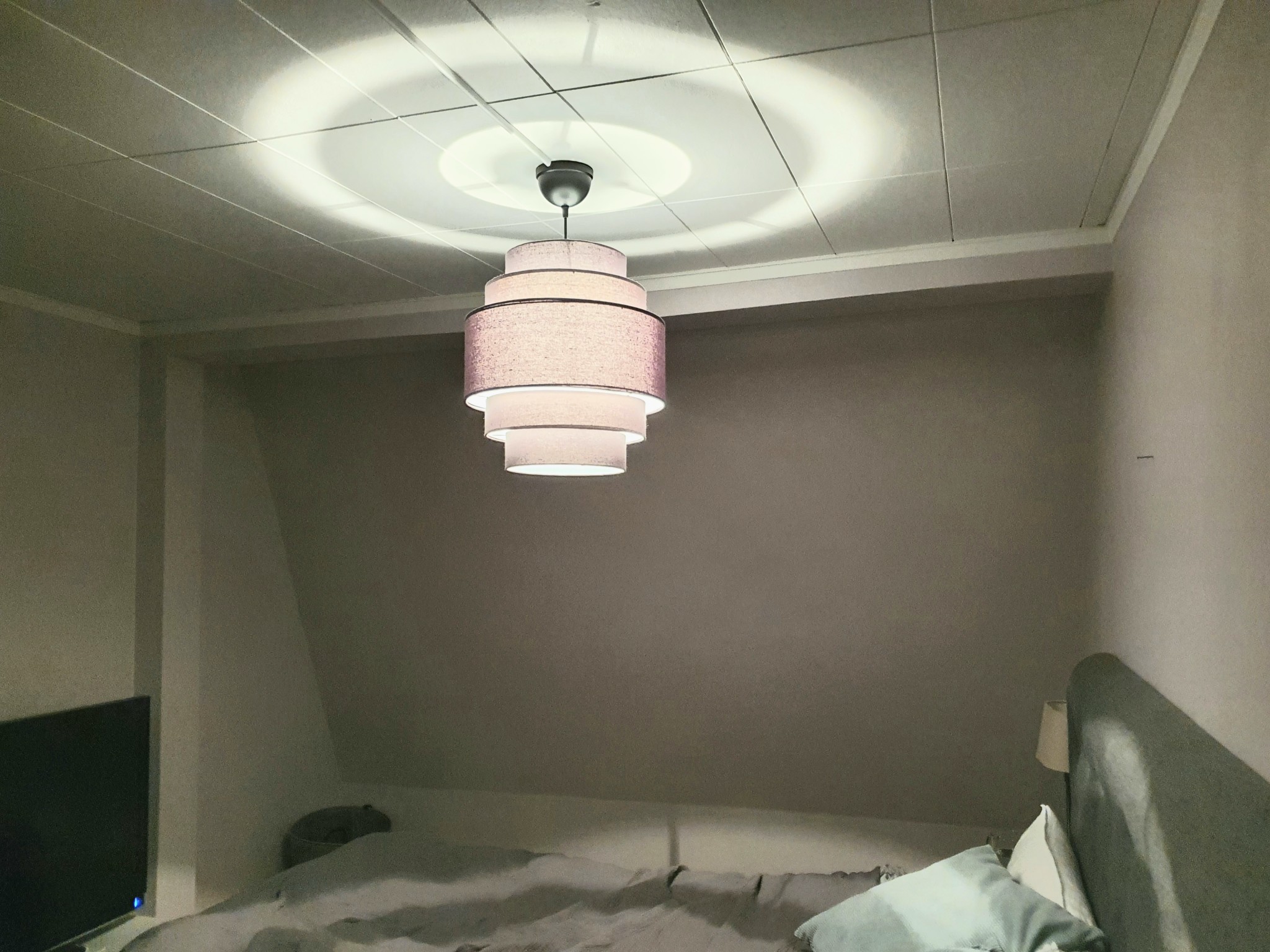
Then the overhead "beam" extends into the bedroom where a corresponding pillar goes down:
Does anyone have an idea why it's there? The corresponding side of the house doesn't have this construction.
Isn't it support for the roof trusses after opening up the attic?
It's a possible explanation, the roof trusses are at a 90-degree angle to the beam, but wouldn't it logically extend around all the exterior walls? Why only there?
The roof trusses previously had support beams that went down where the bed is now (probably two in that area)
Okay, but the roof trusses run across the entire upper floor. It feels strange that only remnants of the support beams have been left in that part of the house?
Can we then assume that there might have been support beams around the entire outer walls of the floor and that these have been demolished previously? Would it then be okay to also remove these remaining two with the beam?
Maybe I should check what I find on older drawings too.
There you should consult a structural engineer. It may be that reinforcements have been made in other ways on the remaining sections where the kattvindarna have been removed. Or that someone has made a mistake and weakened the construction out of ignorance.
There you should consult a structural engineer. It may be that reinforcement was done in another way in the other areas where the attic spaces were removed. Or someone might have mistakenly weakened the structure out of ignorance.
Yes, that might be best. However, I have researched some old floor plans, which confirm that it is old attic spaces that have been removed, it also looks like there is a thicker wall running parallel to the roof trusses. What do you think? Exciting?!
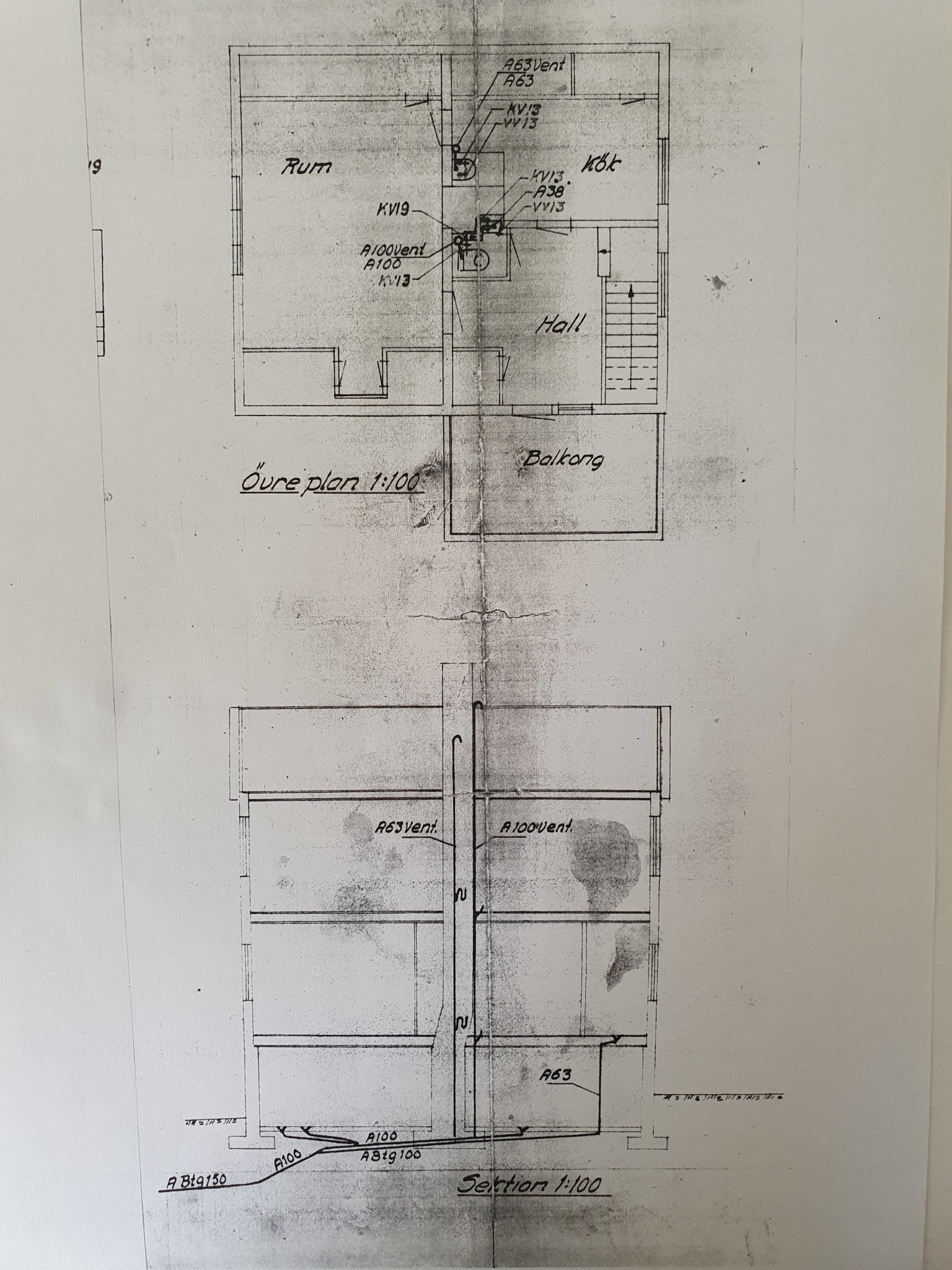
This is how it looked in 1952.
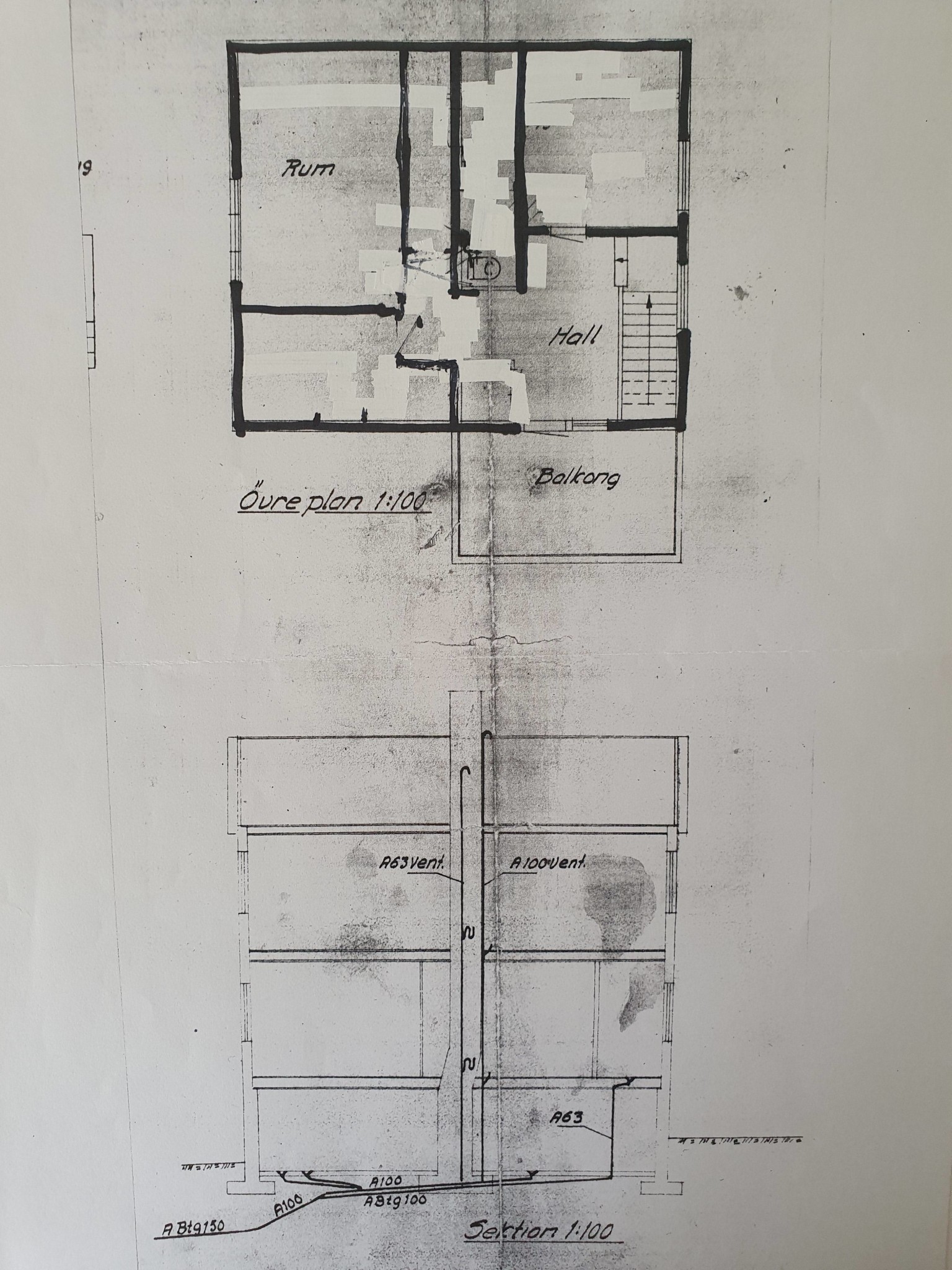
This is how it turned out sometime after tippex was invented.
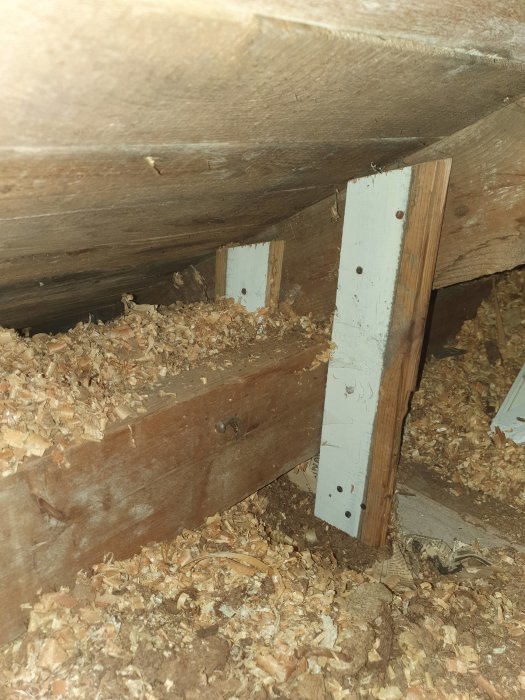
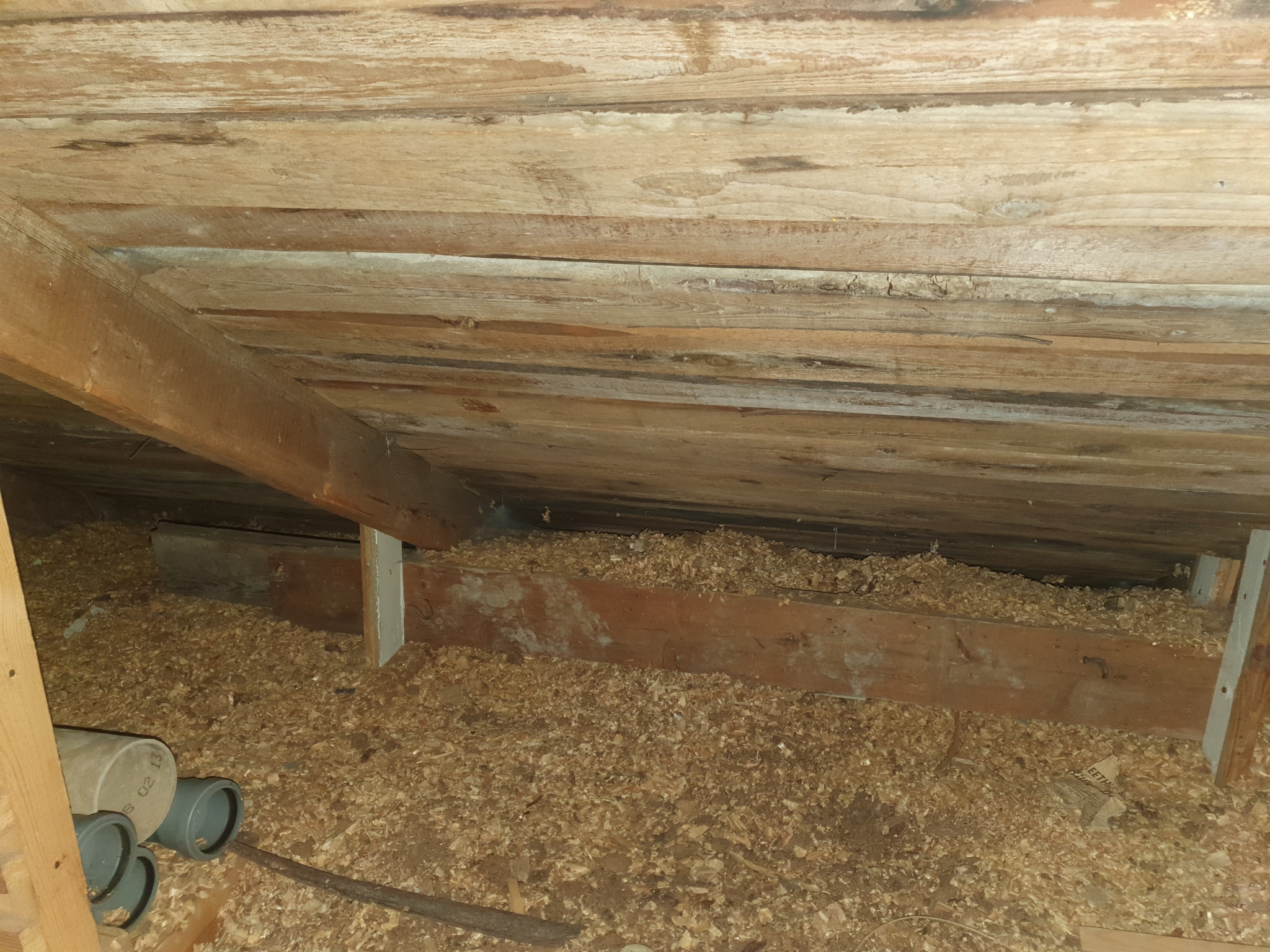
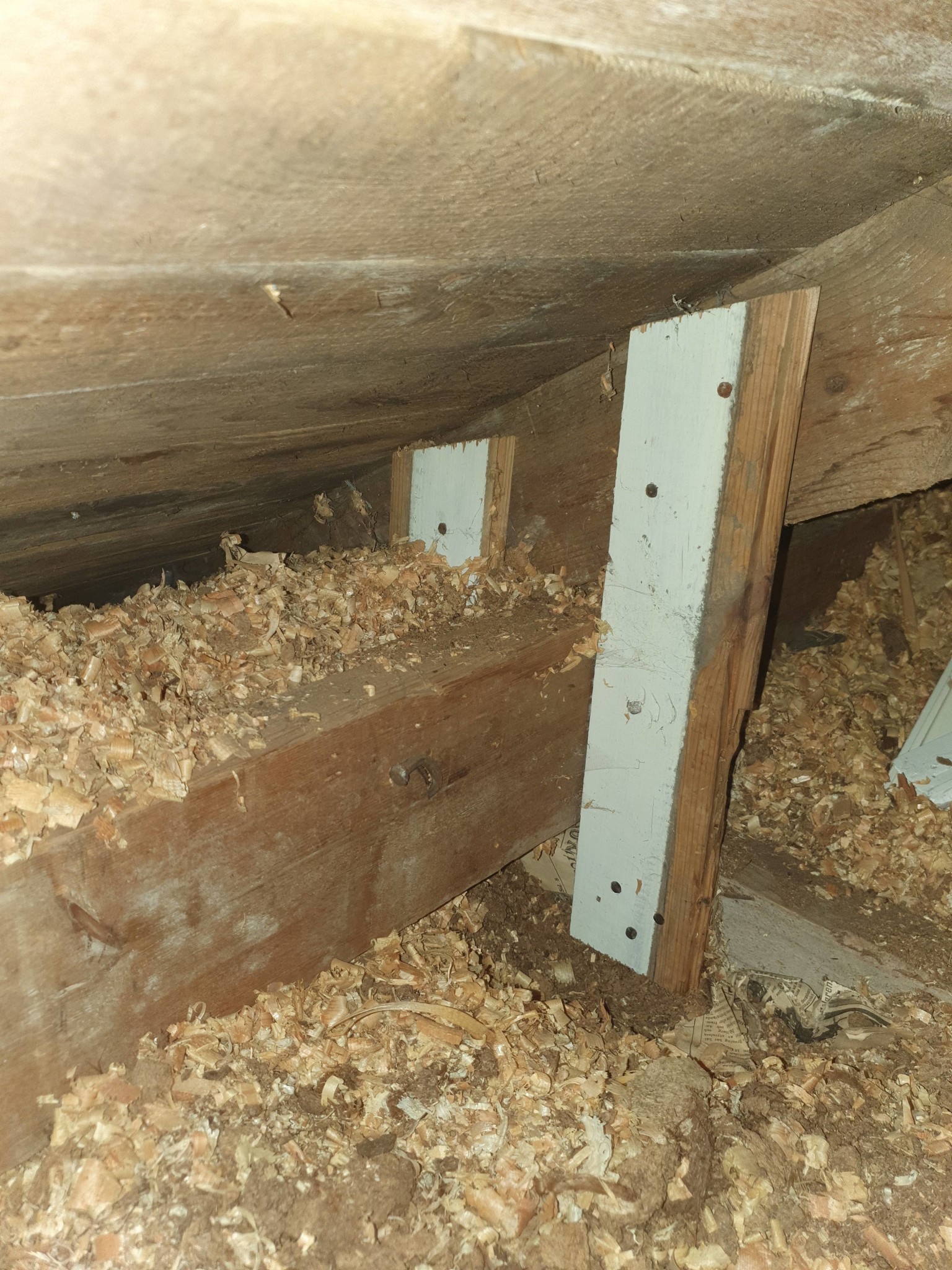
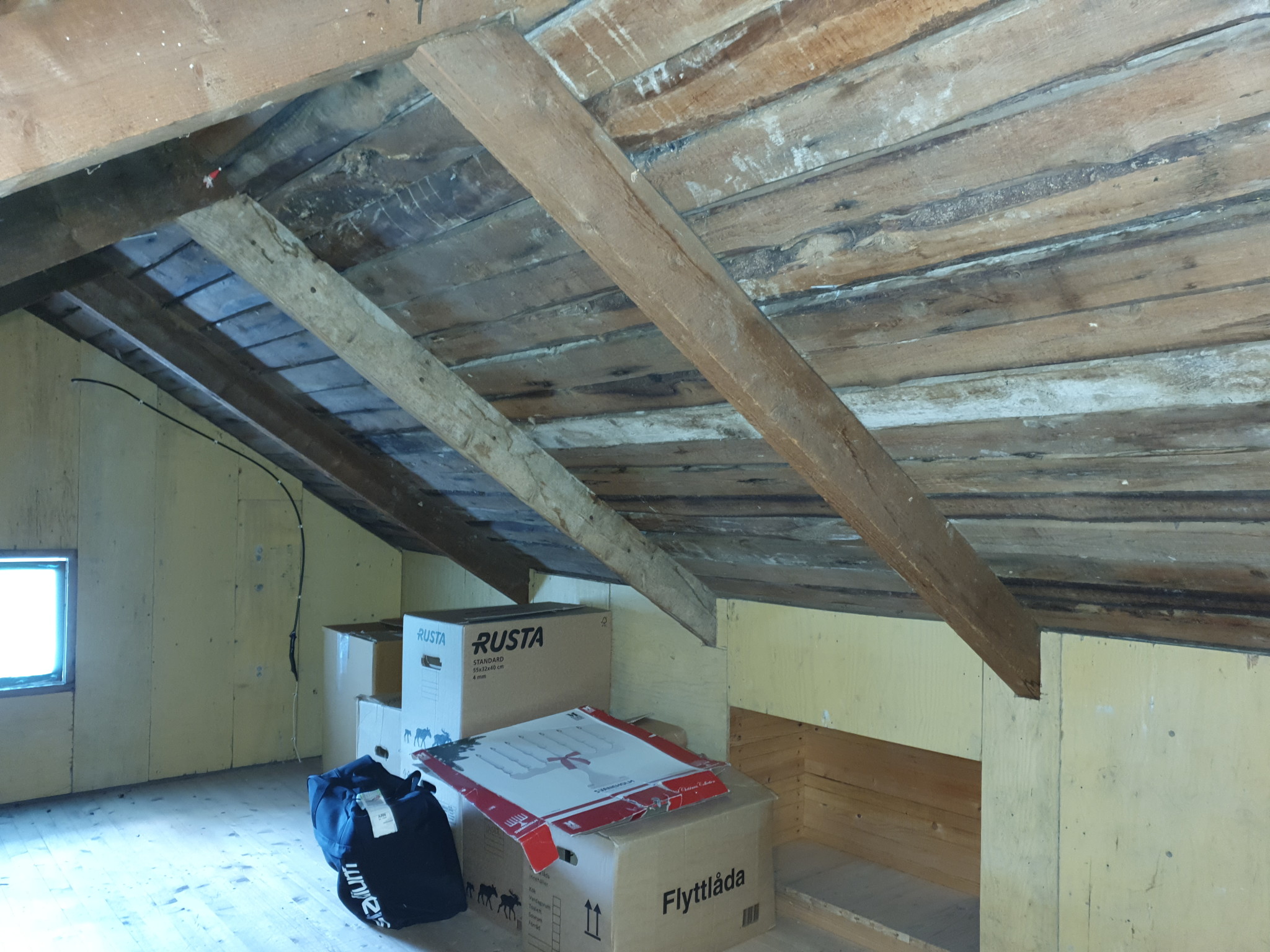
I have continued researching the house, in the attic, a strange construction has been built in the rafters on the side of the house where the knee wall has been completely removed. That is here according to the floor plan:
It looks like they have tried to offload one rafter with the others, as if attempting to even out the load between the 4 rafters that are connected via a beam.
However, I don’t understand what this would do to support the rafters, as there is no support on the second floor of the house. Only the bathroom wall is underneath, and it is completely hollow. It just feels like the load has been distributed over the rafters but not supported from below. Has anyone else seen anything similar? Or knows how this is done?
It is not entirely easy to analyze why it looks the way it does and how it might have looked in the past. The braces in roof trusses have two tasks. Firstly, to allow for slimmer dimensions on the rafters, and secondly, to help transfer roof loads. The trusses where the stairs come up have probably lacked braces from the beginning. Possibly this was compensated for with thicker dimensions, but it is not certain. In the so-called "Swedish truss," which was very common in the 1920s, the braces were not vertical but angled out towards the eave. If the trusses and floor joists have different center distances, the braces are usually attached to a longitudinal horizontal beam instead. Before proceeding, I think one should reconstruct, as far as possible, how it originally looked. Unfortunately, the sectional drawings are longitudinal sections and not cross-sections, so they provide no help. Measurements, dimensions, c/c, etc., are valuable.
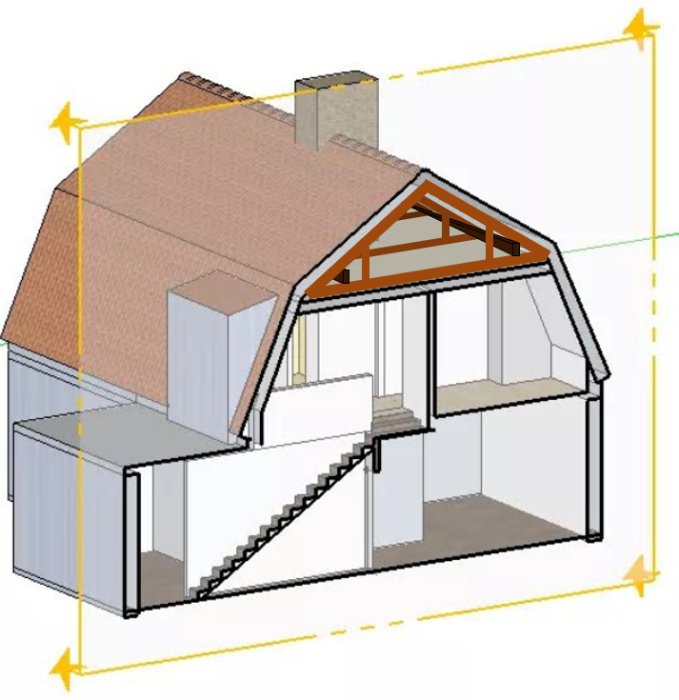
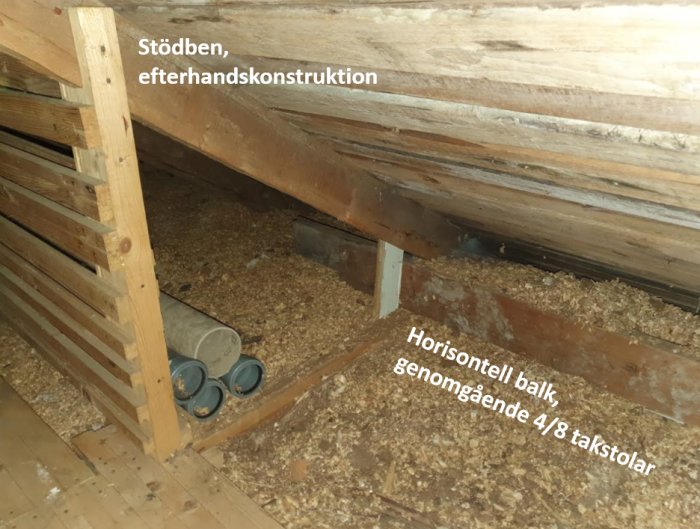
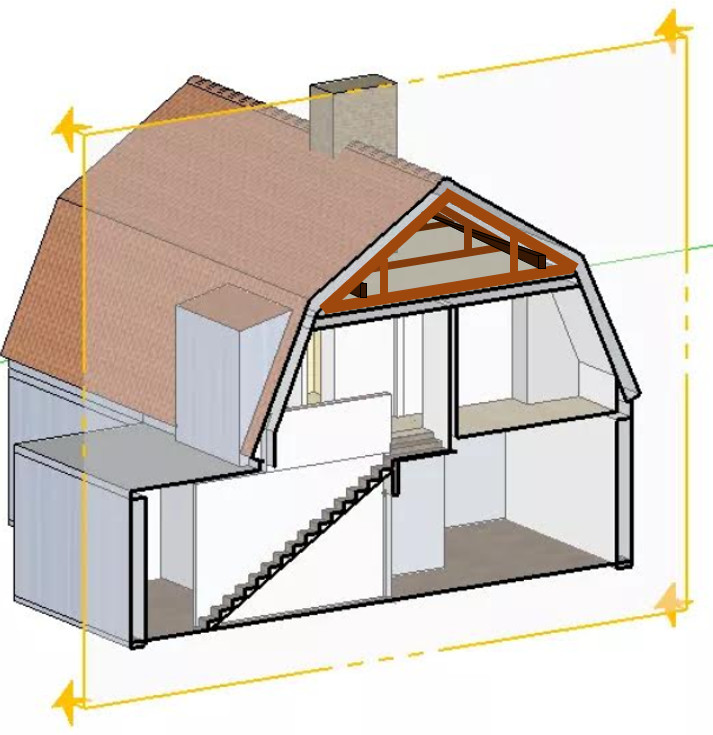
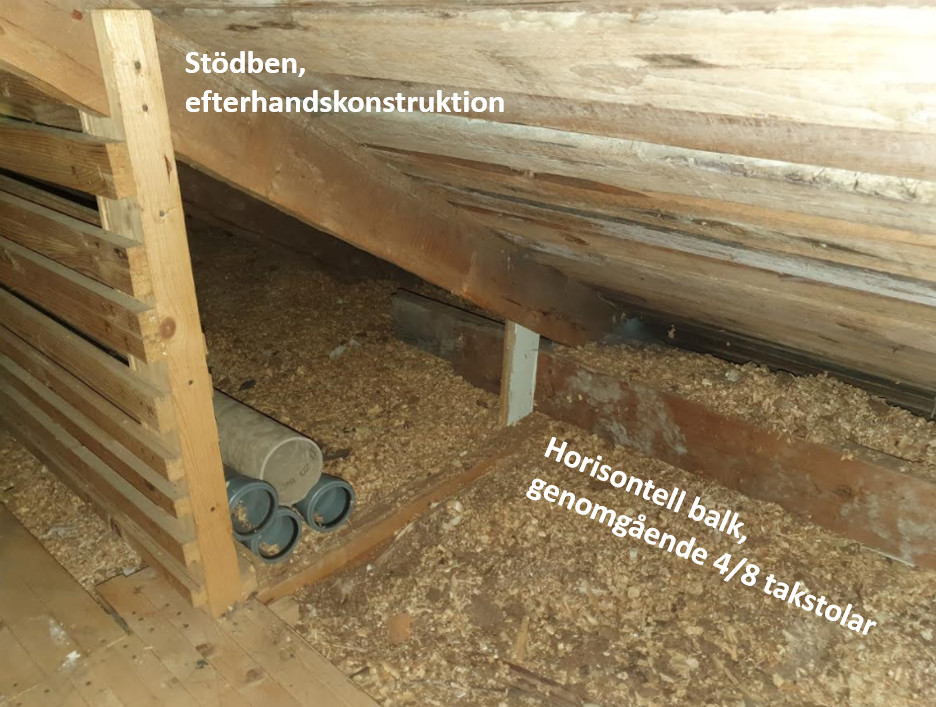
I have sketched a bit of what it looks like in the attic so that the overview becomes a bit clearer. Here is what the house looks like and how the roof trusses are arranged in sectional view, unfortunately, there are no original drawings with sectional views of the house construction left. This is towards the previously mentioned staircase. On both sides of all the roof trusses, support legs have been added afterwards (see the image under the 3D model). The horizontal beam seems to go through 4/8 roof trusses,
The horizontal beam has not been nailed to the support legs; instead, it rests on the floor joists, and the white support legs visible in my pictures are nailed, the beam can move within the frame of the white support legs. Another note is that the center of the high legs and the beam is aligned, support legs have been put up afterwards (I would guess in the 60s) on all 8 roof trusses on both sides as shown in the picture above.
Anyway, back to the main question - why do you need to unload the 4/8 roof trusses in the bedroom with support legs underneath on the second floor & not the remaining 4/8 in the guest room & bathroom? What measures would be needed to remove/move the column that stands in the walk-in closet?
What does it look like at the ends of the continuous beam?
At the ends of the horizontal beam, at least at the end towards the center of the house, it's completely free, (it actually looks like there are 2 wooden beams lying next to each other) not fixed at all, see the right side in the image below:
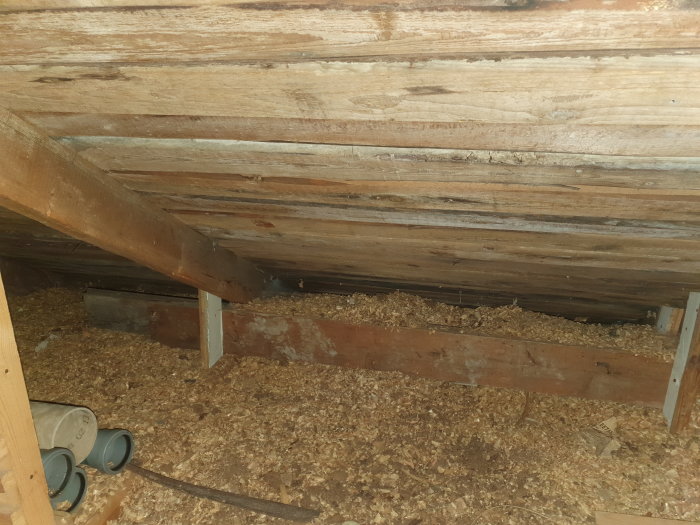
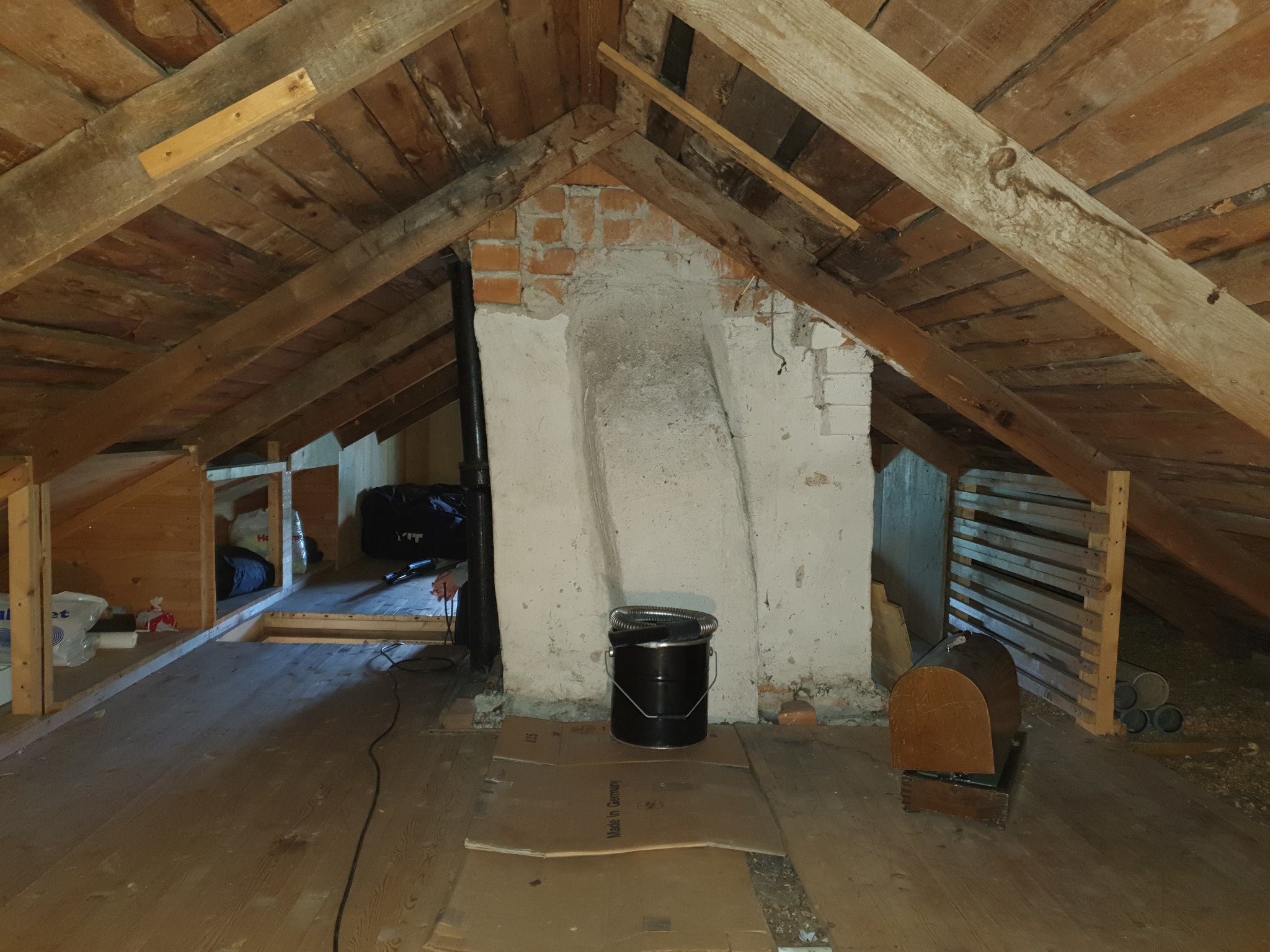
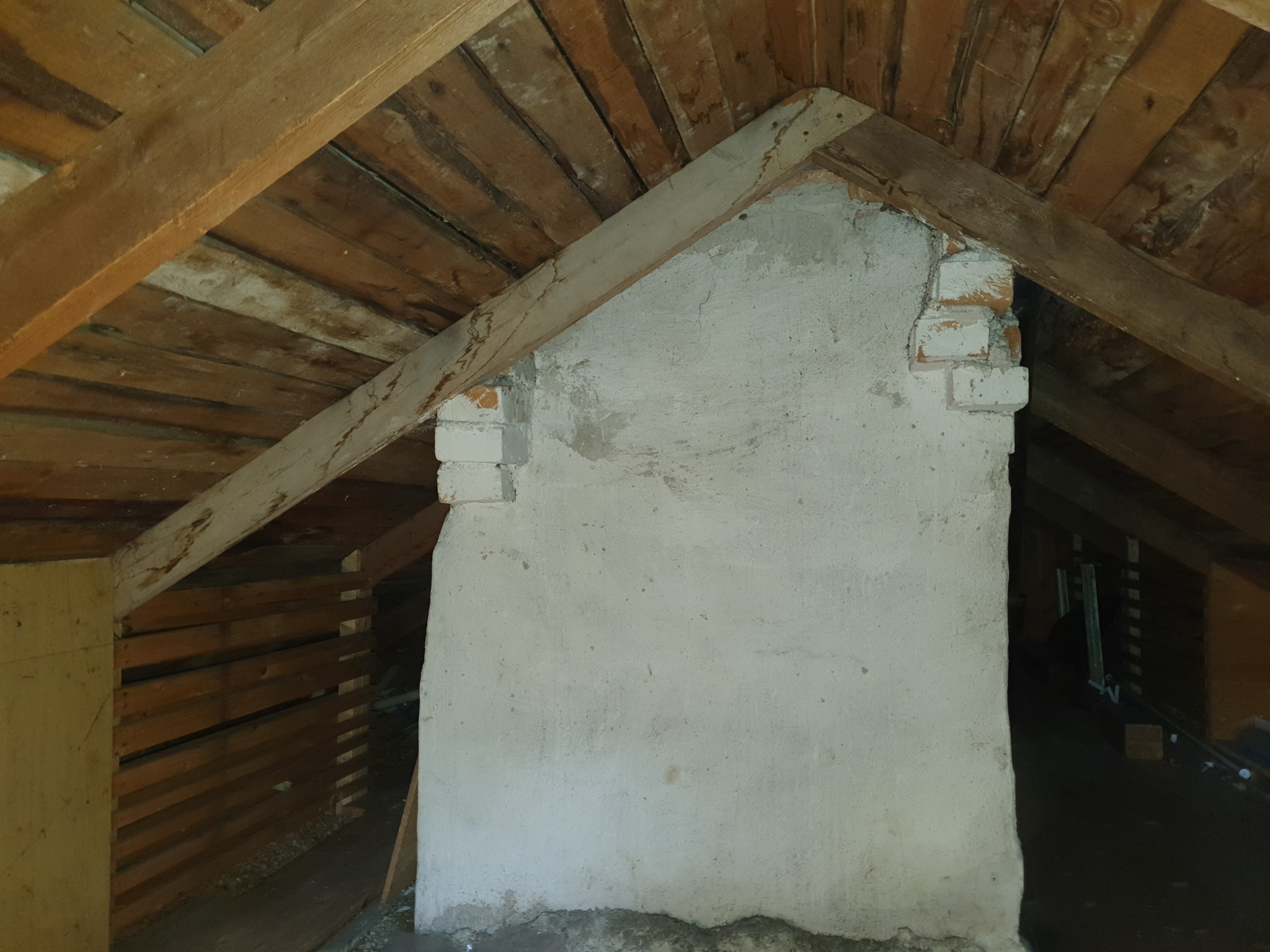
Here are some pictures for perspective on how the attic looks:
To the right runs the horizontal beam, up to the last rafter by the chimney:
Beyond the chimney, it looks like this; in the first picture, you can see that the chimney has been extended and the rafter rests on this. It is from this rafter and the remaining 3 rafters away from the chimney that the beam and columns on the floor below are situated underneath.
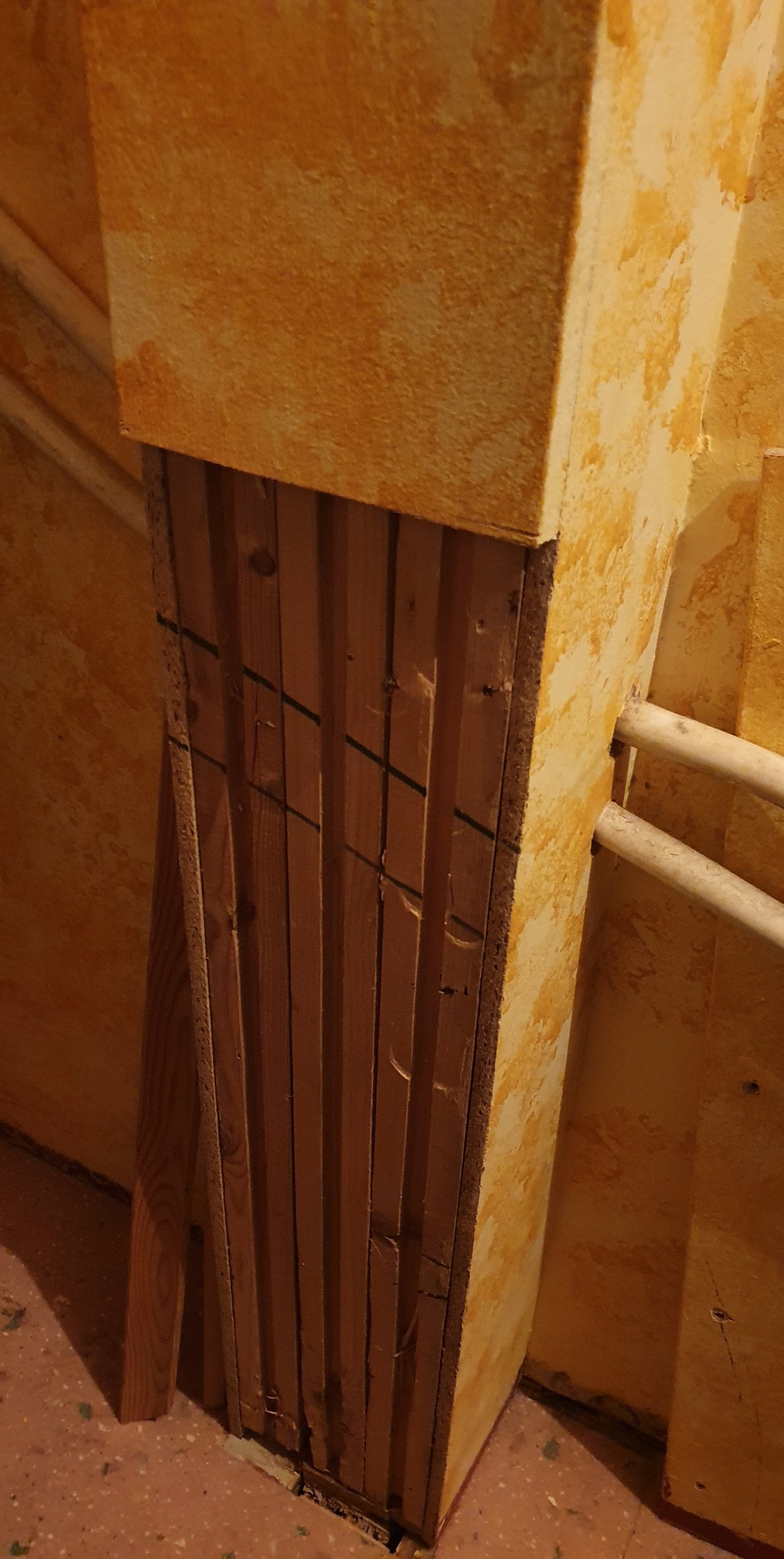
I also started tearing off the surface layer on the column in the closet; when I pried with the crowbar against the column to remove the chipboards, the entire column shifted about 0.5 cm at the top. The column is not attached to the beam, and it doesn't seem like it holds too much weight.
Vi vill skicka notiser för ämnen du bevakar och händelser som berör dig.