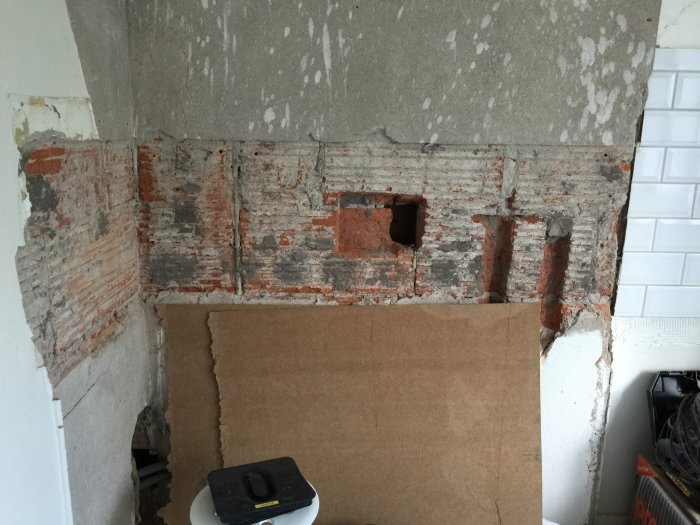
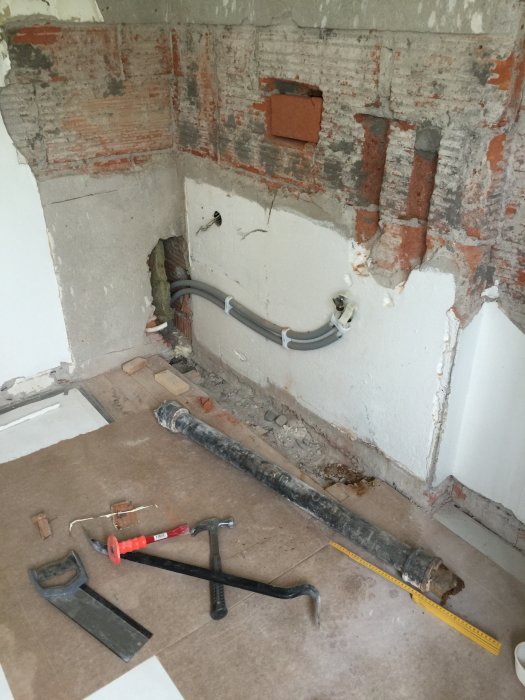
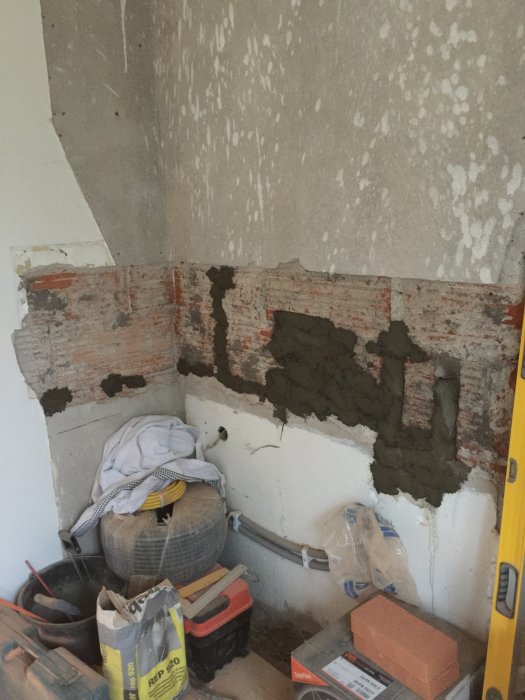
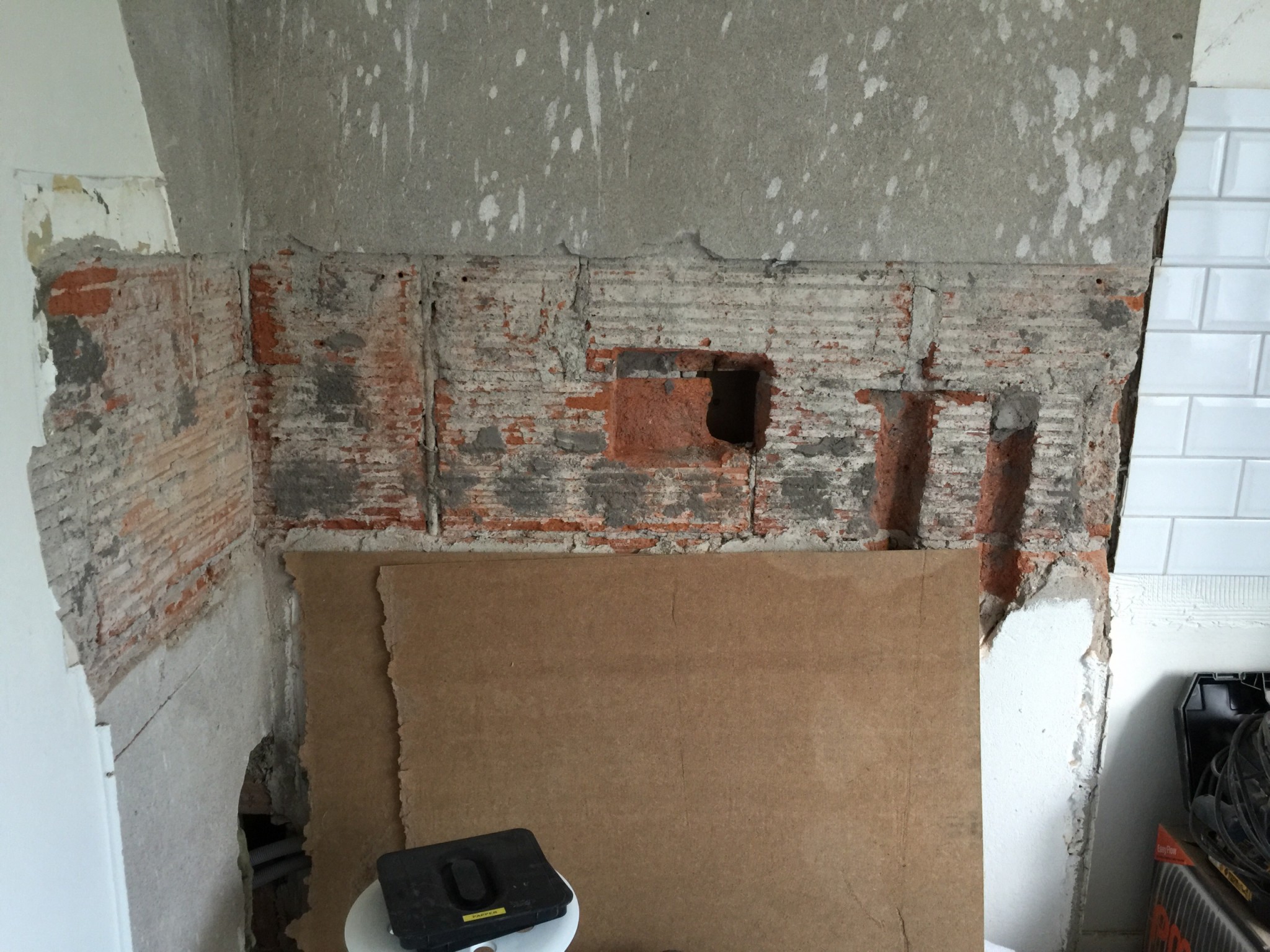
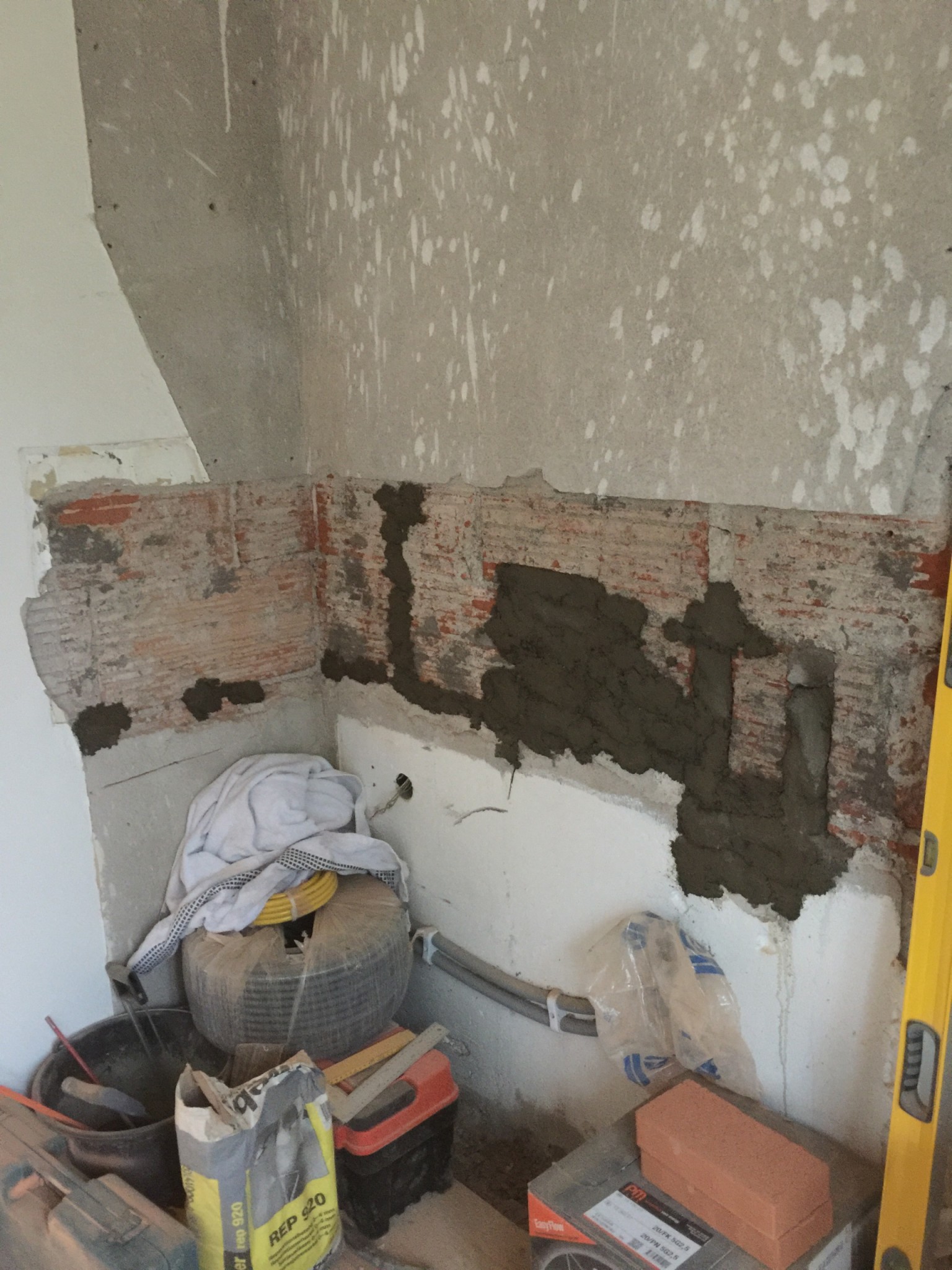
I tore down the tiles in our kitchen and the old plaster came off, so today I tried to fill in some larger holes with repair concrete. There used to be a wall-mounted mixer at some point. However, I imagined it would be like plastering, but it was quite tricky! It barely wanted to stick and was difficult to mix with a screwdriver.
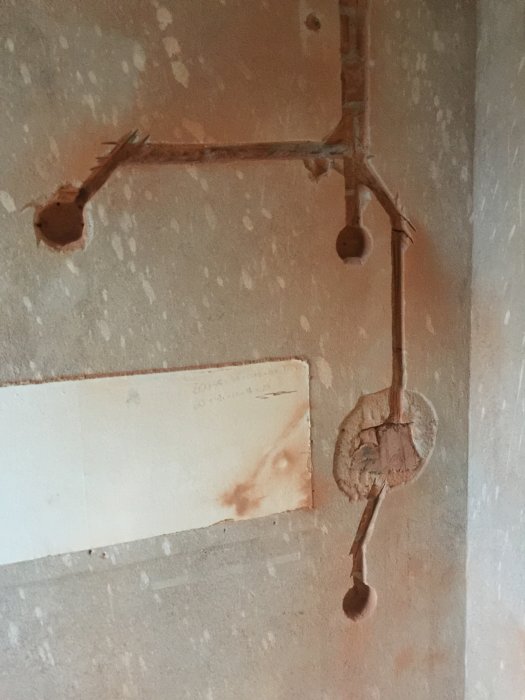
Now I want to plaster the rest to the same level as the old plaster before tiling. The sides won't be tiled now but painted, so it will just be a wall as usual, and that should make the surface quite good, so I won't have to plaster too much. What is the most user-friendly option? I think I need it between 5-10 mm thick. I have also routed electricity that needs to be plastered over.
It was cement filler, no worries, now we just need some moldings, wall paint (one wall is already wallpapered), and the new doors since we bought temporary ones while waiting for the right ones
Click here to reply
Vi vill skicka notiser för ämnen du bevakar och händelser som berör dig.


 .
.