I have a house from ~1850 in southwestern Skåne. Built from clay bricks in a double row. The foundation wall is natural stone and I haven't found any wooden beams under the outer wall, instead, it seems to rest directly on the foundation wall.
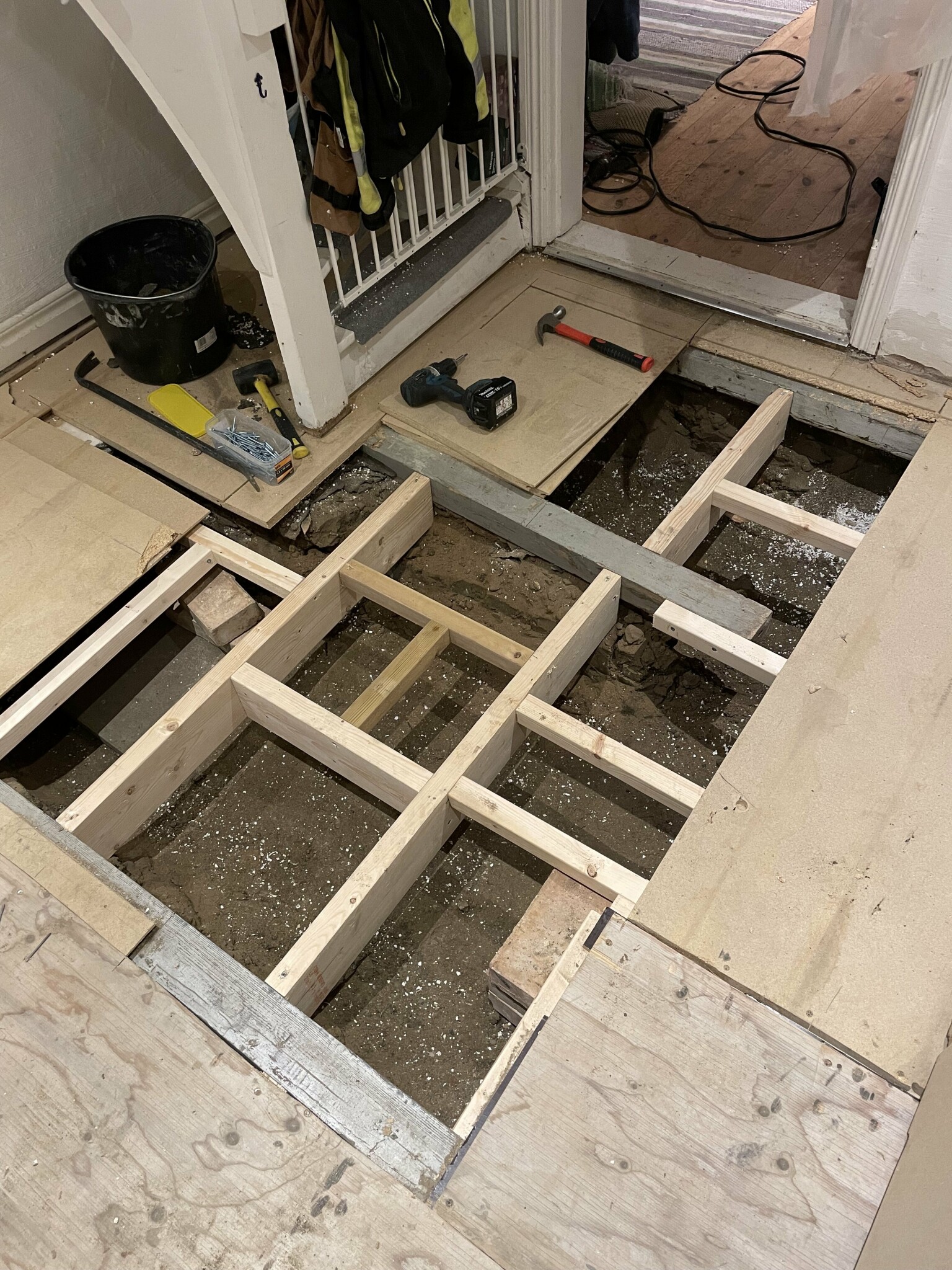
I have currently excavated most of the old earth floor in the hall and removed the styrofoam that was on top. The old joist that was in poor condition has been removed and the somewhat newer one is partially still there. This will also be removed so that I get a "clean hole."
The plan has been to lay 50-100 mm 11-16 aggregate, 200 mm EPS or XPS and then possibly electric underfloor heating in the shape of a T (as I plan to build a wardrobe/shoe rack along the outer wall and the other part is taken up by a staircase) to then level the electric heating loops with self-leveling compound and then lay a stone floor on top so it withstands all the slush, gravel, and dirt that is brought in.
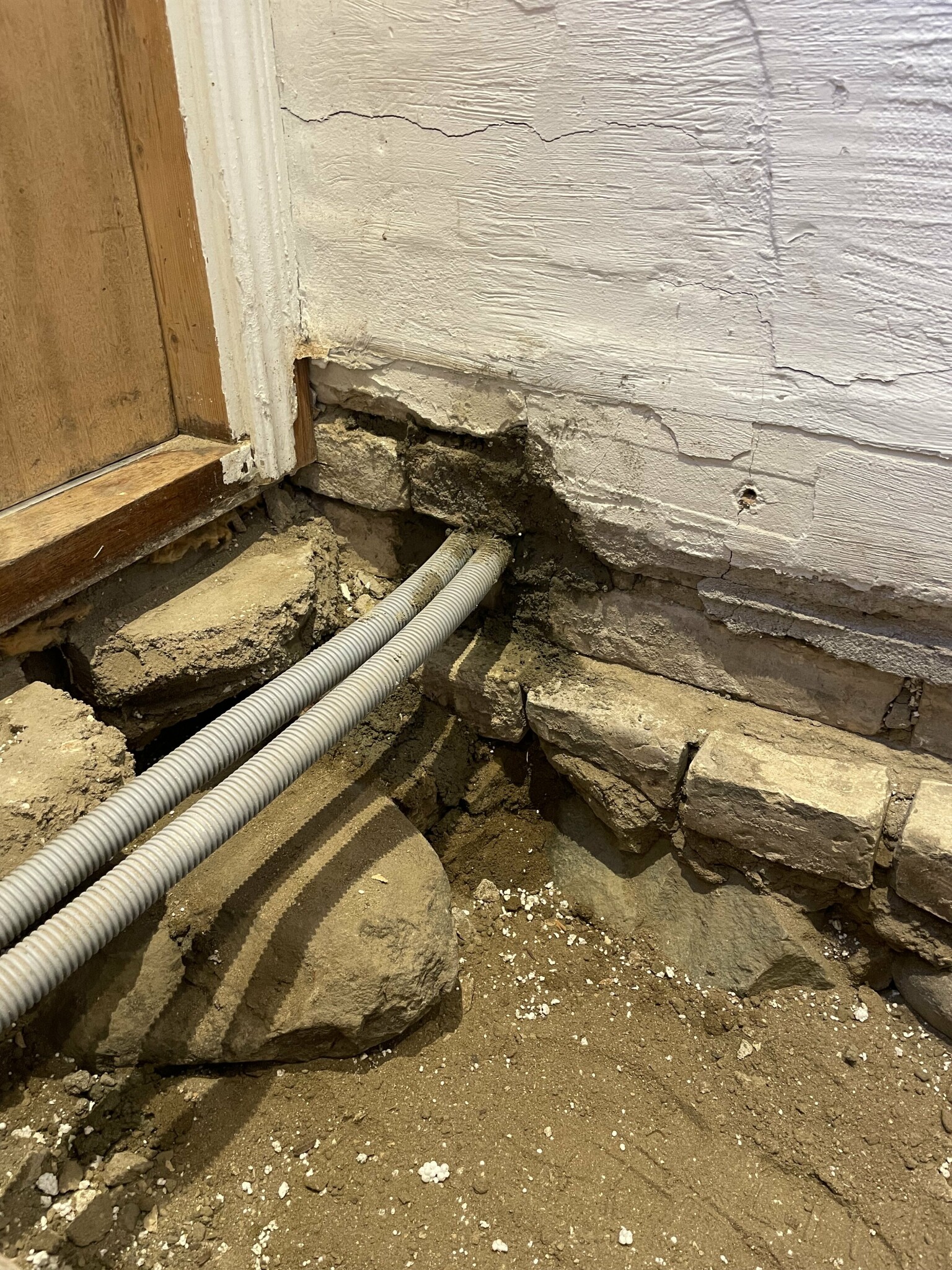
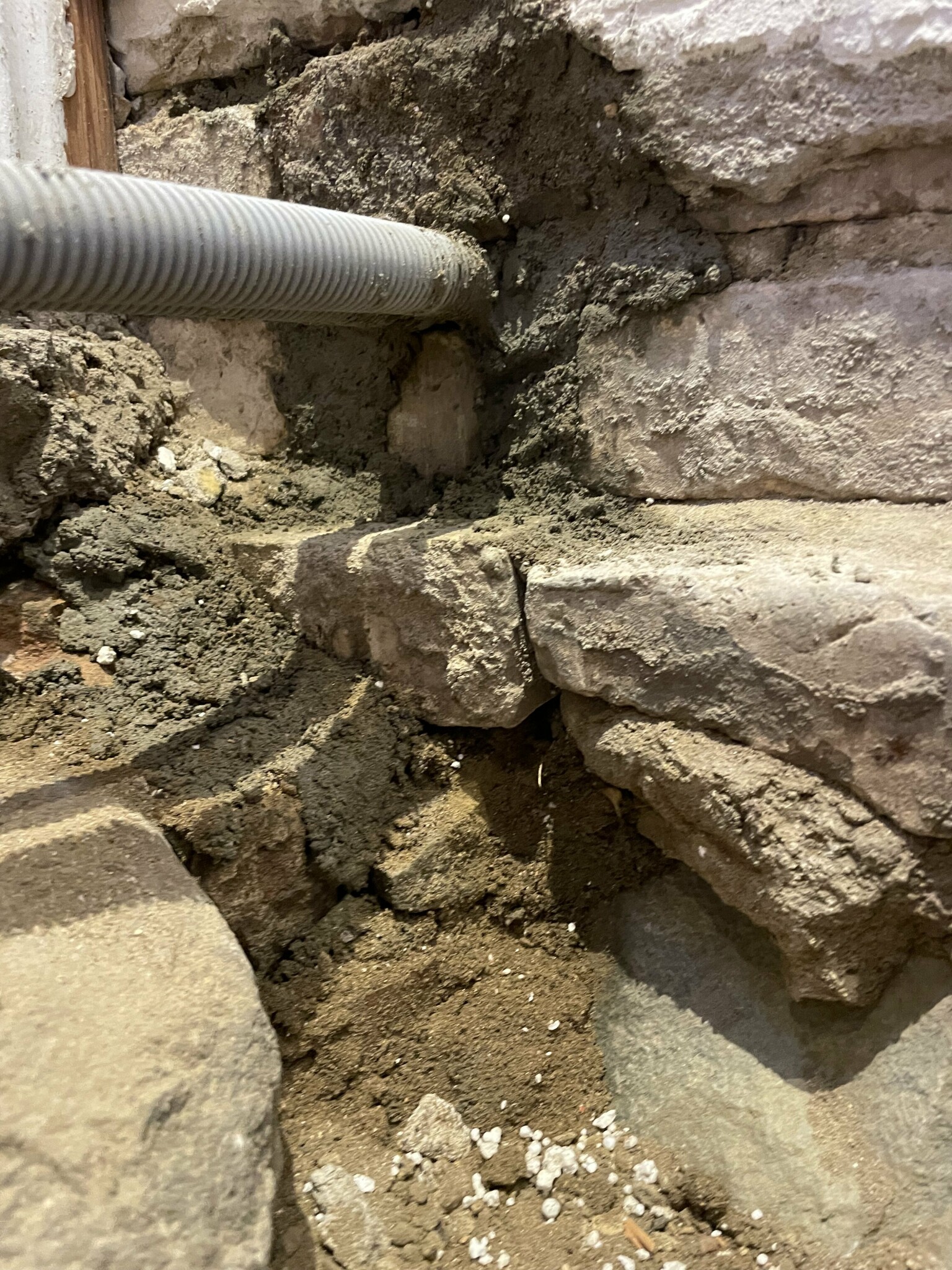
Between the foam and the foundation wall, I plan to seal with mortar to prevent rodents from entering and then fill up with either Leca balls, aggregate, or foam. Since there are some really large stones there, it's not exactly a straight edge we're talking about, but it should be possible to cut out fitting pieces so the gap is minimal.
1: Do I need to have some form of plastic/membrane on top of the aggregate if I follow the above-mentioned plan?
2: Should I build a "floating" joist to place on top of the first layer of foam and then insulate the gap followed by covering everything with floorboards instead?
Here I'm thinking that the organic material is enclosed in foam which to my knowledge is not diffusion-open and should keep moisture away.
The pictures show how it currently looks. The joist and floor are 100% provisional and will be removed/rebuilt properly.
The top layer of soil was very dry and easy to dig out. Below this is hard clay that comes off in thick pieces and for being a Skåne clay field, it's relatively dry everywhere I have been digging.
The two pipes are water in/out to the hot water heater in the bathroom. These will get 15 mm pipe insulation around them as I can't move them.