Hello,
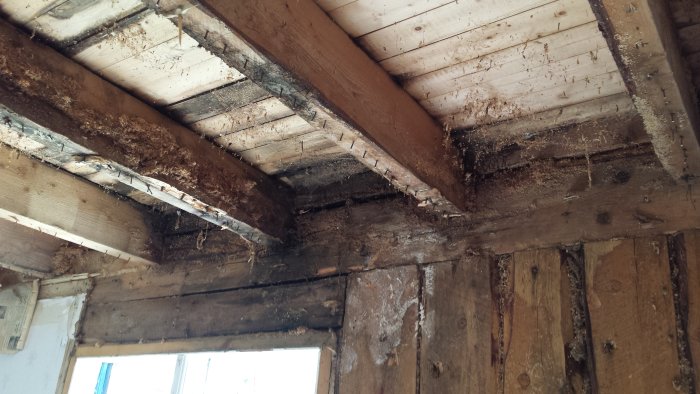
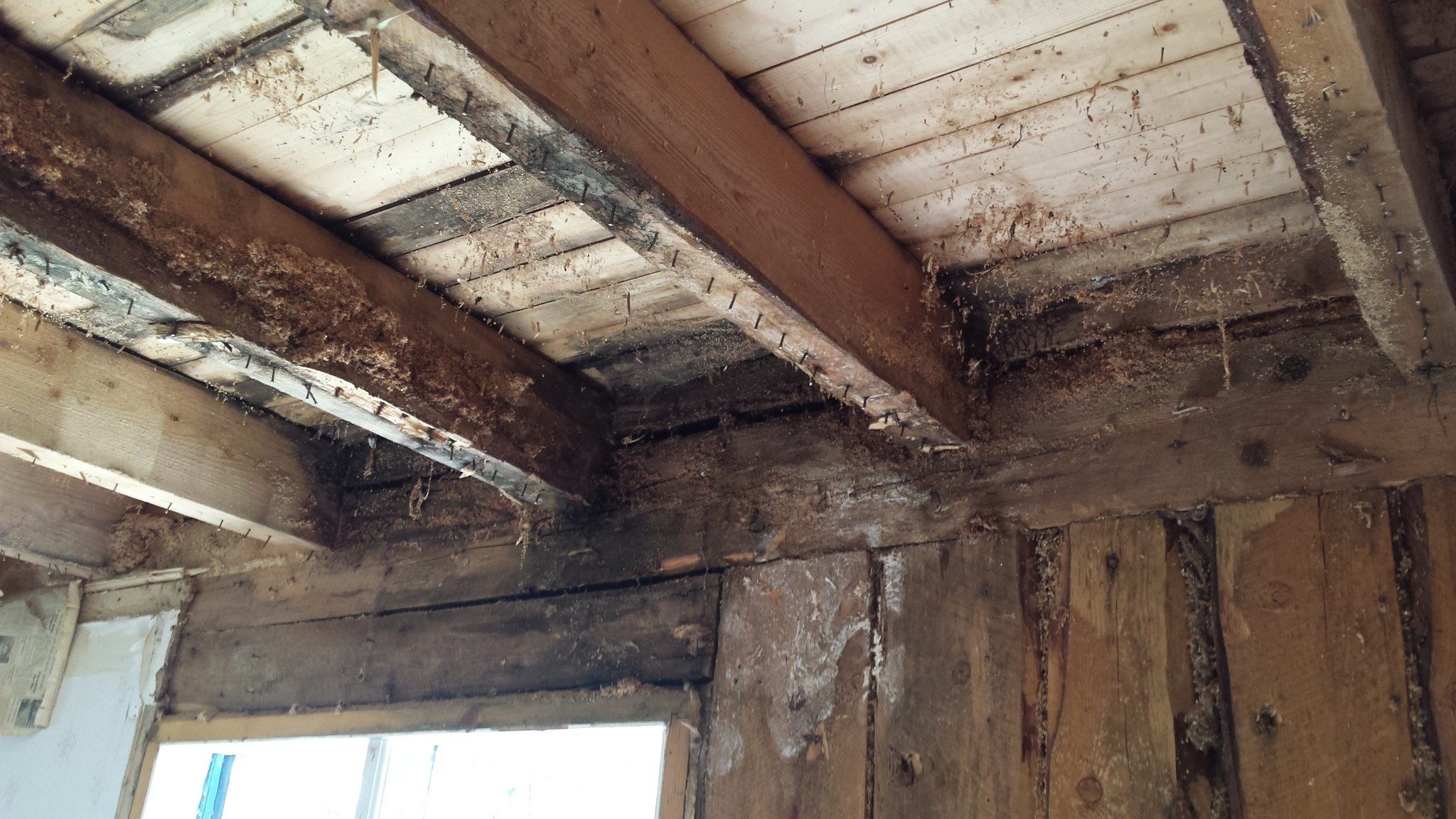
I need to fix water damage in the intermediate floor, and need to replace a couple of meters of damaged beams.
The existing dimension is 70x160. I'm having trouble finding that dimension of timber.
If I use 2 pieces of 45x145 instead (so it becomes 90x145), does anyone have suggestions on how to attach it to the old joist so it gains strength? With a couple of noggins, I'm convinced it will be strong enough, or am I completely wrong now?
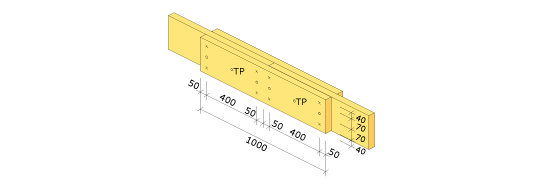
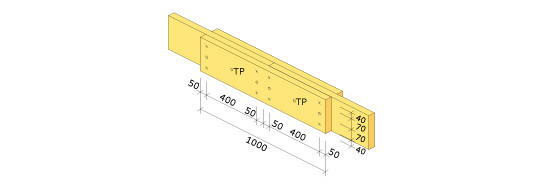
The original idea was to scarf joint as Träguiden shows below, but it doesn't work when the thickness differs. Maybe cut off one cm on each side so the new beam becomes 70 under the scarfing?
In principle, a load-bearing beam should never be spliced.
Can't you just add a 45x170 on each side of the original beam so that they also get support on the bearings? (If the height of the beam can't be more than 160, you'll need to cut the 170 beams down to 160.)
Otherwise, smaller sawmills can usually take custom orders.
The nearest standard sawn dimension that should be available for order at any lumber dealer (except possibly discount chains) is 75x175 mm (3x7").
I suspect that you measured a bit carelessly. The dimension of the existing beam should be attributable to inch measurements. The width could be 3 inches, i.e., 75 mm. The height could be 6.5 inches, i.e., 162.5 mm. A simple option is to replace the damaged beams with glulam. A standard dimension is 78x180 mm, which is easy to cut down to the right height. I agree with Oldboy, do not splice the damaged joists.
There is no problem with splicing with scarf boards.
I think this is somewhat of a reckless statement. It depends, among other things, on where the damage is located and the repairer's knowledge of building construction. For those with less knowledge and experience, it is probably easier to replace the entire beam.
Yes, of course. But it's not without reason that the wood guide discusses splicing in that way. It's strongest about 1/3 from the support and weakest in the middle or right on the support.
The house was built in '36. The person who built it owned his own sawmill, so I don't think there's a standard dimension anywhere in the entire construction
The span is 4.5m.
The parts that are damaged and need replacing are at one end. The one that is worst damaged, I need to cut off 2m, and for some others, it's about 1m each to have a good margin to the damaged timber.
I talked to a builder who thought it would be fine to use a 45x170, cut it down to 160, and with a proper overlap of just over a meter and nailed joint it should work. Some blocking for both suspenders and belt and it's good to go.
I like that solution if you also think it will work. Replacing the entire floor structure would be a much larger procedure that would leave us homeless in the meantime, so I'd very much like to avoid that.
But if the entire beam is exposed, then you can reinforce with full length. And you should probably stick to at least the same height as the current beams. Your span is a bit too long even for a 220mm high beam, if I remember the tables correctly.
hempularen's point is important, with the long span even full 70x160 beams are too weak to meet today's requirements for maximum deflection and bounce. The beams that are rot-damaged at the supports must be replaced entirely. Note that noggings have no effect on the deflection.
Yes, it helps in practice. But the dimensional rules are designed to handle 200kg / sqm. So you can't take the blocking into account, as all square meters are equally loaded.
However, it helps in the case of point load (I don't remember what that load case looks like).
Either way. Replace the parts affected by rot and screw or screw-glue a long new beam along the entire span, and you will be more than safe. However, if you've been satisfied with the flex as it is today, what you've already suggested will suffice.
Yes, the deflection as it is today is quite okay. Pretty stiff, in other words. That is when it looks as it does with rot damage.
The joist is exposed from underneath, but to reach the heart wall for drainage I must tear up the floor on the second floor, which involves quite a few things I'd rather avoid. Quite a few original beams are nice and will be retained as well.
After carrying out all the sawdust that was in the mid-floor joist, I think I can reduce the dimensions quite significantly, sawdust is heavy!
There is a nice thread about kortlingar here: https://www.byggahus.se/forum/threads/krysskolvning.23394/
Then I don't want it to depend on the kortlingen whether the mid-floor joist holds or not, but as an extra support, it feels good.
I have ordered 45x170 studs now. I will nail them up with a proper overlap (1-2m). I promise you can say 'what did we say' if the crap collapses
As always, thanks for the help. Byggahus is fantastic!
Yes, the deflection as it is today is completely okay. In other words, quite rigid. That's when it looks like it does with rot damage. The joists are exposed from below, but to access the central wall to get relief, I would have to tear up the floor on the second floor, which entails a lot of things I'd rather avoid. A lot of the original beams are in good shape and will be retained. After carrying out all the sawdust that lay in the intermediate floor, I think I can actually go down significantly in dimension, sawdust weighs!
There is a nice thread about blocking here: [link] Then I don't want the holding capacity of the intermediate floor to depend on the blocking, but as an extra support, it feels good.
I have ordered 45x170 studs now. I will nail them up with a substantial overlap (1-2m). I promise you can say 'we told you so' if the thing collapses
As always, thanks for the help. Byggahus is fantastic!
The thread you are referring to is mostly about blocking. It's important to keep the concepts separate. Blocking is NOT the same as cross-blocking.
Stickan
Vi vill skicka notiser för ämnen du bevakar och händelser som berör dig.