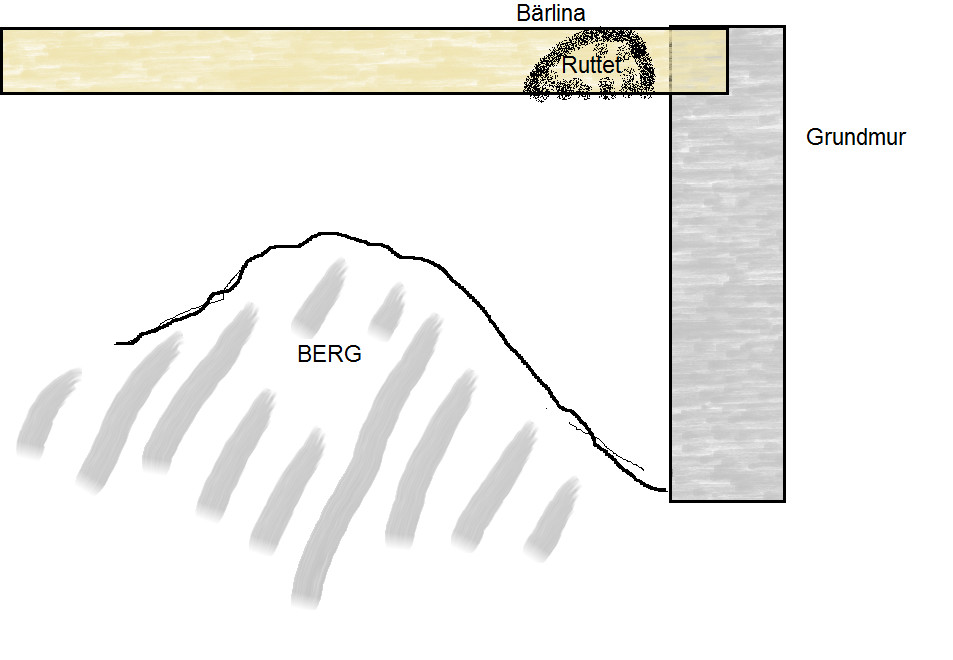
Hello, I have bought an older house where part of a load-bearing beam is rotten due to a previous owner’s poor plumbing.
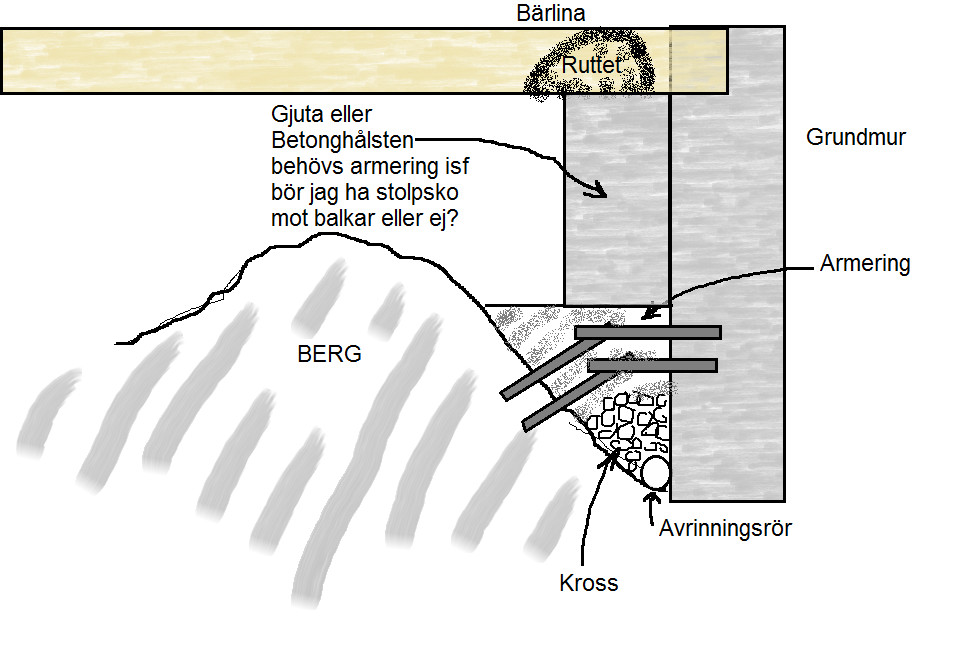
The house has a mixture of crawl space and basement and is partly directly on the rock, so the drainage isn't the best there, and sometimes a little water runs down the rock, which I don't want to stand against a ledge or wall, so I have to somehow take that into consideration. In addition, some sort of access to sewage and pipes beyond the load-bearing beam must be maintained.
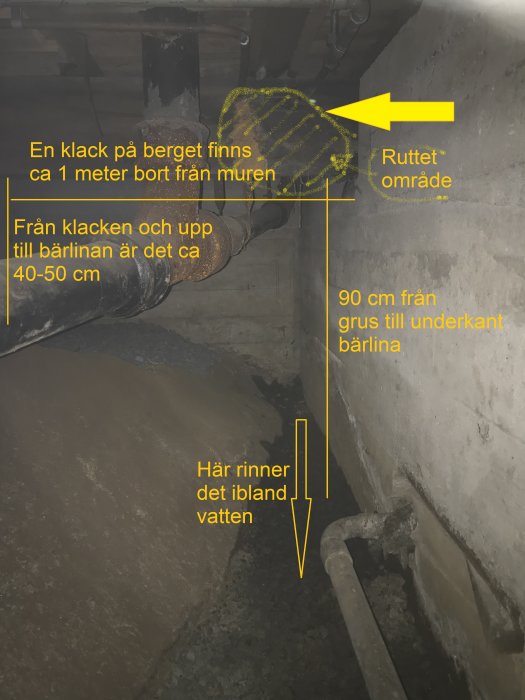
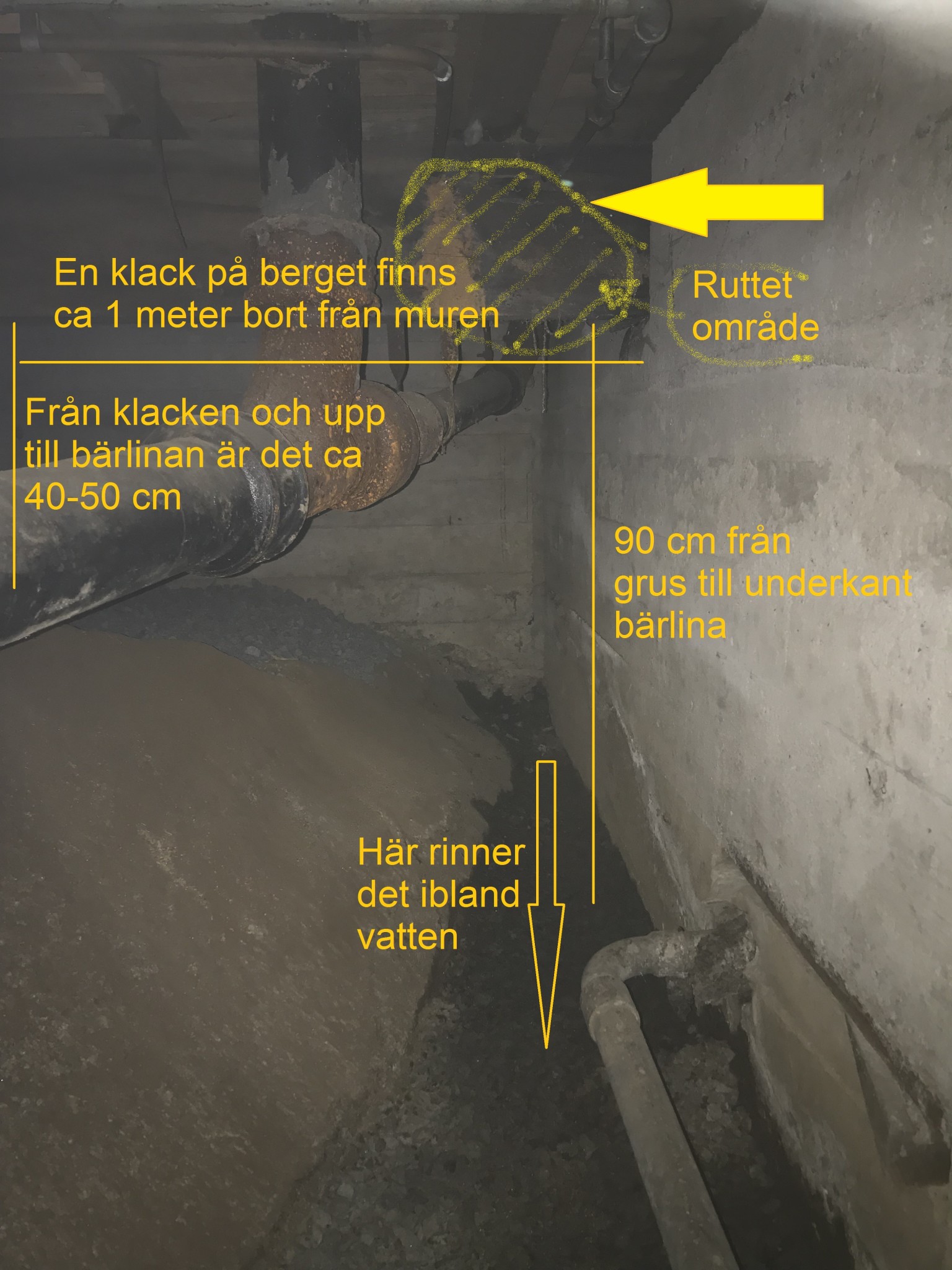
I have been down in the crawl space and took some photos and measurements.
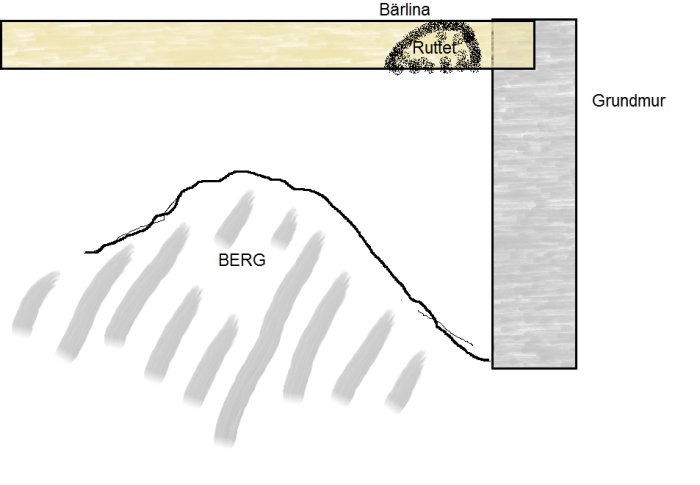
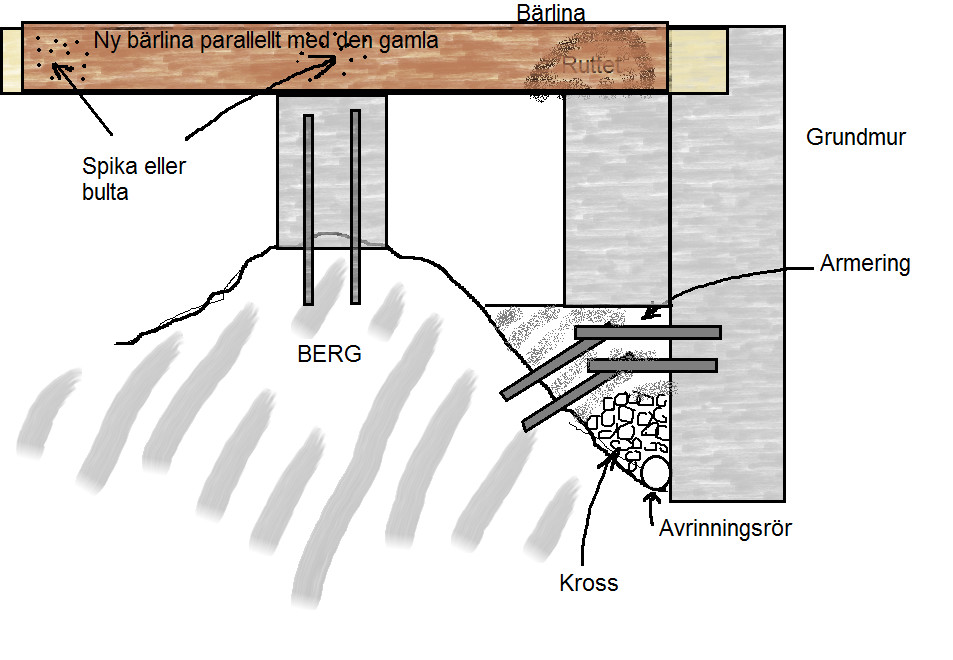
I was planning to cast two piers, one on the rock ledge and one against the foundation, and place a new load-bearing beam overlapping the old one on these as well as nail/bolt the new one to the old one over the ledge on the rock and a meter beyond it in the healthy part of the old beam.
The load-bearing beam that's there I measured to 75 x 220 which seems to be an odd dimension. I assume that the safest option is to step up to the nearest larger standard dimension?
Does anyone have any tips or thoughts on a solution to this?
EDIT: I edited the image a little as it wasn't quite clear which area was rotten.
The bearer beam is rotten right under the pipes at the arrow about 30 cm from the foundation wall. So it's just a short section of 30-40 cm that's rotten. It hasn't rotted away, but it's just extremely crumbly under the pipes. I accidentally drove a spade a bit into the bearer beam when I was down digging in the crawl space...
It's condensation water from the pipes that has dripped onto the bearer beam. Someone apparently thought it was a good idea to run the water through the bearer beam a few decades ago...
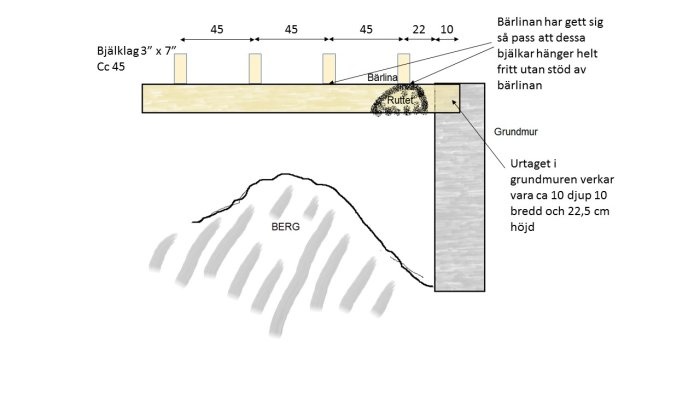
what I meant is whether the beam should go to the left or if what you see is just a snippet of what continues behind the wall to the right. If it's the latter, I would just leave it be. I don't think anyone puts any major load on the outermost part of such a thing, and if there is something across that still rests on it, I don't think the house will collapse just because of that.
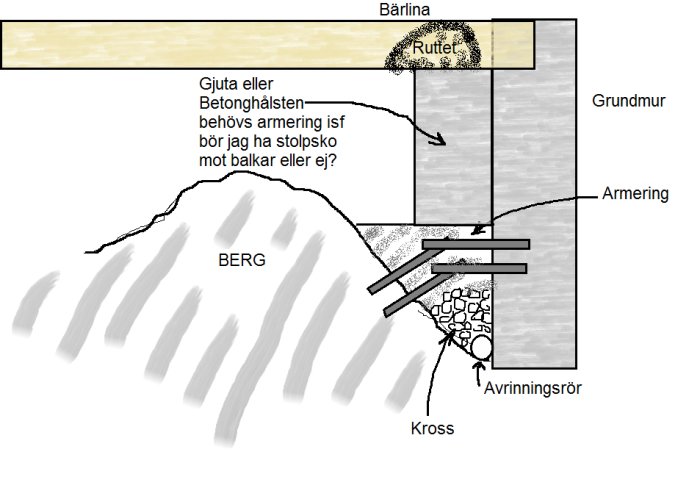
I'm considering how complicated it needs to be to facilitate water drainage closest to the wall.
If I lay a couple of decimeters of crushed rock, do I need a pipe, or is it simpler to just have a pipe but skip the crushed rock and cast directly against the pipe?
Additionally, can one use concrete blocks for such a ledge where the new load-bearing beam is intended to rest, or is it better to cast, perhaps reinforcing and concrete-filling the block?
But you can make the pole, stamp what is needed on the right, and then saw off the top of the pole. Should be much less work and results in a nicer solution.
Yes, of course, it would have been a neater solution. But how do you stamp up something in a sensible way when it looks like it does? Partly because the surface is sloping and crooked in every way, and also because I haven't seen that it's possible to rent such short jacks.
Can you buy a bunch of cheap column jacks and rig something up?
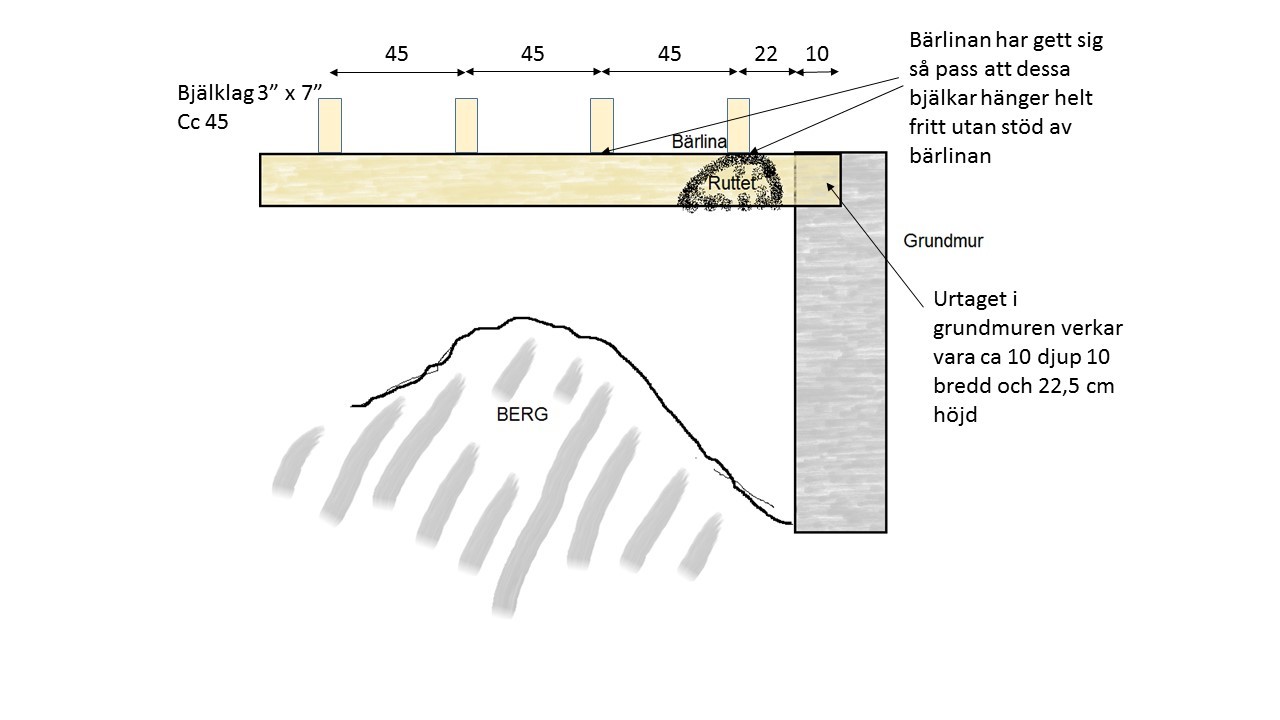
Thank you for your comment about the bjälklag. I was down again and took a closer look at how the bjälklag was laid and now I feel significantly less nervous about cutting the bärlina. Partly because the bjälklag is easy to access from underneath, and partly because the bärlina does not seem to support the beam resting on the part that will be cut. I'm including an image:
Vi vill skicka notiser för ämnen du bevakar och händelser som berör dig.