
3,404 views ·
11 replies
3k views
11 replies
Replace damaged drywall in kitchen.
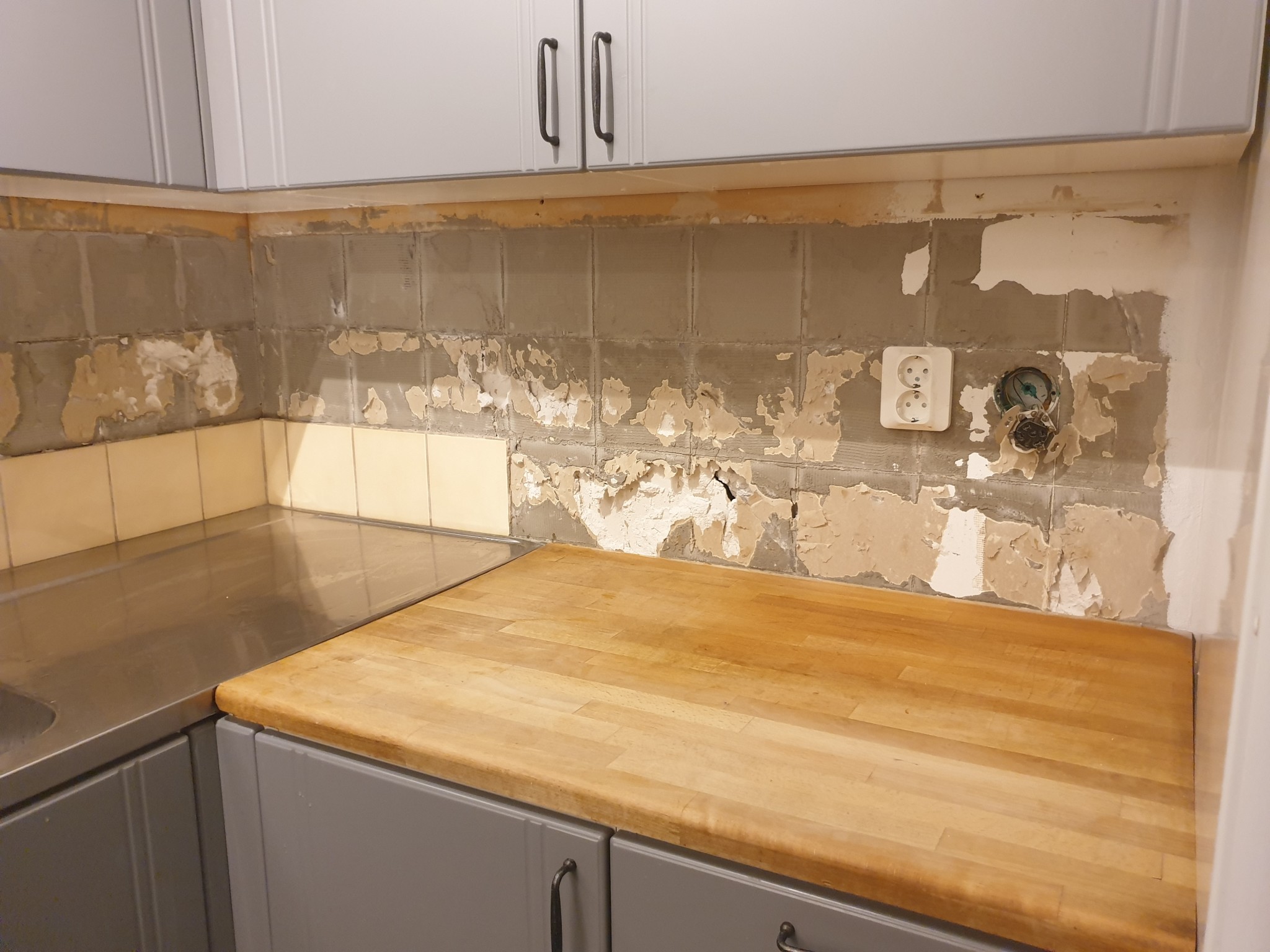
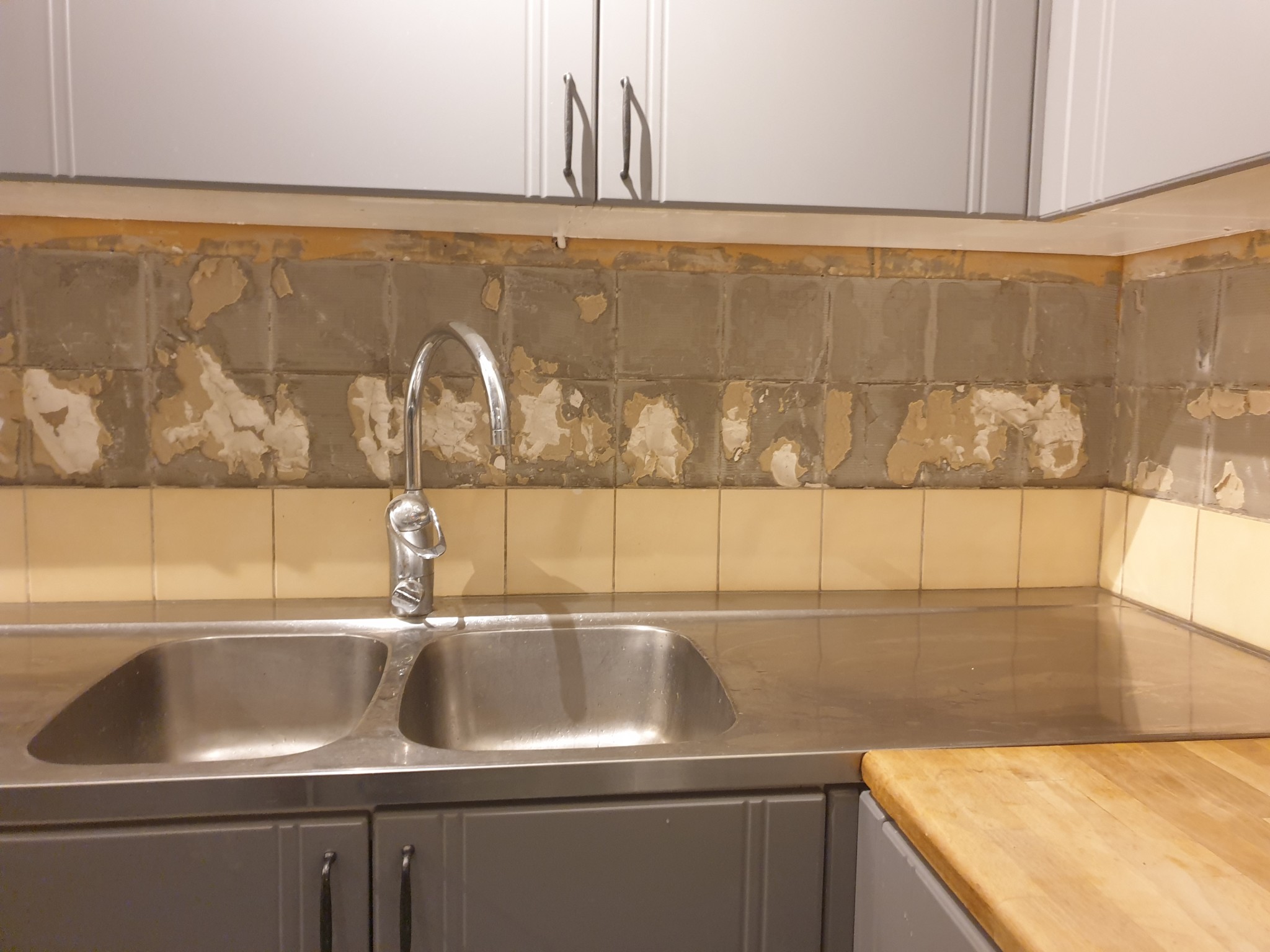
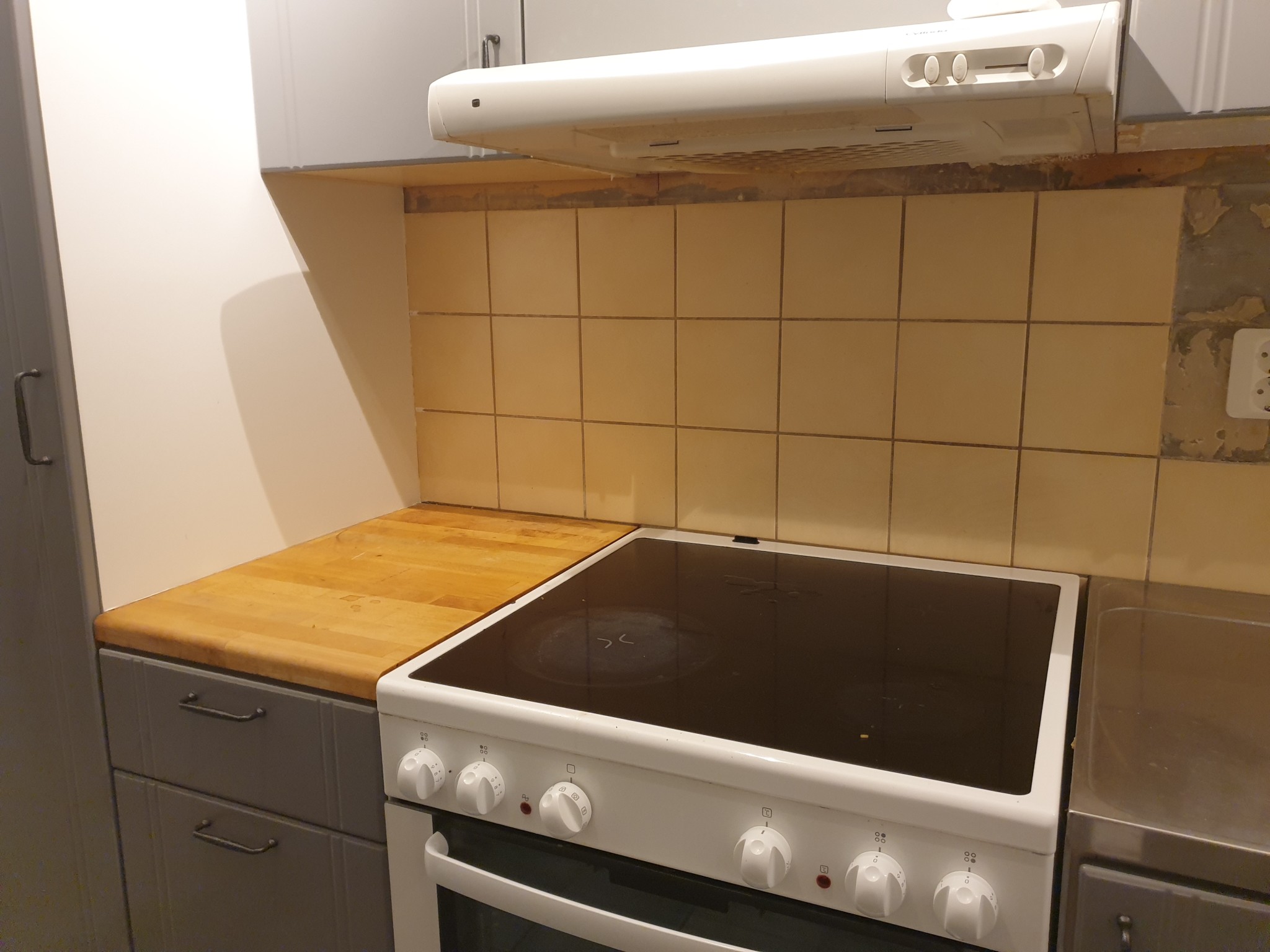
I am replacing countertops in the kitchen and need to replace the existing tiles. I have realized that the removal of the tiles in the kitchen is already damaging the drywall so much that I might as well do as everyone suggests in different posts and saw off the drywall with the tiles on it. (What's still left on the wall, about 1/3)
The question is, where should I make the cuts? All the way up to the upper cabinets on top and all the way down to the base cabinet frames below? Or should I leave a bit to avoid having a drywall seam at or below the countertop level? Same for the sides, should I make the cut all the way to the tall cabinets on both sides?
The top row of tiles was easy to remove, so I have room to work upwards. However, rows 2 and 3 have destroyed quite a bit of the drywall.
If I make the cuts to the edges of the cabinets, it will be easy to measure a new sheet, but how do you seal the seams between new and old drywall? If it even matters? You can't putty such a fit. The wall is at a 90° angle. The long side is double drywall, the short side single drywall.
Grateful for some quick opinions so I can move forward.
The question is, where should I make the cuts? All the way up to the upper cabinets on top and all the way down to the base cabinet frames below? Or should I leave a bit to avoid having a drywall seam at or below the countertop level? Same for the sides, should I make the cut all the way to the tall cabinets on both sides?
The top row of tiles was easy to remove, so I have room to work upwards. However, rows 2 and 3 have destroyed quite a bit of the drywall.
If I make the cuts to the edges of the cabinets, it will be easy to measure a new sheet, but how do you seal the seams between new and old drywall? If it even matters? You can't putty such a fit. The wall is at a 90° angle. The long side is double drywall, the short side single drywall.
Grateful for some quick opinions so I can move forward.
If you're going to tile again, there's no need to plaster the drywall joint, right? You can handle that with the tile adhesive.

The adhesive might not cover if I cut right against the overhead cabinets (upward), the countertop (downward), and the tall cabinet (left). Then the new joint would end up right at the edge of where I'm going to place the new tile. So I should try to get the cuts behind the new tile so the adhesive "seals" the joint that forms. I'll get some pictures.I Interista88 said:

Put new tiles all the way up so the problems are solved
I want to cut away all the old plaster where the tiles are/have been and replace it with a new board. The question is where I should cut away the old plaster. Flush against the countertop, upper cabinets, and tall cabinets, or should I leave a few centimeters up so all joints end up under the adhesive? I will tile again and install new countertops that are 15mm higher than the ones that are there now. It's easier to use a Fein tool and have support against the cabinets and countertop, but I'm not sure if it's smart to have the joint there since the adhesive for the new tiles won't cover it, and I probably won't be able to plaster properly there either.
Click here to reply