Muff in all its glory, but if it's regular pipe like standard plumbing dimensions, I would probably prefer to replace the whole thing. It will become green soon enough naturally. The sheet metal at the bend also seems to have been soldered as well.
The inner pipe is now measured at 54 mm, which as expected is a standard size for hard copper pipes. Price example I found is that a 2.5 m pipe costs around 700:- and a coupling sleeve a hundred. To be continued!
I would think that a handy hen could align the pipe and get it really straight and nice again.
If you anneal copper, it becomes really soft and malleable even after cooling. When it is then processed, it hardens again.
I would guess that a handy person can adjust the pipe and get it really straight and nice again.
If you anneal copper, it becomes really soft and formable even after cooling. When it's then worked on, it hardens again.
I would guess that that processing costs waaay more than putting in a new pipe.
The inner tube is now measured at 54 mm, which, as expected, is a standard size for hard copper pipes.
Price example I found is that a 2.5 m tube costs around 700:- and a coupling sleeve a hundred. More to come!
Suggestion, buy a pipe cutter. Dismantle the pole and join, if necessary for the height of the entire pole, so that the joint is down in the thicker tube. Then no sleeve is needed. It is possible to braze edge to edge, or flare out the old part a little so there is a larger surface to braze against. If it becomes too coarse, it is easy to file away a little so it fits into the thicker part.
Does not need to be tight and withstand municipal water line pressure, so the sleeve is redundant.
I would think that a handy person could straighten the pipe and make it really straight and nice again.
When you anneal copper, it becomes really soft and malleable even after cooling. When it is then worked with, it hardens again.
Impressive that this can work! I don't feel that I have the potential to climb this learning curve myself, but I will mention the option when I consult a plumber. In that case, I'll have to ensure the pipe doesn't break when I lift it out.
I need to straighten the pipe a bit before lifting it so that the "kink" releases its grip on the cable inside. Can the straightening be done without the risk of breaking the pipe when not heating?
Impressive that this is possible! I don't feel that I personally have the potential to climb this learning curve but will bring up the option when consulting plumbers. In that case, I'll make sure the pipe doesn't break when I lift it out.
I need to straighten the pipe a bit before removing it so that the "bend" releases its grip on the cable inside. Can this straightening be done without the risk of breaking the pipe when not heating it?
Yes, the skilled blacksmith who manages to straighten the almost bent copper pipe and make it round again is something I would like to see in action as well.
Yes, the skilled blacksmith who manages to straighten the almost bent copper pipe and make it round again is something I would also like to see in action.
Feel the same way. Sure, it can work but it probably requires more time and money than a new pipe costs. Moreover, it's almost cracked and it's hard to reverse. If you're going to straighten it up, it almost requires driving some mandrel through it gradually, and that's hardly equipment everyone has.
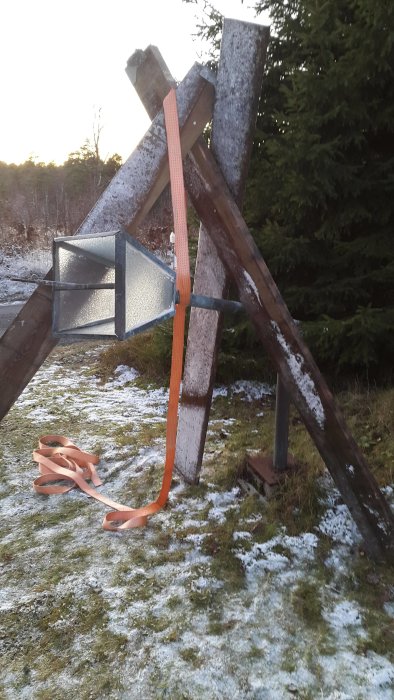
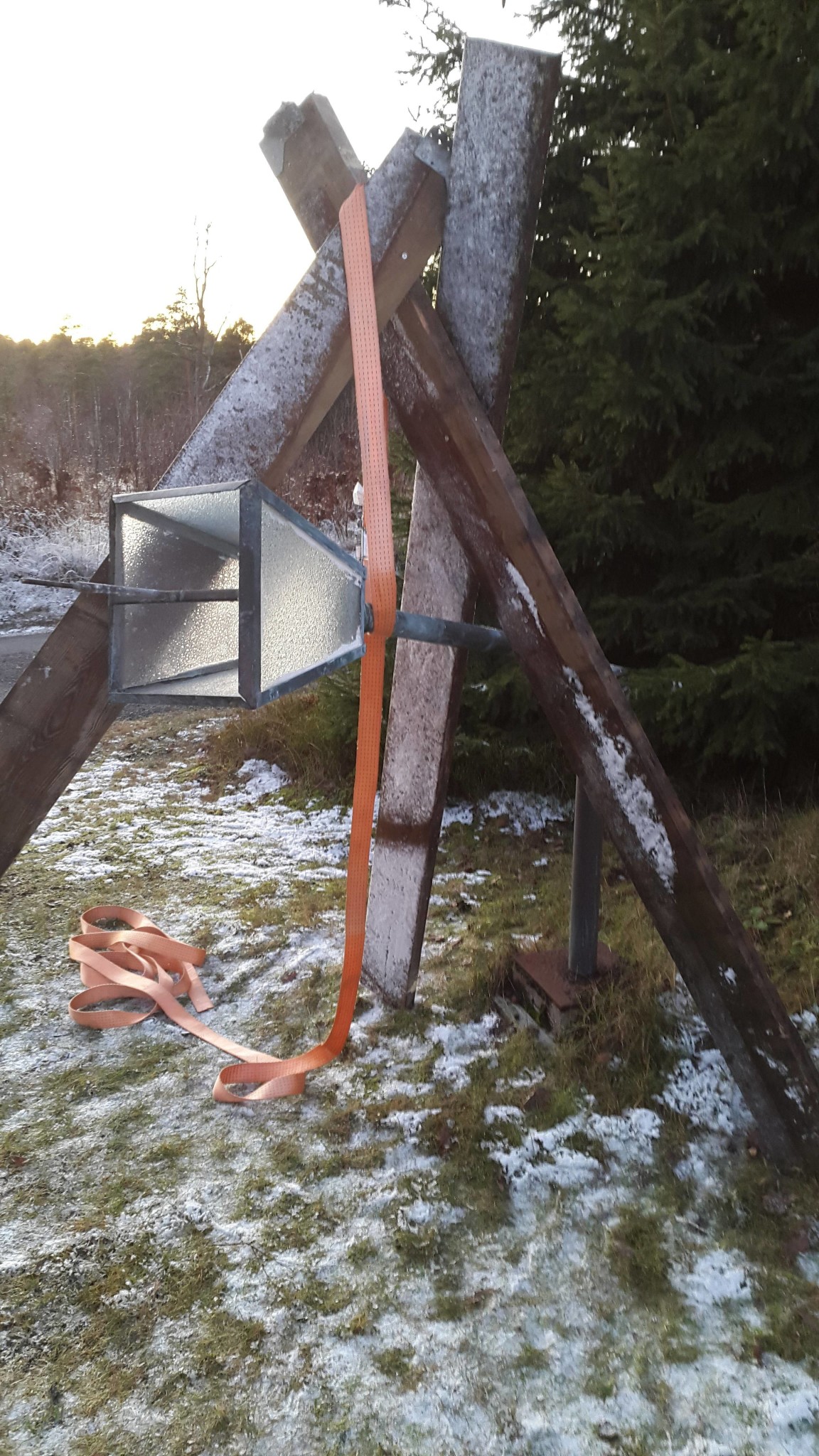
I have received the coupling sleeve and have now started working on the repair. I screwed together some boards to lever up and hold the post in place with a tension strap while I sawed off the upper part:
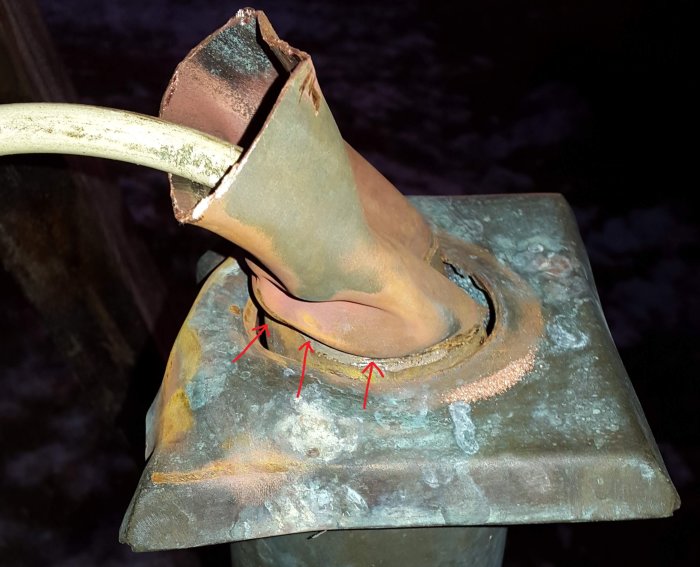
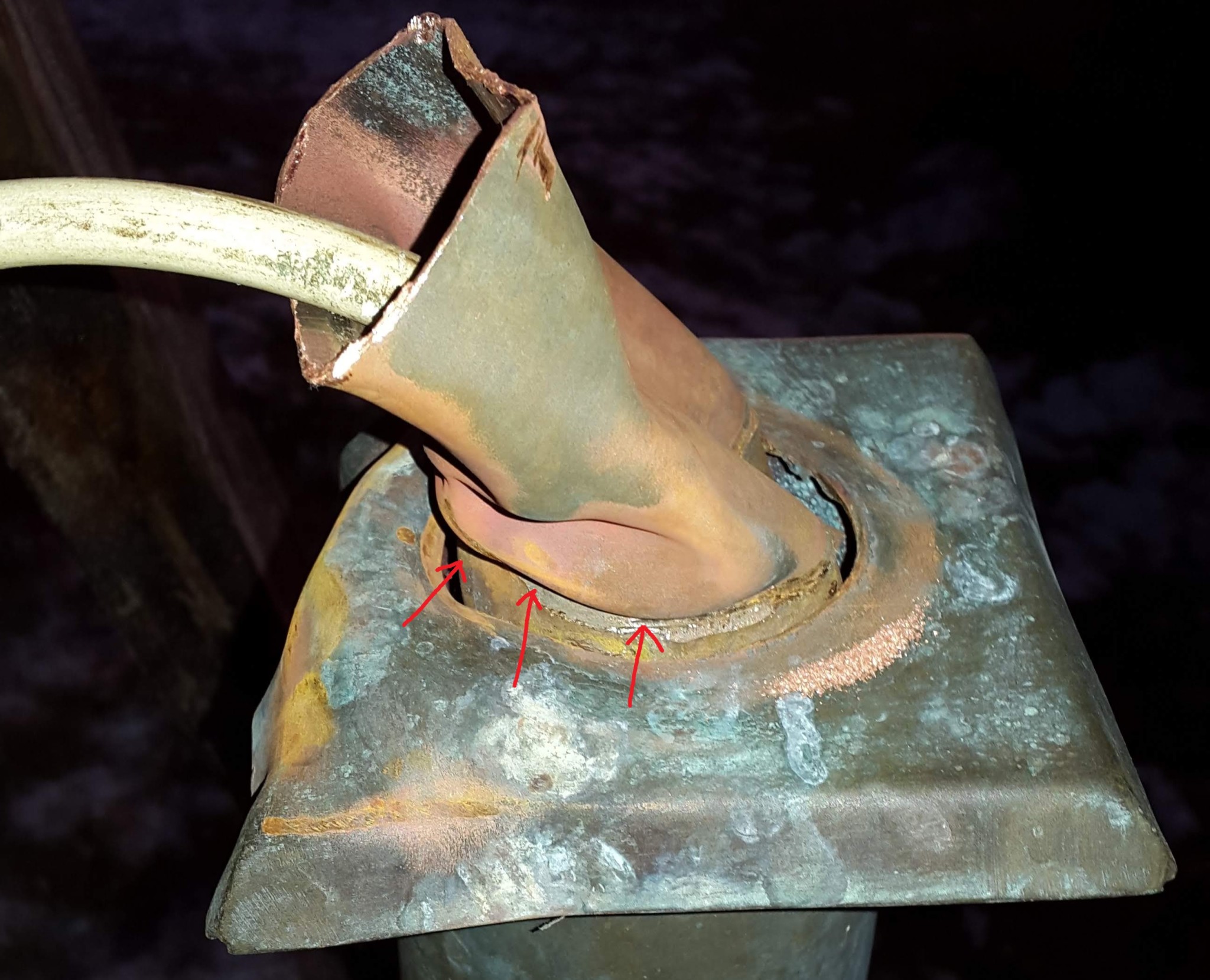
It went well and I have now unhooked the upper piece. I have bent the kink back enough for the cable to run smoothly when I pull up the rest of the inner pipe:
But I have a little hitch. The hole in the square plate is smaller than the diameter of the inner pipe, and the pipe has a flange/reduction (see red arrows) that fits in the square plate. Maybe some kind of waterproofing? You can rotate the inner pipe, but you can't pull it up because the hole is too small...
I can see underneath the square plate that it is soldered to the outer pipe, so you could heat it off, but I was hoping to avoid having to bring someone with gas on site. Do any of you knowledgeable ones have tips on how I can solve this?
Is there perhaps a technique to neatly widen the hole in the cover plate now that the pipe is in place?
Yes, you tap/forge the hole by hitting with a ball-peen hammer. Copper is soft, which is why it couldn't withstand the teenager's swinging on the post. As mentioned, it's easy as pie to make the hole a bit larger, you don't even need to heat the copper plate. Just be careful and tap around the entire edge.
Yes, you can "dimple" the hole larger, it's common in the homebrew community.
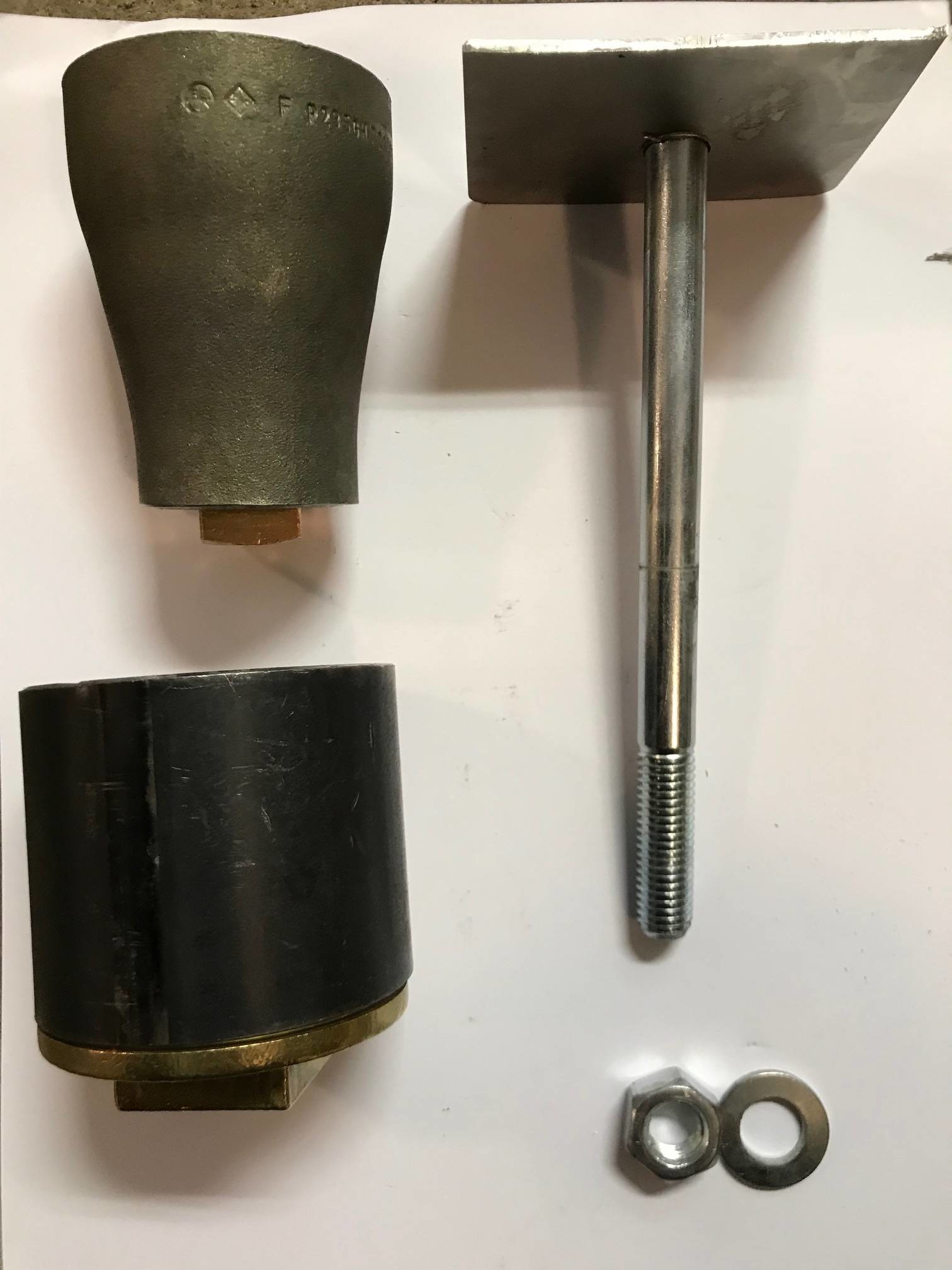
Kind of like my image below, a cone on one side and a larger tube that holds against on the other side. 2 large washers on each end and a long bolt.
When you tighten, you open up the hole and can get a tight, nice bulge that is suitable for soldering.
Vi vill skicka notiser för ämnen du bevakar och händelser som berör dig.


GoC said: