
Hello,
The end of the wall next to the old garage driveway has cracked.
I was thinking of "fixing" this with mortar as a quick fix until we have the finances to do proper renovations in 5+ years (the facade is to be replastered, the basement renovated, etc.). The plan is to build up with HusFix around the old reinforcement, shaping the edges with form plyboard.
Am I on the right track?
The most important thing is not that it looks fantastic, but that children's feet don't get hurt.
The end of the wall next to the old garage driveway has cracked.
I was thinking of "fixing" this with mortar as a quick fix until we have the finances to do proper renovations in 5+ years (the facade is to be replastered, the basement renovated, etc.). The plan is to build up with HusFix around the old reinforcement, shaping the edges with form plyboard.
Am I on the right track?
The most important thing is not that it looks fantastic, but that children's feet don't get hurt.
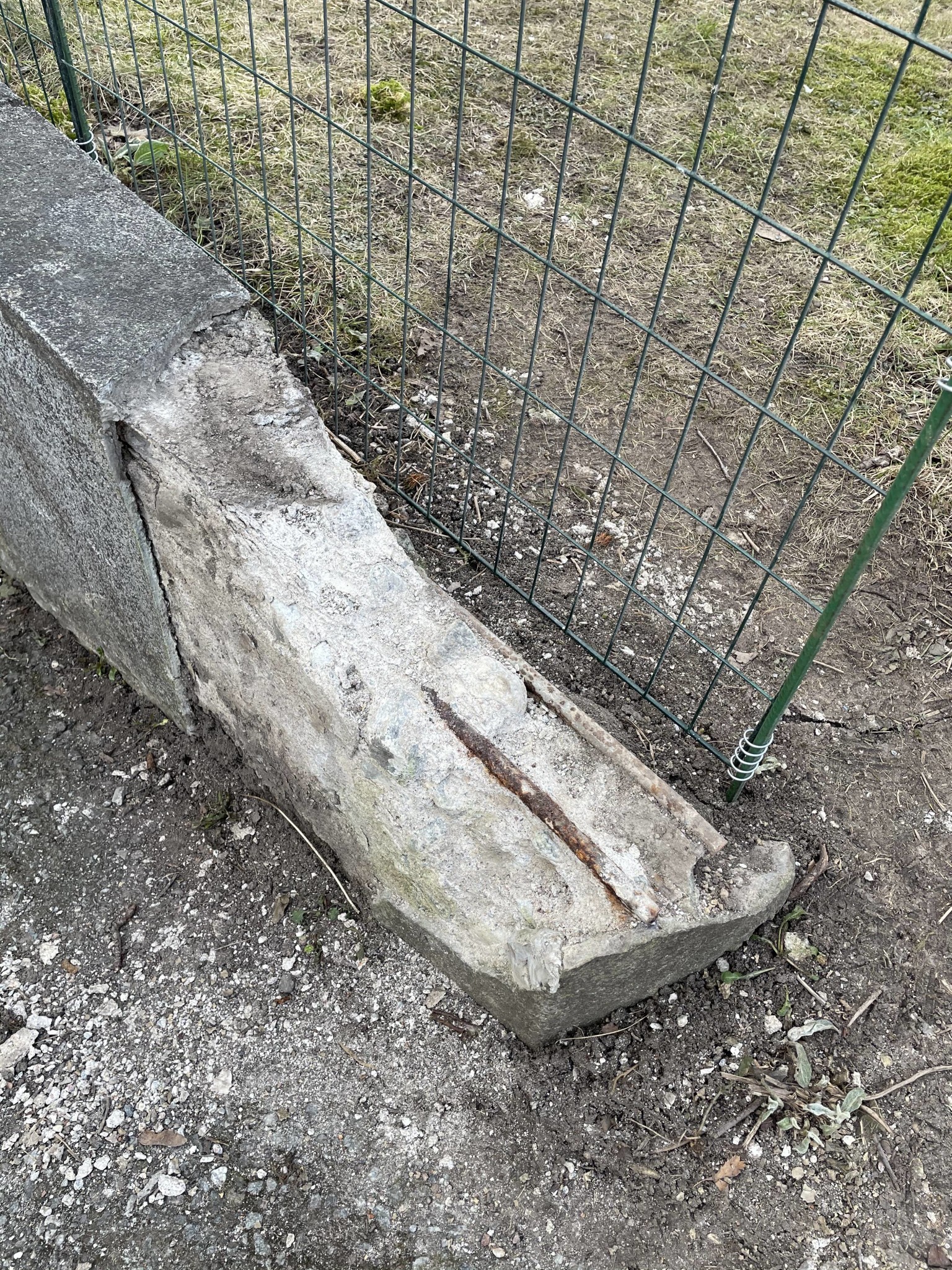
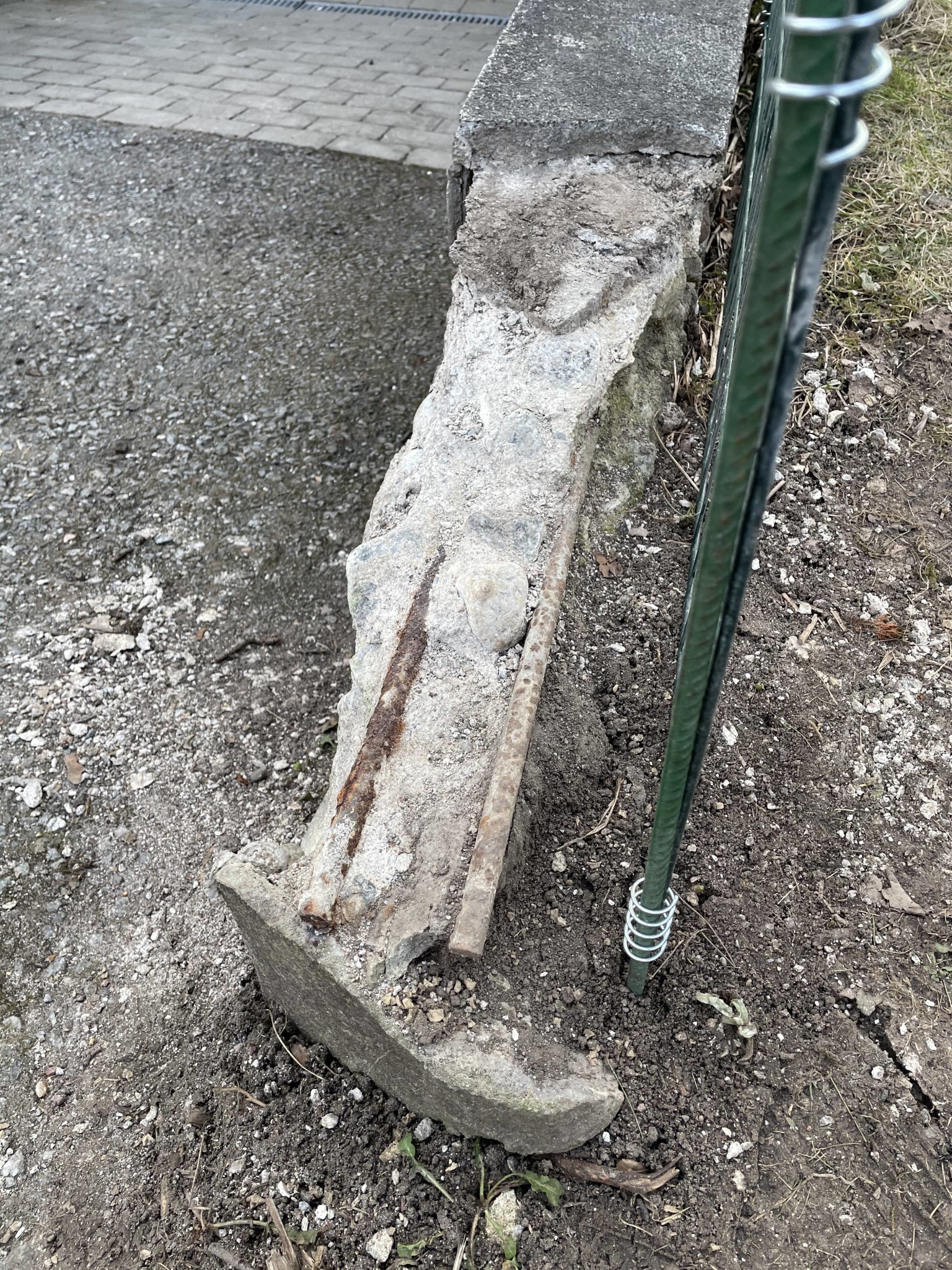

Clean thoroughly with a pressure washer.
Try to remove as much rust as you can from the metal. Possibly drill into the old metal.
Make a mold out of something, raw wood boards or something similar.
Mix a bag of pre-mixed coarse concrete and pour into the mold.
Remove the mold after a day, possibly smooth with something like Murbruk B.
Try to remove as much rust as you can from the metal. Possibly drill into the old metal.
Make a mold out of something, raw wood boards or something similar.
Mix a bag of pre-mixed coarse concrete and pour into the mold.
Remove the mold after a day, possibly smooth with something like Murbruk B.
Okay!
How "fluid" does concrete actually get? I imagine a challenge might be to get the "mold" to be sealed at the bottom, as it's rough asphalt underneath. Maybe lay a layer of something less fluid closest to the ground (like HusFix or similar? - note, not extremely attached to HusFix, just ignorant), let it cure/dry and then pour concrete? It's a bummer to pour a few liters of concrete down the drainage channel because the mold isn't tight...
How "fluid" does concrete actually get? I imagine a challenge might be to get the "mold" to be sealed at the bottom, as it's rough asphalt underneath. Maybe lay a layer of something less fluid closest to the ground (like HusFix or similar? - note, not extremely attached to HusFix, just ignorant), let it cure/dry and then pour concrete? It's a bummer to pour a few liters of concrete down the drainage channel because the mold isn't tight...


Depends on the amount of water on how runny it will be, but mix as thick as you can, add a little more sand from a sandbox or similar. Mix well and place in the mold, let it sit for an hour until it has hardened a bit and then mix normally.
Click here to reply
Similar threads
-
Laga Trasig murad trappa1923
Fyllnadsmassor -
Puts/murgrund tar in vatten/fukt i sprickor. Enkelt laga själv?
Fasad -
Murbruk för att laga stenmur
Grund & Markarbeten -
Repair plaster on chimney
Building Materials and Construction Technology -
House fix on chimney
Building Materials and Construction Technology