Hello, it started as a simple refresh of a room in the basement where I was going to knock out and fill in some small cracks in the exterior walls of lightweight concrete.
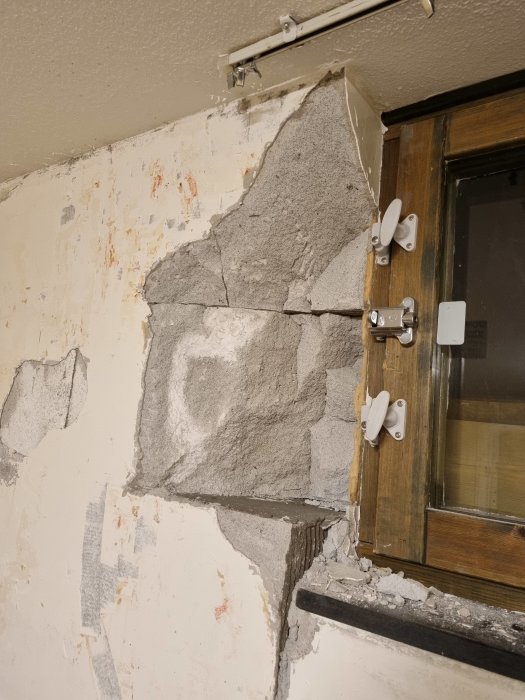
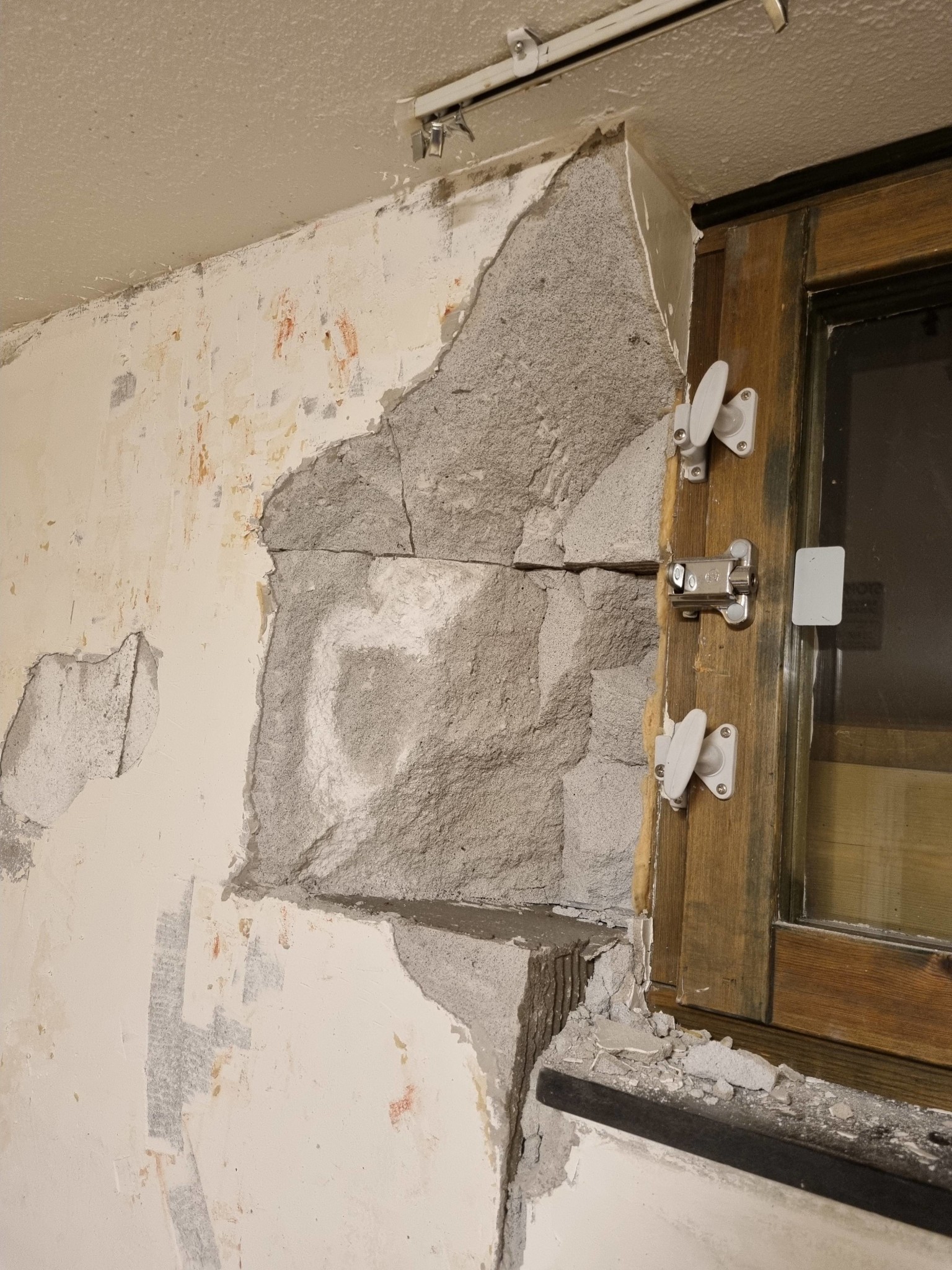
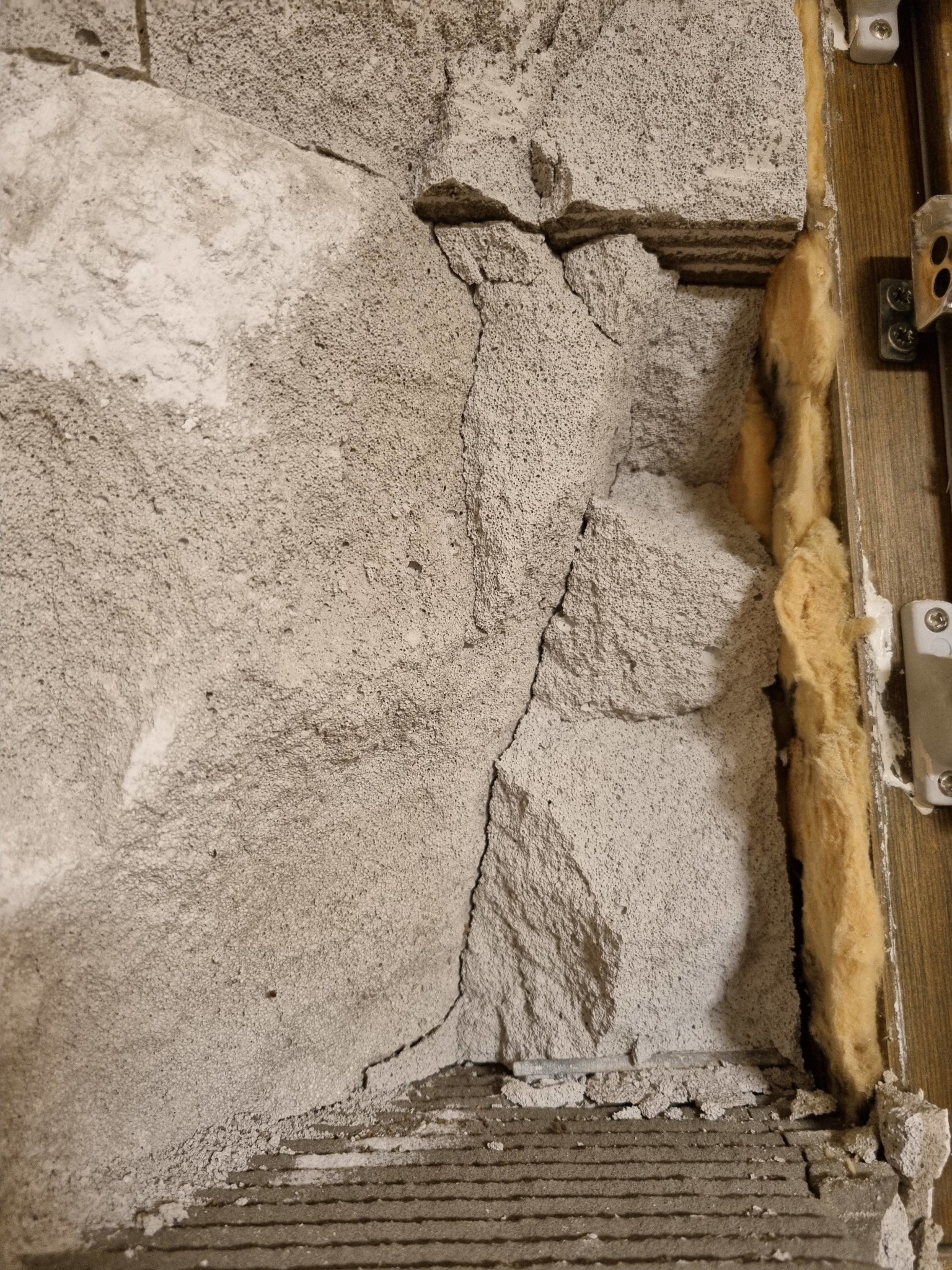
As soon as I tapped with a hammer, it didn't sound good. It was a very hollow sound. A few taps later, it looks like in the pictures below. Large chunks of masonry blocks just come loose due to cracks.
The walls are a total of 250 mm. Most of the cracks end about 10 cm into the wall, but some seem to continue a bit further. I'm afraid to knock more because I'm worried I'll see daylight soon, wrong season for that now.
How do you fix this?? Many layers of rot/repair mortar (husfix)? Something else?
Should I be worried about something seriously wrong or is this probably due to settlement as I believe?
I would probably have tried to build it up with some form of reinforcement. You probably have to build in layers if you do not use some form of stone: concrete/brick that you cut to size as it looks quite large.
I would probably try to build it up with some form of reinforcement.
You probably have to build in layers if you don't use some form of stone: concrete/brick that you cut to size as it looks quite large
Great tip! I will try this. I went and bought a lightweight concrete block yesterday but what do you mean by the reinforcement?
Just make sure you get a good adhesion to the old wall by wetting the stone beforehand and priming with cement water with a consistency similar to filmjölk.
The alternative is to make a simple mold and cast with expanding concrete.
I have similar cavities after pipe installations in aerated concrete/Siporex, have asked a lot about this and at building supplies stores, the manufacturer suggested Siporex blocks which I have cut pieces from / you can quite easily cut straight edges in the wall hole, and then attach with Kim intended for aerated concrete or cement fix (the same that is used under tiles). Then apply mortar/plaster on top for the surface (if it's a basement), but very difficult to get the surface right, so it needs to be sanded afterward.
A lot has been written about husfix here, but people seem to prefer gypsum plaster (probably softer to sand) but doesn't work well with moisture pressure, if it's a basement.
Now I have started building. Building with Biltema's root/repair mortar and lightweight concrete blocks. Then the plan is to plaster the surface with Weber plaster C 135. I have used that before to repair some plaster peeling 2 years ago and it still looks good. I might come back with some pictures of the result.
Click here to reply
Vi vill skicka notiser för ämnen du bevakar och händelser som berör dig.



mexitegel said:
