
10,764 views ·
32 replies
11k views
32 replies
Renovation Basement Lounge from 76
Hello!
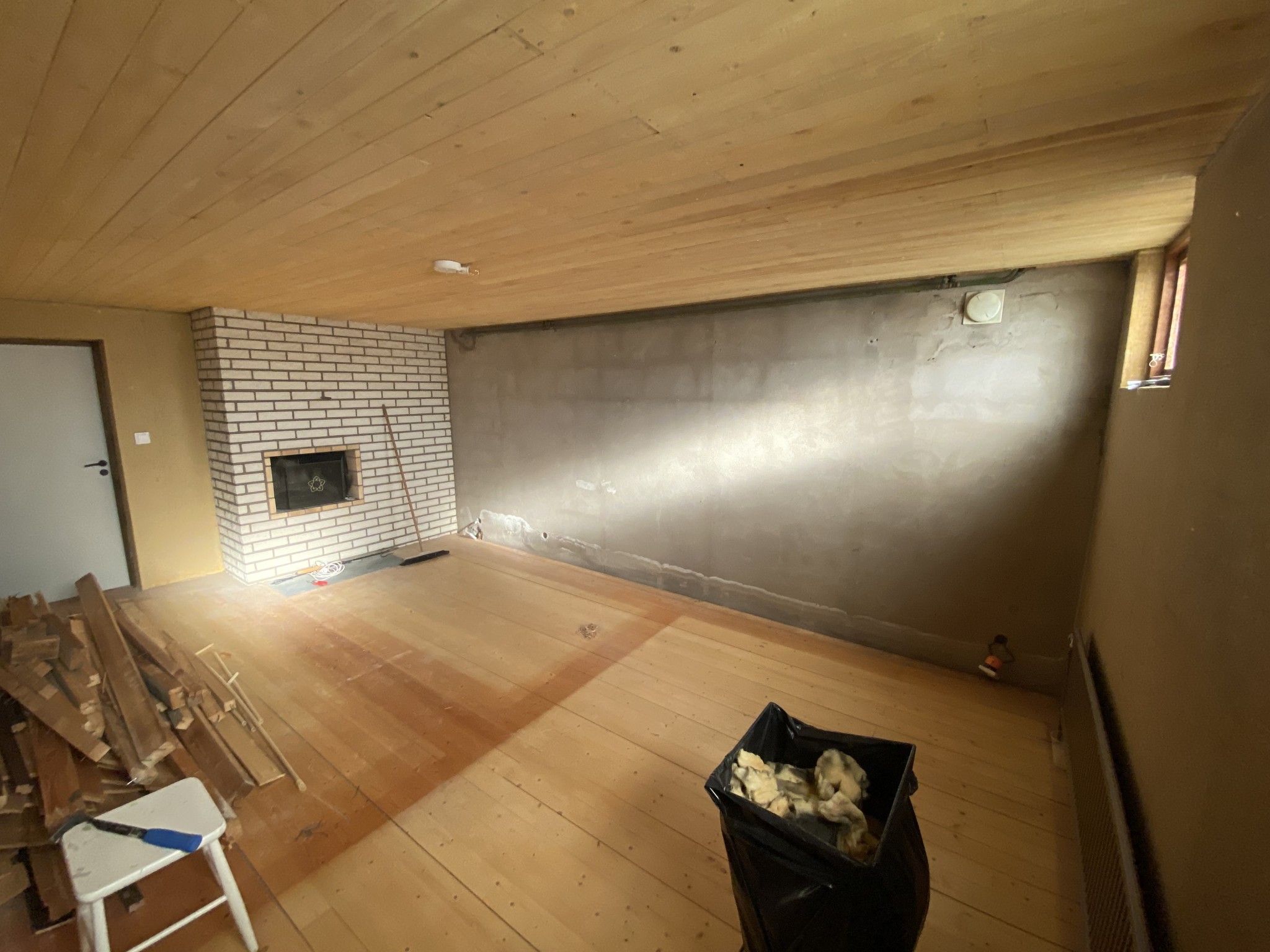
It's time to tackle the basement room in our house from 1976, which will become our TV room. About 20 square meters.
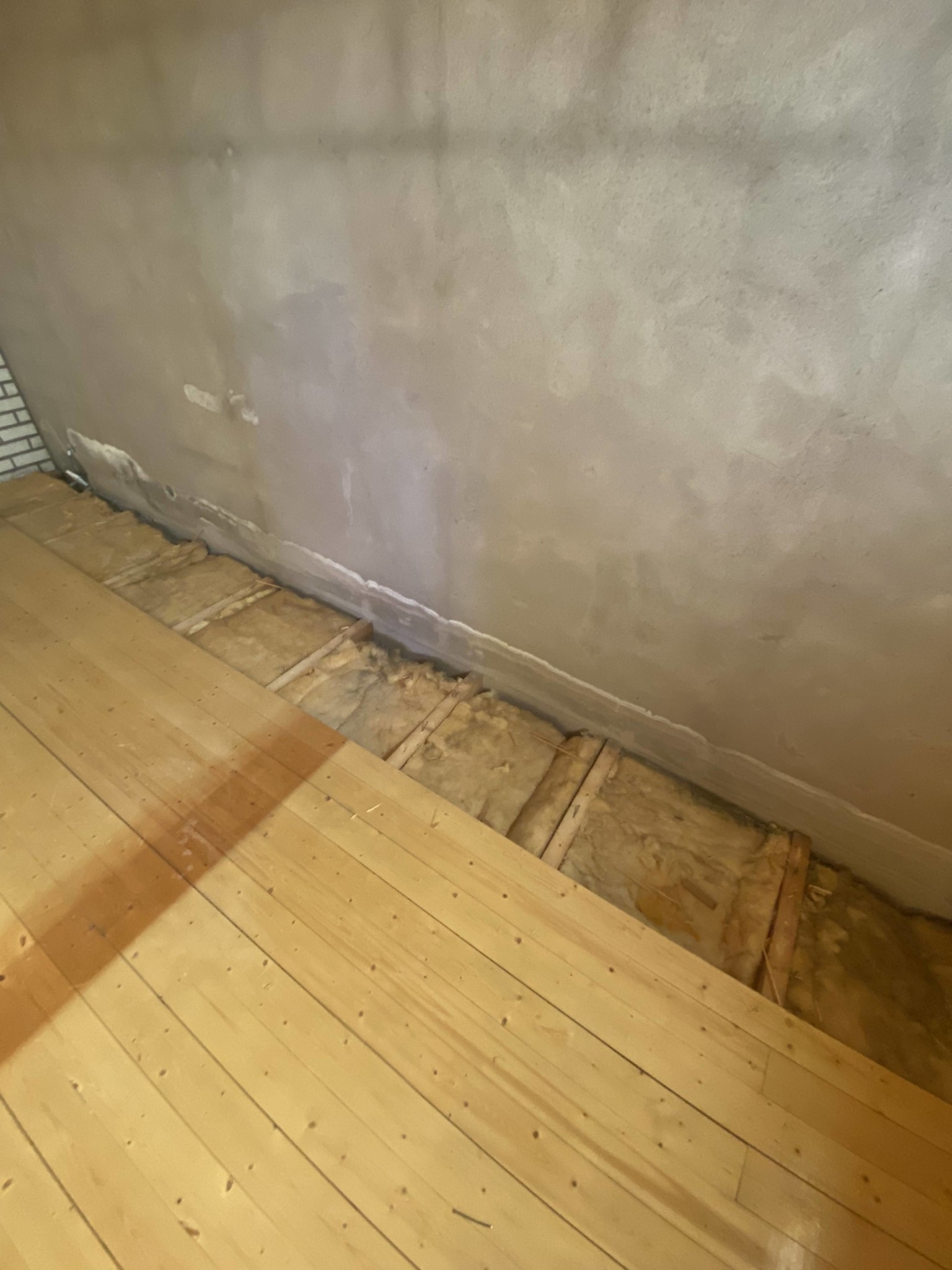
I've removed a ventilated wall with pine paneling and am now working on the floor. Seems to be wooden joists and insulation directly against uninsulated concrete slab, the usual.
Drainage with isodrän around the entire house was done in 2021, which made a big difference. The basement smell disappeared, and with the removal of vinyl floors and other old surfaces, it has become a really pleasant climate down there.
But... I'm pondering over the basement room. What should I do about the floor? The leveling system feels too expensive based on what I've read that others have paid.
I thought I would update with the conditions once I've lifted the floor and removed the insulation. One thought I had was to lay sill paper under MDF blocks and then joist on top. Possibly plastic wedges as well between the joist and MDF block if needed due to the almost certainly uneven slab. Or just pour the whole thing, but that also feels expensive.
Does anyone have tips and ideas?
It's time to tackle the basement room in our house from 1976, which will become our TV room. About 20 square meters.
I've removed a ventilated wall with pine paneling and am now working on the floor. Seems to be wooden joists and insulation directly against uninsulated concrete slab, the usual.
Drainage with isodrän around the entire house was done in 2021, which made a big difference. The basement smell disappeared, and with the removal of vinyl floors and other old surfaces, it has become a really pleasant climate down there.
But... I'm pondering over the basement room. What should I do about the floor? The leveling system feels too expensive based on what I've read that others have paid.
I thought I would update with the conditions once I've lifted the floor and removed the insulation. One thought I had was to lay sill paper under MDF blocks and then joist on top. Possibly plastic wedges as well between the joist and MDF block if needed due to the almost certainly uneven slab. Or just pour the whole thing, but that also feels expensive.
Does anyone have tips and ideas?

Is there any problem today?
I have a 70s house with a slab on grade, recreation room with standing paneling and chipboard on the floor. I've never had any smell or moisture issues, so I laid foam and laminate flooring. There was wall-to-wall carpeting on the chipboard before. Walls and ceiling were spray-painted. Exterior walls insulated with 200mm drainage board.
I have a 70s house with a slab on grade, recreation room with standing paneling and chipboard on the floor. I've never had any smell or moisture issues, so I laid foam and laminate flooring. There was wall-to-wall carpeting on the chipboard before. Walls and ceiling were spray-painted. Exterior walls insulated with 200mm drainage board.
Update!
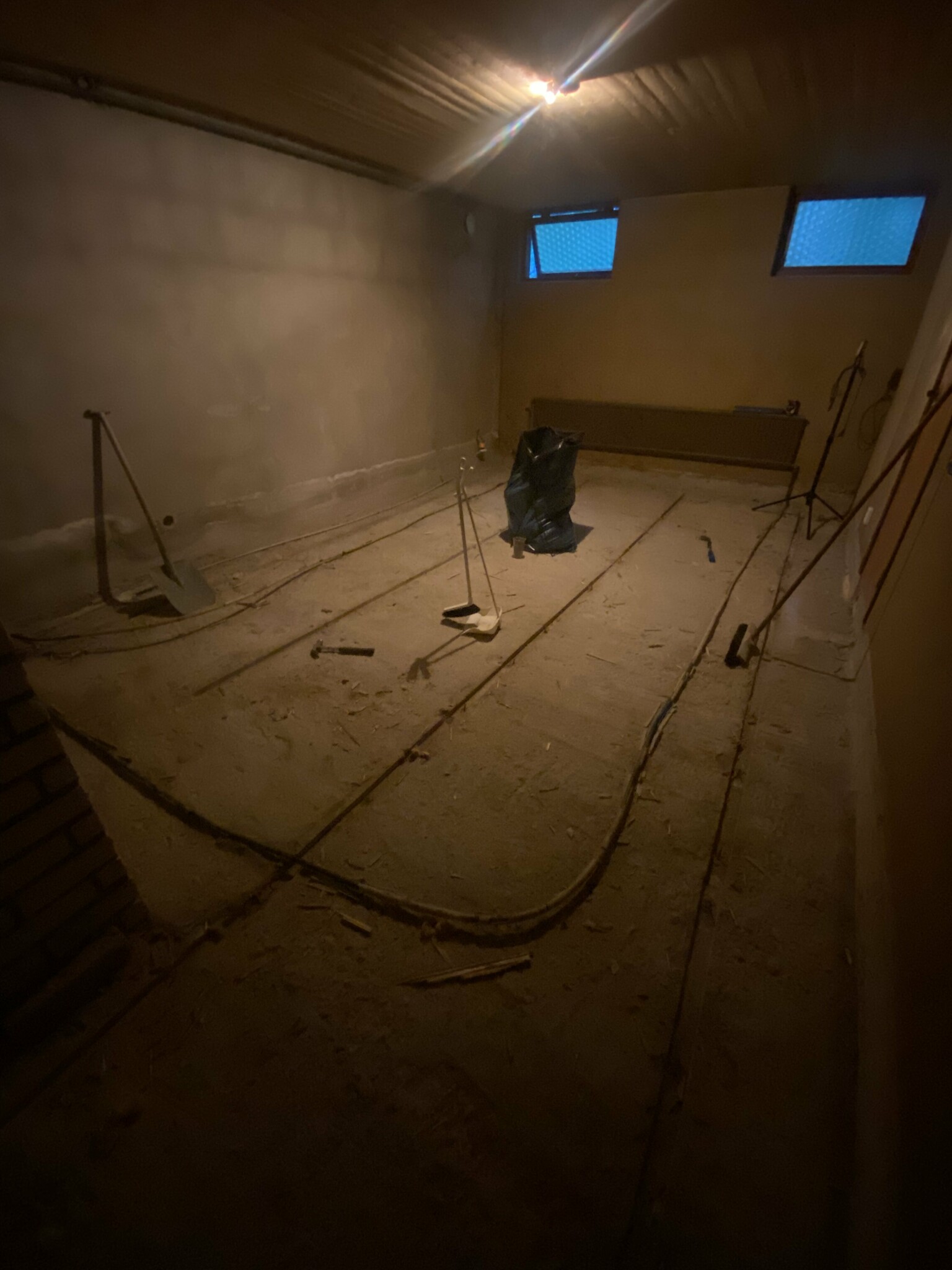
I have taken a look under the insulation now. Studs embedded in the concrete slab. What do those of you with the knowledge say? Something in me says these should be removed. Hard to tell if they are impregnated or not. I haven't done any moisture measurement. Didn't smell anything through the mask when I was working, will check the smell in the room tomorrow when the fiberglass dust has settled.
I have taken a look under the insulation now. Studs embedded in the concrete slab. What do those of you with the knowledge say? Something in me says these should be removed. Hard to tell if they are impregnated or not. I haven't done any moisture measurement. Didn't smell anything through the mask when I was working, will check the smell in the room tomorrow when the fiberglass dust has settled.
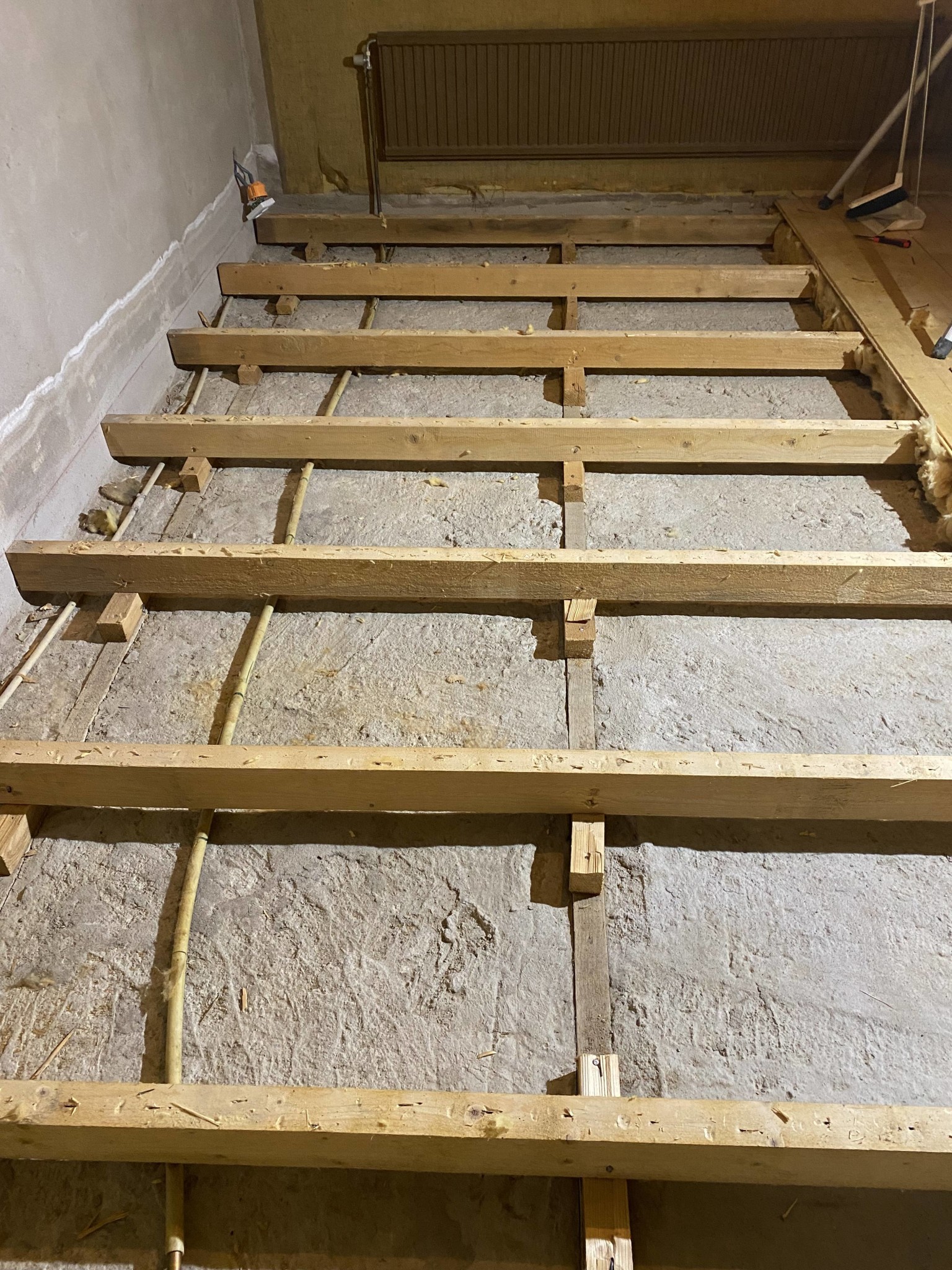


In the pictures, the concrete floor and the embedded studs look very dry. Get or rent a moisture meter and check the moisture level in the studs. Put your nose to the studs and smell. The only correct answer is that you should remove the embedded studs. Considering the good condition, I would probably leave it as it is. It's easy to comment on a few pictures without seeing and feeling the room in person.J_P_K said:
Update!
I have taken a look under the insulation now. Studs embedded in the concrete slab. What do those of you with the knowledge say? Something in me says these should be removed. Hard to say if they are impregnated or not. I haven't done any moisture measurement. Didn't smell anything through the mask while working, will check the smell in the room tomorrow when the fiberglass dust has settled.
Remove the embedded joists. Then apply leveling compound over the entire floor. Then I recommend Icopal Fonda special where you attach it to the concrete floor with butyl tape along the walls and any joints with age-resistant tape. Then you lay down a soundproofing underlay and subsequently a wooden floor, not a laminate floor which becomes cold. Another option is not to attach Icopal Fonda with butyl tape but leave it slightly open along the walls with ventilated baseboards so that any moisture can rise and then be expelled via ventilation. It's interesting to follow the work and how you proceed.Update!
I have taken a look under the insulation now. Joists cast into the concrete slab. What do you who have the knowledge say? Something in me says these should be removed. Hard to say if they are impregnated or not. I haven't done any moisture measurement. Didn't smell anything through the mask while working, will check the room tomorrow when the fiberglass dust settles.


In my house that was built in '76, I have 7 cm of styrofoam directly on uninsulated concrete in the basement without any plastic sheeting against the concrete. Floating 22 mm chipboard flooring with an air gap around and vented baseboard with vinyl flooring has worked well the entire time.
Thank you for all the answers and tips. Interesting to hear suggestions for different solutions. I will take them into consideration.
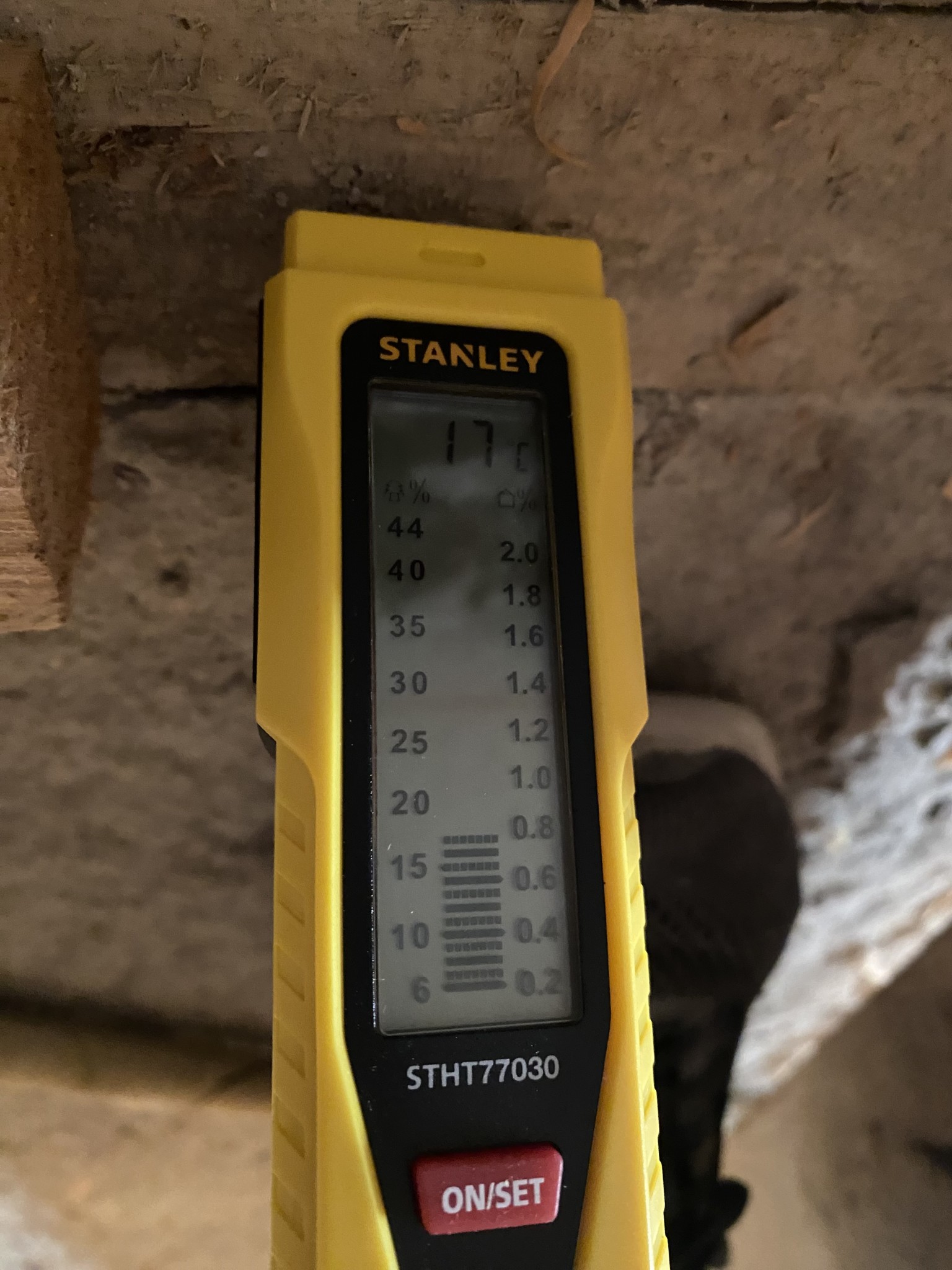
Image of moisture measurement in embedded framing (the highest value I measured).
I notice a smell in the rec room now that most of the concrete slab and the frames have been exposed. I have a bad experience with mold odor, but it smells slightly like a root cellar(?).
Image of moisture measurement in embedded framing (the highest value I measured).
I notice a smell in the rec room now that most of the concrete slab and the frames have been exposed. I have a bad experience with mold odor, but it smells slightly like a root cellar(?).
Even though it is tedious, the right thing to do is to remove the studs… A budget version of Nivell is to use hinge screws on regular studs - saw someone on the forum who did it. Smart anyway!Thanks for all the answers and tips. Interesting to hear suggestions for different solutions. I will consider them in my decision.
Photo of moisture measurement in the embedded stud (the highest value I measured).
Noticing a smell in the den now that most of the concrete slab and studs have been exposed. I have bad experience with mold smell but it smells slightly of root cellar(?).
Hello again. Reviving the thread.
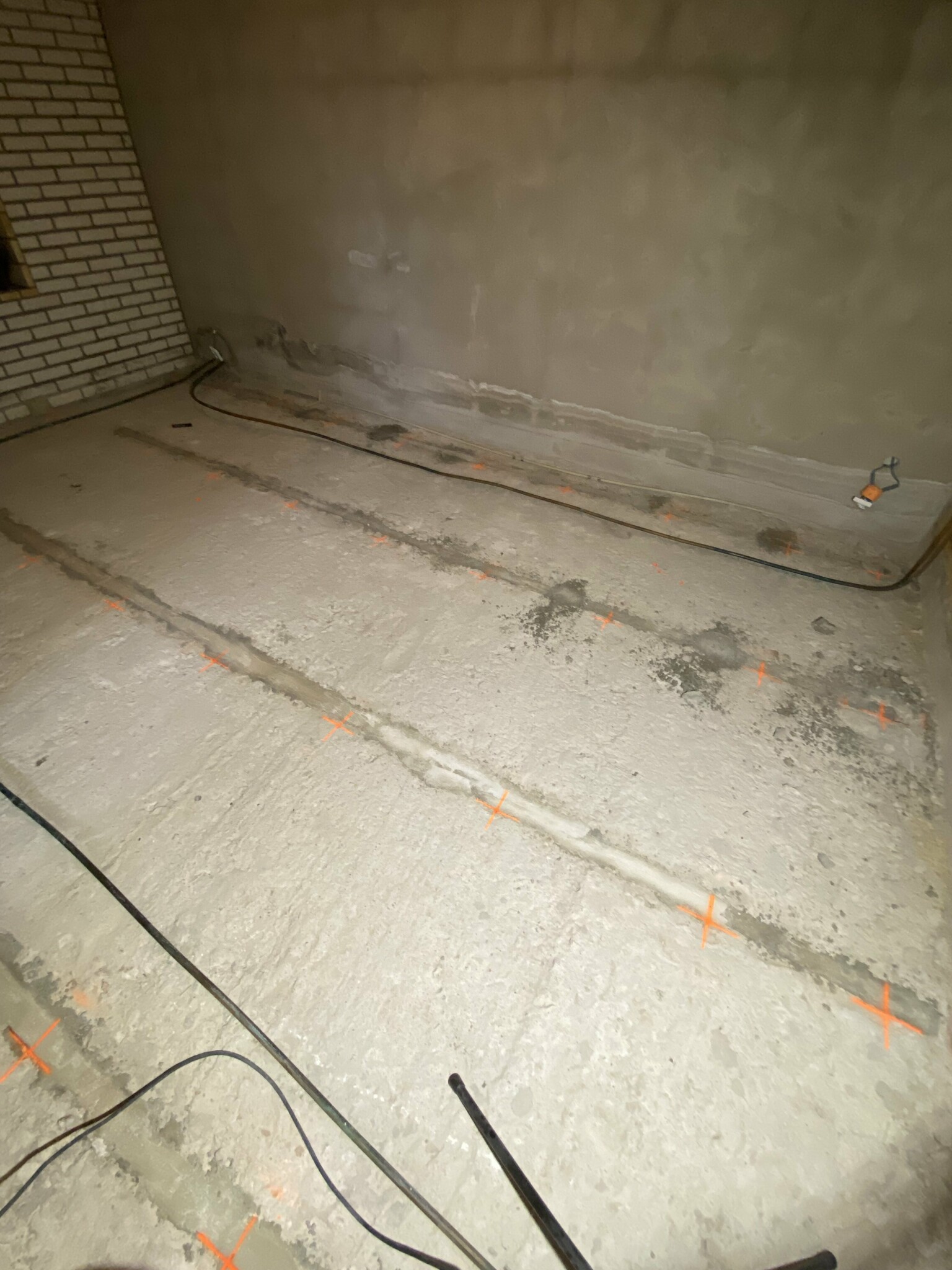
The project in the basement lounge is underway again. The embedded joists were removed and the channels have been filled in.
I'm thinking of laying the floor joists again and creating a similar ventilated solution as before.
My idea is to lay standard cc 60 joists with cross-bracing (along the two longer walls and in the middle?) for stability. Insulation between the joists, like foam board. Joist hangers or angle irons between the wall and the ends of the joists to hold everything in place. Terrace feet (like https://www.jemfix.se/terrassfot-35-70-mm-heco/5101/9055638/) that are screwed into the concrete and then into the joists, one meter apart.
For the joists' dimensions, I'm thinking 45x95 mm.
Maybe a little vaguely described, but I would gladly receive any input from you on what you think about the setup. I'll clarify if there are any unclear parts in what I've written.
The project in the basement lounge is underway again. The embedded joists were removed and the channels have been filled in.
I'm thinking of laying the floor joists again and creating a similar ventilated solution as before.
My idea is to lay standard cc 60 joists with cross-bracing (along the two longer walls and in the middle?) for stability. Insulation between the joists, like foam board. Joist hangers or angle irons between the wall and the ends of the joists to hold everything in place. Terrace feet (like https://www.jemfix.se/terrassfot-35-70-mm-heco/5101/9055638/) that are screwed into the concrete and then into the joists, one meter apart.
For the joists' dimensions, I'm thinking 45x95 mm.
Maybe a little vaguely described, but I would gladly receive any input from you on what you think about the setup. I'll clarify if there are any unclear parts in what I've written.



Update.
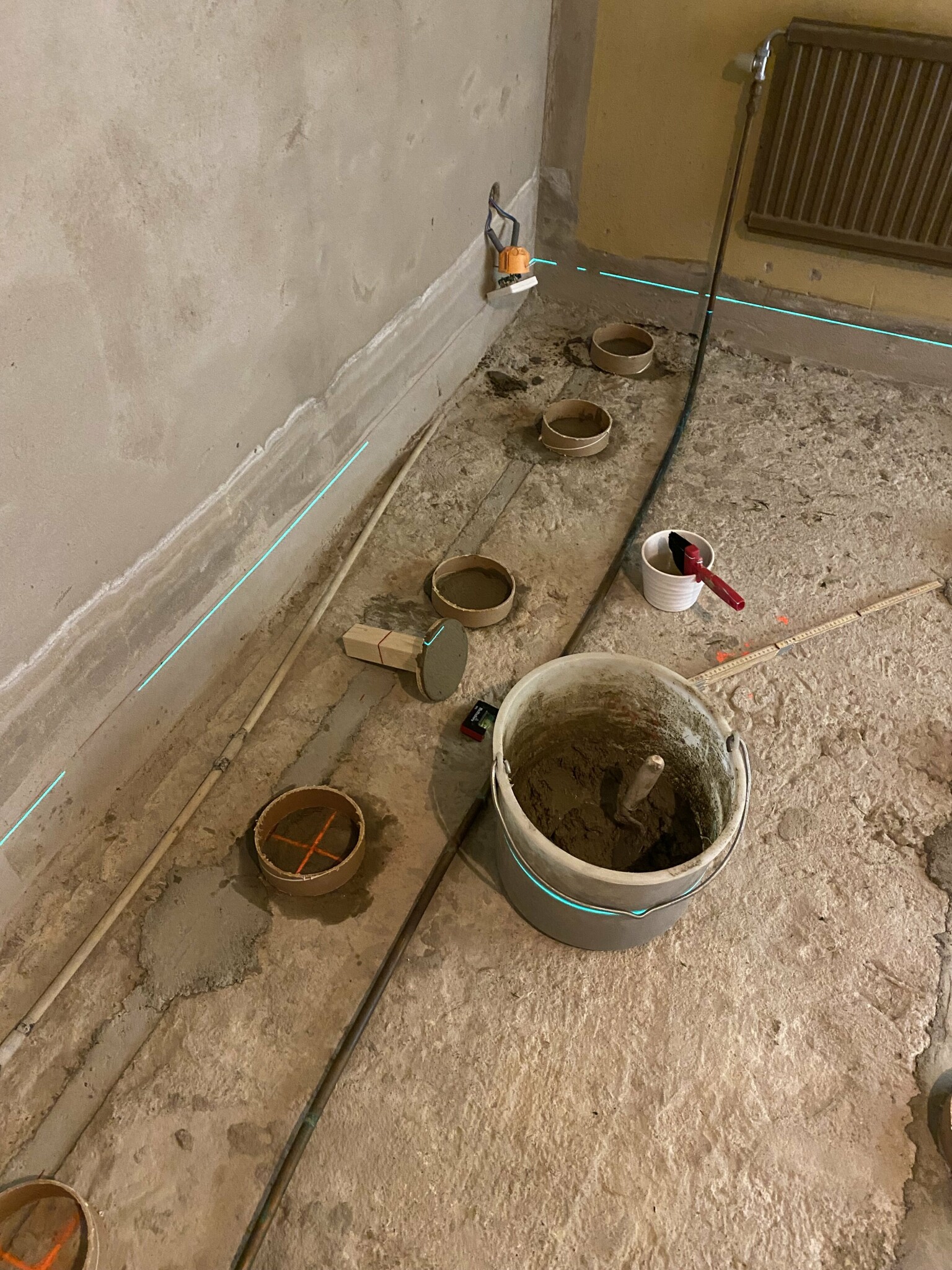
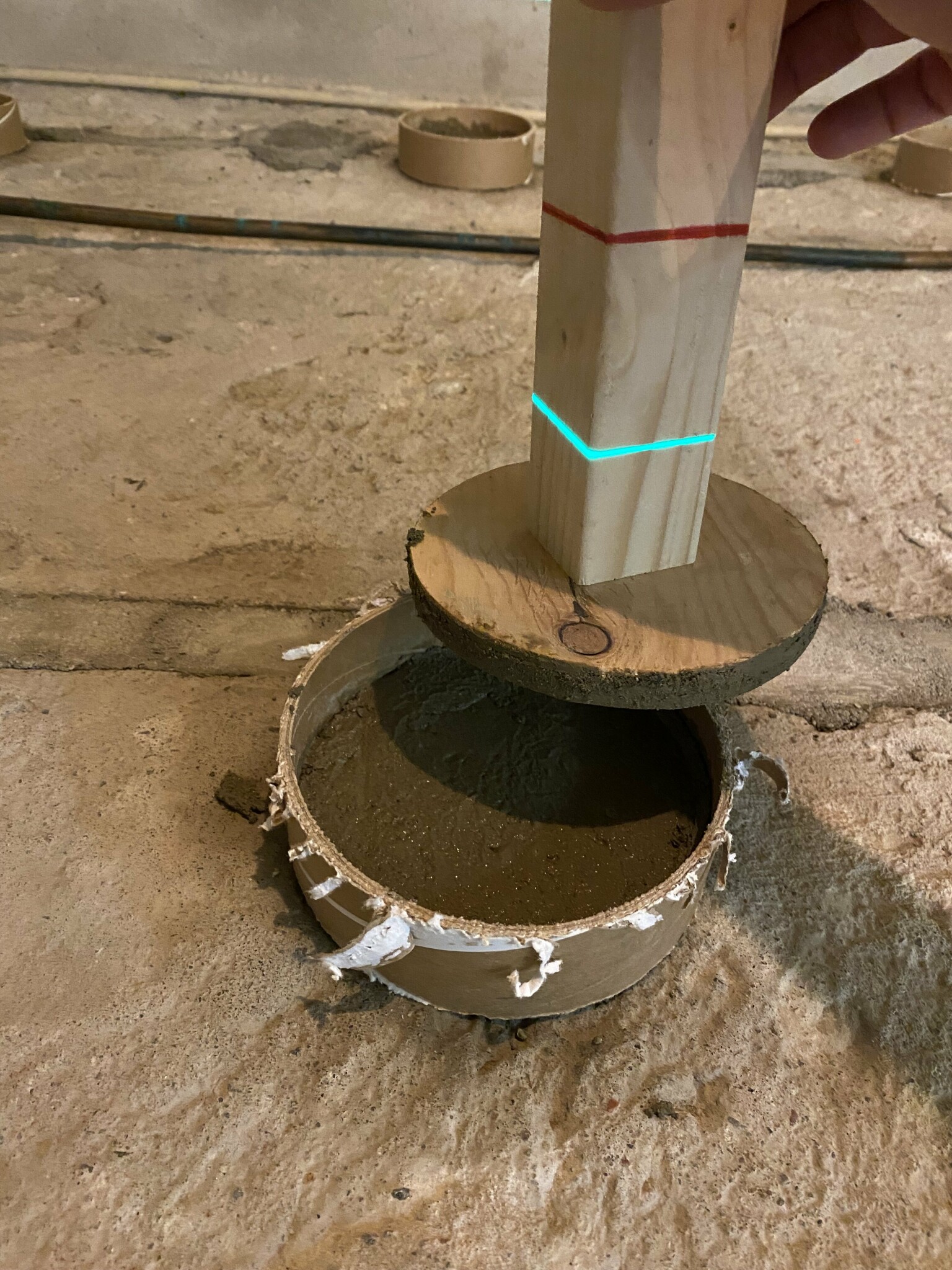
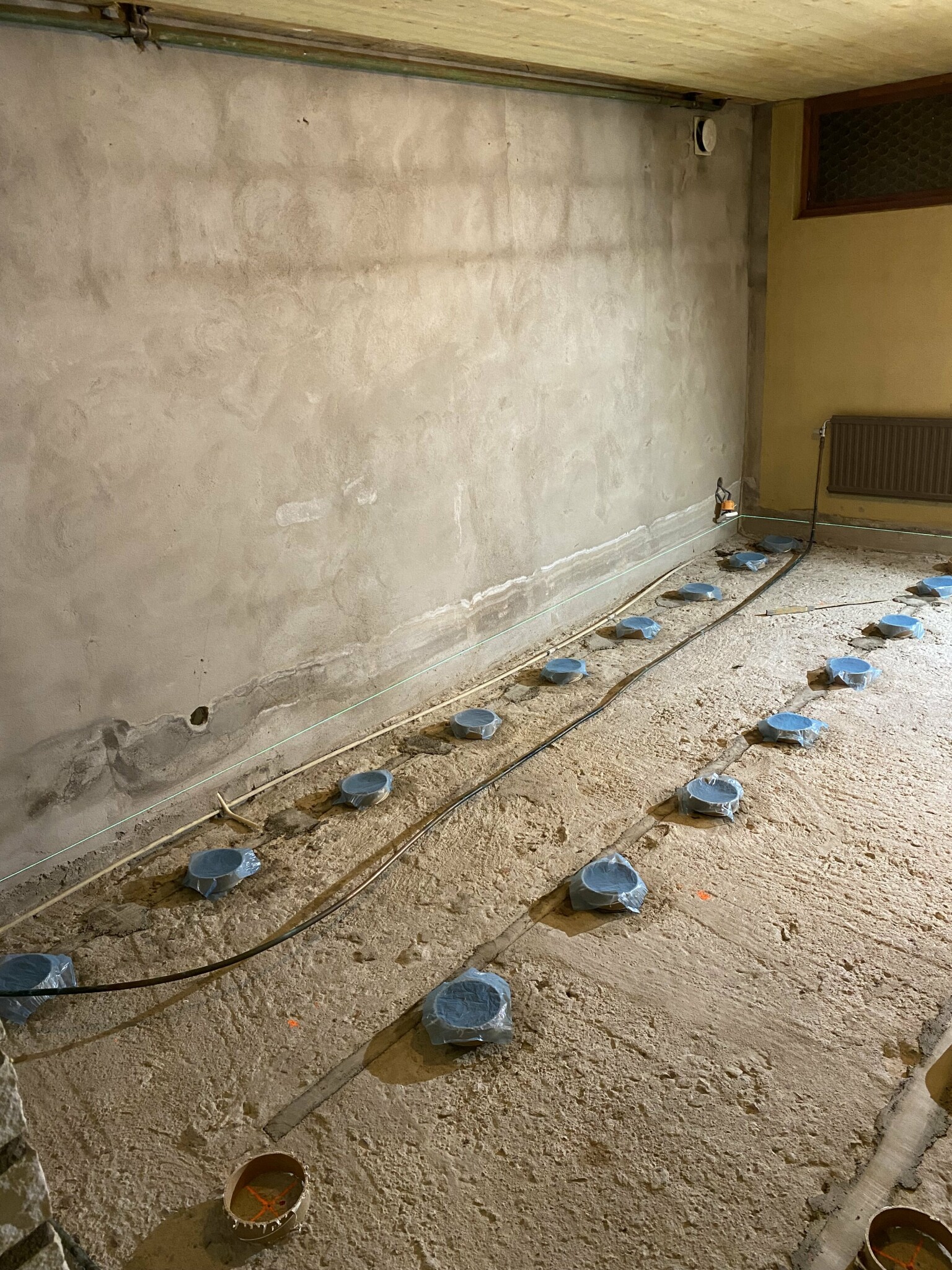
Decided to cast pillars at each support in concrete. Then place rubber beam shoes on top for the joists to rest in. It was a bit of work to get everything level and at the right height, but hopefully, it was worth the effort. A laser is invaluable when doing something like this.
Currently, all the small pillars are cast and are curing while I go down and moisten them now and then.
Decided to cast pillars at each support in concrete. Then place rubber beam shoes on top for the joists to rest in. It was a bit of work to get everything level and at the right height, but hopefully, it was worth the effort. A laser is invaluable when doing something like this.
Currently, all the small pillars are cast and are curing while I go down and moisten them now and then.





A hell of a job, this will probably be fine when the studs are on. Is the house damp in the slab? Why are you doing this? Will there be any heating or insulation?
