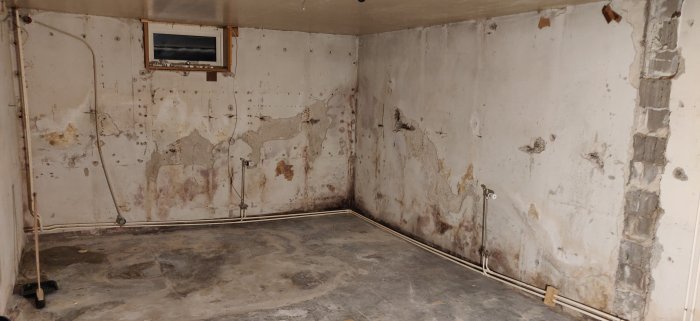
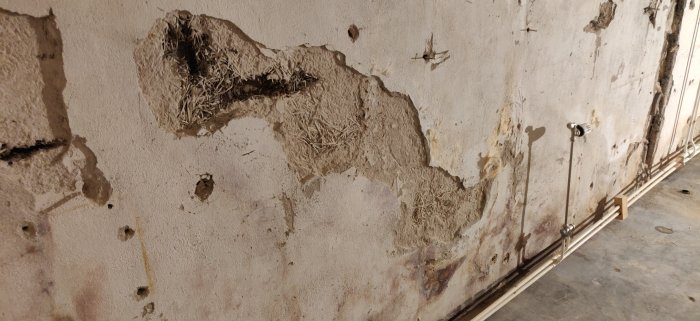
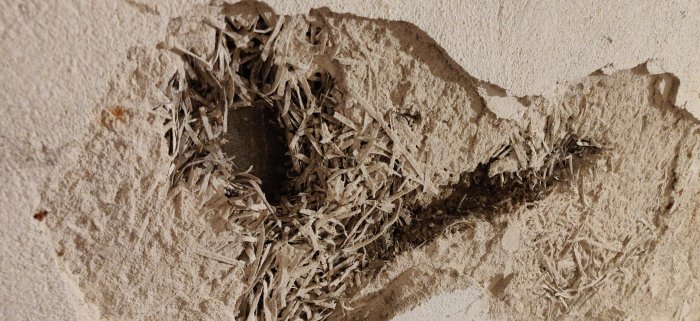
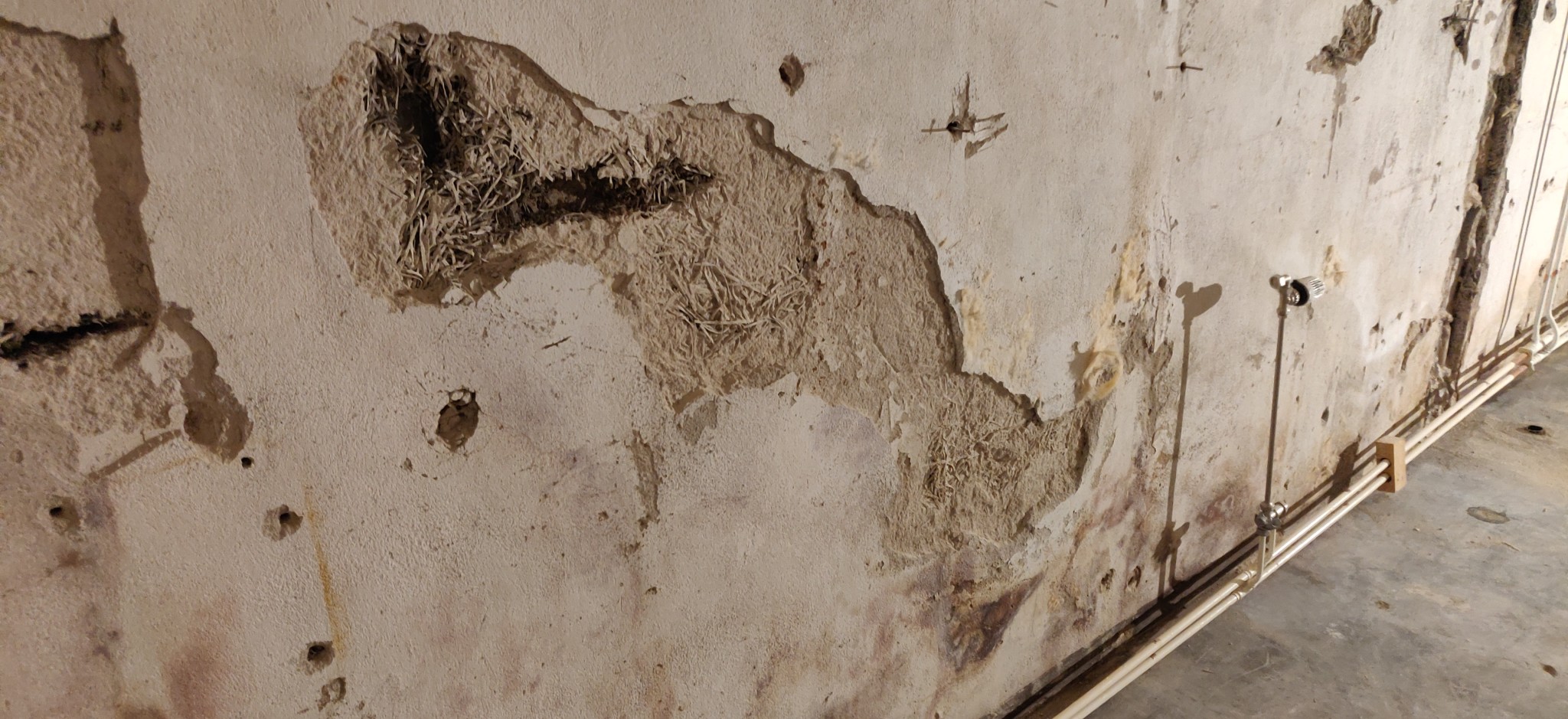
We are in the process of renovating a basement with moisture problems. We have torn out the studded walls as well as the ceiling and floor. In the outer corner of the room, signs of moisture were visible and the walls there were not in good condition, incredibly porous. They crumble at the slightest touch. See the pictures.
What is the material under the plaster?
The plan has been to go with plastered walls, to insulate from outside during drainage in the summer. How should we proceed? Do these walls need to be torn down to the concrete? How should we build them up if so?
We are renovating a basement with moisture problems. We have removed the framed walls as well as the ceiling and floor. In the corner of the room, there were signs of moisture, and the walls there were not in good condition, incredibly porous. They crumble at the slightest touch. See the pictures.
[image] [image] [image]
What is the material under the plaster?
The plan has been to use plastered walls, and we will isolate from the outside during drainage in the summer. How should we proceed? Do these walls need to be torn down to the concrete? How should we build up if so?
Thanks! Yes, that seems to match. It seems to be a fairly moisture-resistant material. The question is whether you can leave the träullit, remove all loose plaster, and re-plaster?
Thanks! Yes, that seems to be correct. It appears to be a fairly moisture-resistant material. So the question is whether one can leave the träullite, remove all the loose plaster, and re-plaster?
I think I would let it stay! Partly because it insulates well, it is moisture-resistant, and also sound insulating.
Click here to reply
Vi vill skicka notiser för ämnen du bevakar och händelser som berör dig.