I’m brainstorming a bit about the near future when I have to build a stable...
The problem is that the part of the barn that fits best has a ceiling that's too low because there were cows there before. But we no longer need the loft, so the question is whether we can remove it and some of the rafters without the building collapsing under the weight of the roof.
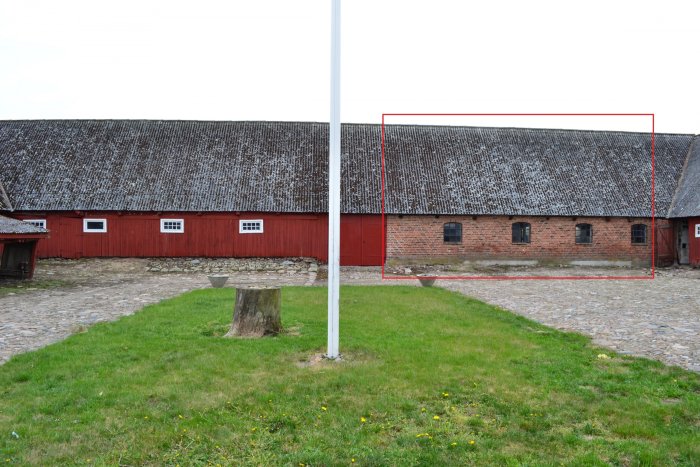
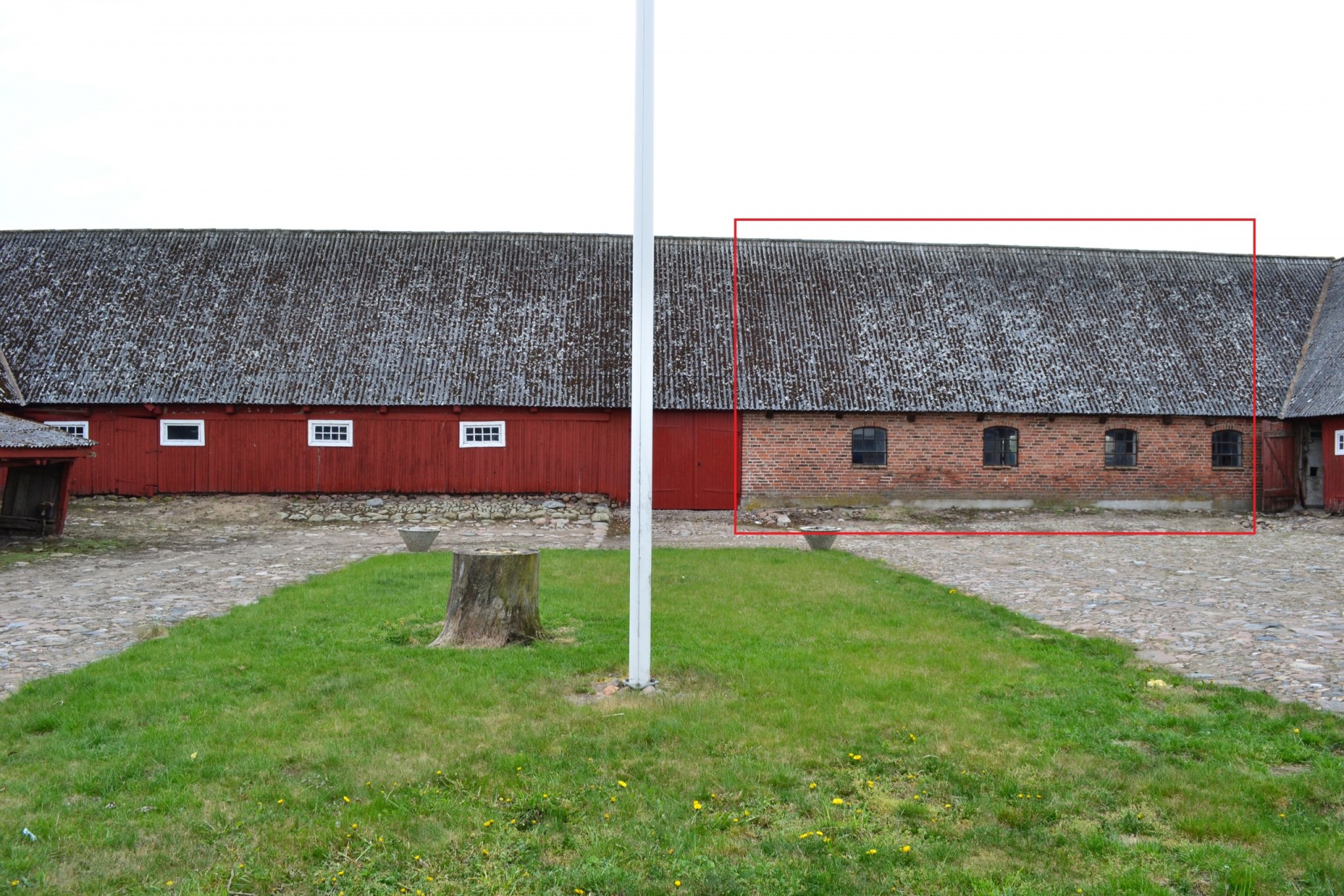
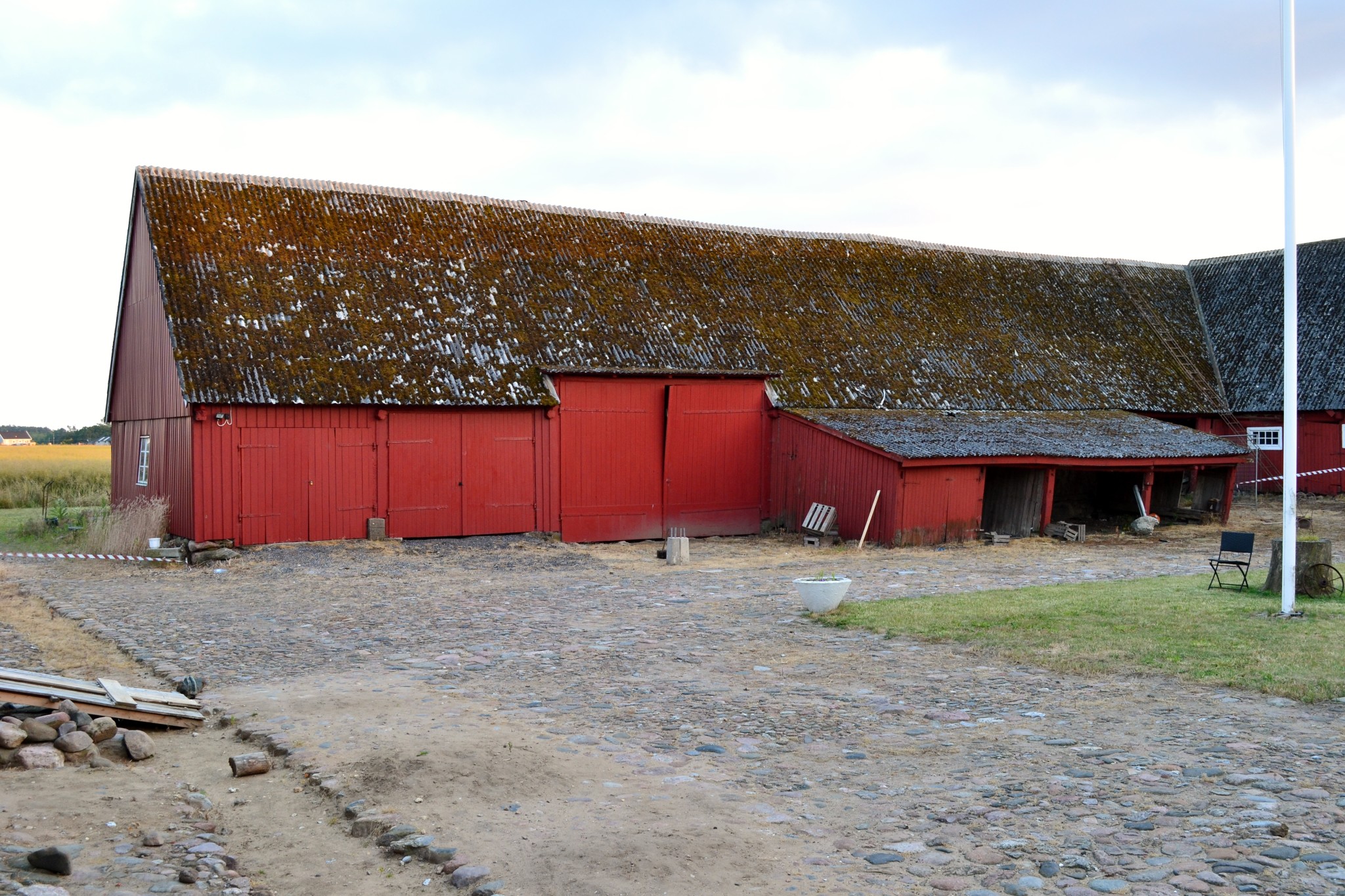
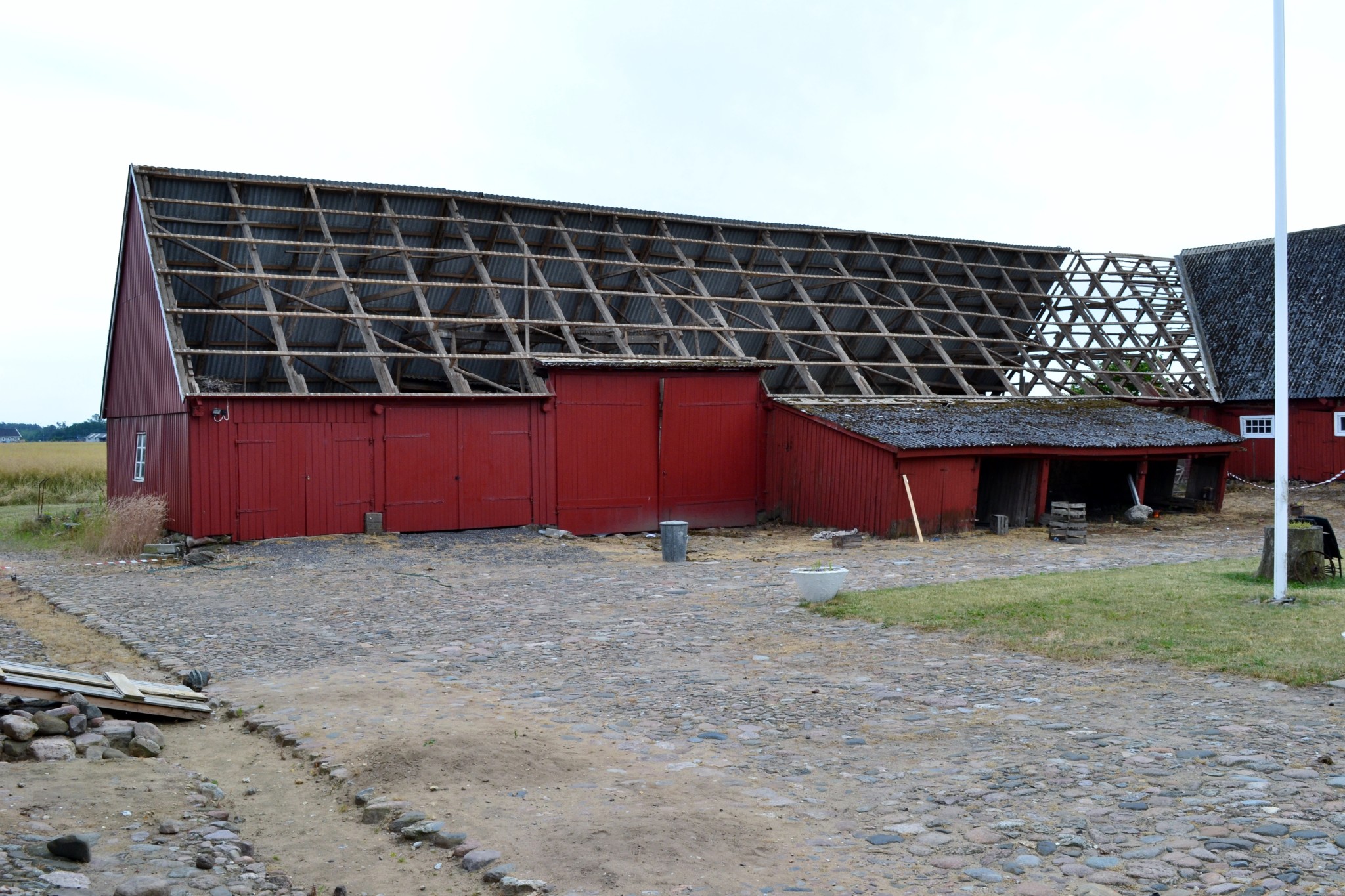
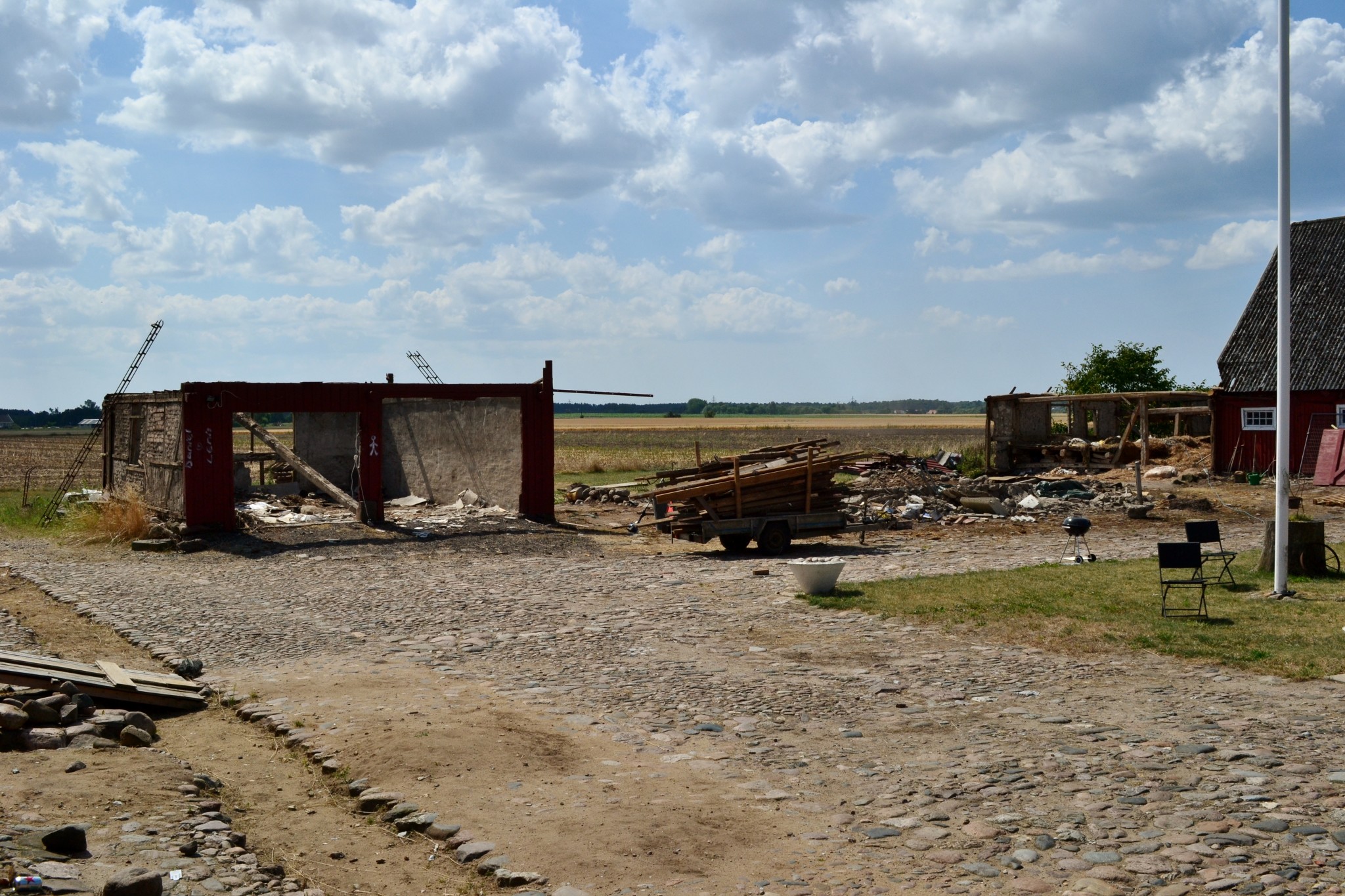
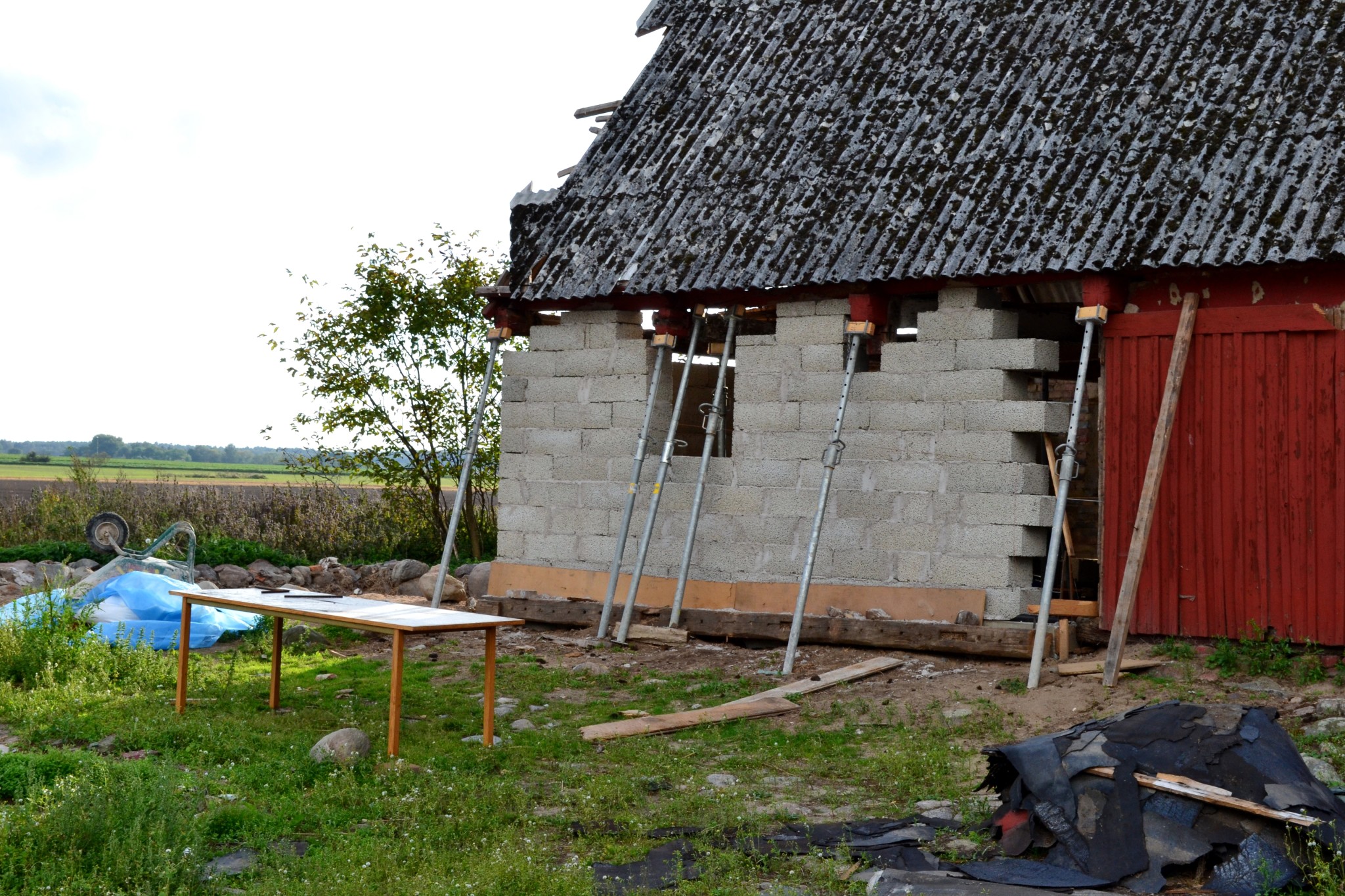
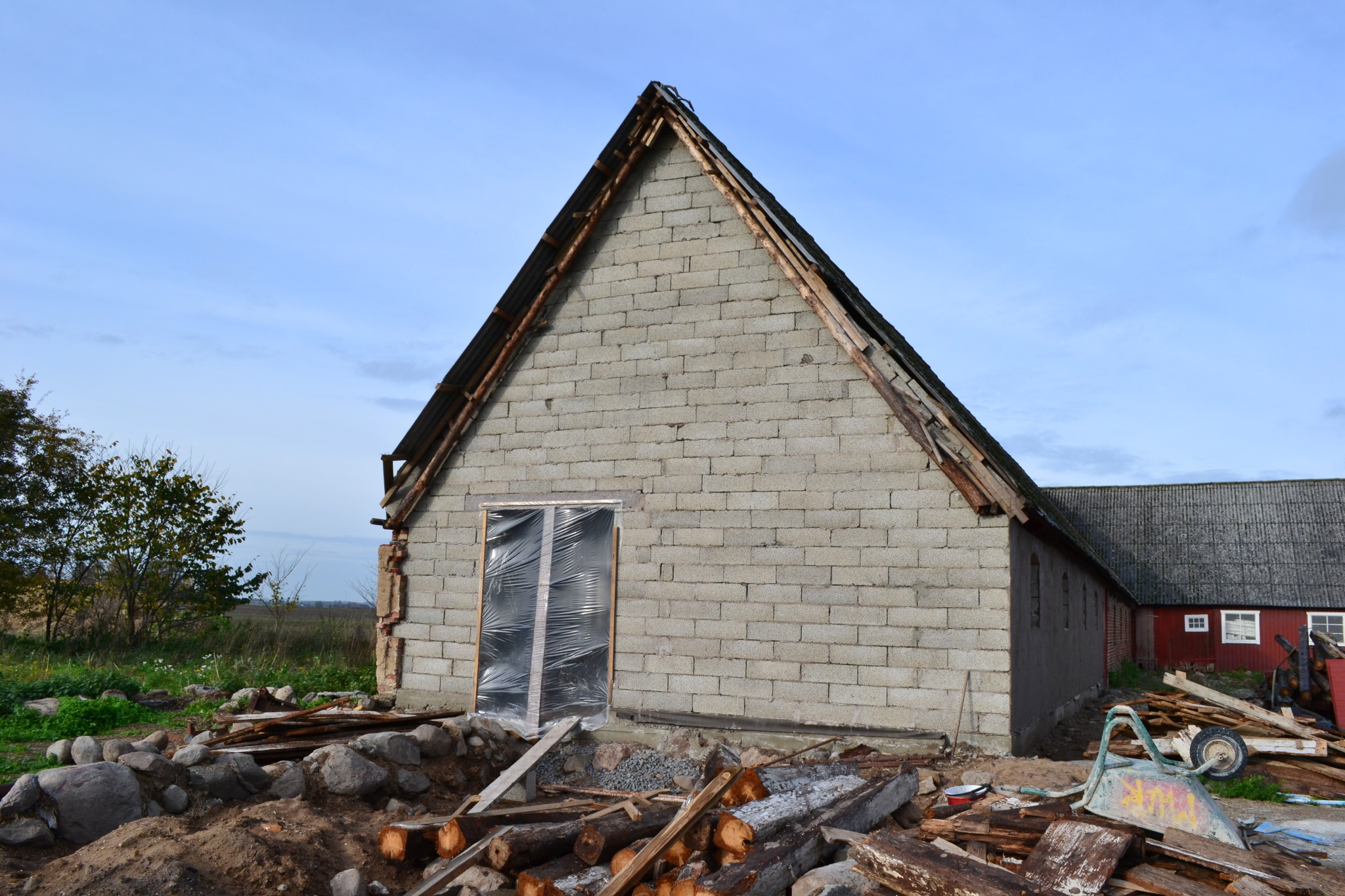
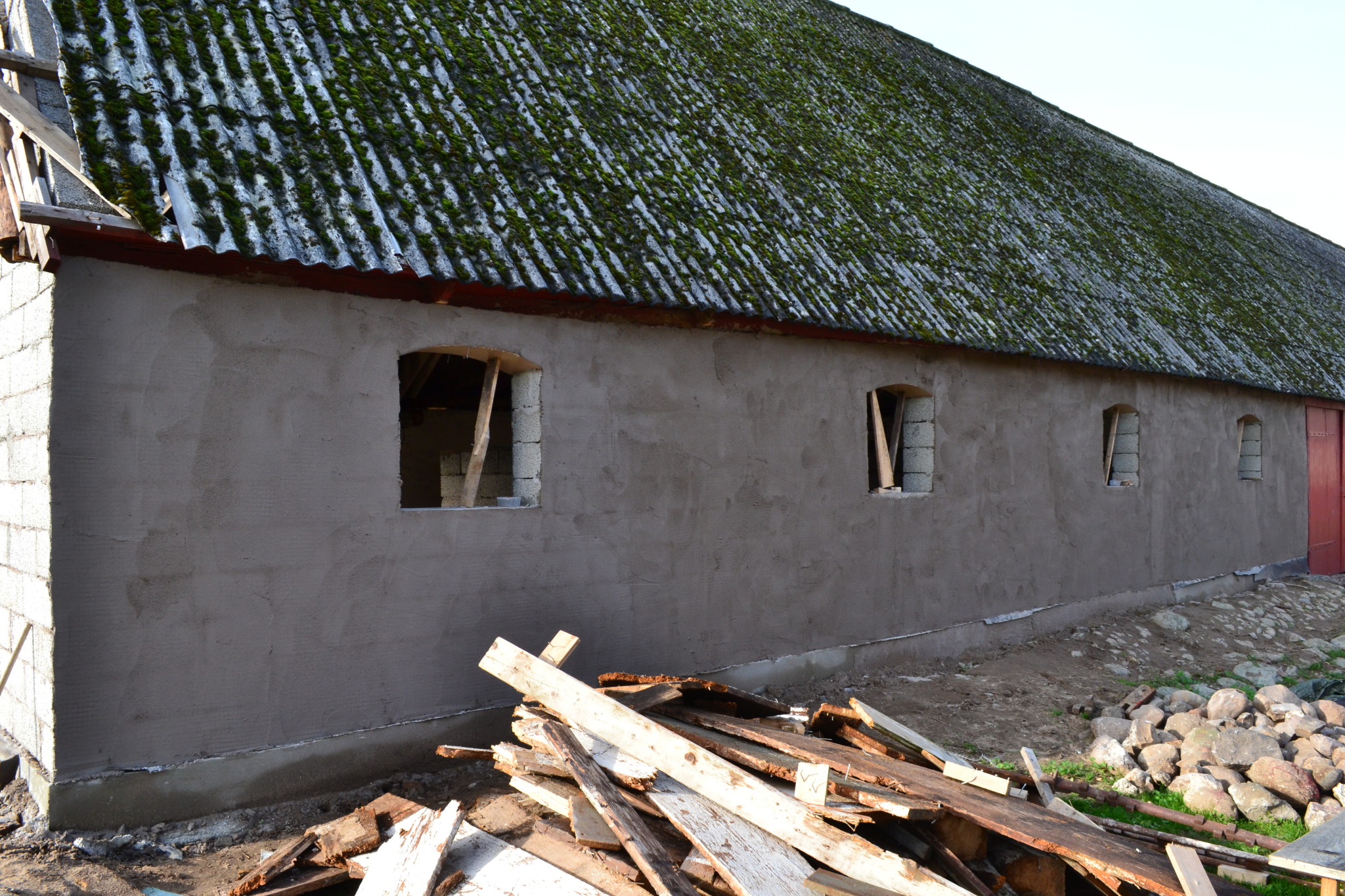
Here is the building, and the mark is where the stable will be and where I want to remove the rafter layer.
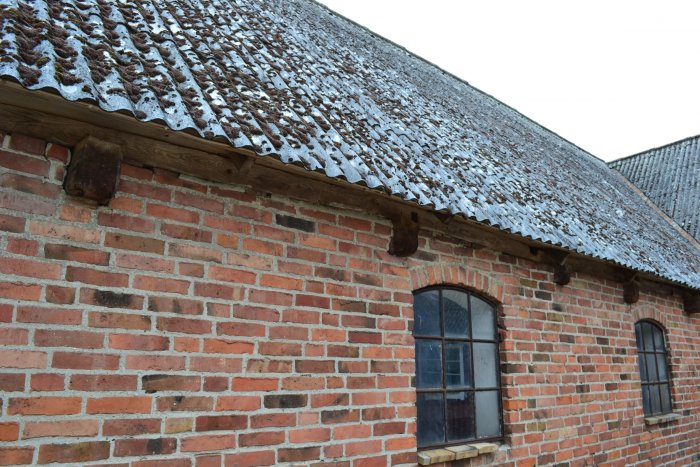
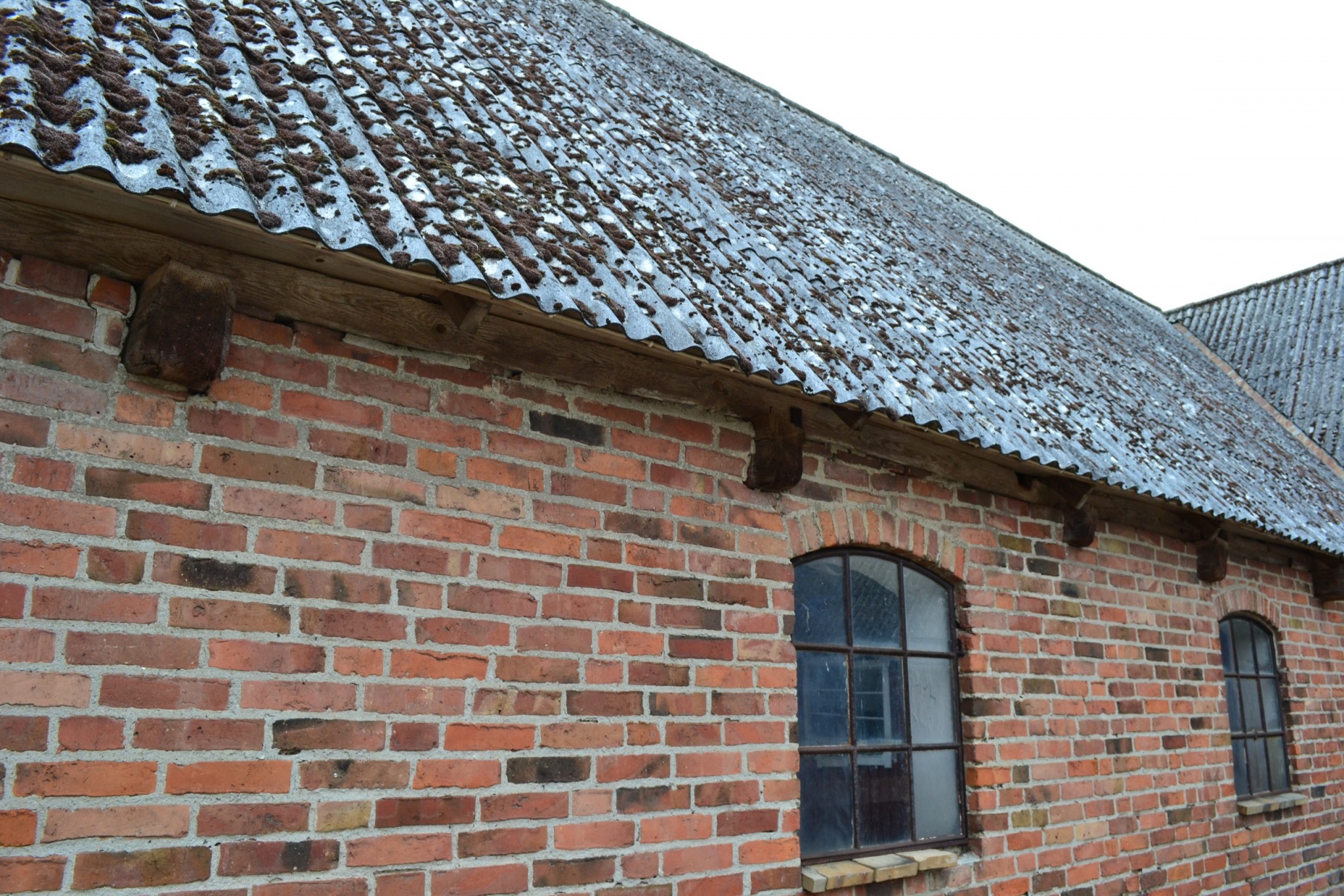
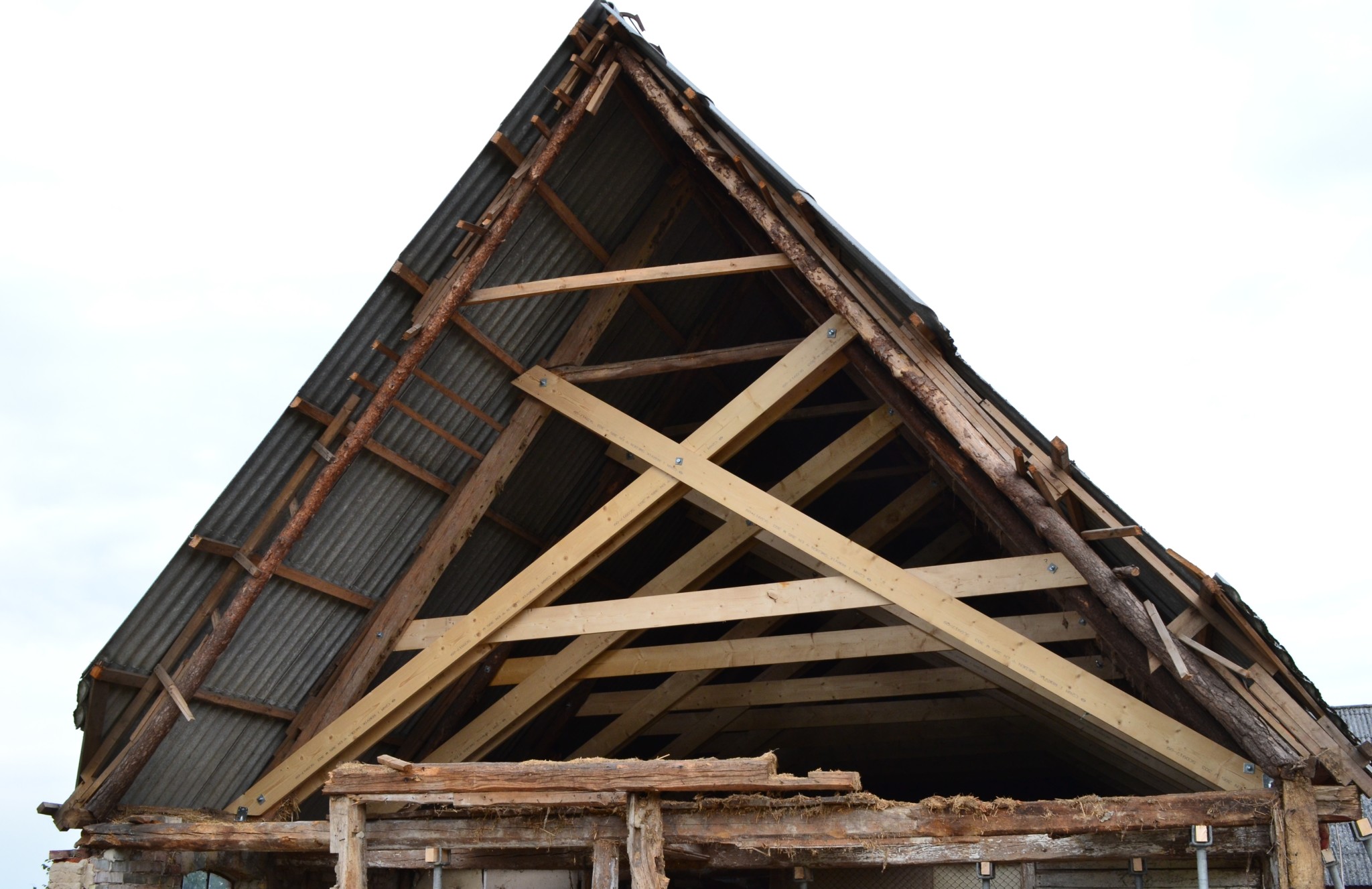
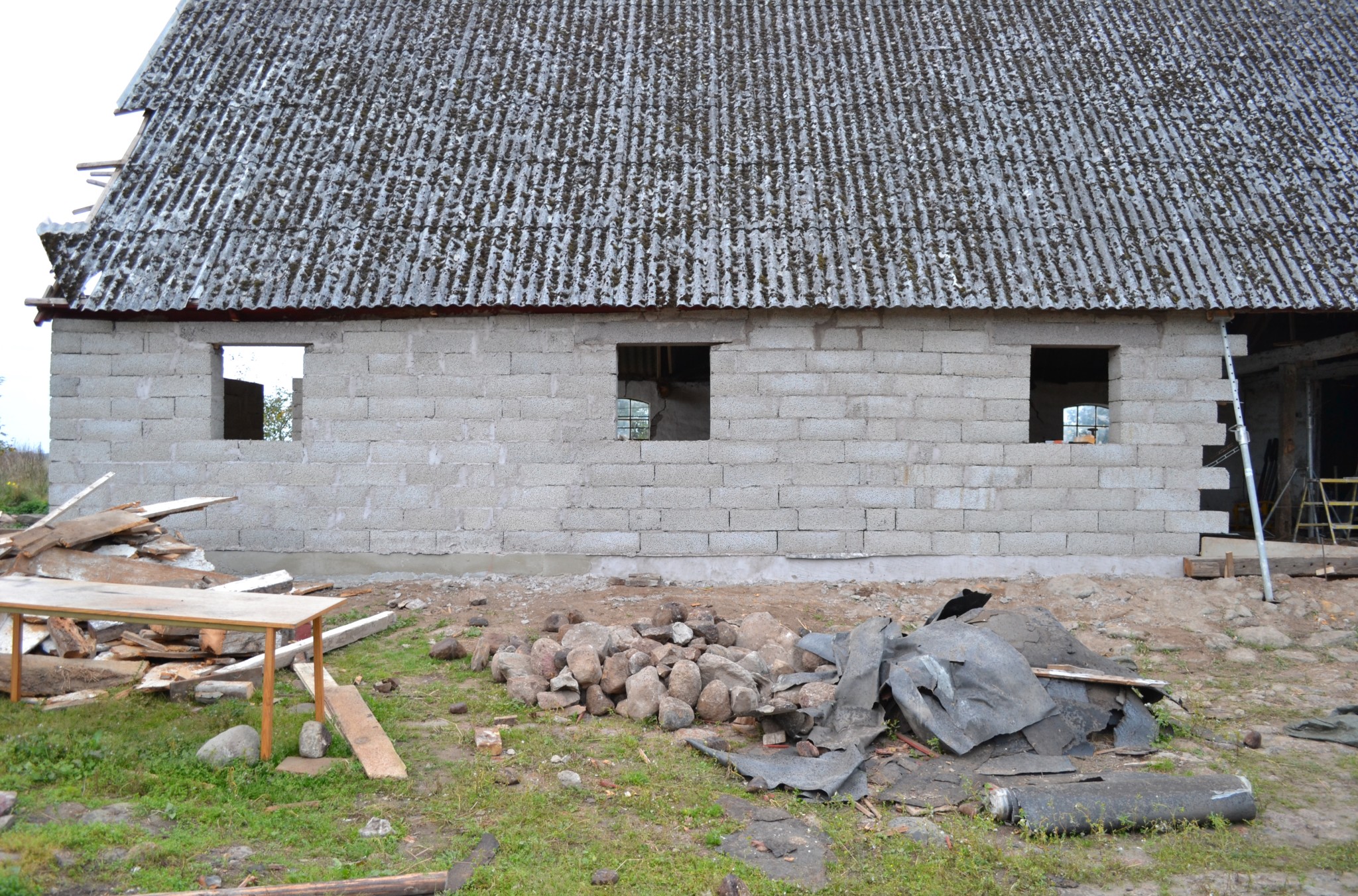
The rafter layer and the carrying beam from the outside...
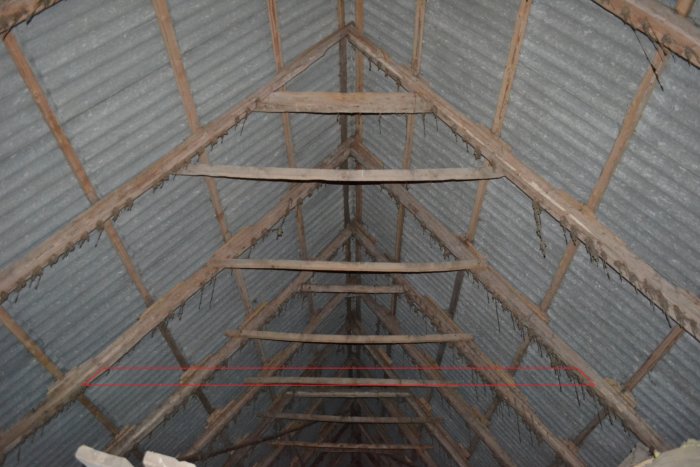
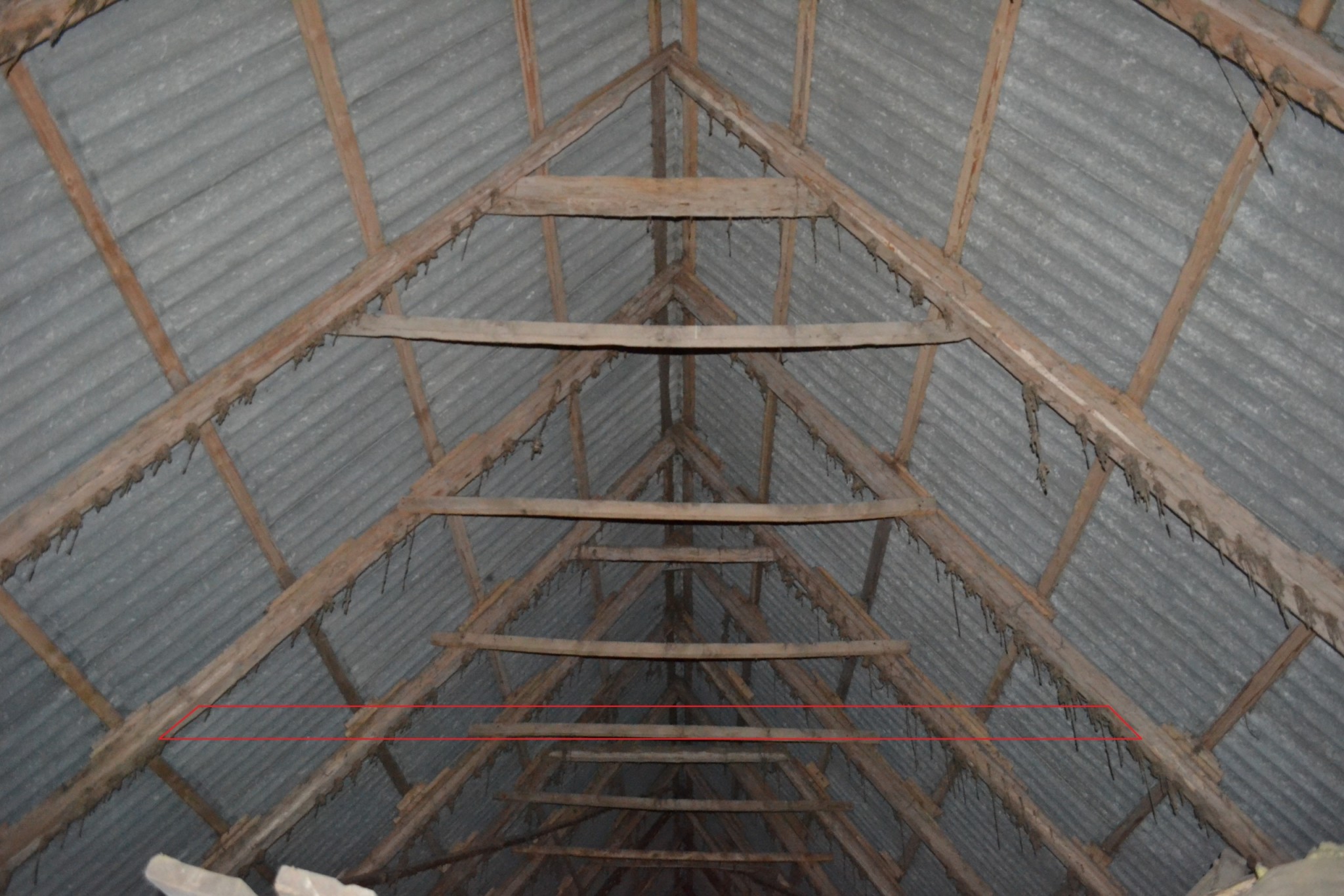
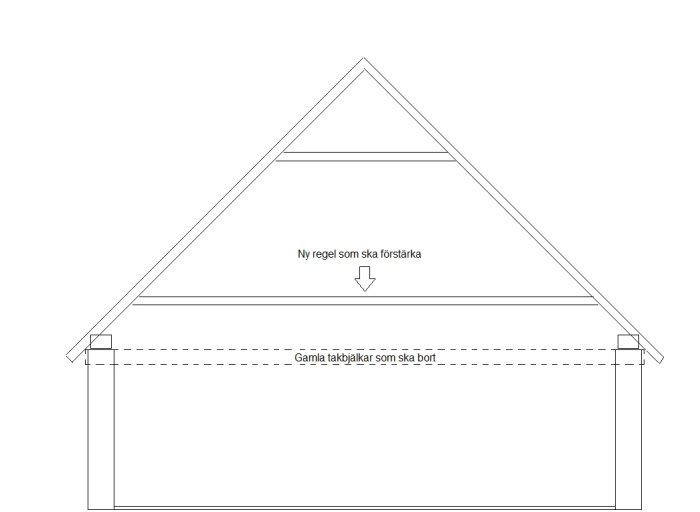
The trusses as they are and the red is a rule that I thought to reinforce each truss with before the removal of the rafter layer.
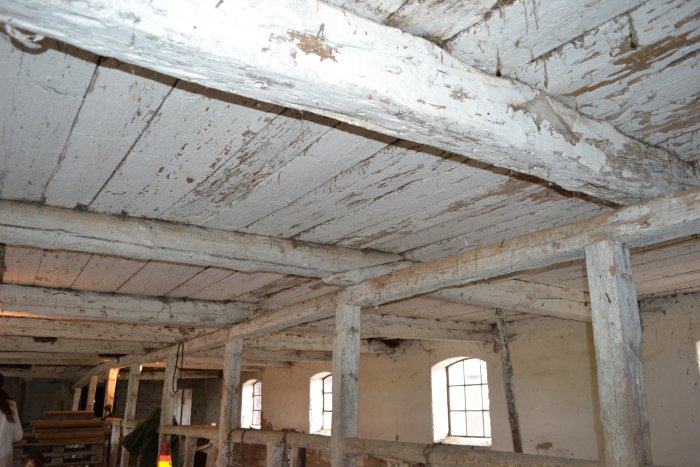
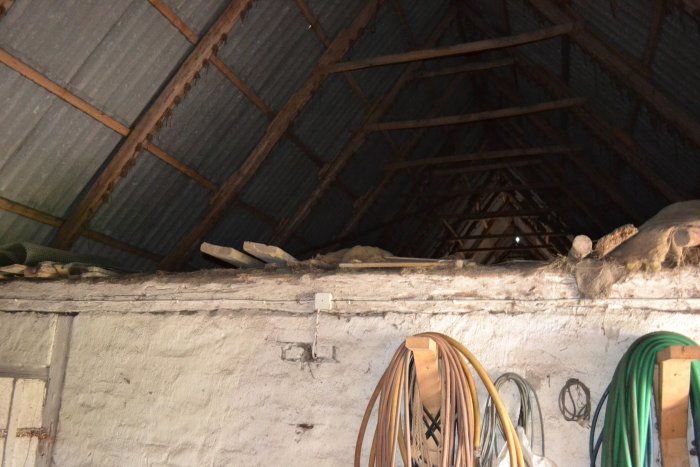
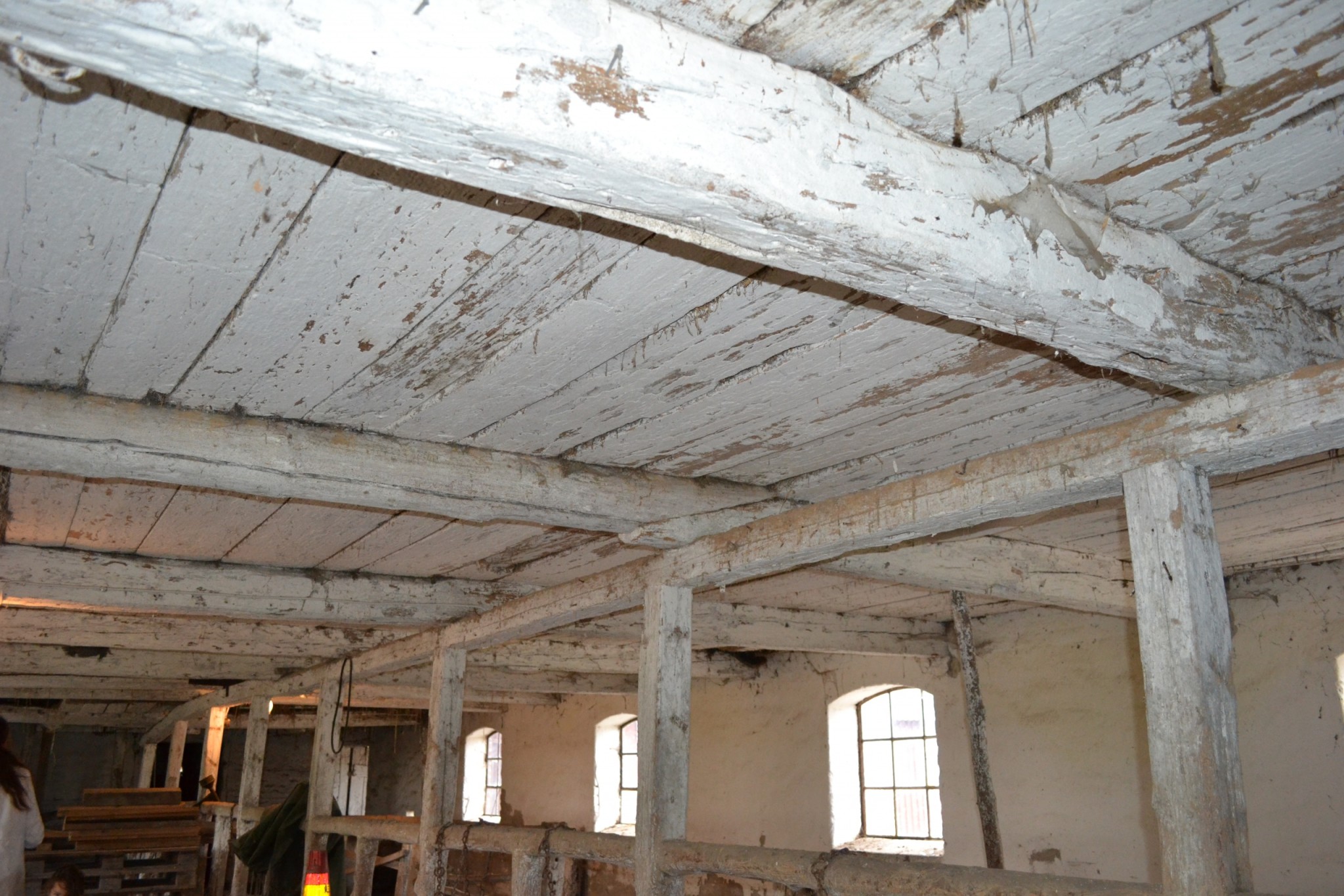
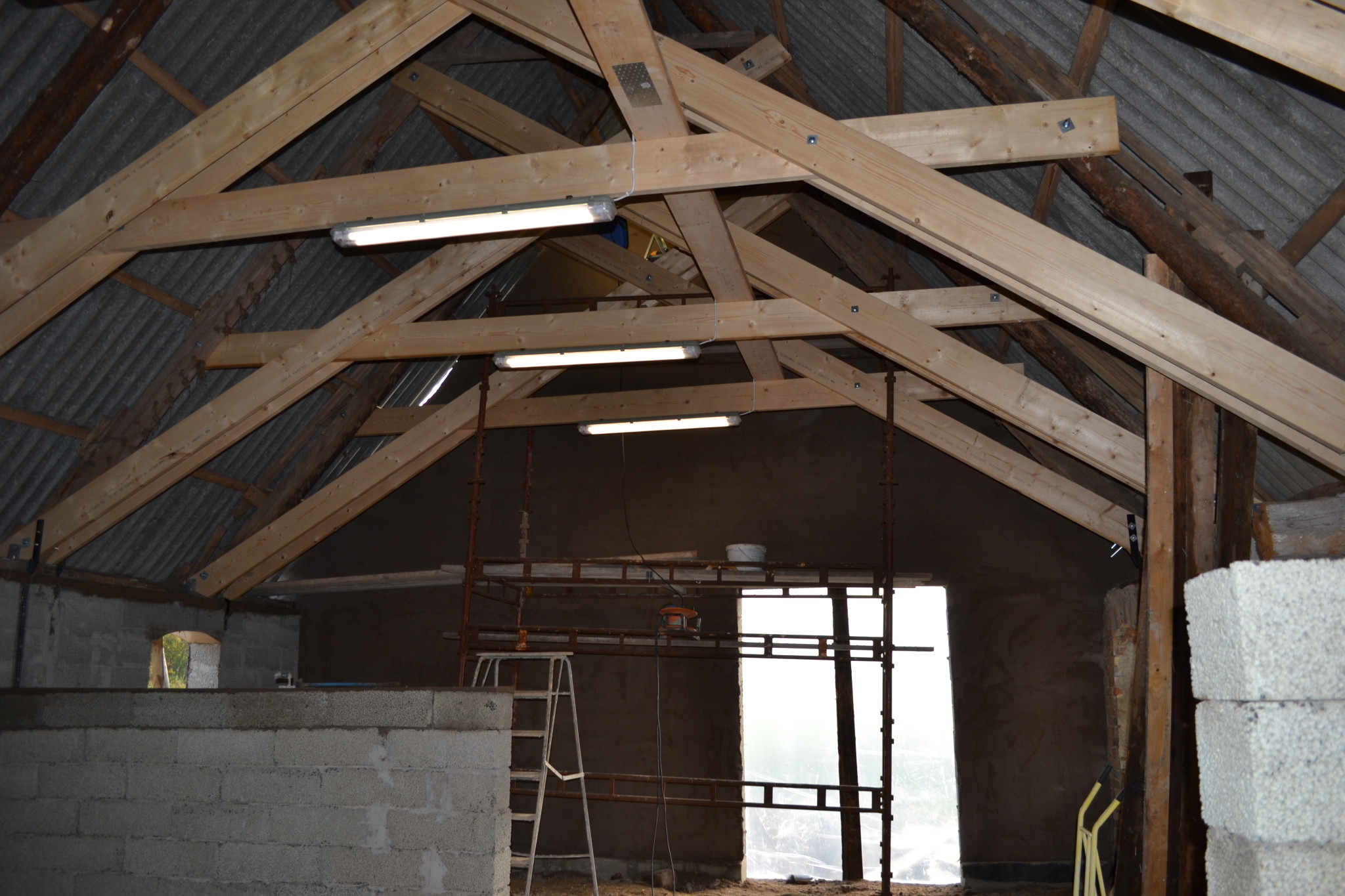
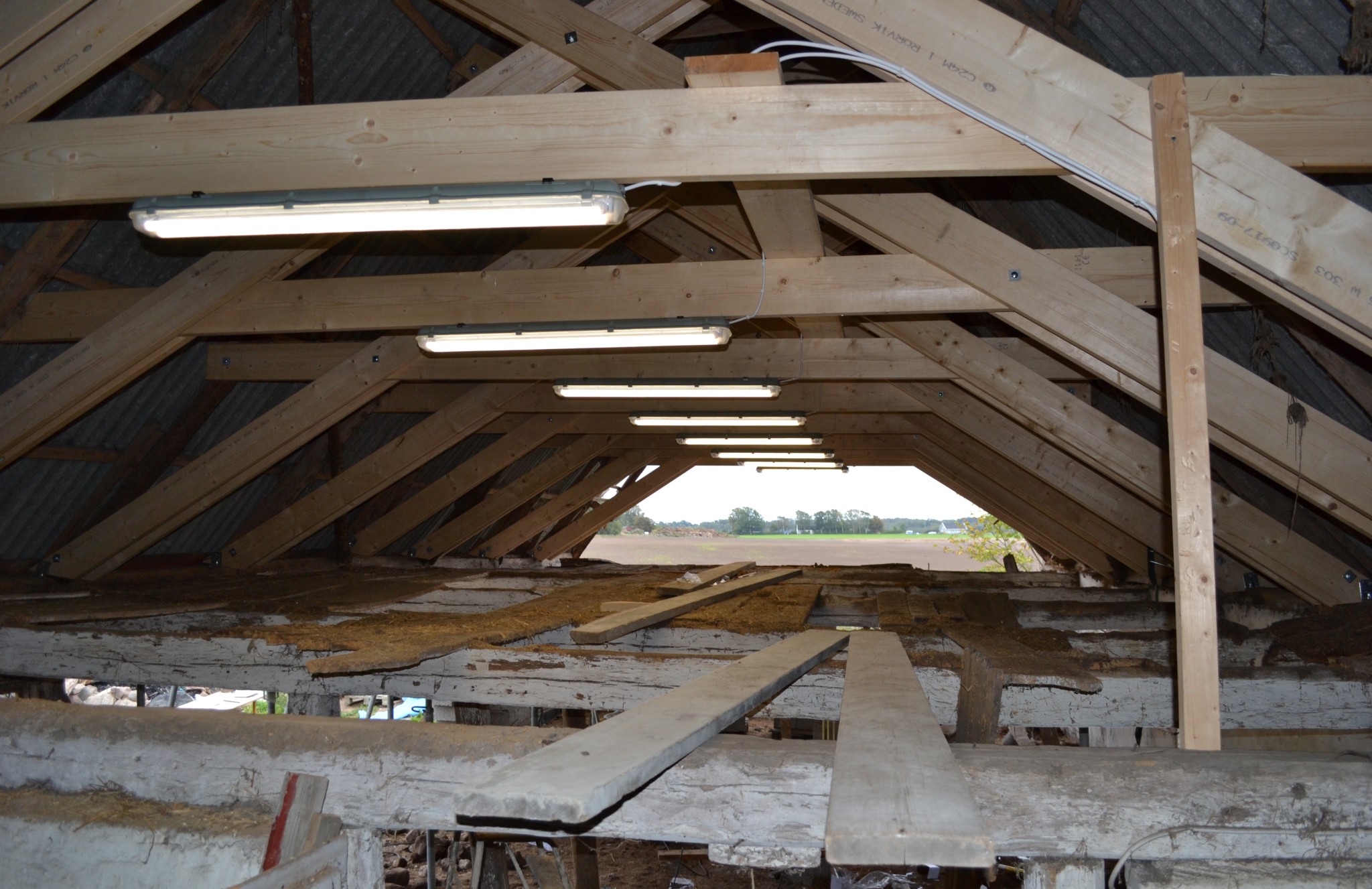
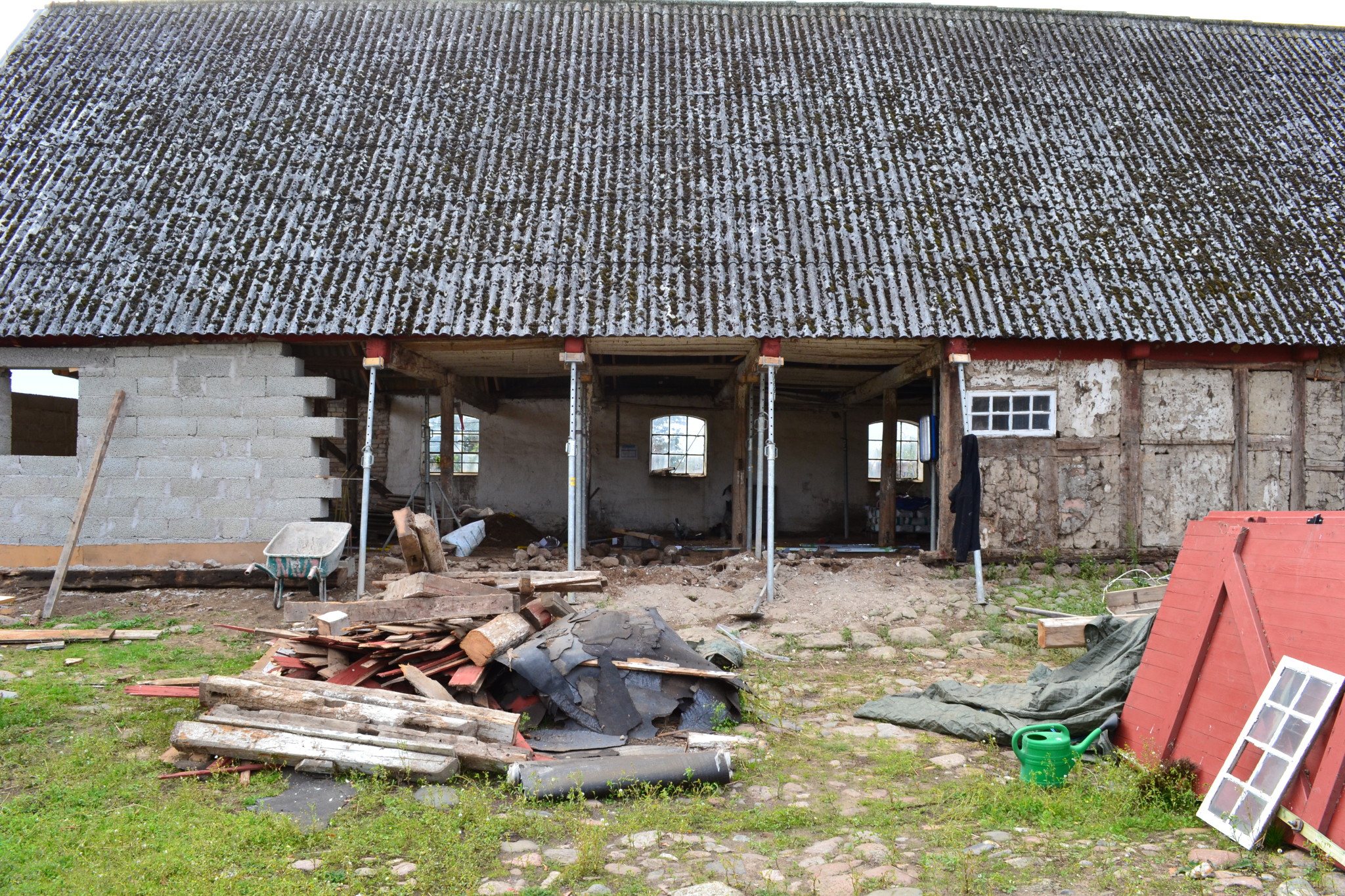
The rafter layer from below...
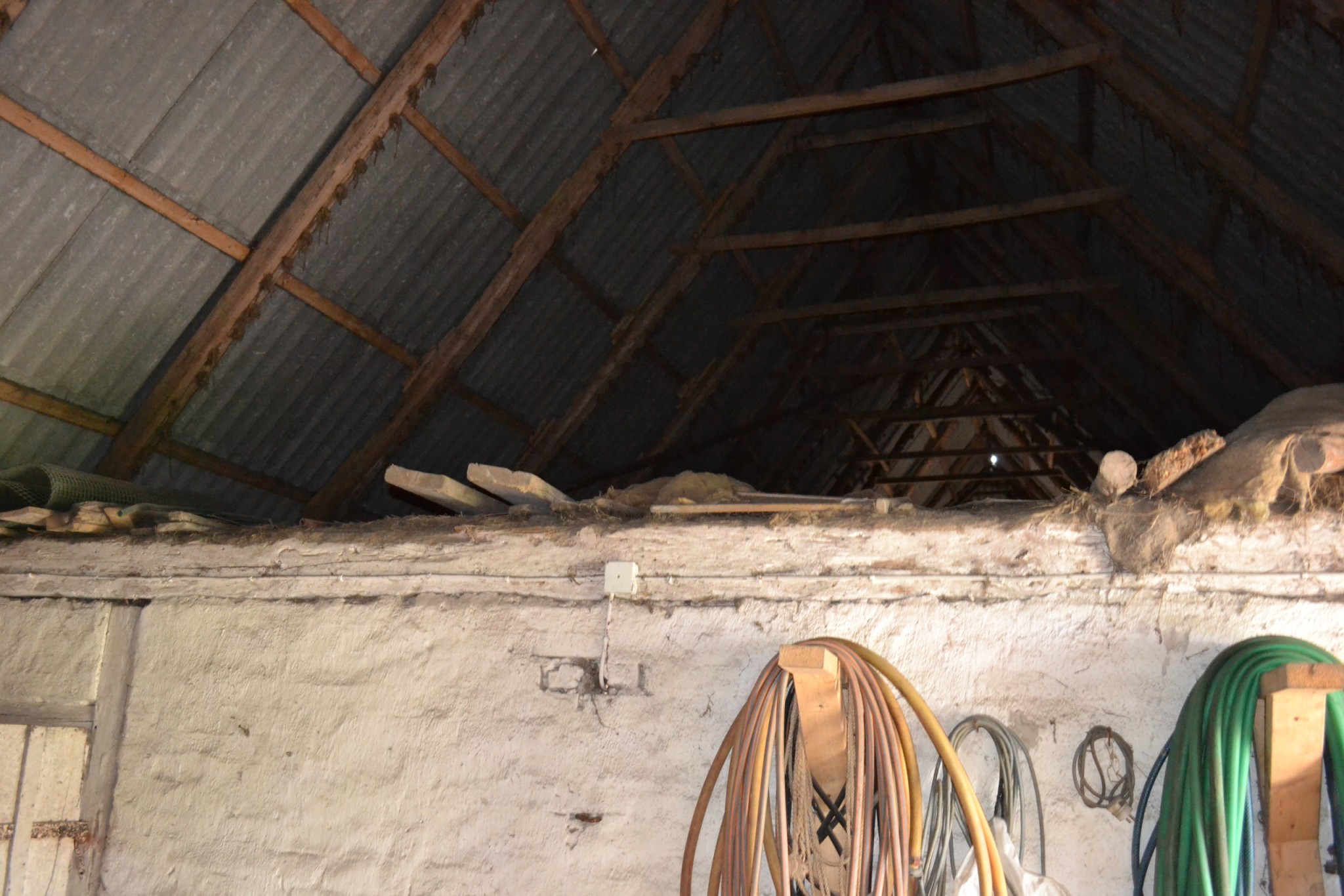
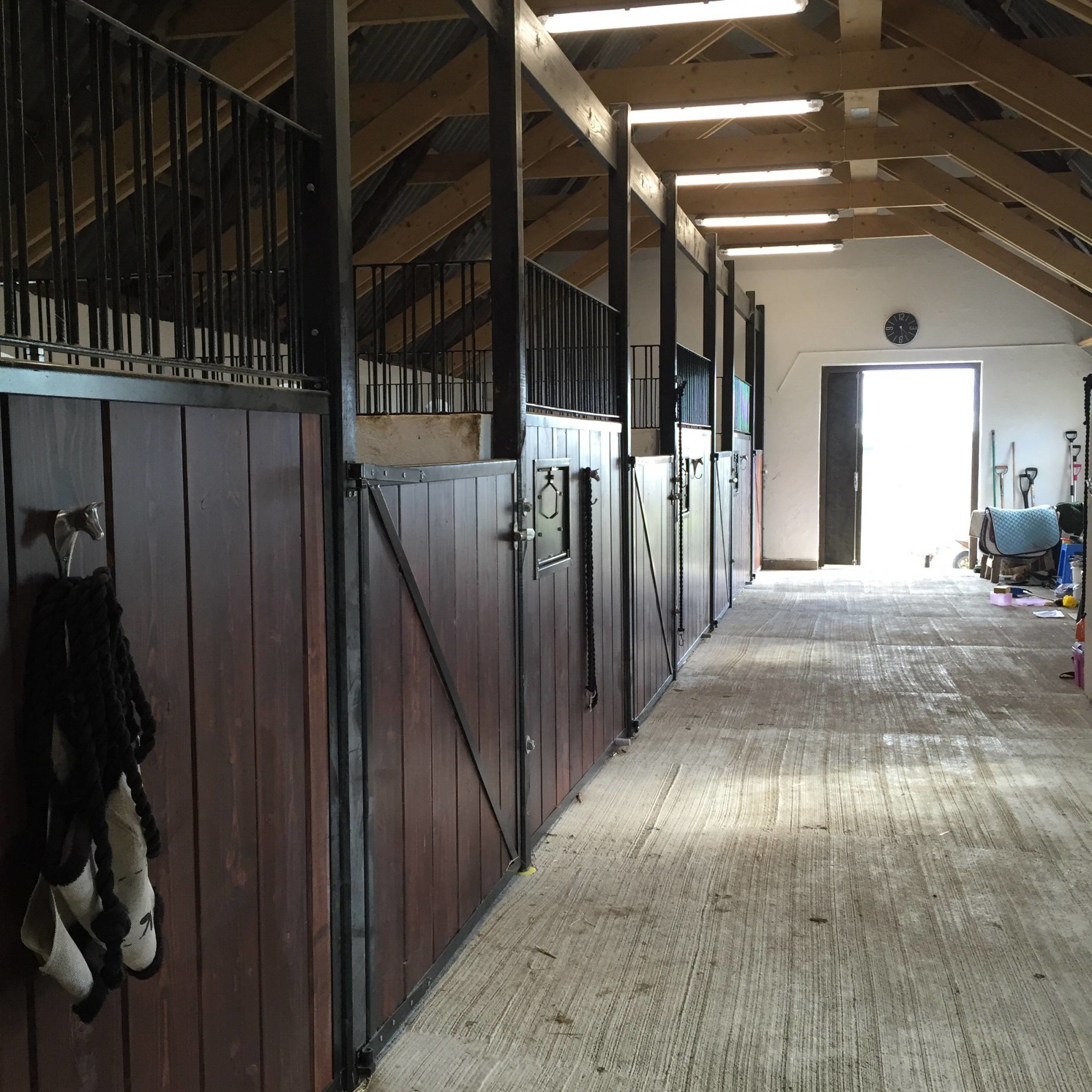
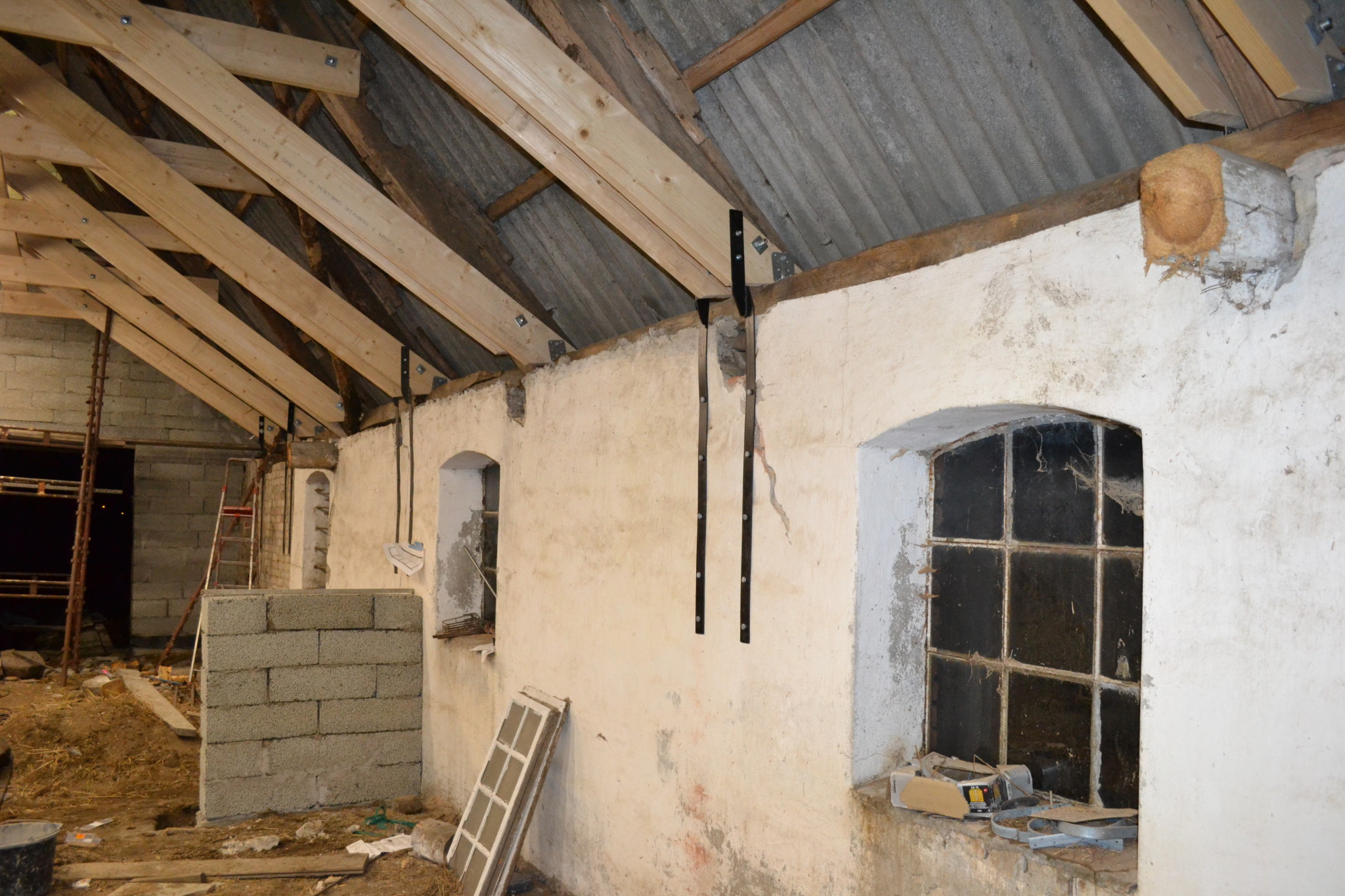
Seen from the middle aisle towards the stable part...
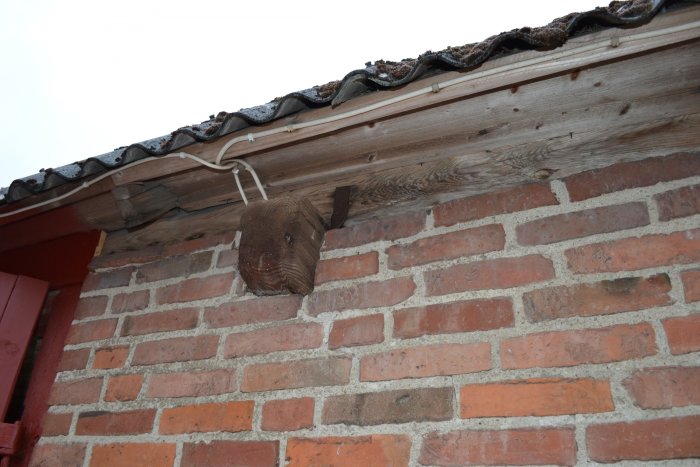
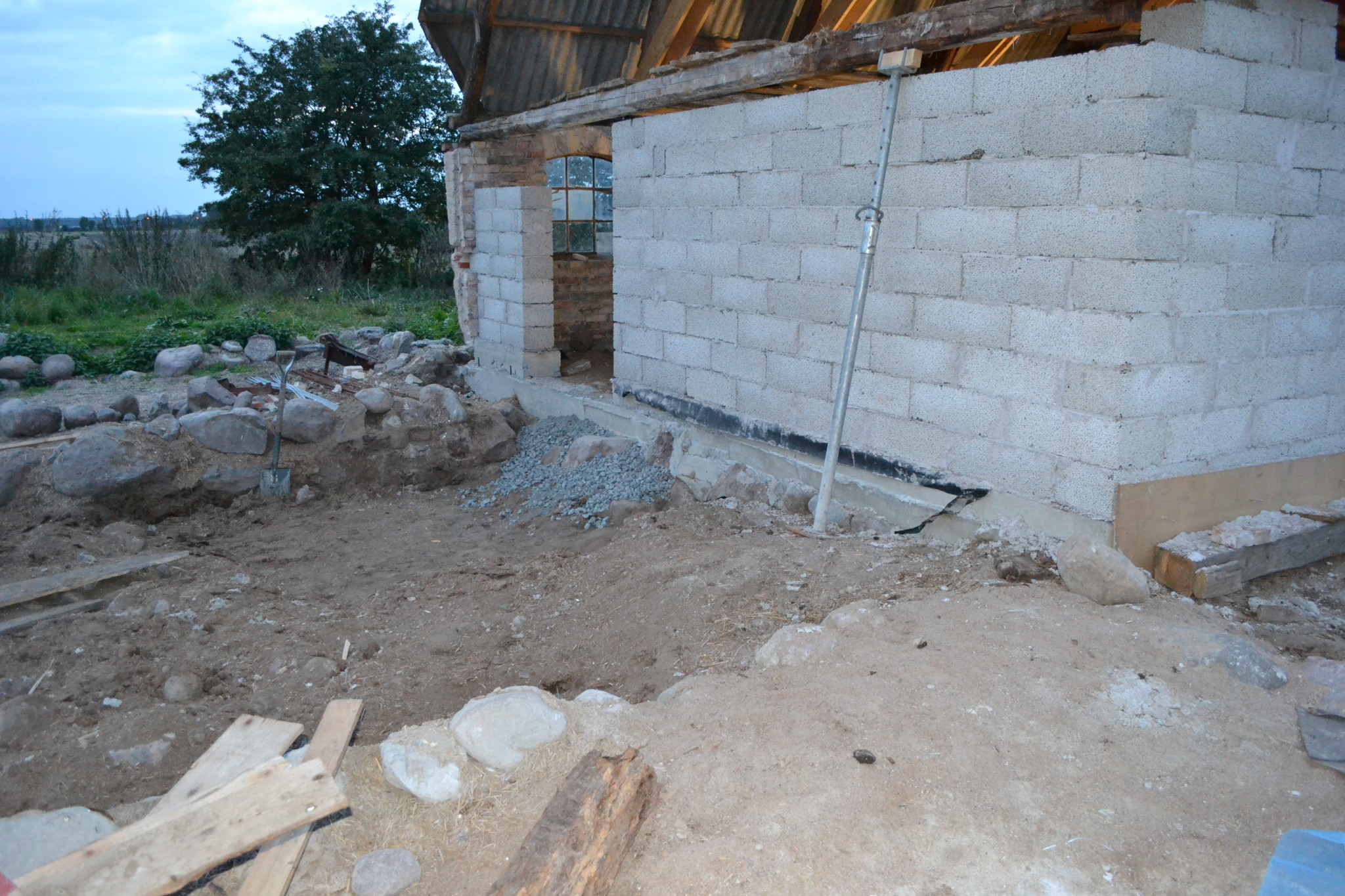
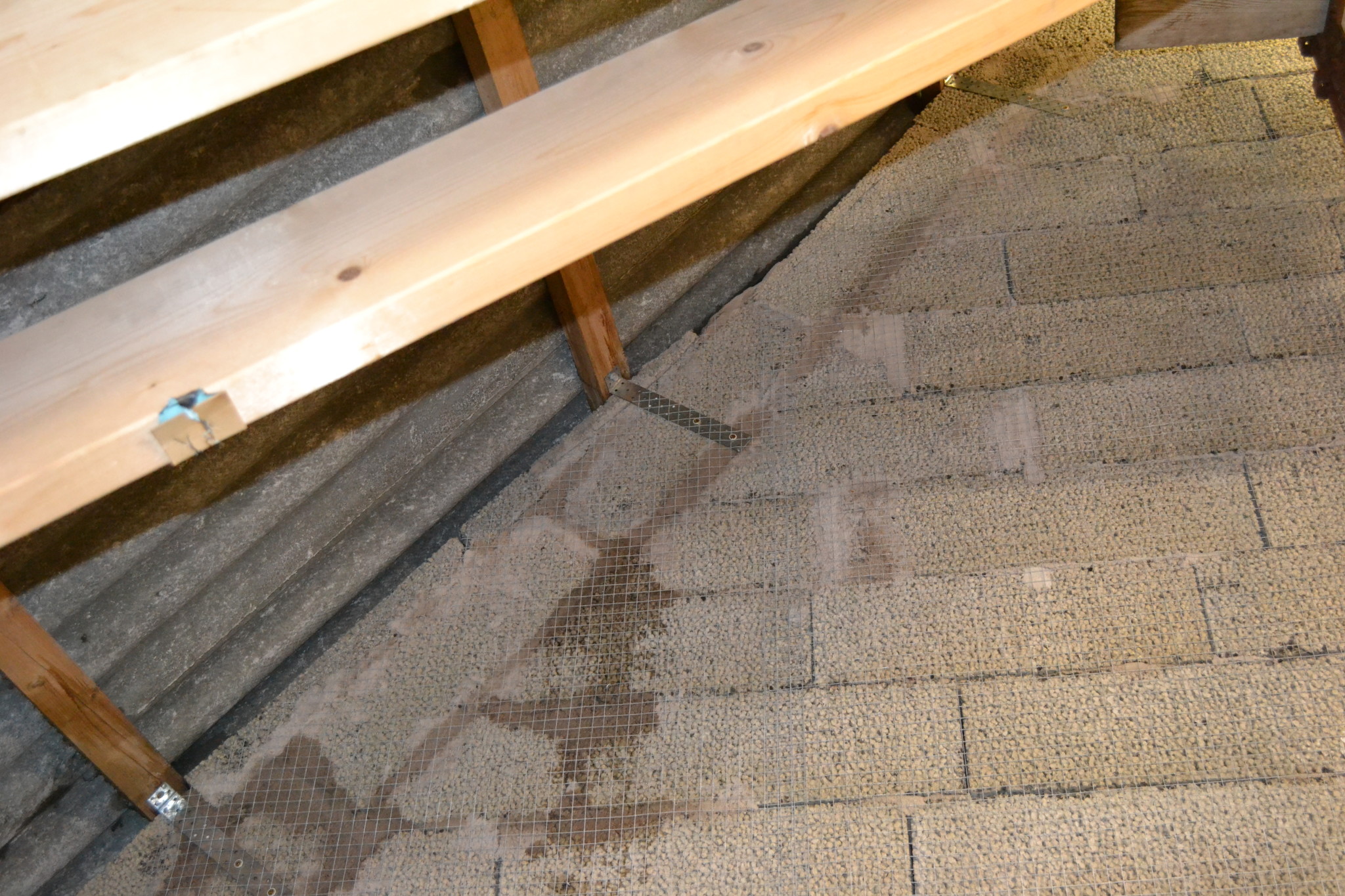
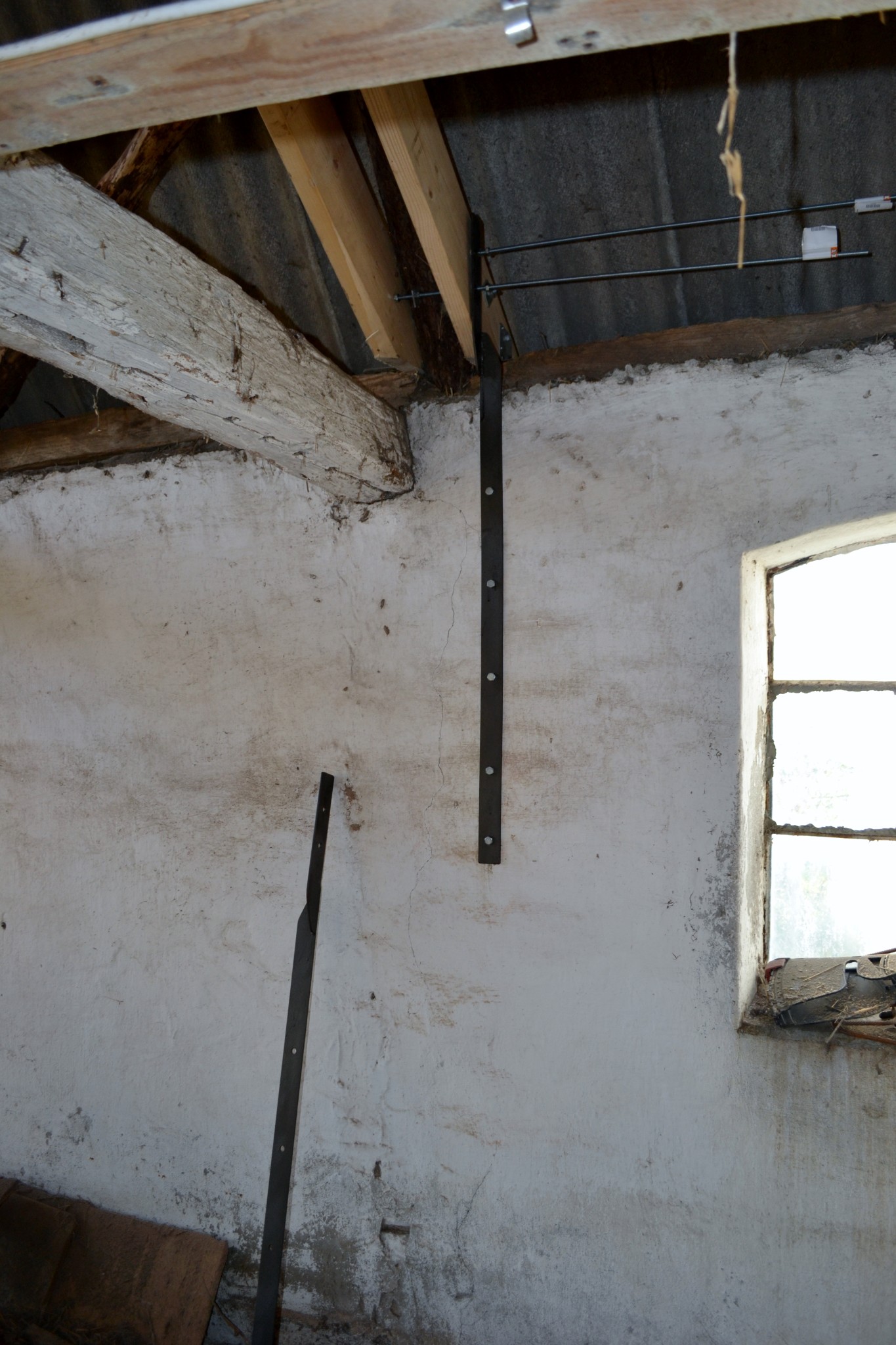
Detail picture
In total, there are about 6 rafters in a row that I want to remove.
Is it just to go ahead, or should one reconsider?
First, check with the municipality what interventions you are allowed to make, as there may be restrictions.
In general, you should not remove the beams as they are part of the truss; they counteract the horizontal forces so the exterior walls don't move outward. I don't think a new beam placed that high up will solve the problem. It won't collapse, but if the wind were to blow strongly at some point, the forces could be quite large, and I wouldn't want anything living under that roof.
One alternative is a "ryggåstak," where beams are placed along the exterior walls, quite high up, to absorb the vertical forces. Under the beams, posts are placed down to solid ground. There are many variations, image search it and you'll see the principle.
But I would have an engineer come over, as this is too risky to guess on.
Now I'm not following you...
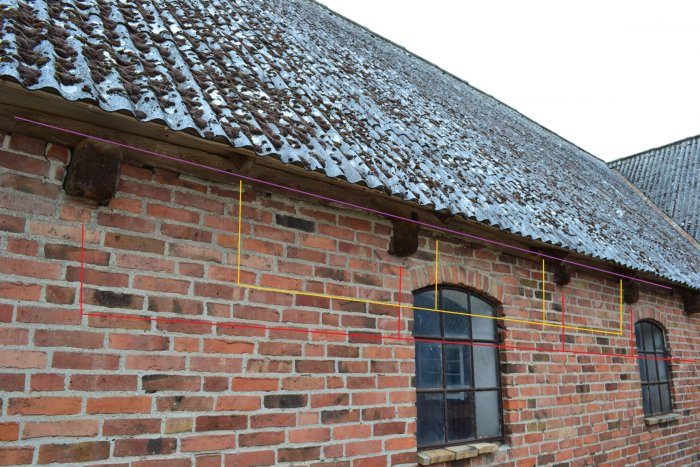
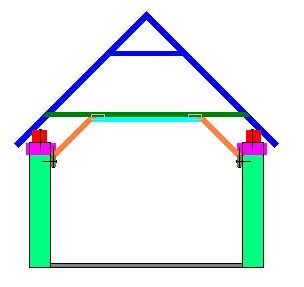
See my image below.
Red = The floor structure (to be removed)
Yellow = Roof trusses
Purple = Support beam
The roof joists are not part of the roof trusses as far as I can see. The roof trusses rest on the support beam.
I might have drawn my reinforcing beams a bit too high, but let's say they land 0.5m above where the floor structure is today, could that work?
See the image for what I have in mind...
If you remove old ceiling beams, you significantly alter the roof truss's structure; moving them up can result in wall movement, which the wall is not designed for. A roof truss is constructed to handle compression/tension loads in all possible directions; it might work with your proposals, but it's unnecessary to take a chance. Bring in someone who can measure dimensions, check the condition of existing roof trusses, etc.
One might think that old houses/barns were built with whatever was available, but there is some thought behind it, which is why you have rather slender beams, but the current construction allows for this.
It is built according to the timber-framing principle. The rafters fasten/lock the load-bearing beam so that it and the walls do not move outward. These are old, genuine things, so the dimensions are substantial, which means that the rafters don't need to be in connection with the roof trusses, but the function is exactly the same as in today's roof trusses.
I assume you plan to place the new beam/rafter so that you get a reasonable ceiling height, about 240-250cm, and then lay a new attic floor? Then it will be roughly as you say, about 50 cm above the current level. In principle, you should be able to do as you think, but you will get increased loads on the lower parts of the roof truss legs. There will no longer be only compressive forces along with them, but also buckling forces. Probably, these old substantial roof trusses in the sturdy old timber are comparable to steel beams, but that presupposes that they are healthy, i.e., no rot and no woodworm. The weight/load is not so severe since the roof is relatively light and slopes significantly so that there are no large snow loads. But you probably shouldn't expect to be able to switch to clay or concrete tiles. Regardless, you don't want to take chances and risk your life. Try to consult a designer who knows their stuff thoroughly, i.e., has practical experience with old buildings/renovations and knows the history of the wood and construction theory thoroughly and only needs paper and pencil to sort out everything.
I myself live in a Skåne farm where the roof of the stable is raised. However, I believe it was done by taking down the roof. In our case, the roof trusses are now a combination, where the old roof truss legs are connected with a new rafter in the same way as a modern homemade roof truss looks. If there was a load-bearing beam, it is now gone and replaced with a 10x10cm wall plate on top of the wall/walls. The wall plate provides the final 10 cm extra ceiling height. That is, as in your sketch, but the new beam lies directly on top of the load-bearing beam.
Nice shed!
What do you plan to store in the new loft?
How wide is the shed?
I don't think the latest suggestion helps.
It's likely the roof truss needs to be reinforced from the support at the wall up to a few meters above your new joist as it will be subjected to a bending it wasn't originally designed for.
Moving up the subframe (the green one) should work, you can also reinforce the lower part of the rafter (the blue one) by adding an extra plank on each side, which should then extend past the connection point for the subframe.
The subframe acts as a tension rod and prevents the "legs" of the truss from pushing out the walls. If you move it up, the truss will break where green and blue meet, hence reinforcing the rafters (blue).
But I would also advise at least consulting with an engineer who has performed similar work.
The last variant works as you've essentially raised the wall, making it even stronger than the original but reducing the interior space.
The brown after the leg, could that be iron? It's not needed. The span of the truss has decreased.