But that's good. Bathrooms and toilets are "heavy" rooms that need reinforcement underneath.
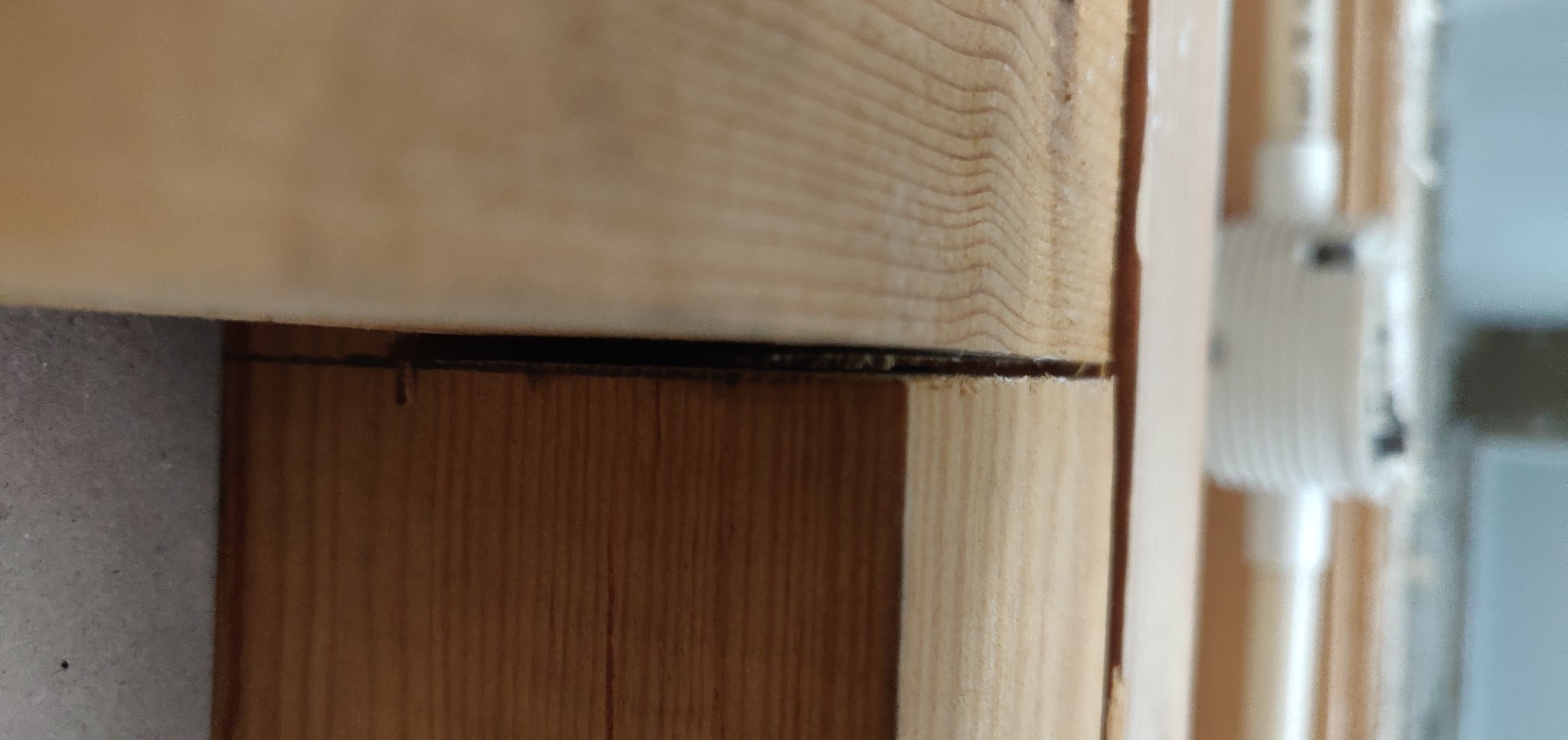
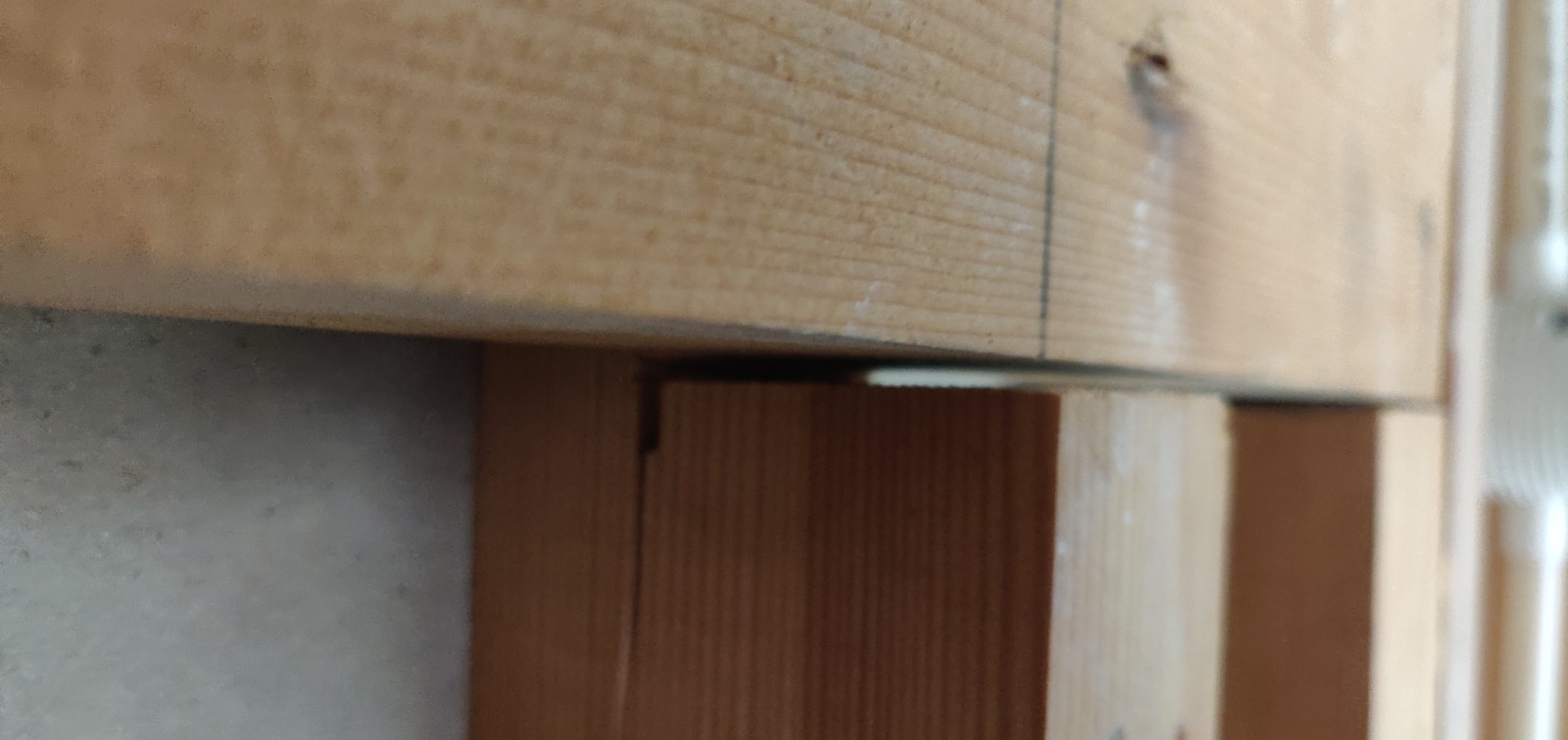
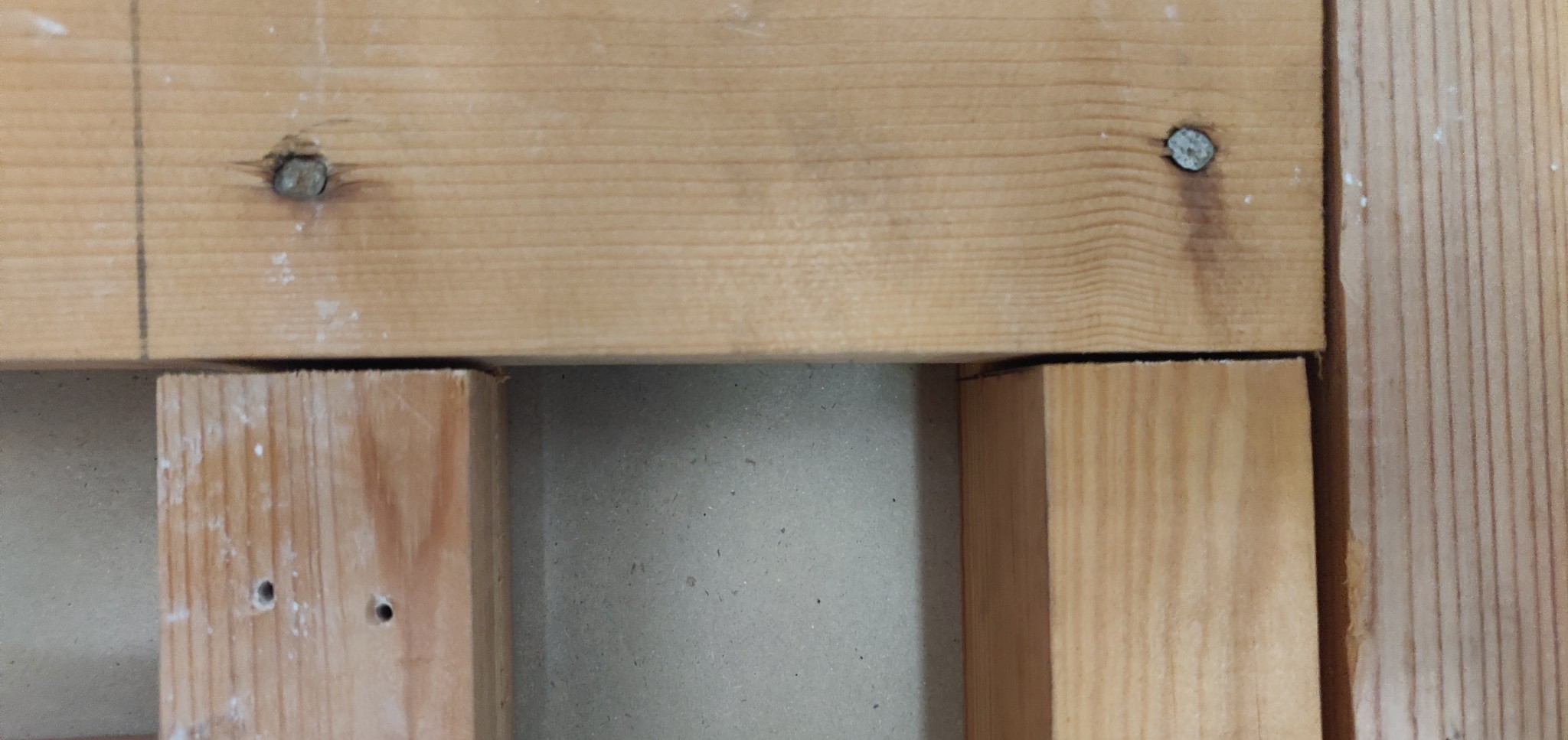
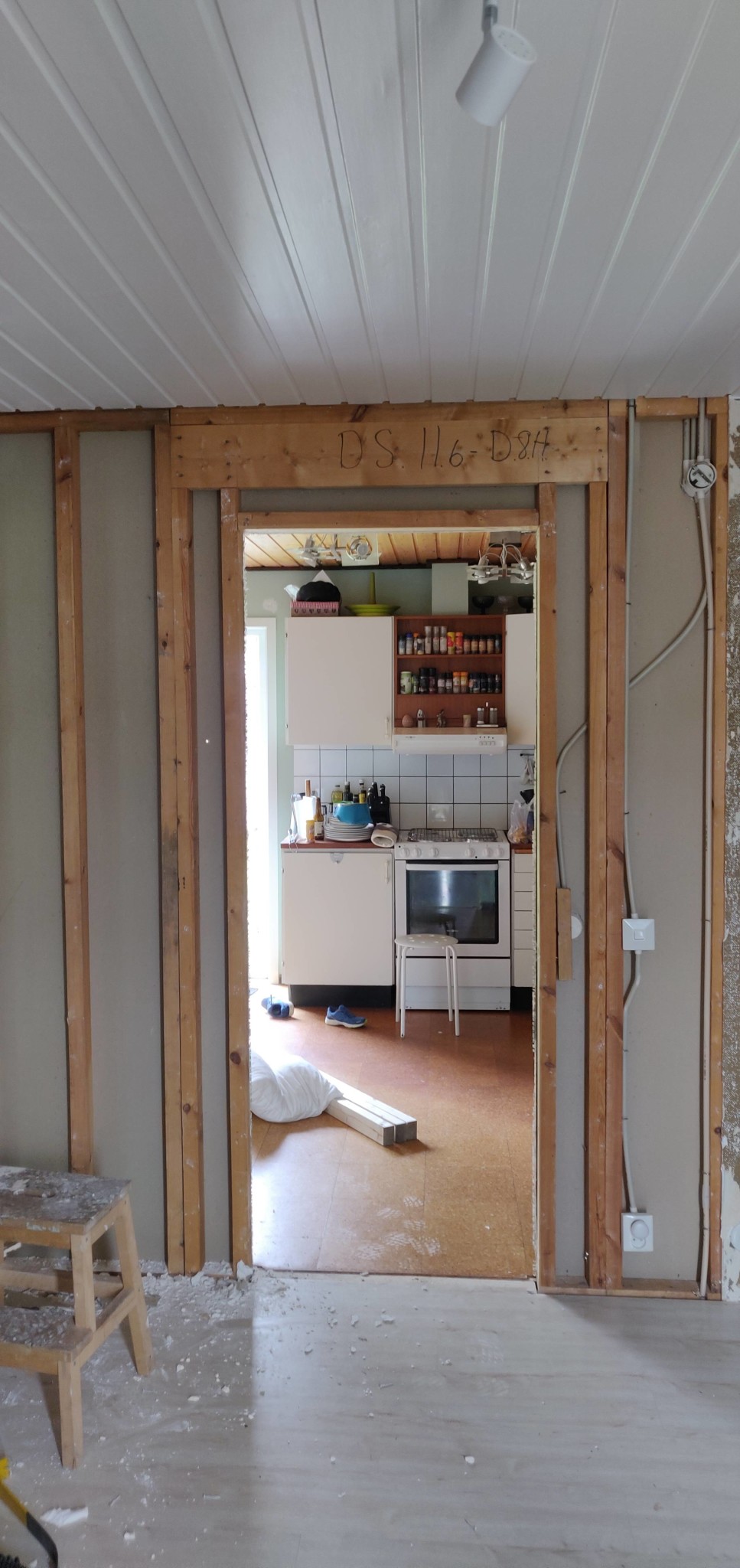
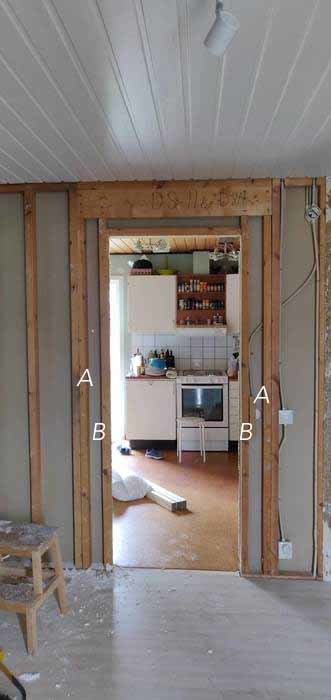
It might be an optical illusion, but in your photos, it looks like there's a small gap between the beam and the two standing studs on the right, at least on the one you want to remove. If that's the case and the beam is hanging on the two nails, it's also a sign that the stud isn't bearing much load...
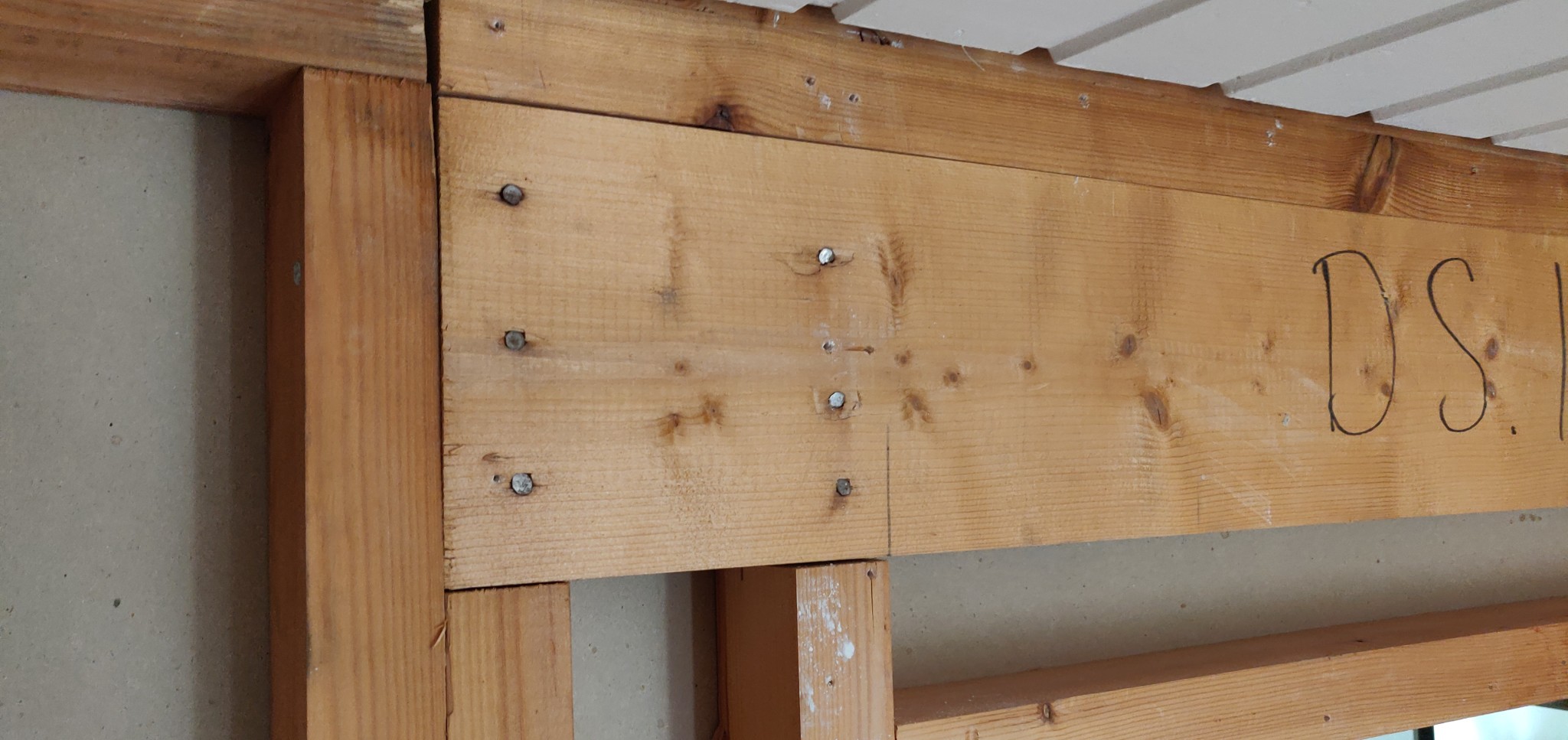
The beam is nailed into both studs, at least it looks like the stud is notched. It should still be possible to remove it as it is supported by the next stud. Possibly screw this stud into the 3rd one.
Theoretically, it is not possible to determine from the images which of the standing studs are load-bearing. It could, by the way, be both. It is likely fine to remove the left one, but it's not difficult to check if that's really the case. What are the dimensions of the beam and the studs, and how long is the beam? The loads can be easily calculated using the floor plans.
Theoretically, it is not possible to say from the images which of the standing studs is load-bearing. It could be both, for that matter. It is likely okay to remove the left one, but it's not difficult to check to make sure that's the case. What are the dimensions of the beam and the studs, and how long is the beam? The loads can easily be calculated with the help of the floor plans.
Need to remove more gypsum and get back with the length of the beam.
Are both studs load-bearing you mean? Do you attach door frames to load-bearing studs?
Yes, both studs are load-bearing. Yes, doors are attached to load-bearing studs, imagine an exterior wall where all studs are load-bearing and there you attach both windows and doors.
Theoretically, it's not possible to tell from the images which of the standing studs is load-bearing. It could also be both. It's likely fine to remove the left one, but it's not difficult to check if that's actually the case. What are the dimensions of the beam and studs and how long is the beam? You can easily calculate the loads using the floor plans.
From a span perspective, you can remove the studs closest to the door. However, it is doubtful whether the remaining studs are sufficient for the vertical loads. This depends on the strength class. The simplest solution is to screw on an additional stud on each side. Alternatively, replace with studs of a higher class (at least C 24).
From a span perspective, you can remove the studs closest to the door. However, it is questionable if the remaining studs are sufficient for the vertical loads. It depends on the strength class. The simplest solution is to screw in an additional stud on each side. Alternatively, replace with higher classed studs (at least C 24).

Sockerhög said:
But that's good. Bathrooms and toilets are "heavy" rooms that need reinforcement underneath.