

I need help so I'm trying to post it in this forum instead. The other thread can be removed.
It's time to start reinsulating the roof of the conservatory. This raises questions about the best way to do it.
Previously, there were panels on the inside of the roof and on top there was insulation all the way up against the sheathing. The roof is flat and consists of felt.
Now the questions are about the best way to build it up.
Above the windows, the roof extends with a 20 cm overhang where it's open directly outward. (See pictures)
My idea is the following:
Vapor retarder all the way out, even in the overhang.
Above the vapor retarder, mineral wool in boards filling the entire space.
Below the vapor retarder, batten and gypsum.
There is no air gap today and there wasn't one before. I hope the roof can breathe with the help of the vapor retarder. But is it risky to place insulation all the way up against the sheathing anyway?
If you were to install a vapor barrier, you would trap any moisture between the felt and the barrier, which can't be good.
Grateful for all the help.
It's time to start reinsulating the roof of the conservatory. This raises questions about the best way to do it.
Previously, there were panels on the inside of the roof and on top there was insulation all the way up against the sheathing. The roof is flat and consists of felt.
Now the questions are about the best way to build it up.
Above the windows, the roof extends with a 20 cm overhang where it's open directly outward. (See pictures)
My idea is the following:
Vapor retarder all the way out, even in the overhang.
Above the vapor retarder, mineral wool in boards filling the entire space.
Below the vapor retarder, batten and gypsum.
There is no air gap today and there wasn't one before. I hope the roof can breathe with the help of the vapor retarder. But is it risky to place insulation all the way up against the sheathing anyway?
If you were to install a vapor barrier, you would trap any moisture between the felt and the barrier, which can't be good.
Grateful for all the help.

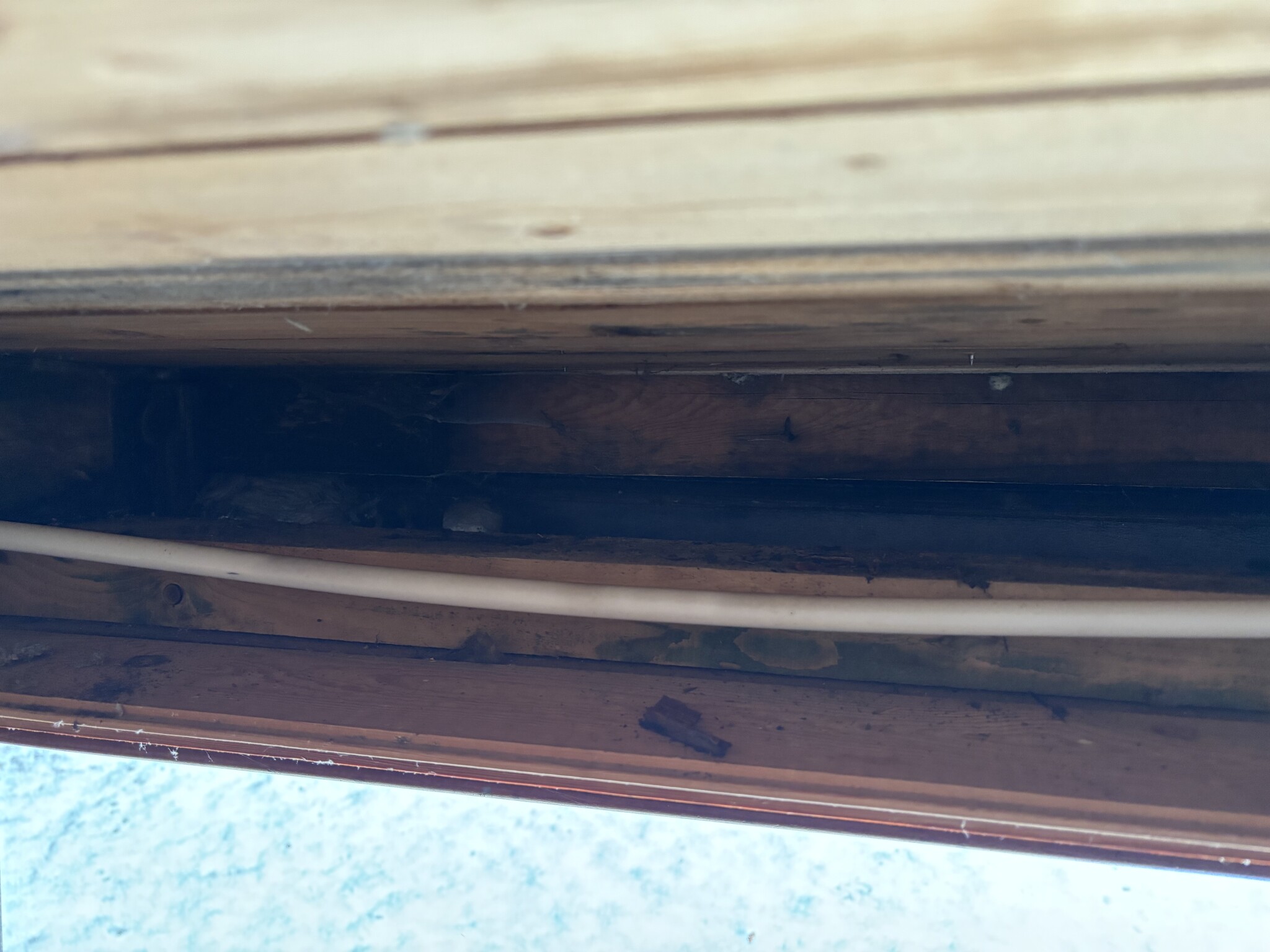
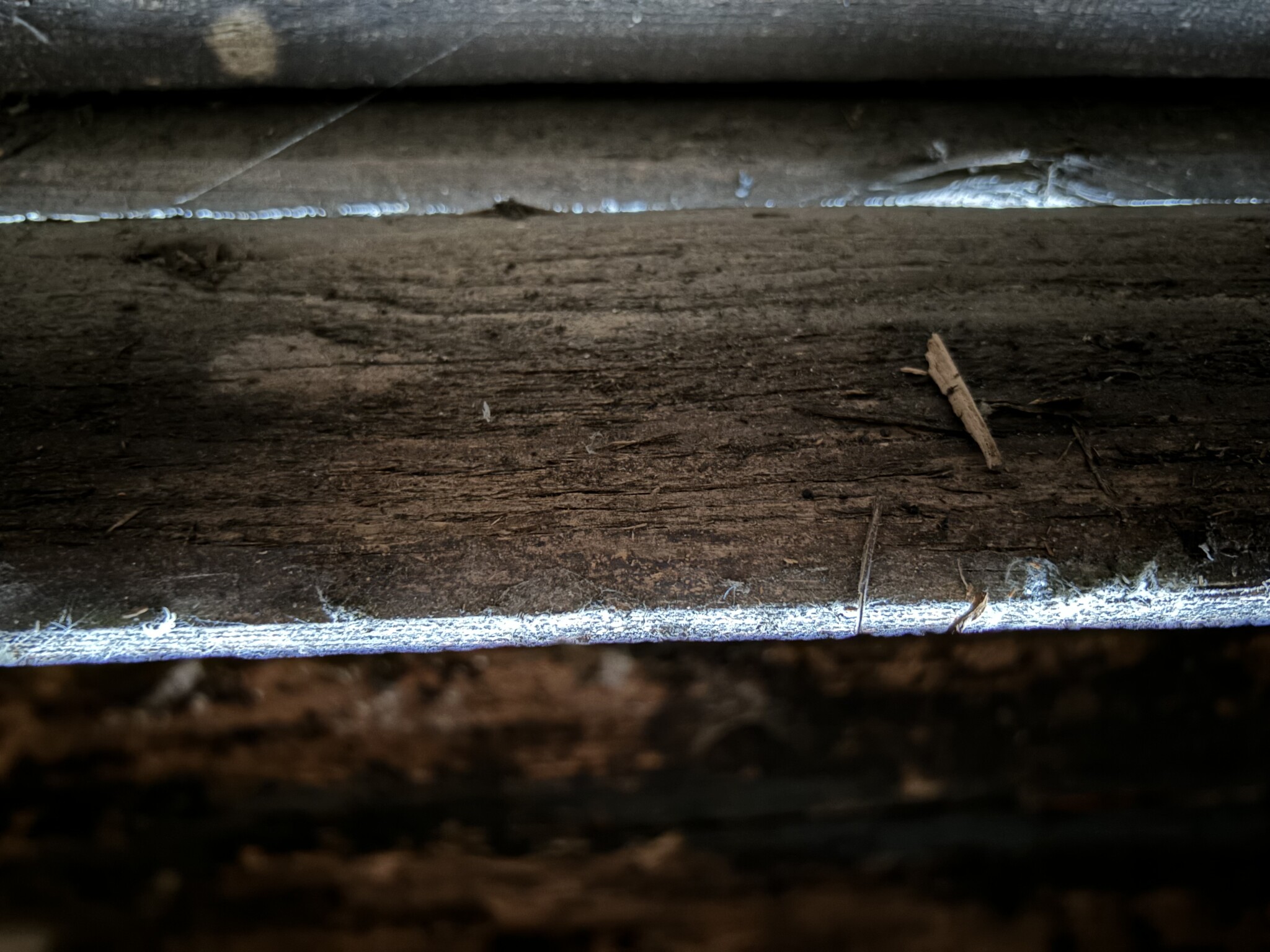

Do I understand correctly that the only difference from how it was before is the vapor barrier? Have there been any problems before, or why did you take down the insulation? Will the space be heated?
I believe that it's generally considered that roofing felt is not airtight. So a vapor barrier shouldn't be hindered for that reason. As I understand it, there are two problems you might encounter when installing construction plastic in an old roof. One is that you might not get it sealed along the edges, allowing moisture to still enter the roof. The other is that you might not notice if water comes in from outside. It can lead to significant rot damage before you realize something is wrong.
I believe that it's generally considered that roofing felt is not airtight. So a vapor barrier shouldn't be hindered for that reason. As I understand it, there are two problems you might encounter when installing construction plastic in an old roof. One is that you might not get it sealed along the edges, allowing moisture to still enter the roof. The other is that you might not notice if water comes in from outside. It can lead to significant rot damage before you realize something is wrong.
the roof has leaked in about 10 places when it has been really windy. But it has had the chance to dry in between, so no rot but rather black spots.
Therefore, it also hasn't been windproof. There have been electric radiators, and as far as I know, no door but an open space towards the living room as we plan to have it.
You mean it protects against water from the outside but doesn't block the vapor?
Therefore, it also hasn't been windproof. There have been electric radiators, and as far as I know, no door but an open space towards the living room as we plan to have it.
You mean it protects against water from the outside but doesn't block the vapor?
Well, I can absolutely have an air gap, I just wondered if it was necessary since it wasn't there previously.Rejäl said:
But maybe it's something that's been learned over the 60 years since it was built?
Then you place the air gap so it can ventilate down over the window overhang?
So that each compartment can at least ventilate individually.
I would have an air gap due to the fact that you still have some black spots, etc. There are air gap boards made of paper that you can easily push in between the rafters. For example, like these https://www.rockwool.com/se/produkter-och-konstruktioner/produktoversikt/byggisolering/vindavledare/
Then you can have insulation below these. The vapor barrier should be on the warm side, as they say. So from the roof counted: air gap, insulation, vapor barrier, inner roof.
PS Have you secured the roof properly on the outside and sealed all leaks?
Then you can have insulation below these. The vapor barrier should be on the warm side, as they say. So from the roof counted: air gap, insulation, vapor barrier, inner roof.
PS Have you secured the roof properly on the outside and sealed all leaks?
Exactly. Ok, that sounds good.M manner said:I would have an air gap since you have some black spots left. There are cardboard air gap boards that you can simply press in between the rafters, e.g., like these [link]
Then you can have insulation below these. The vapor barrier should be on the warm side as they say. That is, from the roof down: air gap, insulation, vapor barrier, ceiling.
PS Have you secured the outside of the roof properly and sealed all the leaks?
Yes, the windows are new, and the roofing felt is new, so everything that leaked has been fixed. Just going to spray the spots before we start building.
Then we'll go with that!
Ok. Next question then.
Which insulation material is most suitable to use.
I was thinking of using fiberglass like in the rest of the house, but since the height will be limited to about 15 cm, maybe there is a material that provides better value at the same thickness?
Which insulation material is most suitable to use.
I was thinking of using fiberglass like in the rest of the house, but since the height will be limited to about 15 cm, maybe there is a material that provides better value at the same thickness?
Click here to reply