Hello!
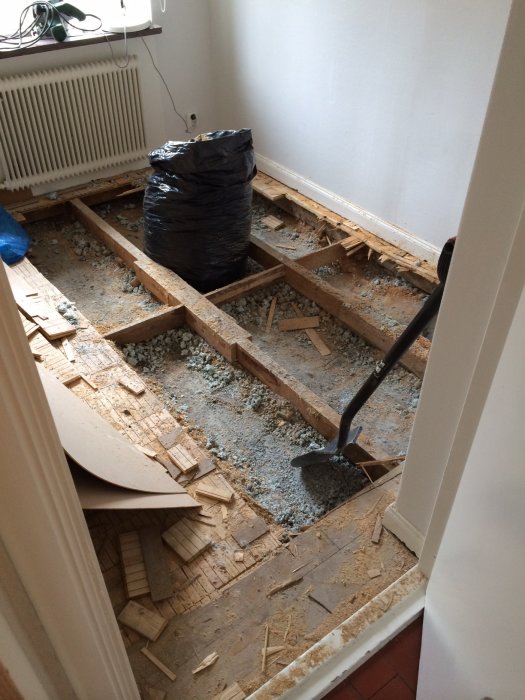
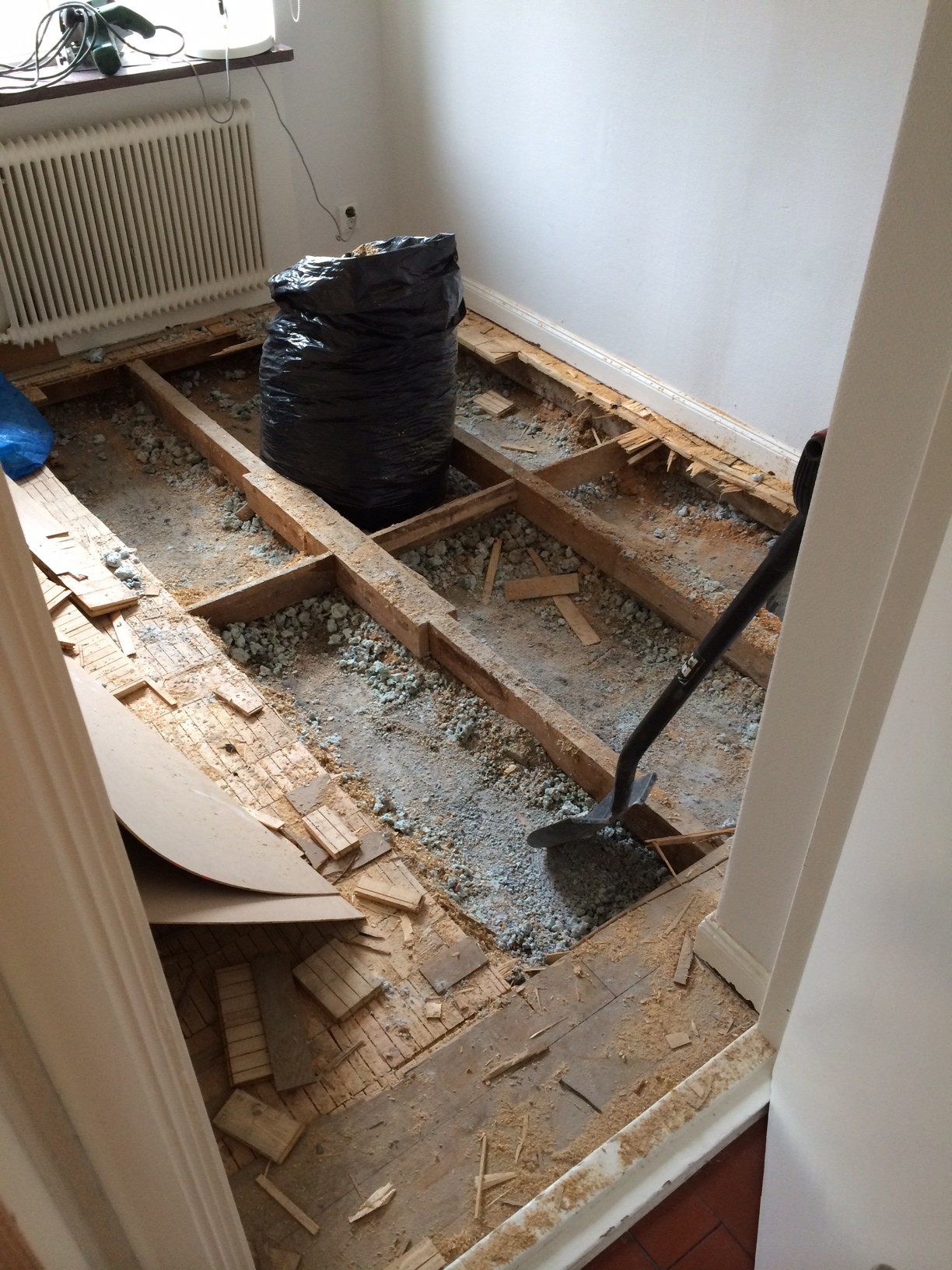
I've recently encountered a bothersome little problem. Rats in the wall in two places, likely entering through a damaged sewer pipe we found after filming the sewer pipes. I've now torn up the floor to both break up and repair the damaged pipe and also to remove rat droppings and other unpleasantness that smells...
I'm now wondering what I should fill in here with? As shown in the picture, it was filled with some kind of styrofoam-like crushed stone (what is it?) mixed with sawdust... What do you fill in with and insulate with afterwards? Underneath is the concrete slab that is visible in the picture, which appears to be painted with asphalt... It seems intact and all, which is reassuring to see. There are no rats coming up here anyway. The whole house is built on a rock with crushed stone in 1947, so there are plenty of paths and corners for the rats to get in under the house, I would assume.
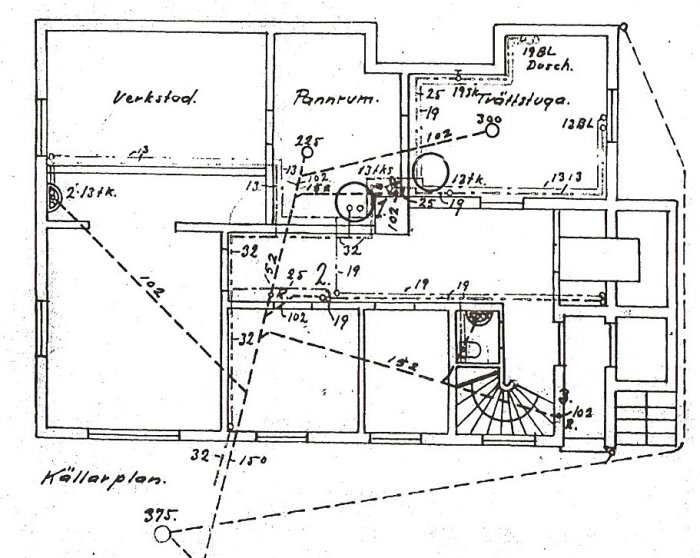
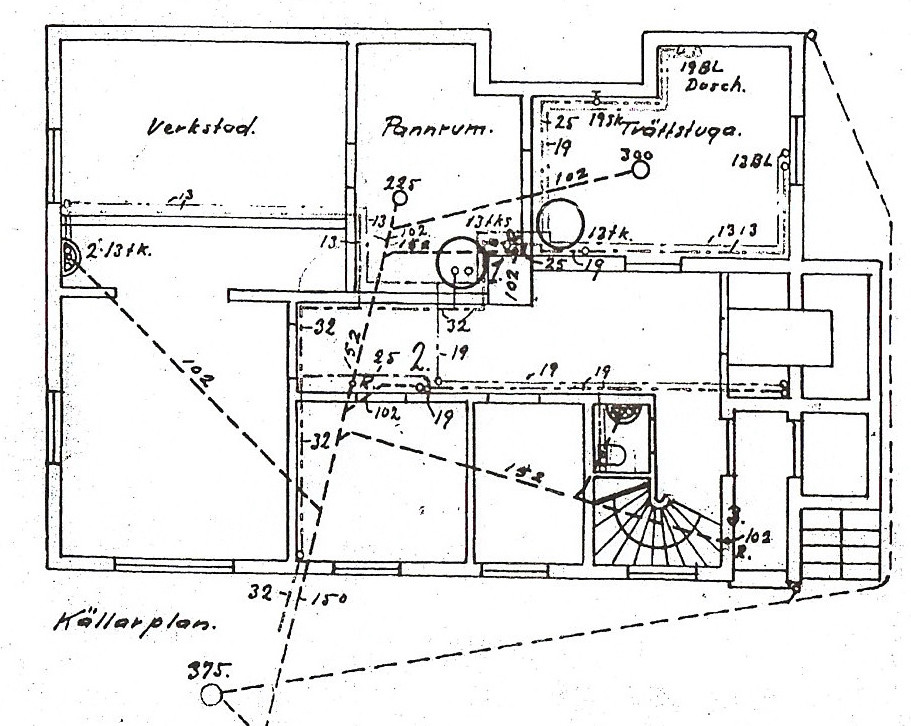
Does anyone have a qualified guess on how they laid such sewer lines in '47? Are they in the foundation slab or underneath? Deep underneath? How much do you have to break up? Is there a risk of hitting a water pipe in the floor slab? On the drawing I enclose, it does look like the water comes into the house here too. (I'm working in the room where the sewer line exits the house). Do you seal it with regular coarse concrete?
I'll read up a bit more on flooring later, but I assume you can just lay chipboard directly on the joists after insulating with something, lay a soundproof mat and then click flooring? I don’t want to make it more complicated than it needs to be
I have read a bit in other threads about turning PVC pipe on cast iron pipes and that should work, but what I am wondering a bit about is, can you replace the sewer pipes up to the wall do you think, and then the next time I renovate the living room which is adjacent, then connect in the wall from the other side when I tear up the floor in the new room? I'm not particularly keen to tear up the bedroom floor twice :/
I can answer some questions. Personally, I would probably add regular insulation to the floor. If the slab was coated with some asphalt, there won't be any moisture, plus the concrete has dried out long ago. Then just put on chipboard. If you use 22mm chipboard, you don't need to splice on the beams if they're on 60 cc. You might as well check if the floor is level when it's up. You can then attach new beams next to the old ones at the right level.
After the chipboard, you just lay foam plastic and parquet or laminate flooring if that's what you want.
Regarding the material that was in the floor, I don't know what it could be, but all sorts of strange materials were used in the past.
Thanks for the answers!
Now I have to rip up a part of the floor again, and then cast in new pipes. Then maybe it's not preferable to use regular insulation (like glass wool you mean?) if moisture might seep up there? Alternatively, that what I cast should dry out?
It's probably so little concrete that it probably doesn't matter. The important thing with moisture is that it doesn't get wrapped in plastic so it has somewhere to go.
Click here to reply
Vi vill skicka notiser för ämnen du bevakar och händelser som berör dig.