I've been searching for good information on how the wallpaper works in reality but have found very little. So I'll try it myself and share a little.
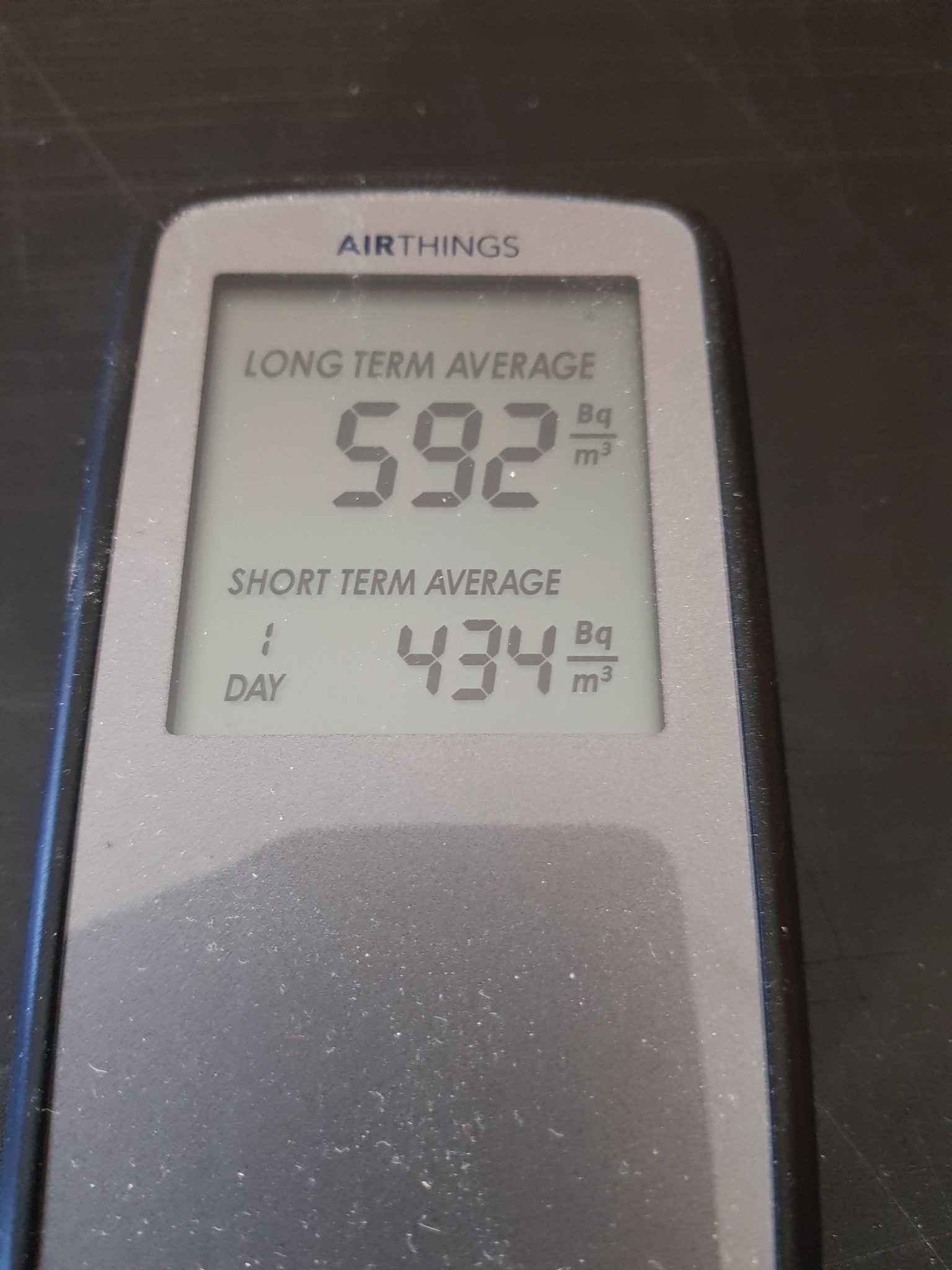
In the current apartment, the radon level has been around 900 Bq with natural ventilation. We had an exhaust fan installed and brought it down to 450. With a radon meter, we've concluded that the radon primarily comes from the walls since we have built-in wardrobes where the value is significantly higher with the door closed.
I can really recommend a simple radon meter. Whether it's accurate or not, it shows fairly quickly if your measures are having an effect.
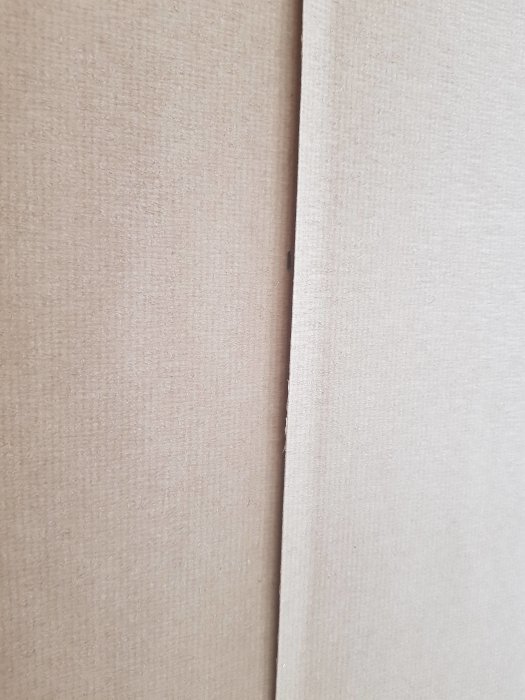
We've now started the wallpapering and plan to finish by the weekend. It's like putting up regular wallpaper except that it's a real hassle in the corners. It doesn't want to adapt and tends to peel off. Additionally, we'll have to re-glue all the seams since they come off too. But it will be really exciting to see the results.
Problematic to get the seams to fit as they should. These need to be re-glued in certain areas. It might be wise to make a reservation here, as we have used glue from a different manufacturer than the one recommended
Well. So it's time to summarize my evaluation, and I can only coldly conclude that it was a total fiasco. No impact at all on radon levels.
Is it then a bad product? Yes and no. Installing it with over-lip is totally bad. We tried two types of glue, but you have to go back and re-glue the seams several times. However, we did not use the recommended brand but a glue of the same type.
Obviously, this wallpaper has shown good results for some, but radon is a tricky adversary that seems to find all possible ways in.
What did I do wrong then? Well, I did not hire a professional to analyze the source of the radon but instead drew conclusions with my own meter. By closing all the vents and openings in an apartment on the second floor, I managed to raise the radon level to 1600Bq. And then also get high levels in closed closets which are an area in the wall. But with wallpapering in a living room where inlet vents are located (exhaust in hall, bathroom, and kitchen), not even managing to measure a clear difference gives me the answer that this was not the solution for me.
I have personally installed radon wallpaper on two occasions, once in my previous home and once for a client. No problems getting it to adhere, I used wet room adhesive. It's very important to seal everywhere, as it's a gas you want to encapsulate. Ideally, all furnishings should be removed, moldings, baseboards, etc., to ensure it's airtight. I never conducted a follow-up measurement in my own home, but the client had done measurements and claimed that it worked!
With a radon meter, we have concluded that the radon primarily comes from the walls as we have built-in wardrobes where the value is clearly higher with the door closed.
It could also be that the wardrobes lack sealing against the floor and the interior of the walls, and then the gas can come in through gaps from underneath. To see if it really comes from the walls, a portable gamma meter is needed (however, I don't know if that's what you already have, as I find no information on the measurement method). With such a meter, you can also see if the gas has decayed and stuck behind your newly installed wallpaper. Check with the municipality's Environmental and Health department, and maybe you can borrow a meter.
Of course, it's important to emphasize that some closets and the area behind the radiator are not covered. However, I am somewhat skeptical that it needs to be as airtight as a submarine. Now that I have covered more than 95% of the wall area, I feel I should have seen some small change.
But I might be completely wrong here. Now I'm working on sealing the joints properly and installing extra ventilation slots.
I'm not completely dismissing the wallpaper but can only note that it didn't help me in this apartment.
I have read that wallpaper normally halves the radon. This assumes that it is well made with sealed switches and wall sockets.
Normally, radon increases on the other side of the wall.
How did you determine that it is from the wall that the radon is coming? Are the walls built with known Radium-containing material (e.g., blåbetong)? Do you know the principle by which your meter measures? Does it measure alpha or gamma? Is there directional sensitivity in the instrument?
OK, then it measures the gas decay directly. You can try enclosing the meter in some form of hemisphere (plumber's plunger?) that presses tightly against the wall and then take a reading to really see if it really comes from there. When performing radon mitigation, it's crucial to know exactly where it is entering.