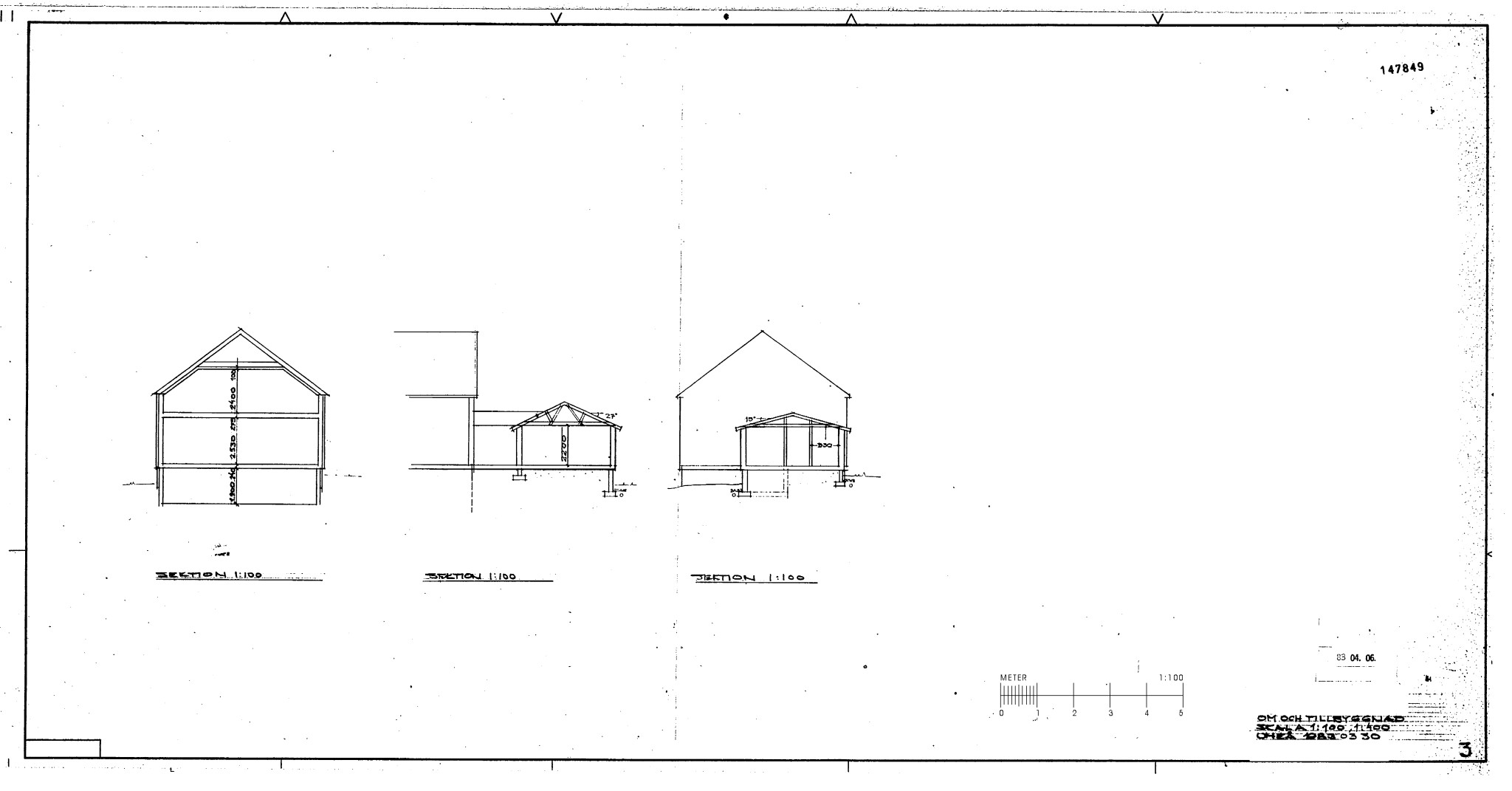
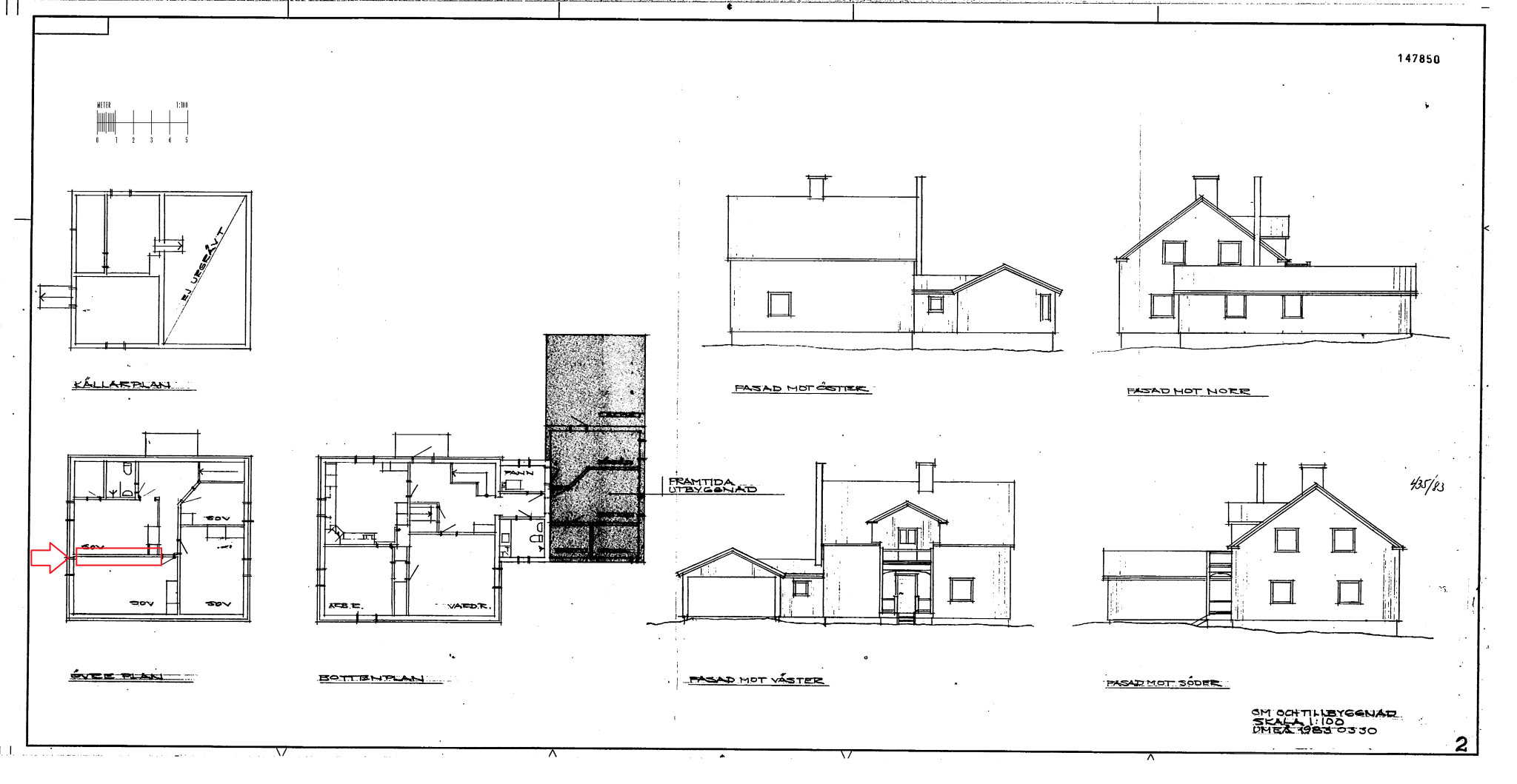
Hi, I have a question about whether this wall is load-bearing. It seems that the wall goes up to the roof trusses. The house is from '62. It is the wall that is marked in red on the upper floor.

Grateful for a response. :)
 
  • Architectural blueprint showing cross-sections of a house built in 1962, focusing on a potentially load-bearing wall indicated in red on the upper floor.
  • Floor plan showing a highlighted wall on the upper floor, possibly structural as it reaches the roof trusses. Query if the wall is load-bearing.
You probably need to supplement with more drawings of what trusses etc. look like before you can expect any reasonable answers, I would think.
 
These are the only drawings I have received from the municipality, but I will get in touch with them again. Thank you for your response.
 
  • Like
Mattias_Jo1
  • Laddar…
L Linda223 said:
These are the only drawings I've received from the municipality but I'll contact them again. Thanks for the reply.
I believe you can check yourself what is available for your house. Try this one.
Lantmäteriet.se
 
No, walls on the upper floor with the current situation are not load-bearing. Roof loads are transferred down through the högbenen and any stödben.
 
Thank you so much for the reply! :)
 
Hi, we have now started taking down the wall, no pressure in the studs against the outer wall, but there's resistance in the studs that are towards the middle of the house and it's pinching the saw. Could it be load-bearing then?
 
Then you have too much junk in the attic. The hanbjälkarna (which lie horizontally above your wall) are usually not designed for any significant vertical loads. The largest roof loads are always snow, and you probably don't have that yet.
 
Okay but no snow yet and only insulation in the attic, could it be the studs that are too tightly encased perhaps?
 
Inkilade *
 
The main task of collar beams is to prevent the roof loads from pushing out the exterior walls. Therefore, they are primarily subjected to tensile forces. Additionally, they need to bear their own weight along with the weight of insulation and the ceiling. Tell me the length of the collar beams, their dimensions, the amount and type of insulation, as well as the type of ceiling, and I will calculate how much deflection is reasonable.
 
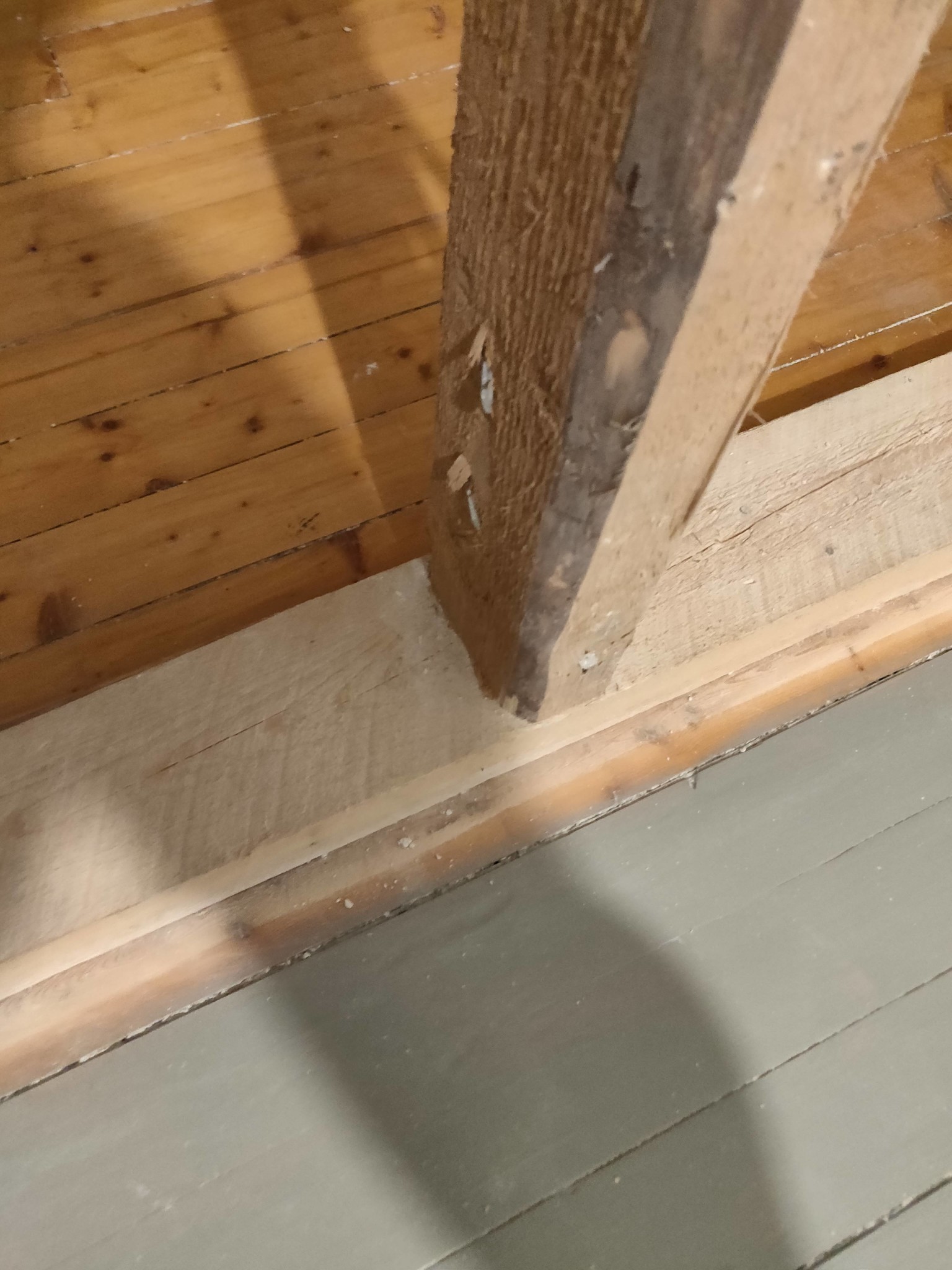
Thank you so much for the help! Here's how it looks towards the floor and the ceiling respectively. The ceiling seems to be simple gypsum board, I'll go up and check how it looks in the attic tomorrow.
 
  • Ceiling with exposed wooden beams and torn drywall.
  • A wooden beam resting on a timber floor with adjacent boards, as part of a construction or renovation project.
Is it an option to support with 2 posts and a smaller beam? To be a bit on the safe side.
 
It should not be necessary. With the measurement information, it is easier to assess the situation.
 
Not the easiest wind to climb up on, there's a risk of getting up but not down. The rafters were about 4 meters long 150/60
 
  • Attic interior showing wooden beams, approximately 4 meters long and 150/60 in size, with dim lighting and debris on the floor.
  • Attic space with wooden beams and debris on the floor, showing a challenging space to access. The beams mentioned are approximately 4 meters long, 150/60.
Vi vill skicka notiser för ämnen du bevakar och händelser som berör dig.