
6,947 views ·
16 replies
7k views
16 replies
Plaster on uninsulated outdoor pizza oven
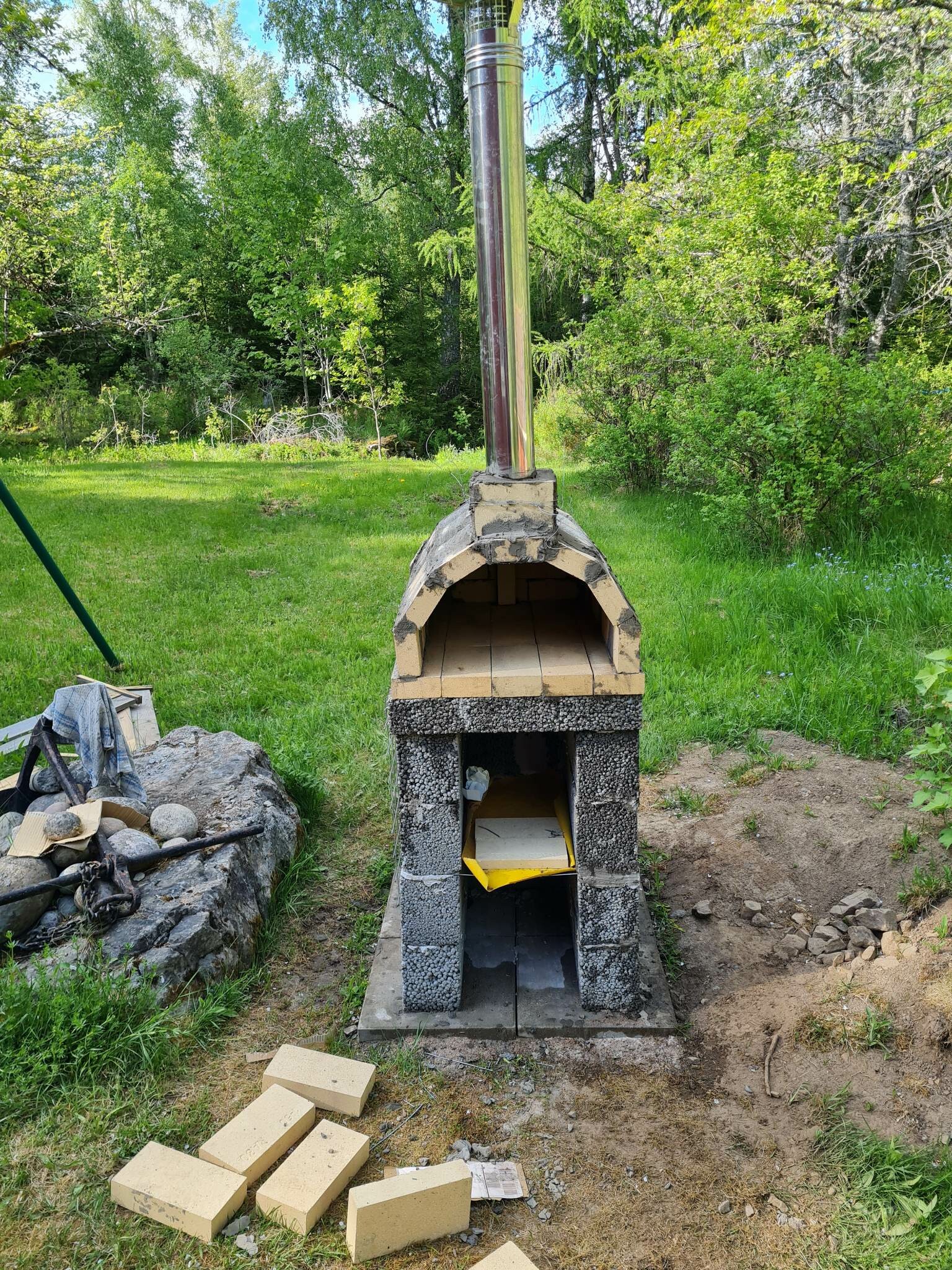
I have built a pizza oven with firebrick and used Finja fireproof mortar in between.
There is no insulation on it, so it is "raw."
I have test-fired and made pizza in it and it works excellently, but I would like to put a nice render on it and make it weather-resistant for the winter. Should I just use fireproof mortar as render and then concrete paint on it, or are there other better options?
If I use regular render, I assume it will crack when I fire it?
There is no insulation on it, so it is "raw."
I have test-fired and made pizza in it and it works excellently, but I would like to put a nice render on it and make it weather-resistant for the winter. Should I just use fireproof mortar as render and then concrete paint on it, or are there other better options?
If I use regular render, I assume it will crack when I fire it?
Member
· Västra Götaland
· 3 648 posts
Is already nice as it is with exposed brick, instead plaster your lecablock it stands on, and make a nice shelf in oak.
Member
· Västra Götaland
· 3 648 posts
Can't you brush it with water glass? Then the surface and joints get protection.

Know-It-All
· Västra götaland
· 11 025 posts
You definitely need to protect it from rain, both to reduce the risk of frost damage, and to avoid having to slowly fire it for a few days to drive out the moisture before each season (or each time you use it)...David Gunnarsson 82 said:
The simplest thing to do is just throw a tarpaulin over it...
Edit; it's worth thinking about that you also need to protect the opening, if it rains in there, it doesn't matter how the rest of the coverage looks...
I will probably combine the tarp at the end of the season, but it's not something I want to take on and off every time if possible.You definitely need to protect it from rain, both to reduce the risk of frost damage and to avoid having to burn slowly for a few days to drive out the moisture before each season (or each time you use it)...
The easiest thing is just to throw a tarp over it...
Edit; it's worth considering that you need to protect the opening too, if it rains in there, it doesn't matter how the rest is covered...
Know-It-All
· Västra götaland
· 11 025 posts
If you want it watertight, you must have a valve that can release overpressure.
Personally, I would go for insulation, then a layer of plaster, and then a protective roof on top.
But at the same time, since the opening is as high as the roof of the oven (that's what it looks like to me?), you will use up a lot of wood to keep the temperature up, even with insulation...
Edit: leca can't handle "pizza temperatures" in the long run, so make sure it's reasonably easy to take down and rebuild the oven when that happens...
Personally, I would go for insulation, then a layer of plaster, and then a protective roof on top.
But at the same time, since the opening is as high as the roof of the oven (that's what it looks like to me?), you will use up a lot of wood to keep the temperature up, even with insulation...
Edit: leca can't handle "pizza temperatures" in the long run, so make sure it's reasonably easy to take down and rebuild the oven when that happens...
If you want it watertight, you need a vent that can release overpressure..
Personally, I would go for insulation and then a layer of plaster, and then a protective roof over it..
But at the same time, since the opening is as high as the oven roof (that's how it seems to me?), you will use up a lot of wood to keep the temperature up, even with insulation...
Edit: leca can't handle "pizza temperatures" in the long run, so make sure it's reasonably easy to take down and reconstruct the oven when that happens...
Yes, as it is now at least, the opening is as large as the rest of the oven, it's like straight back. The idea is a door that can be opened at the bottom for air intake so the heat stays in better.If you want it watertight, you need a vent that can release overpressure..
Personally, I would go for insulation and then a layer of plaster, and then a protective roof over it..
But at the same time, since the opening is as high as the oven roof (that's how it seems to me?), you will use up a lot of wood to keep the temperature up, even with insulation...
Edit: leca can't handle "pizza temperatures" in the long run, so make sure it's reasonably easy to take down and reconstruct the oven when that happens...
It works well to make pizza in it already now but it could of course be more energy efficient and use less wood.
The difficult thing with insulation is that it adds a lot to the thickness and then it has nothing to rest on. If I had thought about it from the beginning, it would have been just a matter of moving the building blocks outwards a few cm on each side. If I were to do it now, I would have to build on the width in some way.
Know-It-All
· Västra götaland
· 11 025 posts
Feel free to post more pictures, it's fun to see how others have done it!
I have built my oven into a small "house" so I first have 50-100 mm ceramic fiber, and then 200 mm "regular" mineral wool ...
If you want to add on, you can always cast a shelf in concrete, it can probably be attached to the LECA edge .. But otherwise, it's certainly possible to "hang" the insulation over, 25-50 mm ceramic fiber makes a big difference, and then you can plaster on it ..
I have built my oven into a small "house" so I first have 50-100 mm ceramic fiber, and then 200 mm "regular" mineral wool ...
If you want to add on, you can always cast a shelf in concrete, it can probably be attached to the LECA edge ..
But otherwise, it's certainly possible to "hang" the insulation over, 25-50 mm ceramic fiber makes a big difference, and then you can plaster on it ..Some miscellaneous unordered pictures, also from the construction.Feel free to upload more pictures, it's fun to see how others have done it!
I have built my oven into a small "house" so I first have 50-100 mm ceramic fiber, and then 200 mm "regular" stone wool ...
If you want to expand, you can always cast a shelf in concrete, it can surely be attached to the LECA edge ..
But otherwise, you can probably "hang" the insulation over, 25-50 mm ceramic fiber makes a big difference, and then you can plaster on it ..
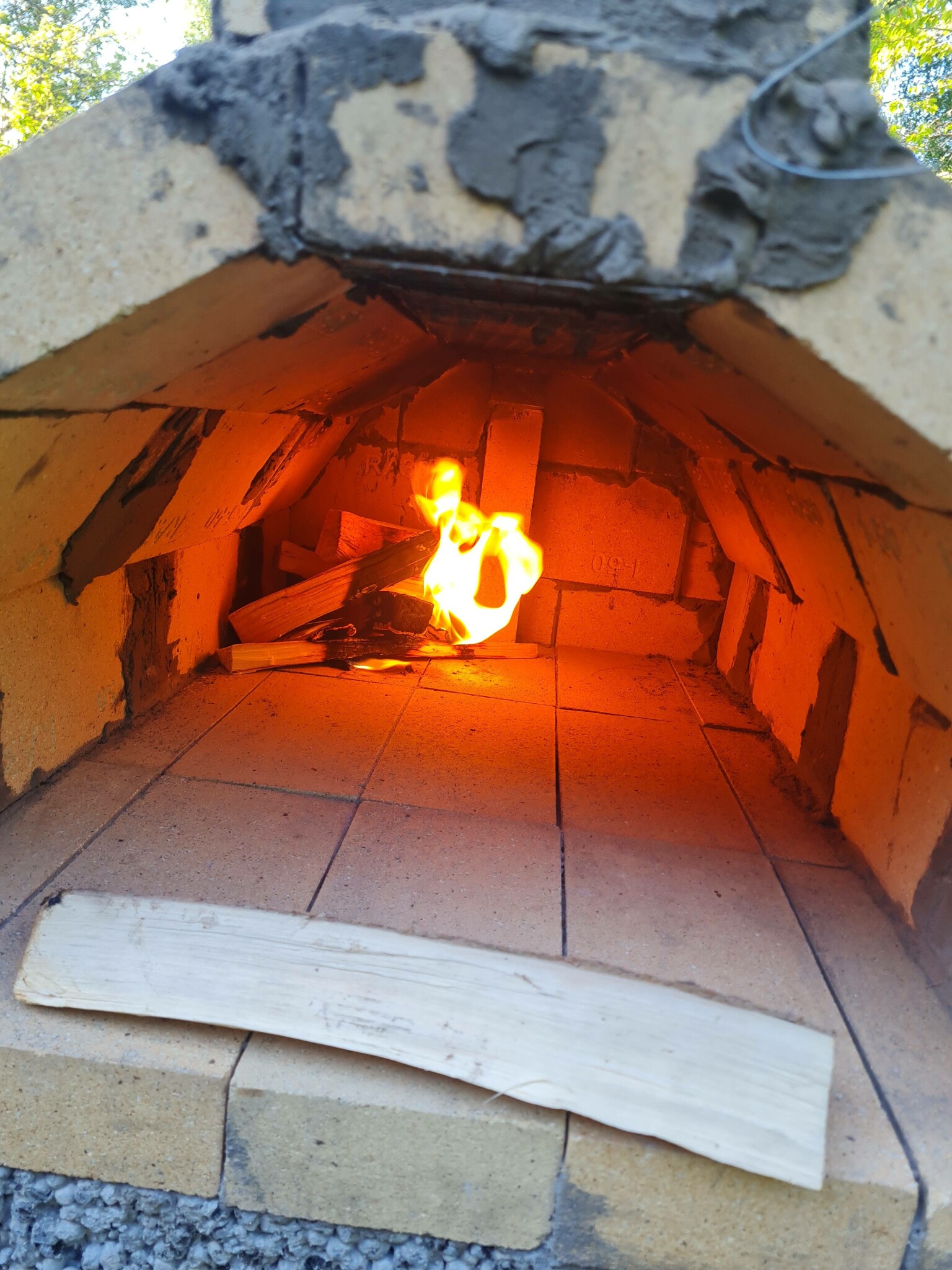
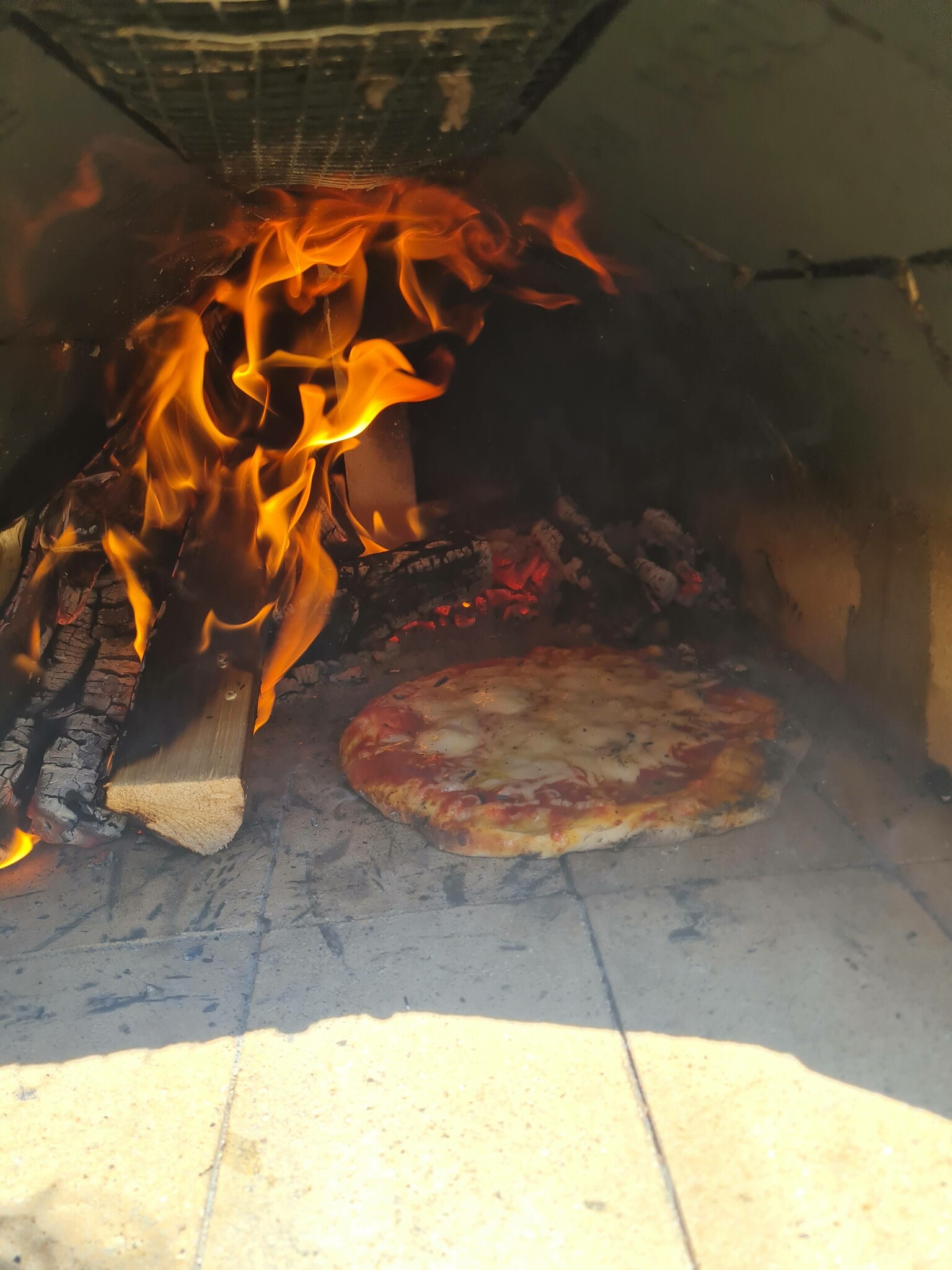
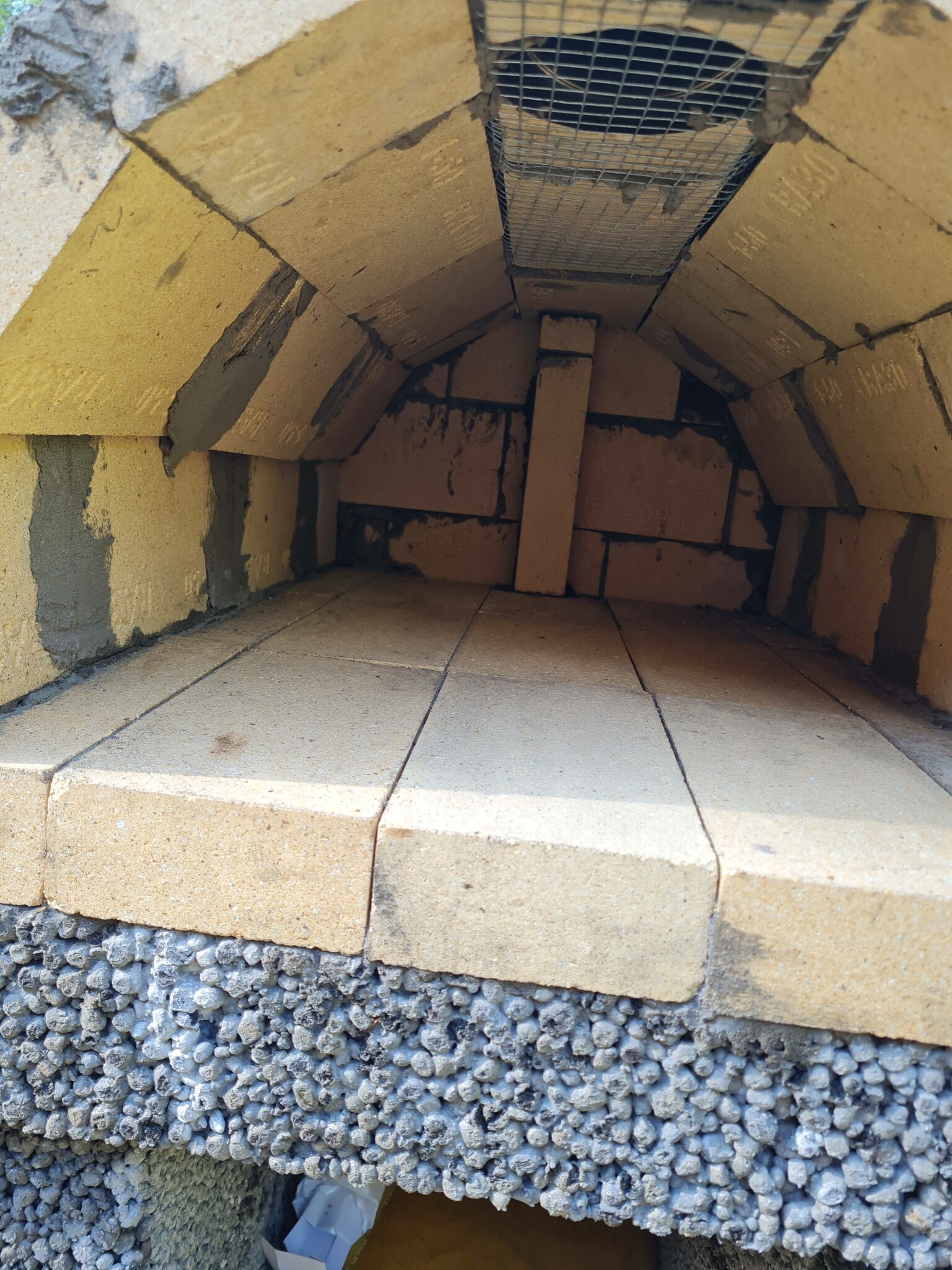
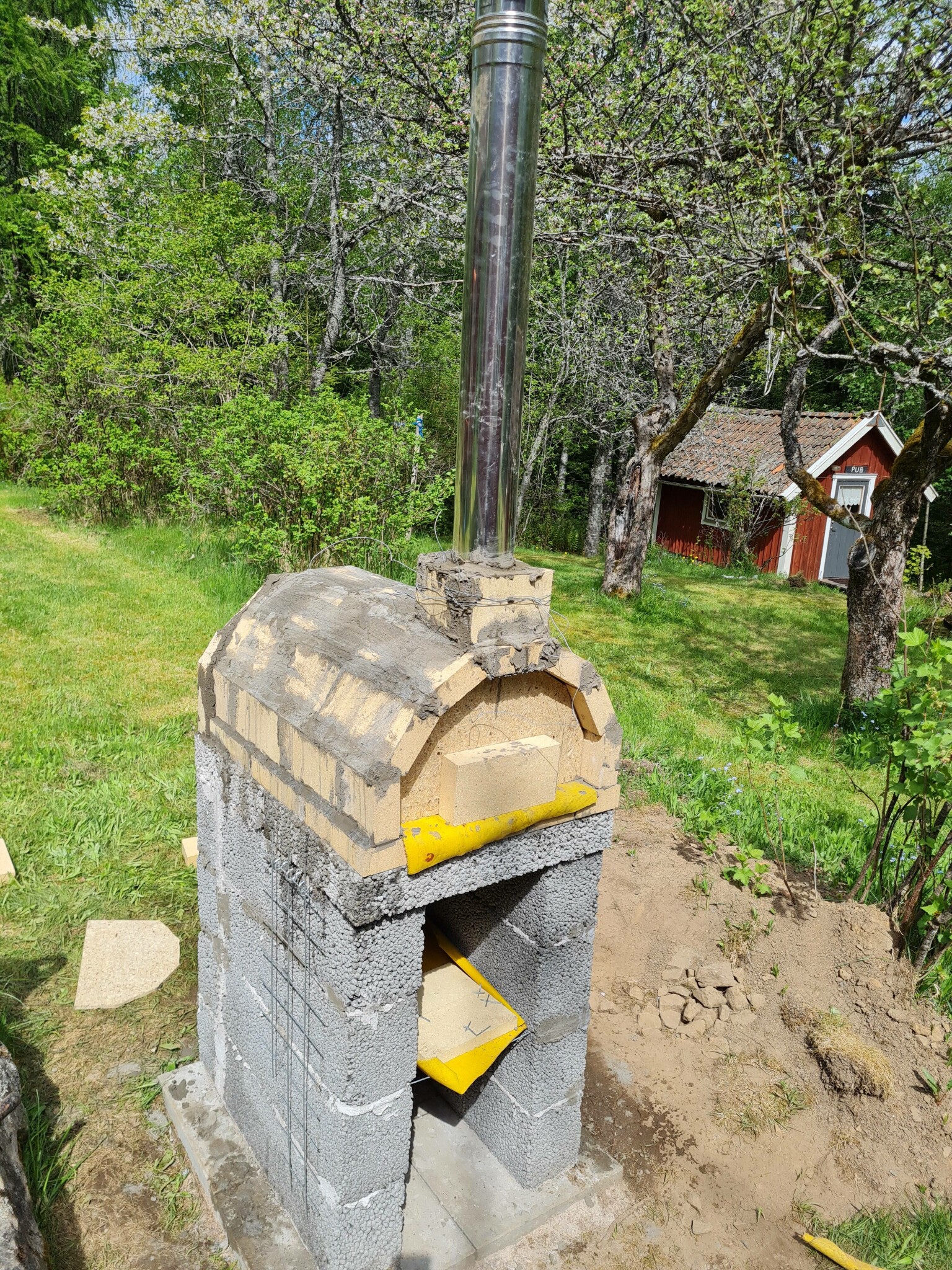
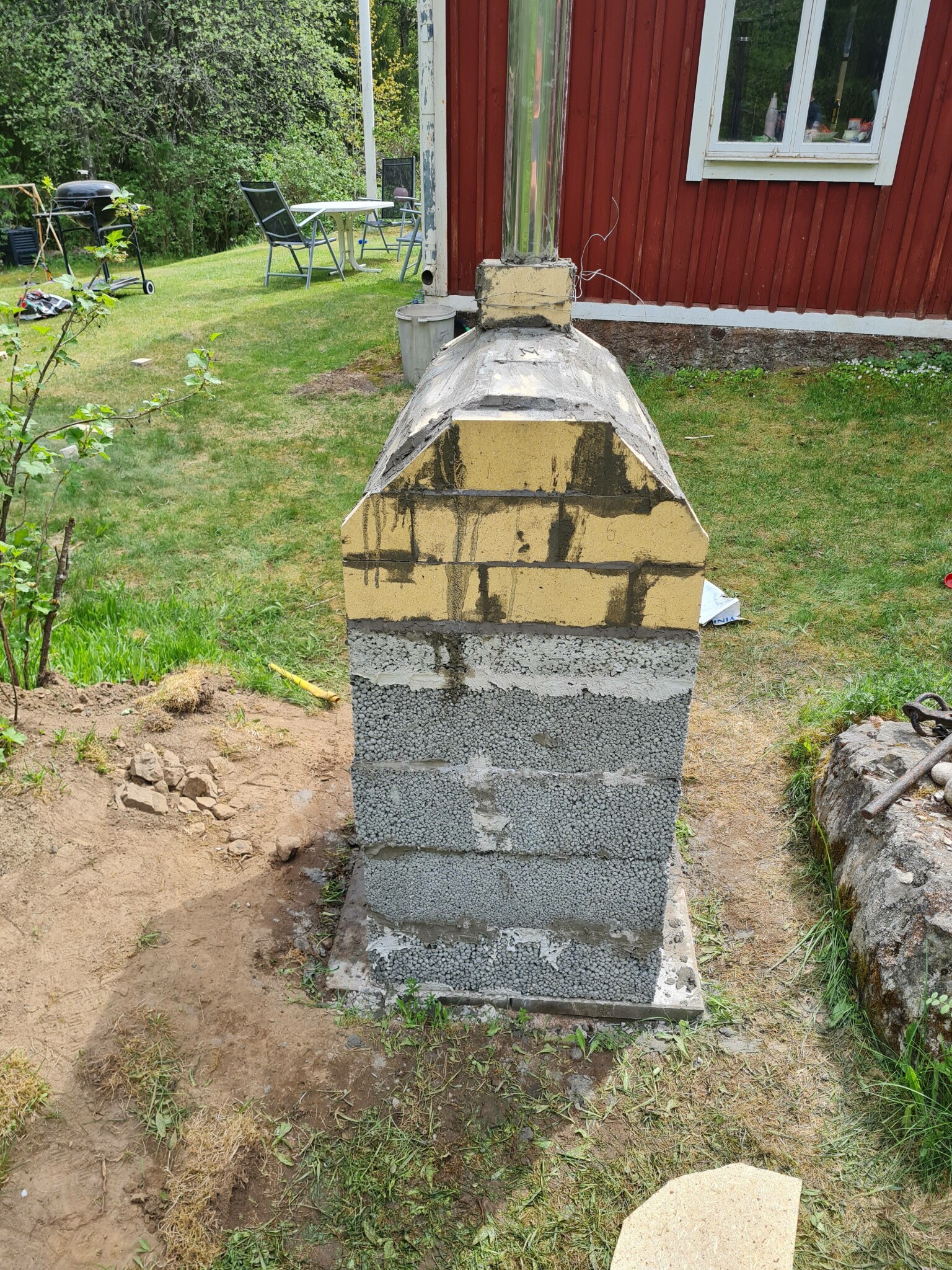
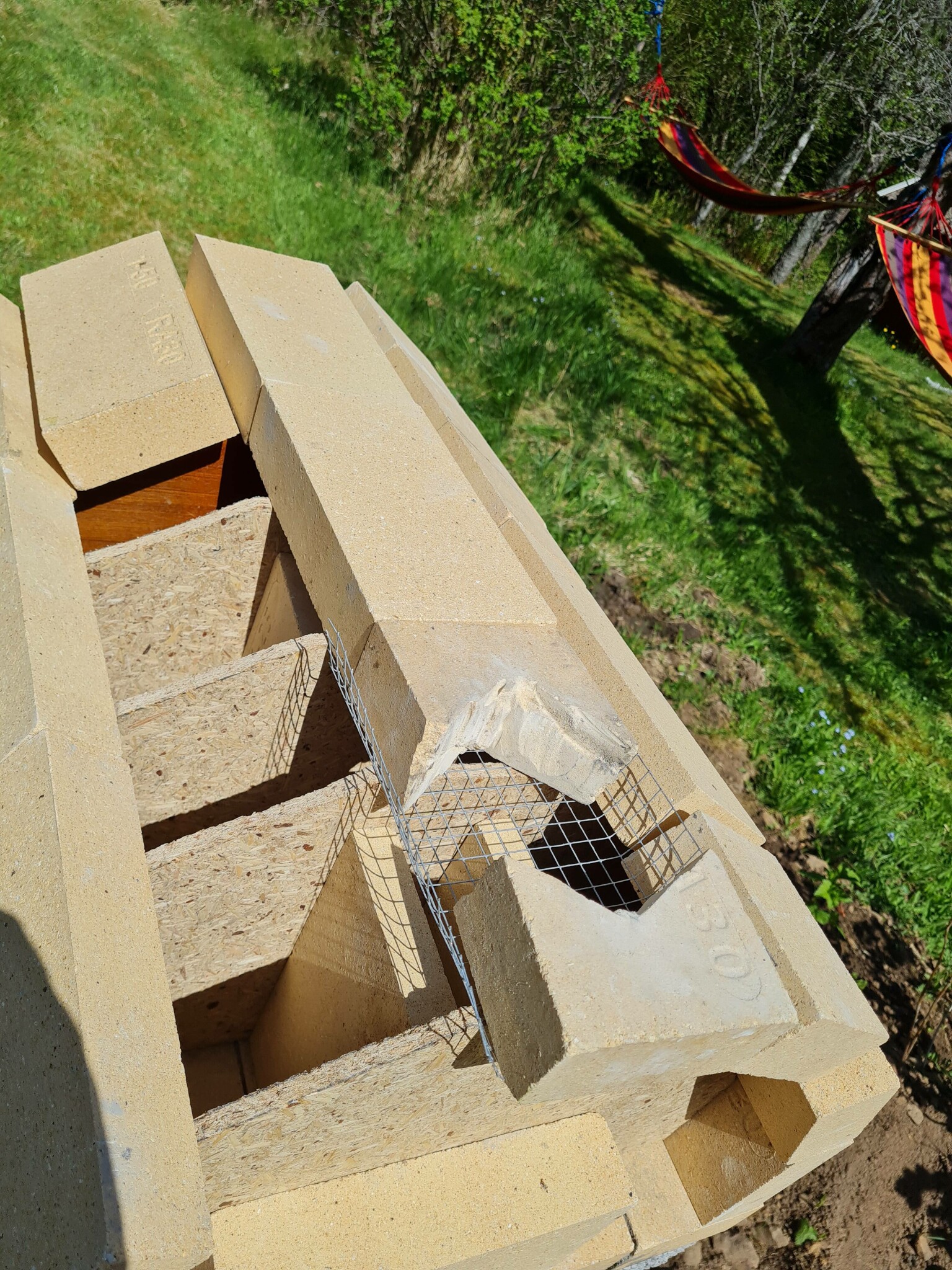
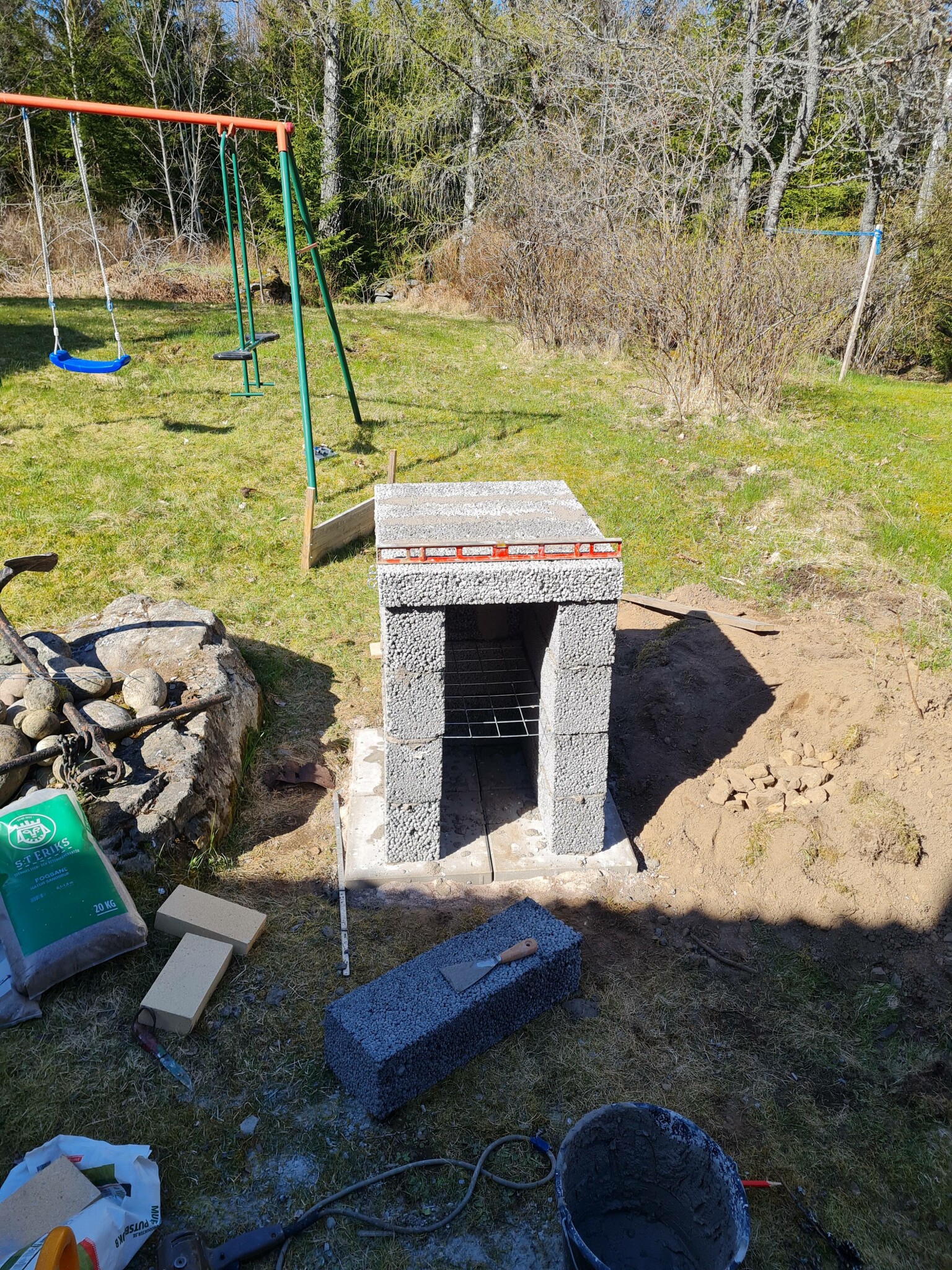
I guess I'll have to hope that the leca blocks withstand the heat, simply because the stones at the bottom are cemented against them. When I've used it so far, the underside of the blocks hasn't even become lukewarm...If you want it watertight you need a valve that can release pressure..
Personally, I would opt for insulation and then a layer of plaster, and then a protective roof over it..
But at the same time, since the opening is as high as the oven's roof (I think it looks like?) you will use a lot of wood to keep the temperature up, even with insulation...
Edit: leca doesn't handle "pizza temperatures" in the long run, so make sure that it is relatively easy to take down and reset the oven when that happens...
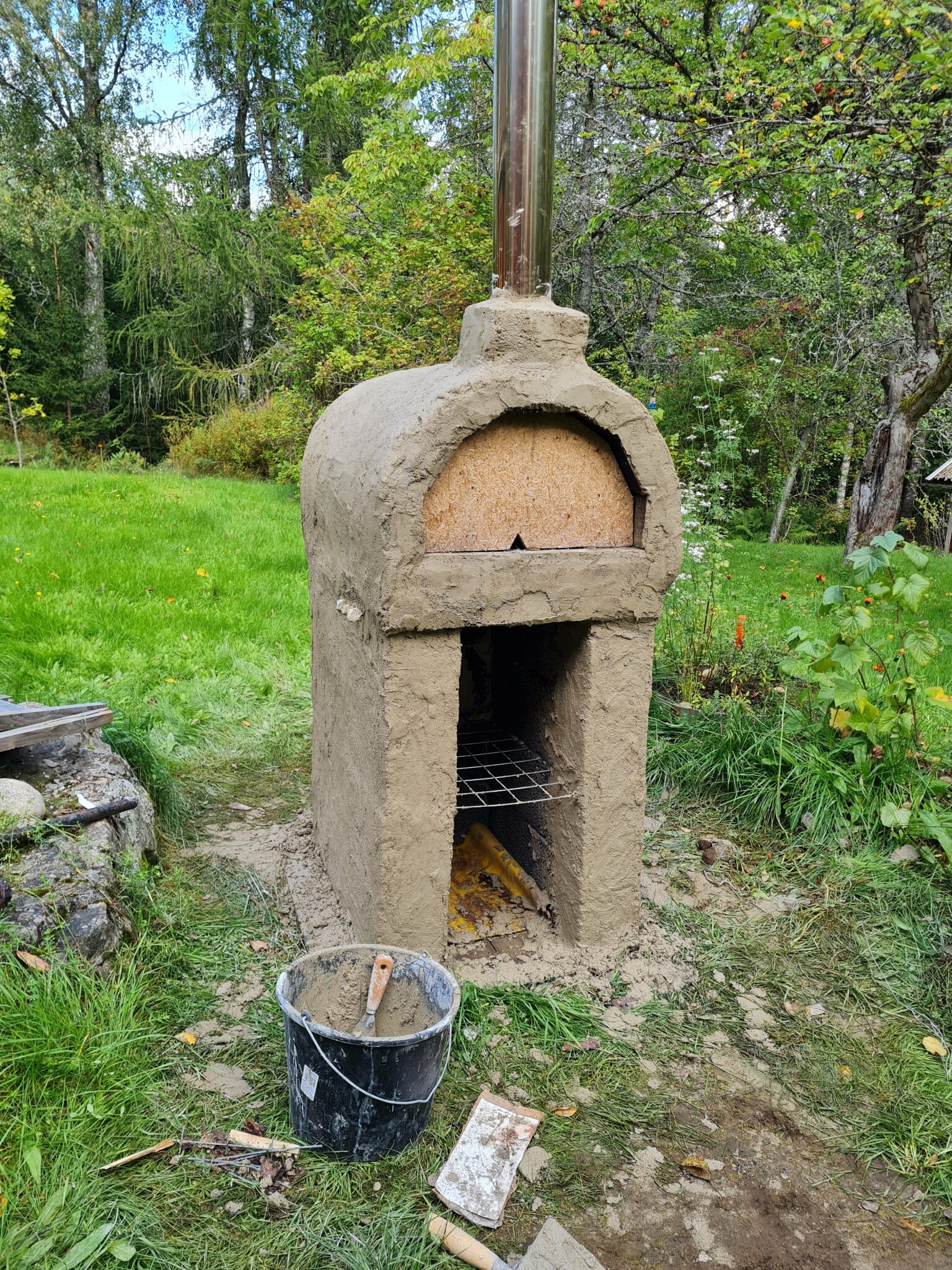
What material did you use for insulation? I need to insulate my oven myself.