D
Hello, I'm building a cold storage and can't figure out how to solve the eaves.

I'm going to have roofing sheets directly on battens.

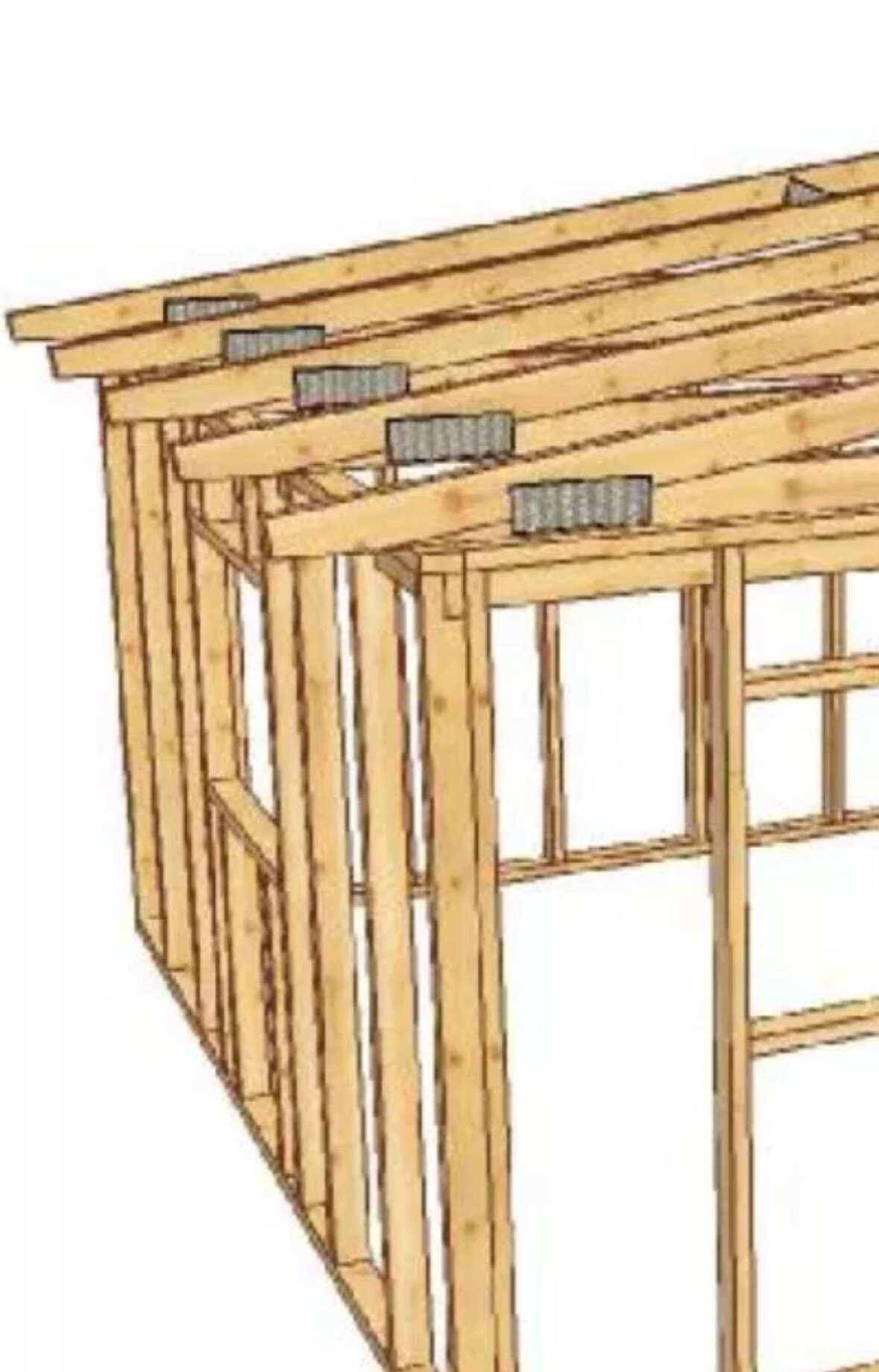
Why do you miter the roof rafters?

Like this:
 
  • Illustration of a cold storage roof detail showing rafters with miter joint beneath roof sheathing; query about using corrugated metal directly on battens.
  • Wooden roof construction with rafters for a cold storage building. Rafters appear angled, showing placement for direct metal roofing on nail battens.
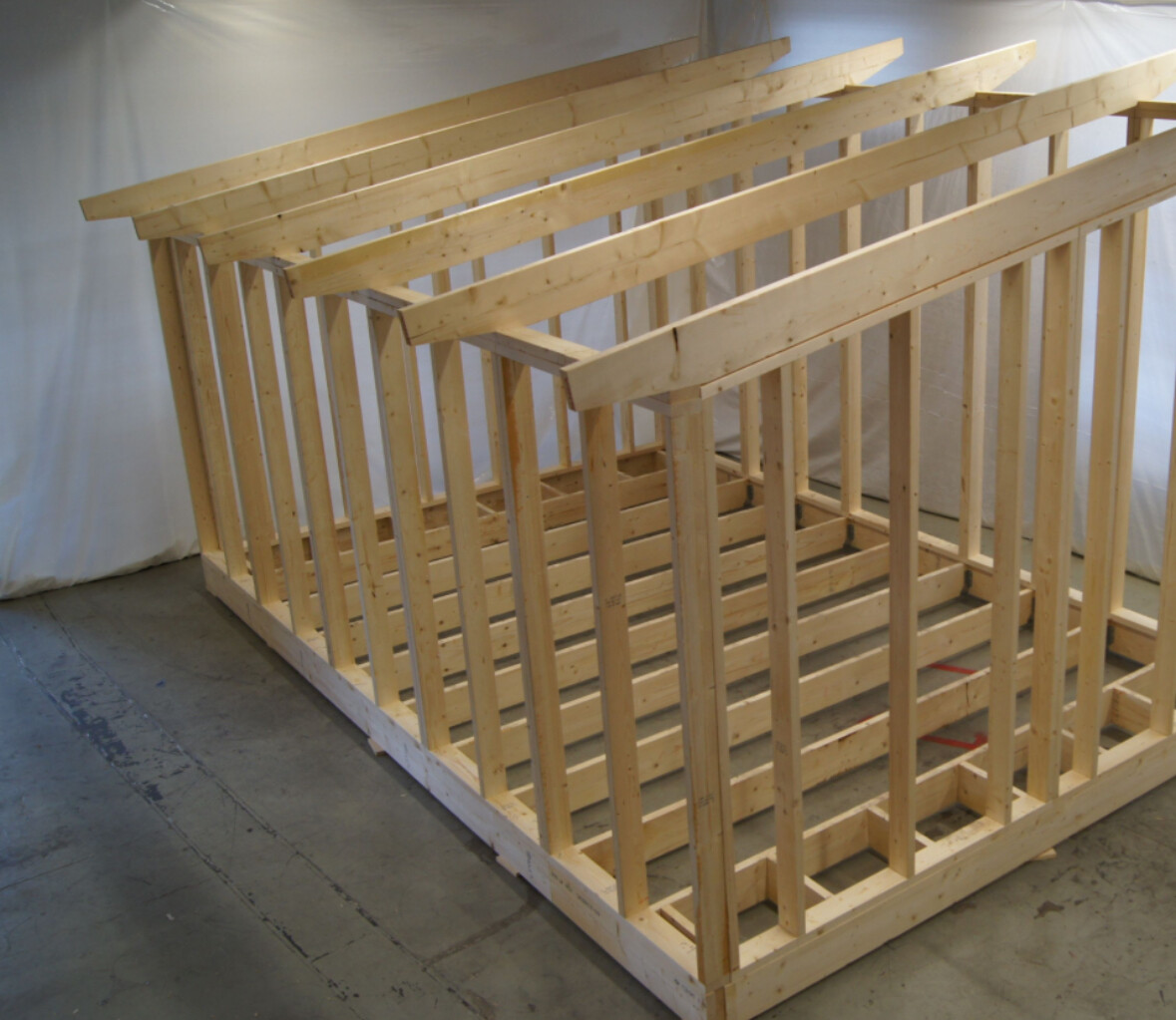
  • Wooden frame structure for a cold storage unit under construction, showing angled rafters and floor joists, with roofing to be added later.
If possible, they can be geras to obtain a horizontal surface.
For your part, it will rather be that you expose more end grain. I would have changed the design of the cut. First vertically in the line of the frame, then angled cut/horizontal cut
 
  • Like
stugfar and 1 other
  • Laddar…
D
Thank you so much!
 
D
I will draw a bit so you can take a look to make sure I understand correctly. If you can and feel like it. Thanks
 
D
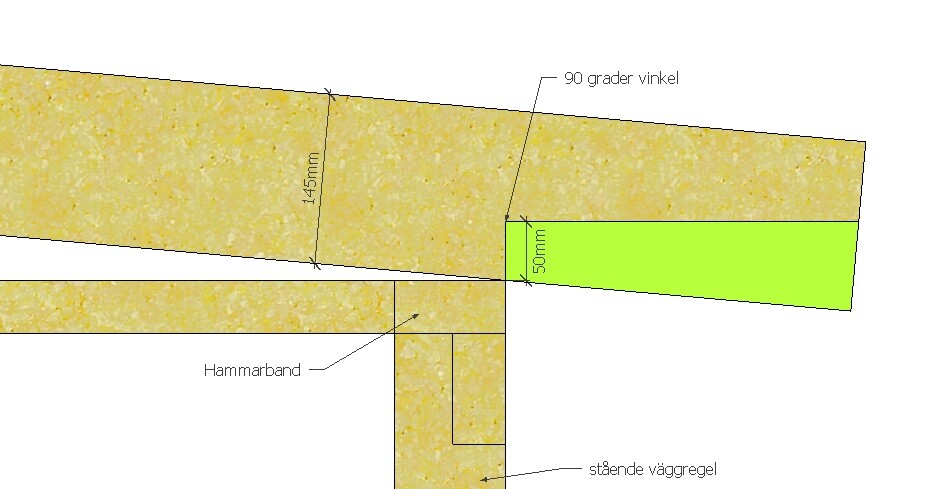
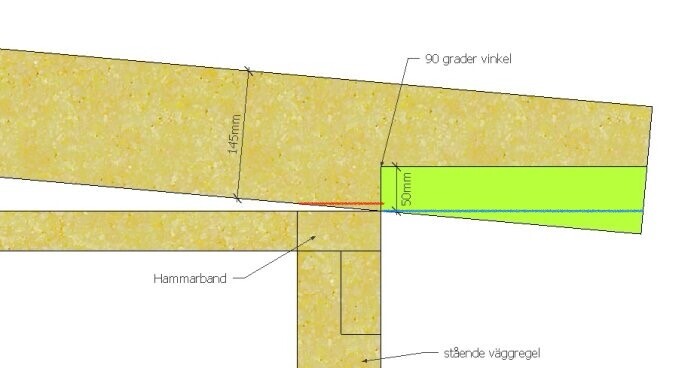
Is this what you meant?

The green piece is cut off.
 
  • A diagram showing a construction layout with a green section labeled to be cut off, including measurements and annotations like "hammarband" and "stående väggregel.
S
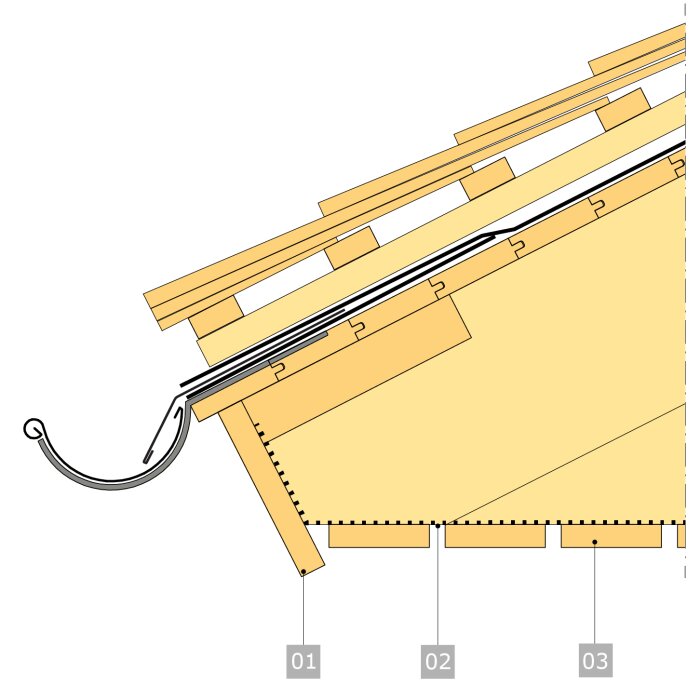
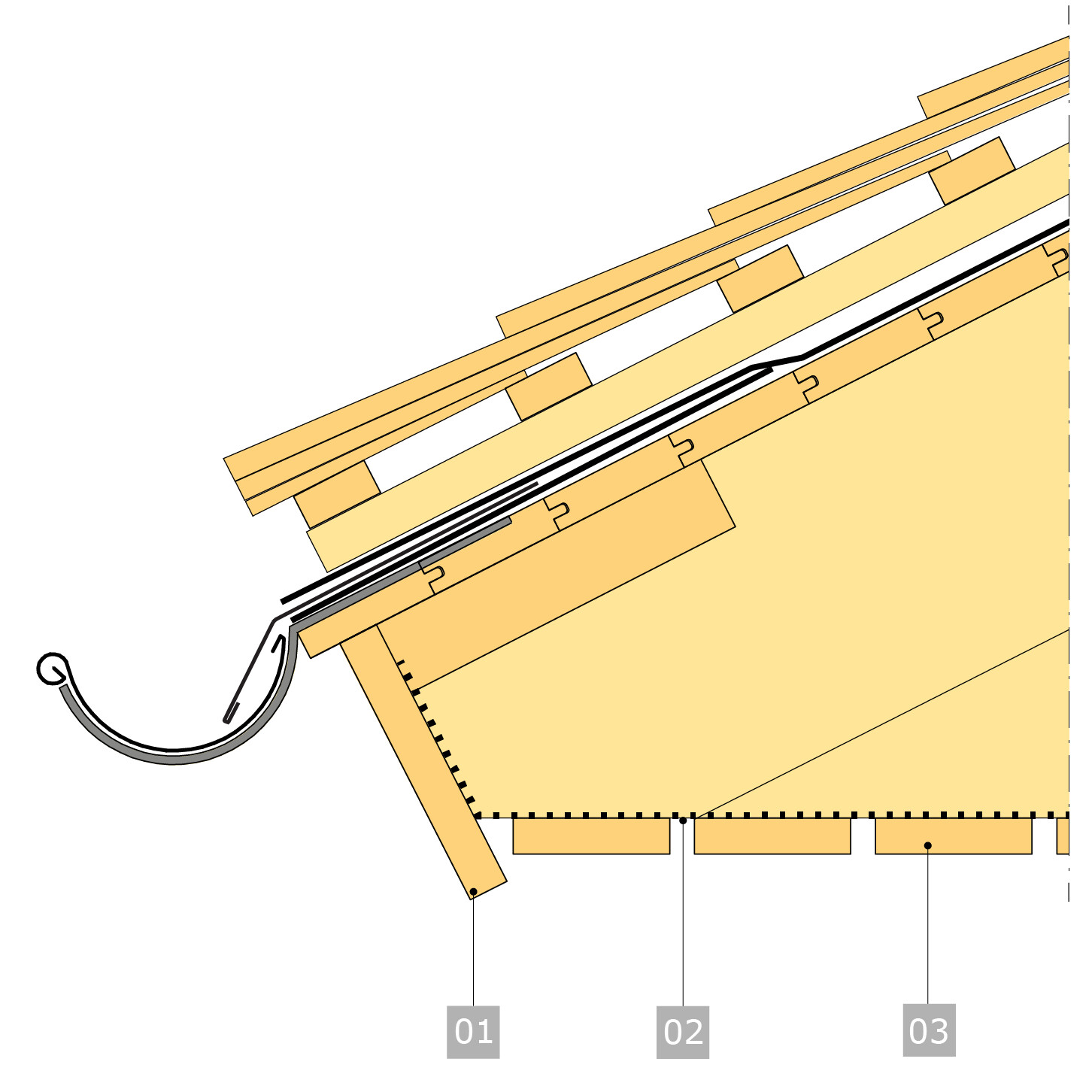
The eave on the first image does not look right. As previously mentioned, if you want to clad the eave, you want a horizontal surface for the baseboards (no. 3 in the image).
Illustration of eaves construction showing components like fascia board and roof angles, numbered for reference. Includes specific angles for gutter brackets.
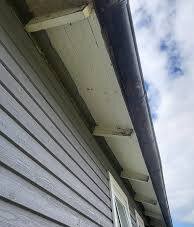
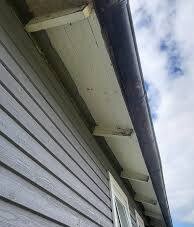
But if you are not going to clad the eave, it can look like this:
Eaves of a house under a cloudy sky, showing exposed rafters and the angle affecting the fascia board and gutter hooks.
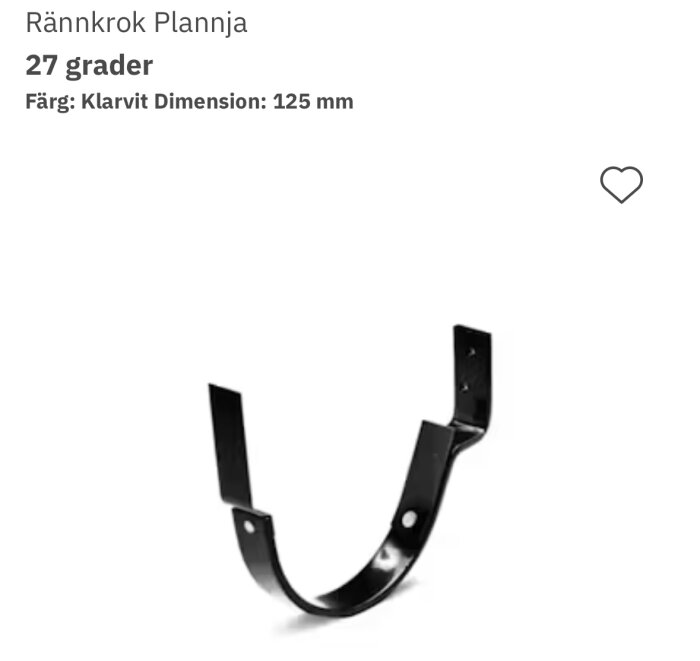
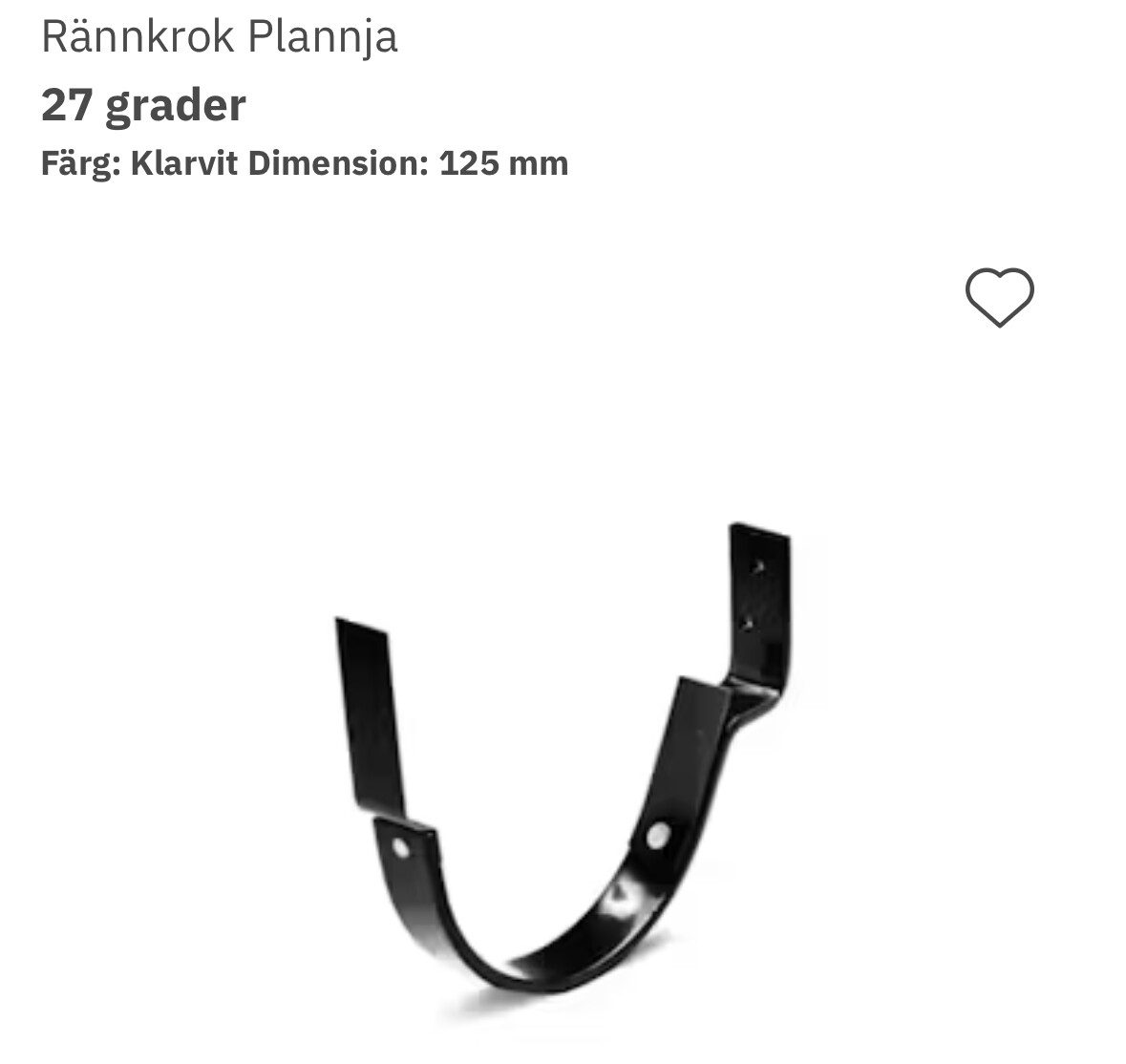
The angle at the end of the roof truss also affects the width and slope of the fascia board, where different designs can be used to achieve different appearances. And the angle influences the choice of gutter brackets attached to the fascia board, if you are using that type of brackets, as some of those brackets do not work with different angles on the fascia board, for example, this one which only works at 27° on the fascia board:
Gutter bracket Plannja, 27-degree angle, white color, 125 mm dimension, suitable for specific roof eaves with 27° fascia board angle.
 
S
Blue line: horizontal for the underslag boards. Red line: notch for better support against the hammarband. Blue and red can be combined into a cut.
 
  • Diagram showing construction detail with a blue line for horizontal support boards and a red line indicating a notch for better support against the plate.
D
Thanks!

I'm thinking of skipping the red line and attaching the ceiling joists with angles or through screws from underneath. I've read some other threads and it apparently becomes stable enough with angles, at least for a cold storage of 5x3.5 meters.

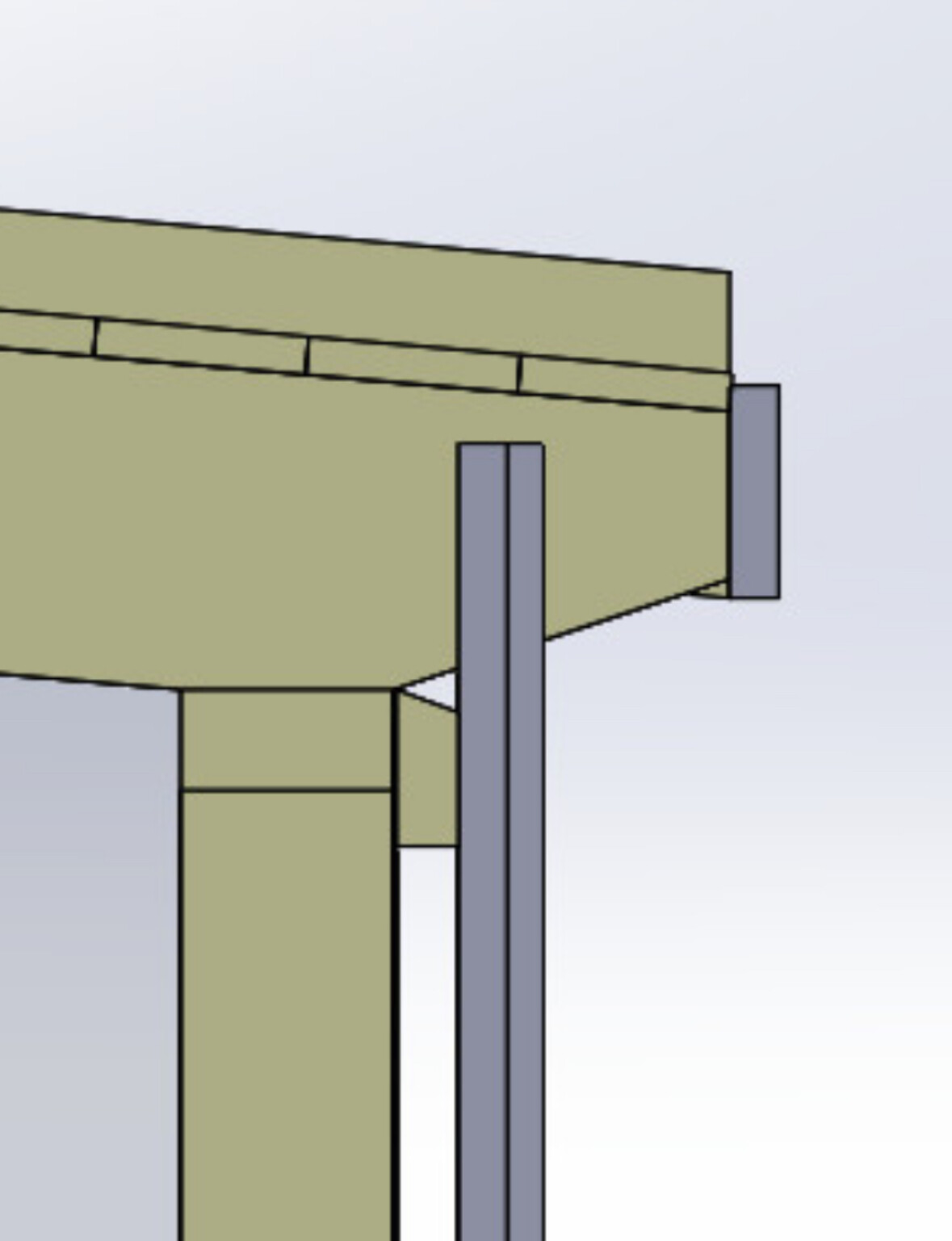
I understand the blue line. However, I'm thinking that I'll first make a vertical cut flush with the wall stud. That way, I can attach the battens and facade higher up. Additionally, the covering of the eaves will be sleeker, smoother (i.e., it looks neater).
 
Many people make an underlying miter to make the construction look a bit more slender. Not so heavy. The outermost part of the beam doesn't have much weight to handle. I think it looks nice, even if I haven't done it myself, because I'm lazy. I wouldn't make the cut as you planned to raise the nail rule.

I haven't bothered to miter the outer ends since I started using these gutter hooks.
https://www.byggmax.se/rännkrok-ställbar-svart-p26332
 
D
underlying miter, what is it?
 
I was thinking about the average to narrow down the rule.
 
D
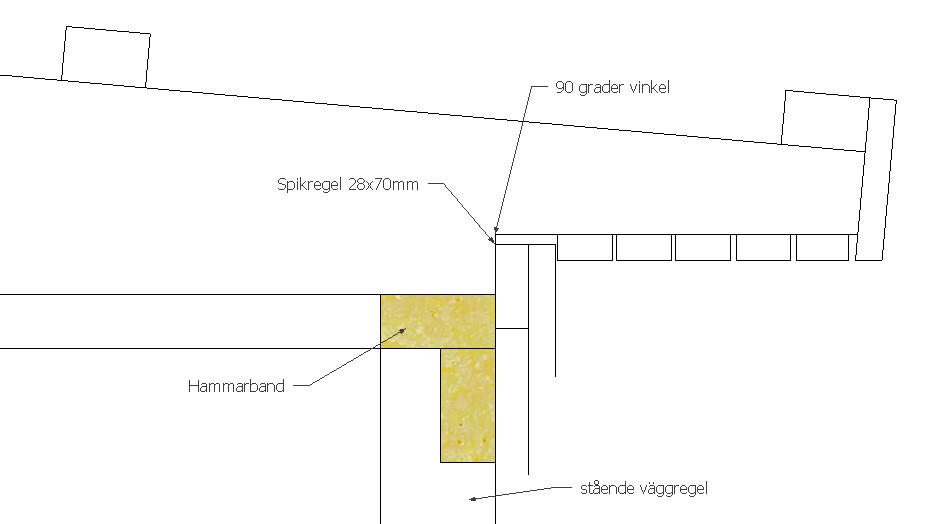
ah you mean the vertical section.
 
  • Cross-section diagram showing roof construction with labeled components: 90-degree angle, nailer 28x70mm, and upright wall stud, context "vertical section".
D
in the picture above, I have both made a cut to raise the nailing rule (and the facade) and a long horizontal cut (to taper the roof rule and get optimal support against the wall plate).
 
D
I only have a 5-6 degree angle on the roof. I'm not planning to use a gutter; the sheet metal will just protrude 5 cm (?) beyond the fascia board.
 
I mean the long horizontal cut when I say underlying gering.

The straight cut at the hammarbandet I think is extra work that doesn't add any value. The spikläkten doesn't need to go up there.
 
Vi vill skicka notiser för ämnen du bevakar och händelser som berör dig.