
8,593 views ·
26 replies
9k views
26 replies
Problem! Crack in the entire wall behind the TV!
We mounted the wall TV on the wall a few weeks ago. The wall is thin (I'd guess 7-8cm) and made of lightweight concrete. After many tips and advice, we then mounted the TV using lightweight concrete plugs and screws for the purpose. The TV sat well and no problems appeared.
Today, while renovating in the room on the other side of the wall, we see that the screws have almost gone all the way through to the other side and a crack has appeared from floor to ceiling.
The crack is now also visible on the TV's side, which makes me a bit nervous. Can the wall collapse? Can the TV collapse? Can the wall be reinforced in any way? It should be added that we now took down the TV just to be safe, though it only weighs about 23kg, so it's by no means a heavyweight.
This occurred when we gently took down some wallpaper in the room on the other side of the TV. Aesthetically, there are no problems since I can surely fill in the crack with putty and paint over it.
Attaching pictures of the mess. The pictures with the white wall are the room where the TV hangs, the remaining pictures are from the room on the other side.
Today, while renovating in the room on the other side of the wall, we see that the screws have almost gone all the way through to the other side and a crack has appeared from floor to ceiling.
The crack is now also visible on the TV's side, which makes me a bit nervous. Can the wall collapse? Can the TV collapse? Can the wall be reinforced in any way? It should be added that we now took down the TV just to be safe, though it only weighs about 23kg, so it's by no means a heavyweight.
This occurred when we gently took down some wallpaper in the room on the other side of the TV. Aesthetically, there are no problems since I can surely fill in the crack with putty and paint over it.
Attaching pictures of the mess. The pictures with the white wall are the room where the TV hangs, the remaining pictures are from the room on the other side.
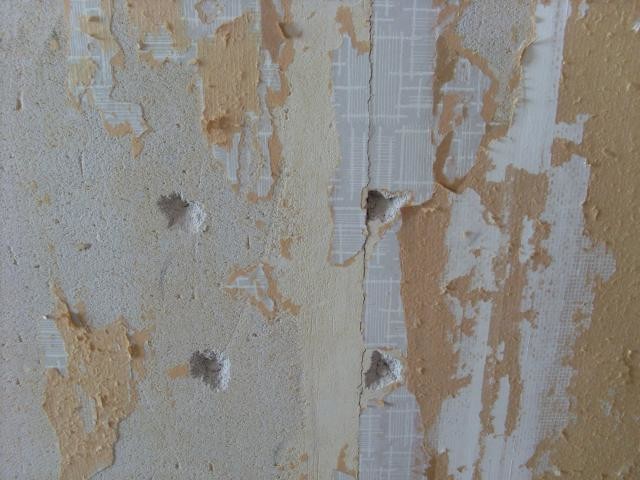
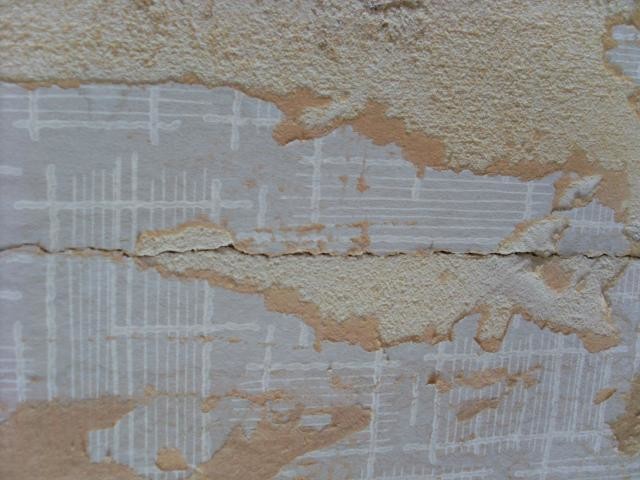
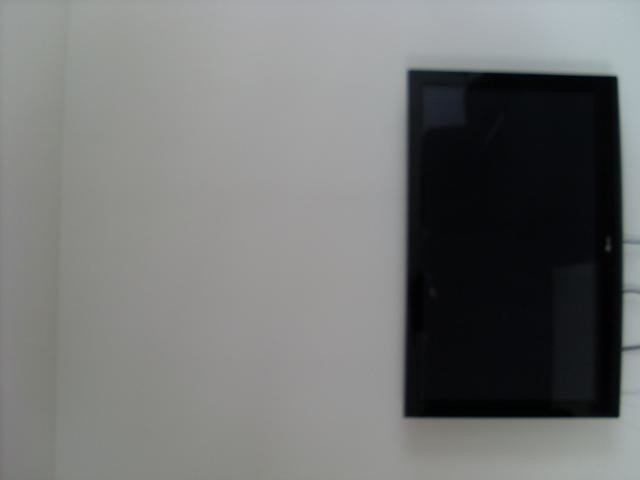
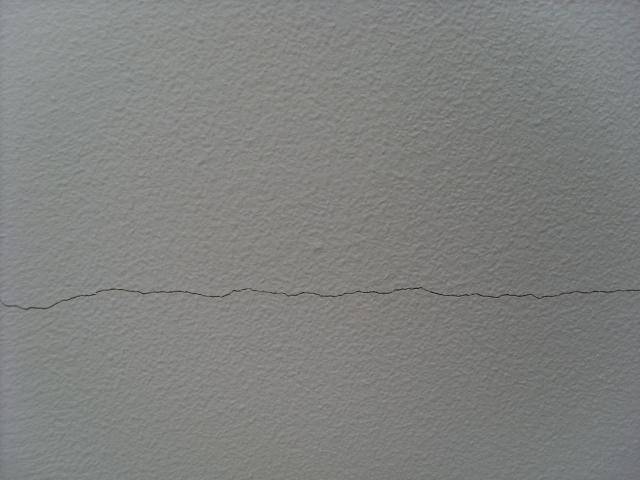
Now, it's hard to say, but from what you see in the pictures, there's probably no risk of the wall collapsing. The easiest way is to see it on site. Do the plugs you used to hang up the TV seem loose? Did you also glue the plug when you inserted it?
If you want to have a nice surface and solve it easily, one way would be to glue on a strip of drywall with PL400 glue, for example, to avoid all the work of finishing the surface. But at the same time, painted plaster also looks nice.
If you want to have a nice surface and solve it easily, one way would be to glue on a strip of drywall with PL400 glue, for example, to avoid all the work of finishing the surface. But at the same time, painted plaster also looks nice.
Last edited:
The plugs seemed to be holding well when I put them in, I think. I didn't glue the plugs, no.Richtmann said:Now it is difficult to say for sure, but from what you can see in the pictures, there is probably no risk of the wall collapsing. It's easiest to check in person.
Do the plugs you used to hang the TV seem loose, and did you also glue the plug when you put it in?
If you want a nice surface and solve it in a simple way, it would be to glue a piece of gypsum board, with PL400 glue for example, to avoid all the work of getting the surface right.
But at the same time, painted plaster also looks nice.
I don't think a neat surface is a problem. I believe I can just paint over the crack behind the TV where it's most important that it looks good.
The room behind the TV will be fully plastered, so there's no problem "hiding" the crack there.
So repair gypsum for aesthetic reasons, I don't think it's necessary.
But do you think the wall will withstand a 23kg TV in the future despite the crack that has appeared?
Very hard to say, but from what you can see in the pictures, I can't imagine there being any problems at all, since a wall like this is also reinforced and isn't just pure plaster, at least I can't imagine anything else.
Is there no risk that just the TV might fall as you see it?Richtmann said:
Whether it's reinforced or not, I don't know, but it's really soft in the wall.
When I need to screw something into that wall, I don't need to use a drill, it's enough to push in a screwdriver and it makes a hole.
Then it really depends on how well the anchors are sitting. If you feel that it seems securely fastened (presumably there are between 2-4 anchors you have used to mount the TV), and you distribute the weight among those anchors, it shouldn't be too much stress on each one. However, as mentioned, if the anchors feel stable and you can tighten them without them seeming like they’re going to pop out like they do when they're loose, there shouldn't be any problem.
It's also important to use the right type of anchor; if it's porous, anchors with extra large "wings" are a bit better, and you can also glue them with something like PL400, to be sure.
It's also important to use the right type of anchor; if it's porous, anchors with extra large "wings" are a bit better, and you can also glue them with something like PL400, to be sure.
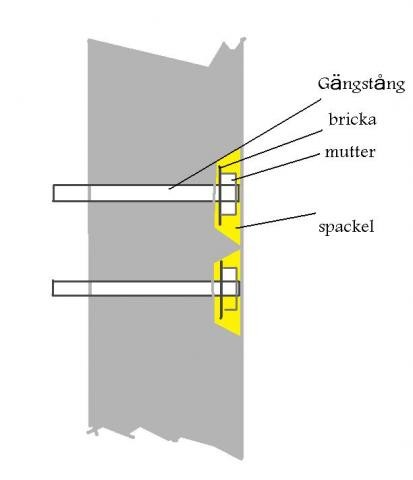
If you want to feel 100% secure, you can use a threaded rod. Drill holes straight through and countersink the threaded rod with a nut and washer. Fill in with putty. Then you can probably hang a 50 kg TV there. If you want to hang even more, place a larger plate from behind, like a hole plate.
Edit. The wall holds.
Edit. The wall holds.
Last edited:
Nice EDIT therekamilenski said:If you want to feel 100% secure, you can use threaded rod. Drill the holes straight through and countersink the threaded rod with a nut and washer. Spackle in. Then you can probably hang a 50 kg TV there.
If you want to hang even more, place a larger plate from behind. Like a perforated plate.
Edit. The wall holds.

I spoke with a carpenter who has been in the house before. He said there was plenty of rebar in the wall so it shouldn't be a problem.
He said you could remove the plug, glue, and insert new plugs.
But at the same time, I'm afraid the holes will widen too much so that it gets worse so I think I won't do anything at all.
The TV will hang.
doesn't sound good at all... like a plastered drywall?savio said:
Last edited by a moderator:
Not sure what a polished gypsum board is but there are no problems making holes in my lättbetong with a chisel anyway.gaia said:
By the way, do you think I should unscrew the screws, fill the plug with PL400, screw them back in, let it dry, and then put up the TV?
We have mounted a 42-incher on a lightweight concrete wall with 4 French screws in Fischer plugs, it's securely fastened and will never fall down. Additionally, there's a bracket that allows the plasma to be swung out 90 degrees against the wall, acting as a decent lever.
The crack is probably in the plaster, not in the lightweight concrete wall?
The crack is probably in the plaster, not in the lightweight concrete wall?
The crack is straight through the wall since you can see it from both sides of the wall.Jan-Å said:We have hung a 42-inch screen on a lightweight concrete wall with 4 French screws in fischer plugs, it's really secure and will never fall down. Additionally, a mount where you can extend the plasma 90 degrees from the wall, which creates a decent lever.
The crack is in the plaster, not in the lightweight concrete wall, right?
Or am I misunderstanding your question?
Hm, no, you didn't misunderstand. Maybe I was thinking wrong :S But the wall is plastered, right? In that case, I thought that the crack is in the plaster, the light concrete wall has moved which cracks the plaster on both sides, but the stones are whole and held together with mortar and reinforcement.savio said:
I perceived the cracks as vertical, but the pictures actually show the crack both as vertical and horizontal. If it has cracked vertically as I assumed, the stones must have cracked all the way through, which I thought was unlikely. A horizontal crack, on the other hand, can follow the seam between two layers of stone, and then the mortar can, of course, have cracked straight through the wall. :O