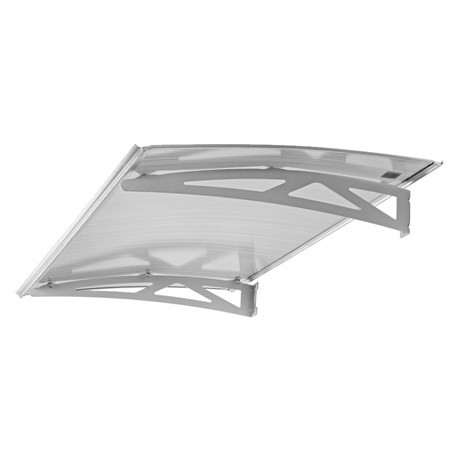
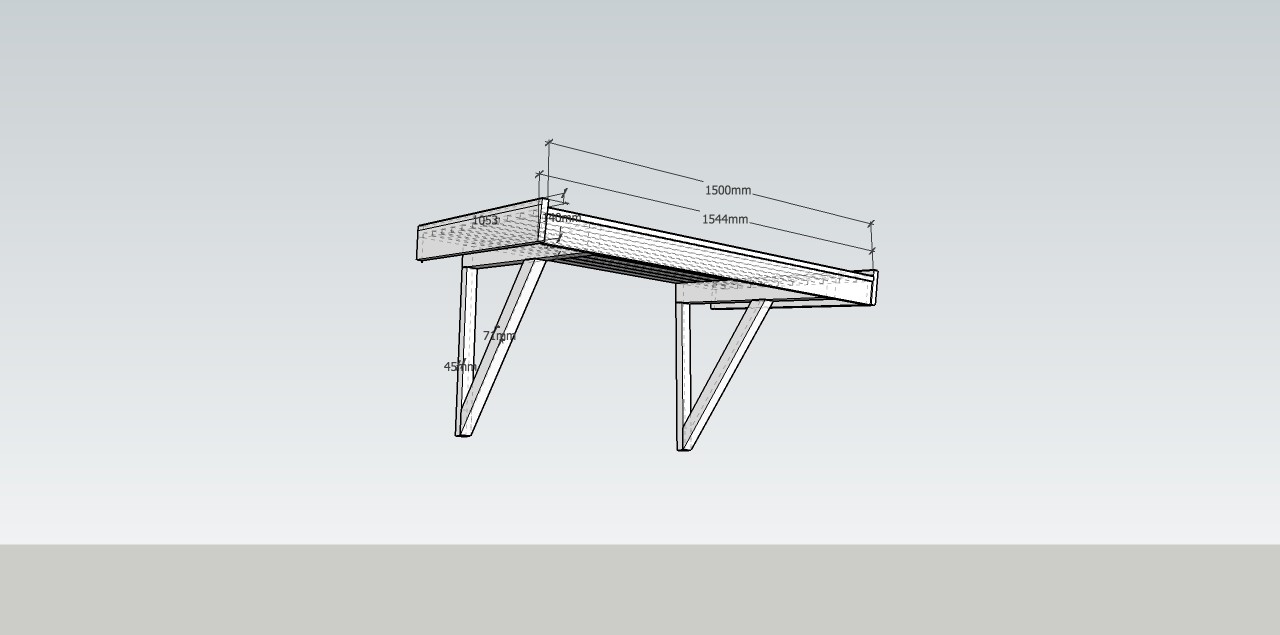
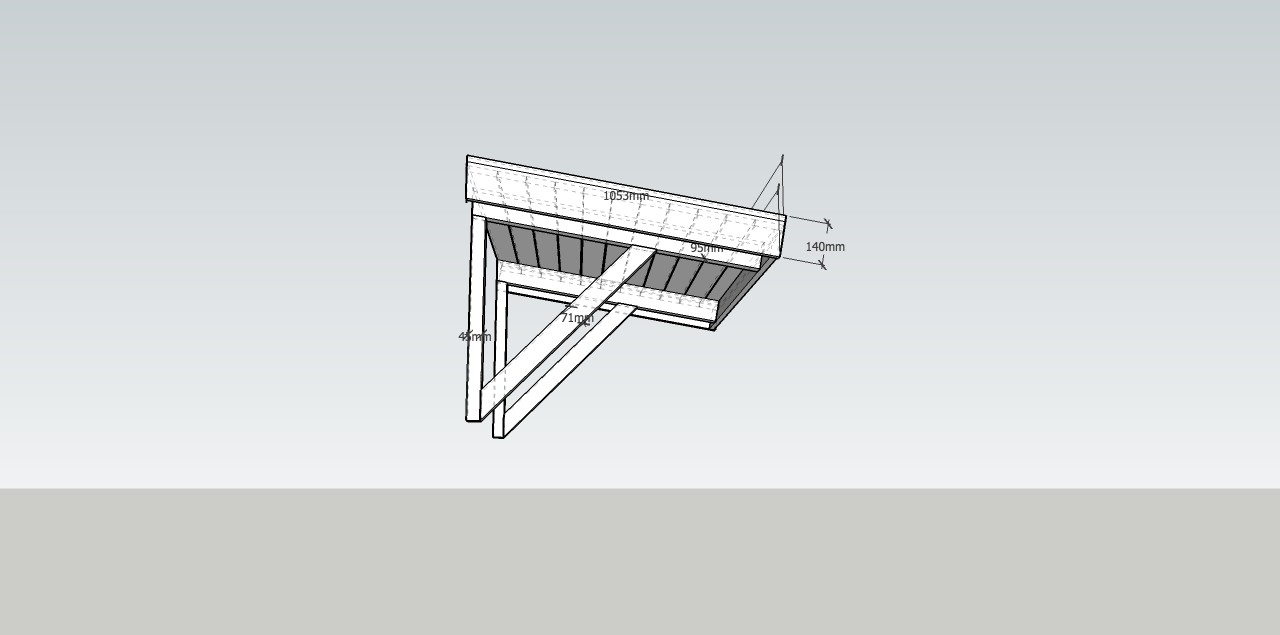
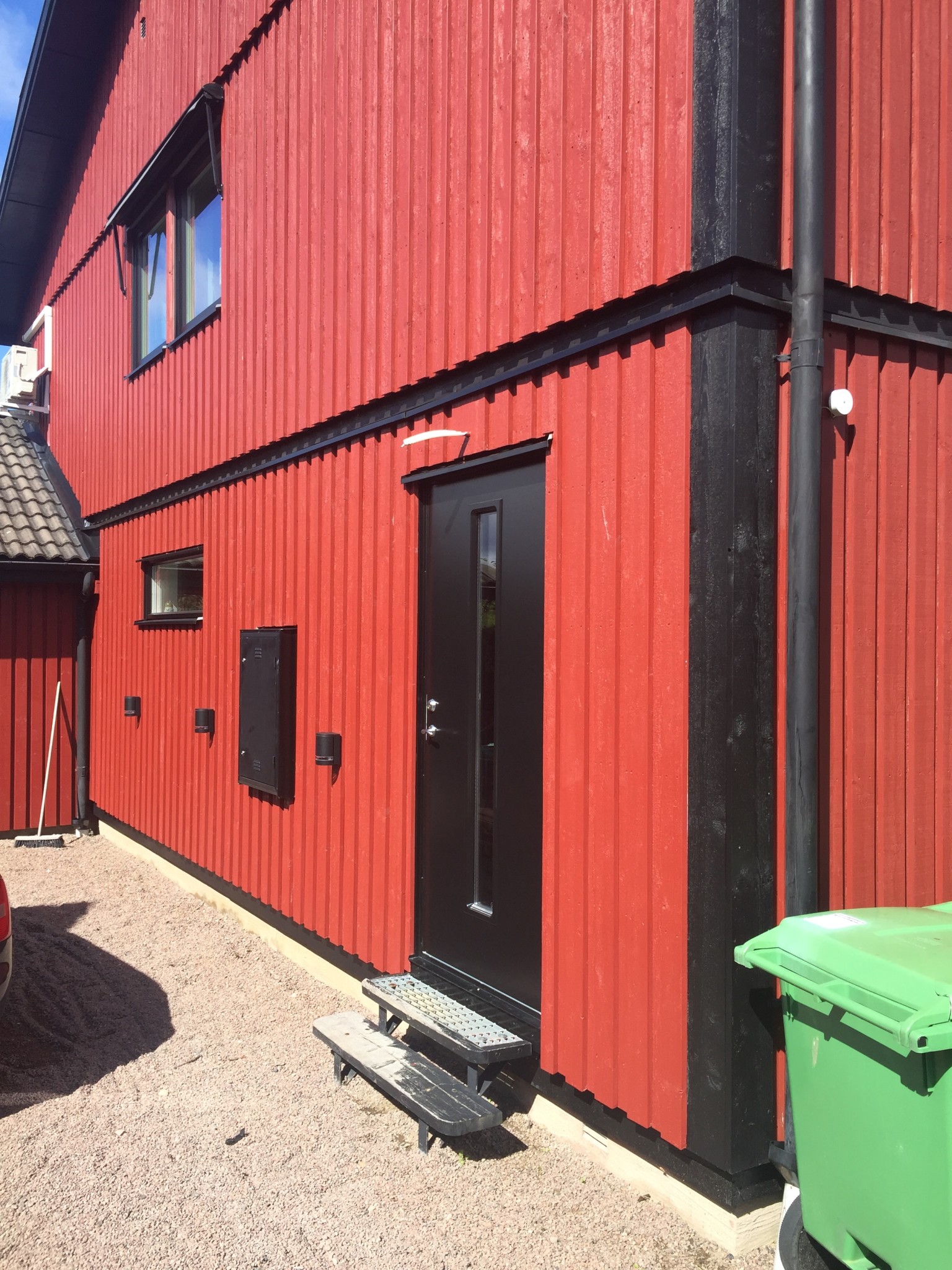
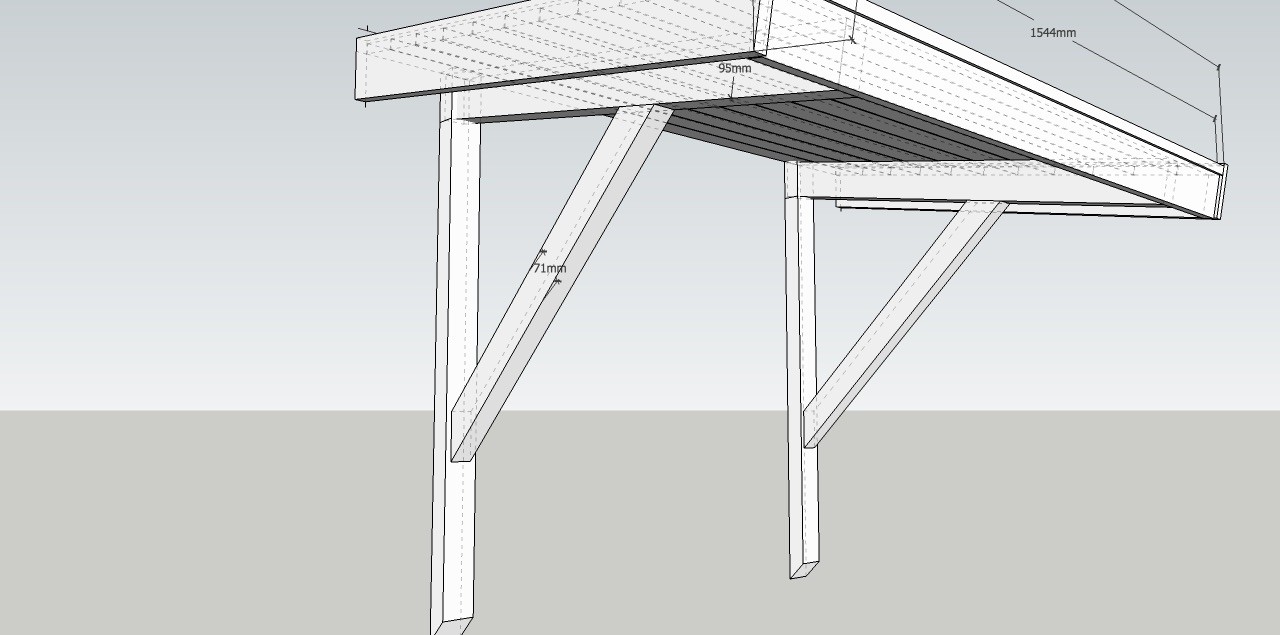
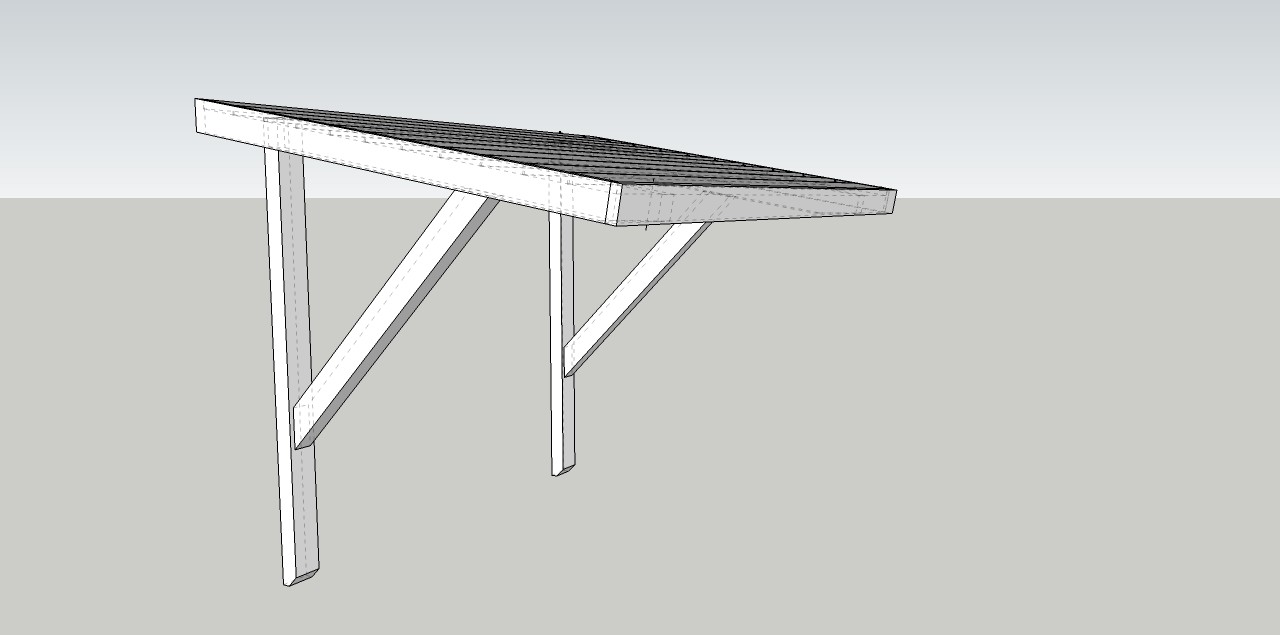
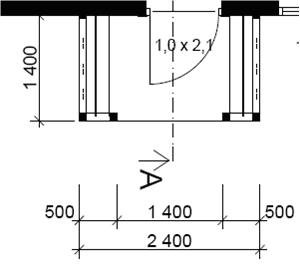
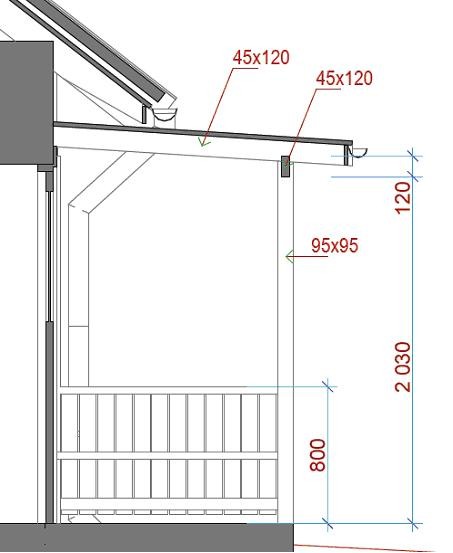
I'm planning to build a simple entrance canopy. Essentially, it will be two brackets with a roofing of tongue and groove boards, which will then be covered with roofing felt and metal sheeting. Roof pitch 10 degrees. 100 cm deep and 150 cm long. On the wall, I'm thinking of screwing a 45x45 frame, and an angle brace 45x70. The base for the tongue and groove boards 45x90. What do you think about my construction? The aesthetics? Any other suggestions? I'm planning to build a new staircase as well, it's starting to get a bit worn... The house is located in Helsingborg, so there won't be much snow load.
I think there's very little roof, 1 meter out doesn't protect much from rain, while you're at it, why not make a proper entrance with a roof that provides decent protection. I saw the car is parked there, maybe there's not much space, but still, a tiny cute roof is not a roof, so think about how you can do it, otherwise what you've planned isn't wrong.
No place in the country is as cold and windy in winter as Skåne... If the door faces south or west, I think you should consider a somewhat larger roof.
The dimensions of the material are completely OK. Design-wise, however, it's not a standout. Try extending the brackets all the way to the edges and use a stronger dimension than 45x95. Let the bargeboard (in a smaller dimension) align with the bracket. Another option is to make the roof part extremely thin, similar to a modernist house.
Thank you for the great feedback! I unfortunately don't have room for a larger entrance; it will be too cramped for cars, bikes, and other things. This is just the kitchen entrance, so there is a proper veranda at the front. I plan to make a new staircase that is slightly deeper than the current one, but even that is on the edge. So the roof will be based on the principle of "better than nothing." I pulled the bracket in from the outer edge to be able to attach it to the studs around the door. Or is it enough to anchor the construction to the panel's nail rule?
I will have a tinsmith cover (is that the right term?) the roof and bargeboards.
I've considered the dimensions, but I don't want it to feel too bulky, as it is just a "snuttgulltak"... but I have increased the length and dimension of the bracket slightly.
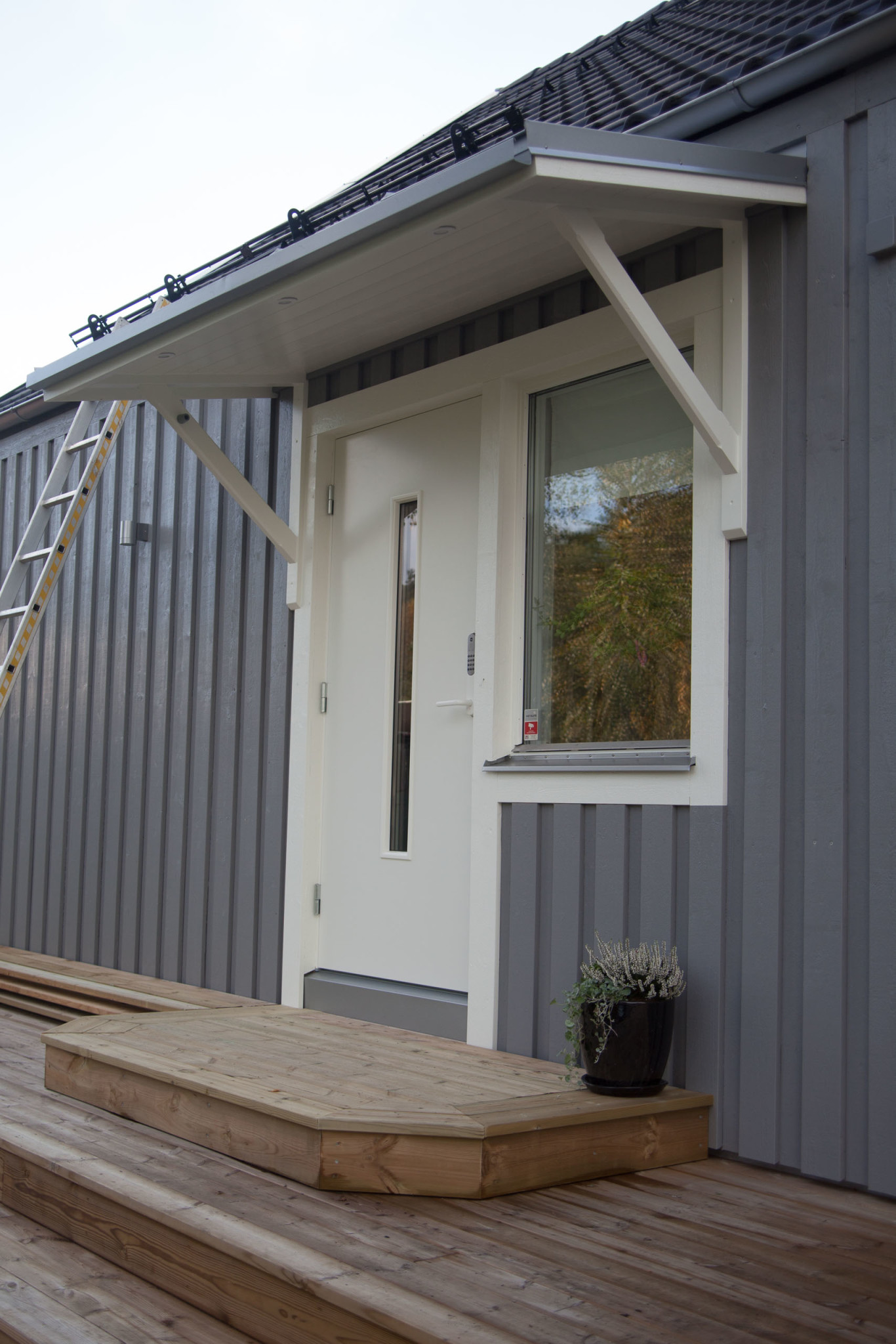
I built something very similar a couple of years ago. Mine is, however, a bit wider than yours. It has a metal profile at the front edge to maintain a sleek appearance.
A successful design often occurs when one exaggerates in one direction, which doesn't necessarily mean bigger. vectrex variant is more stylish because the roof is more delicate. I think your reworking is going in the right direction, but make the bargeboards and fascia smaller.
Very nice vectrex! I might borrow some ideas! What are the dimensions of your consoles? Roof slope? It looks like you've made an "inner ceiling" between the consoles to hide the cables?
Justus: it sounds like a good tip to make the ceiling neater, I'll try to rework it a bit! Should I also reduce the console like vectrex or keep my heavier construction for a neater ceiling? How about the mounting, do I need to align with a standing wall stud?
I think you can keep your thicker konsoler for a lighter ceiling. The maximum load on the ceiling is under 300 kg. With four French screws, it will be at most 75 kg per screw. You don't need to hit any standing studs for that attachment.
I don't quite remember the dimensions. But I think I started with 45x70, which I squared and planed. Probably ended up around 40x65 roughly.
The top part is a bit thicker. I think it is about 60x60.
The roof consists of an 18mm construction plywood (stiffens better laterally than tongue and groove) that is screw-glued on top of the brackets and the metal beam. The brackets are connected at the front with a 50x70mm square aluminum beam. On top of the plywood lies underlay felt, and on top of that is the sheet metal.
On the underside, I glued 18mm strips of plywood to which I then fastened the panel with 25mm brads. This provided an 18mm space to run electricity to the LED lights (and space for spotlights and a transformer). The panel on the underside is leftover panel I used as an indoor ceiling panel. It is 15mm thick. Siljan spring panel.
Sketched a more delicate roof, it turned out significantly better! Now I have a 45x70 as the top part in the bracket and a 22x70 as the eaves and fascia board. I have a fairly limited workshop, so I have to stick to standard dimensions for the timber.
I'll try to sketch up the house facade in the same sketch to get a better feel for it and maybe also compare with a more delicate version of the bracket.
Thanks for all the great opinions so far, I think the result will be much better now!
Or you could make an effort and do it right.
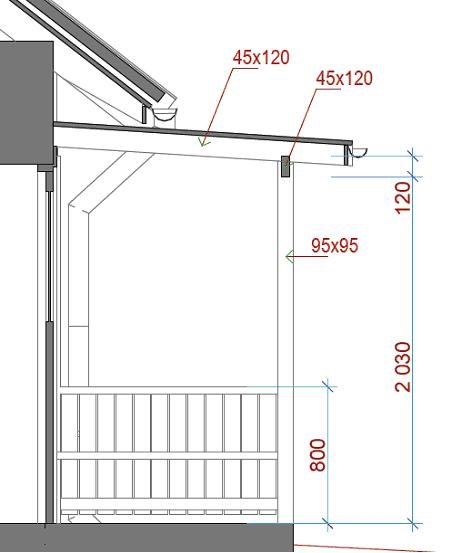
If it's the main entrance of the house, it shouldn't just look like a bus shelter?
From post 4:
Unfortunately, I don't have space for a larger entrance, it becomes too cramped for the car, bicycles, and more. This is just the kitchen entrance, so there is a proper veranda at the front.





KnockOnWood said:
BirgitS said: