
8,120 views ·
23 replies
8k views
23 replies
Polishing concrete slab with cracks?
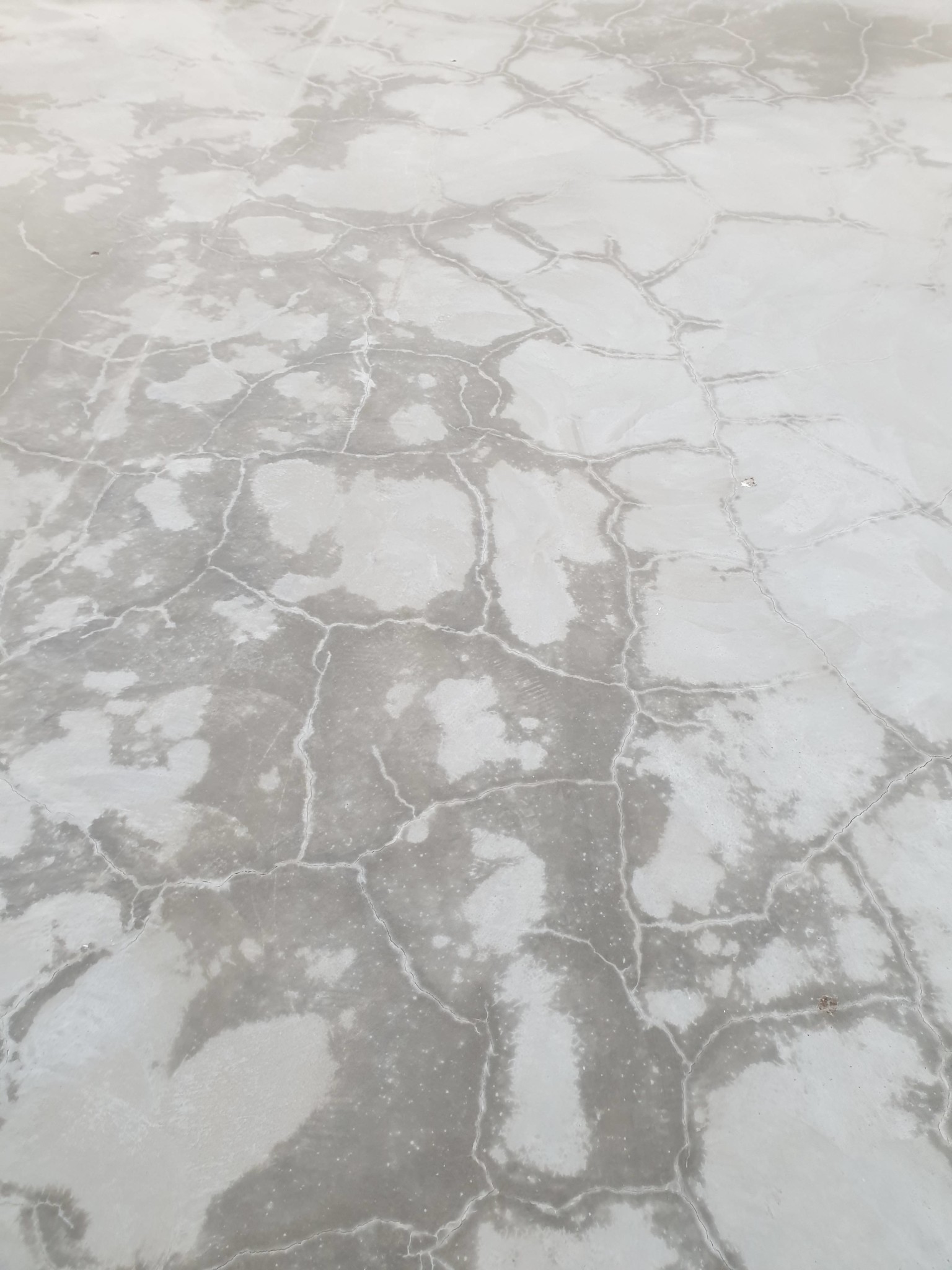
We poured the slab for our house a while ago. The plan was to have polished concrete throughout the entire house. But right after the pouring, the whole slab was full of cracks.
Now the big question is what the result will look like after polishing? Will the cracks still be as visible?
Now the big question is what the result will look like after polishing? Will the cracks still be as visible?

Mats-S
Construction veteran
· Sollentuna
· 3 327 posts
Mats-S
Construction veteran
- Sollentuna
- 3,327 posts
I recommend that you contact the suppliers who do these jobs, they are the best at evaluating your floor and the conditions. But I would guess that the cracks are not visible after the polishing ... but note that there are a number of variations on "polishing concrete floors"
Those who are supposed to polish the floor came and looked almost immediately after the casting. He said there were a lot of cracks. They have never polished when it has looked like this before. We were supposed to do a test corner first. But now we have stopped it and contacted the company that did the casting.
What bothers me the most is really that we have been very clear that the slab should be as good as possible during casting. Yet it looks like a spider web. From what I can read, they should have covered the slab immediately.
What bothers me the most is really that we have been very clear that the slab should be as good as possible during casting. Yet it looks like a spider web. From what I can read, they should have covered the slab immediately.

Cracks in the slab/floor cannot be avoided with regular casting, it is when the water leaves that the cracks appear. Covering is to prevent evaporation when the concrete sets as it becomes warm. The concrete should be vacuumed to remove as much water as possible, and plenty of reinforcement.M MPinje said:

Know-It-All
· Västra Götaland
· 11 963 posts
Softcut is usually used if a smooth surface is desired. Lines are cut into the concrete, and the cracks will then appear there instead of randomly. Many don't do this, so I would actually choose to have, for example, the grinding company that does, for example, HTC superfloor grinding also cast the slab.
The cracks will be visible, you either accept it or you need to change methods, for example, self-level and treat the surface afterward.
The cracks will be visible, you either accept it or you need to change methods, for example, self-level and treat the surface afterward.
Of course, there will be cracks. But there are different causes for different types of cracks. These are plastic shrinkage cracks that appeared immediately when they were finished. They had to sit and wait a few hours before the post-treatment started because their machines were delayed. I'm almost sure it dried too quickly there. It was quite windy.J jonaserik said:Cracking in the slab/floor is unavoidable with standard casting execution. It occurs when the water leaves, and that's when the cracks appear. Covering is to prevent evaporation when the concrete sets, becoming warm. The concrete should be vacuumed to remove as much water as possible, along with sufficient reinforcement.
Know-It-All
· Västra Götaland
· 11 963 posts
Oh, that was a lot
It is certainly a slab with double reinforcement one would hope, but perhaps it wouldn't have been wrong with double mats both in the bottom/top reinforcement, it also seems to be too much water and then cracks can easily occur.